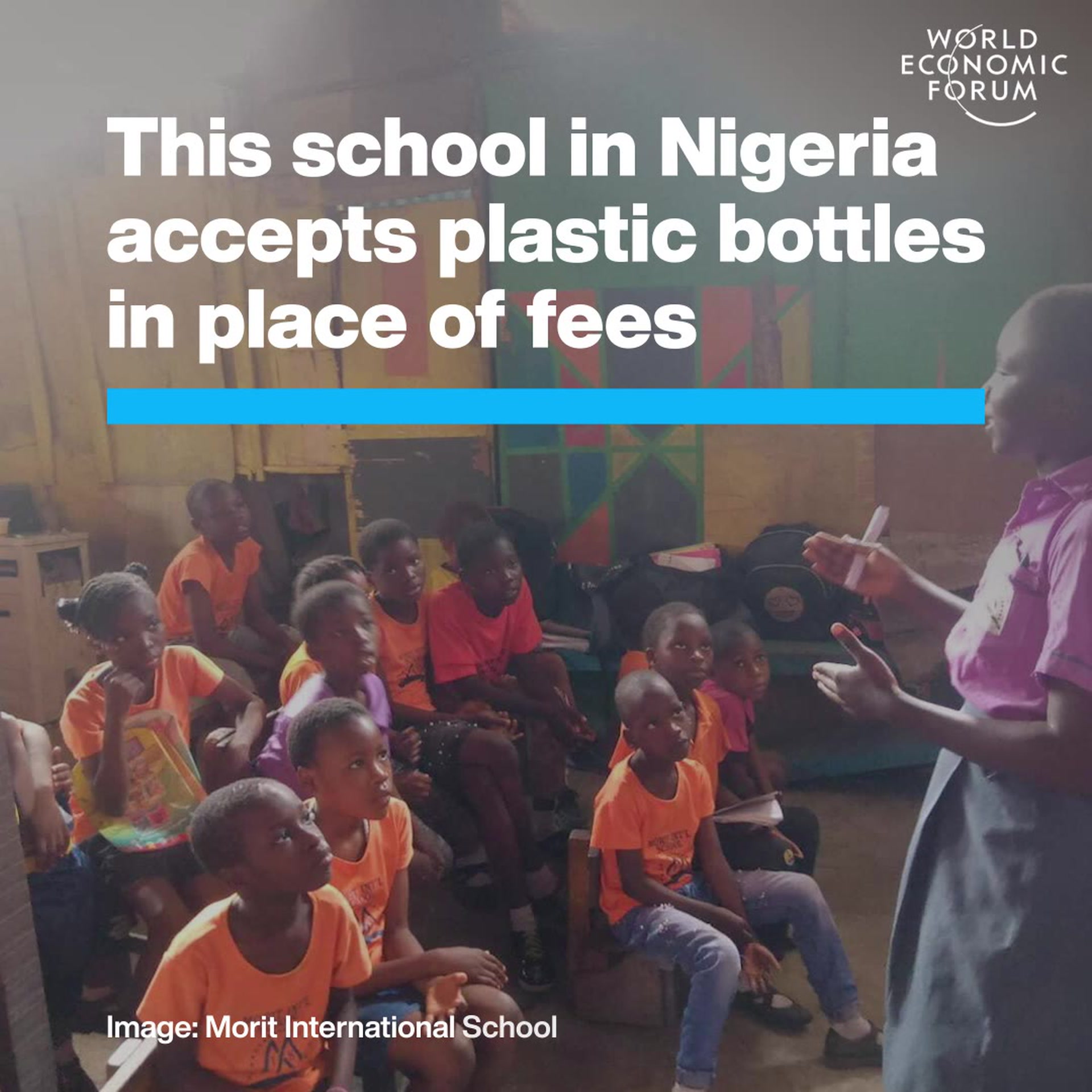
In 2015, teacher Patrick Mbamarah noticed two problems in his impoverished district of Ajegunle, Lagos. Children out of school and plastic pollution. He founded the Morit International School which accepts plastic bottles in place of fees, making education more accessible while cleaning up the local area.
In 2015, teacher Patrick Mbamarah noticed two problems in his impoverished district of Ajegunle, Lagos: children out of school and plastic pollution. He founded the Morit International School and set the fees as low as possible, but parents were still struggling to pay the costs.
Paying in plastic for education
Mbamarah joined up with local recycling companies to allow parents to pay in plastic. The children are encouraged to bring in 5 plastic bottles a day, and one plastic bottle counts as one naira towards their fees. Recycling companies weigh the bottles and exchange them for cash. Collecting bottles is the responsibility of parents, but it also raises environmental awareness among the children.
Impact
The scheme has spread to the community, where many people now give their recyclables to the school. Collectively, humans generate 350 million tonnes of plastic a year, and less than 10% of it is recycled. The Morit International School is a small but important step in addressing both the problem of plastic pollution and the problem of access to education.
The Morit International School is a unique and innovative solution to two major problems. It is a model that could be replicated in other communities around the world.