Opinion
Globalisation is here to stay, but not as we’ve known it
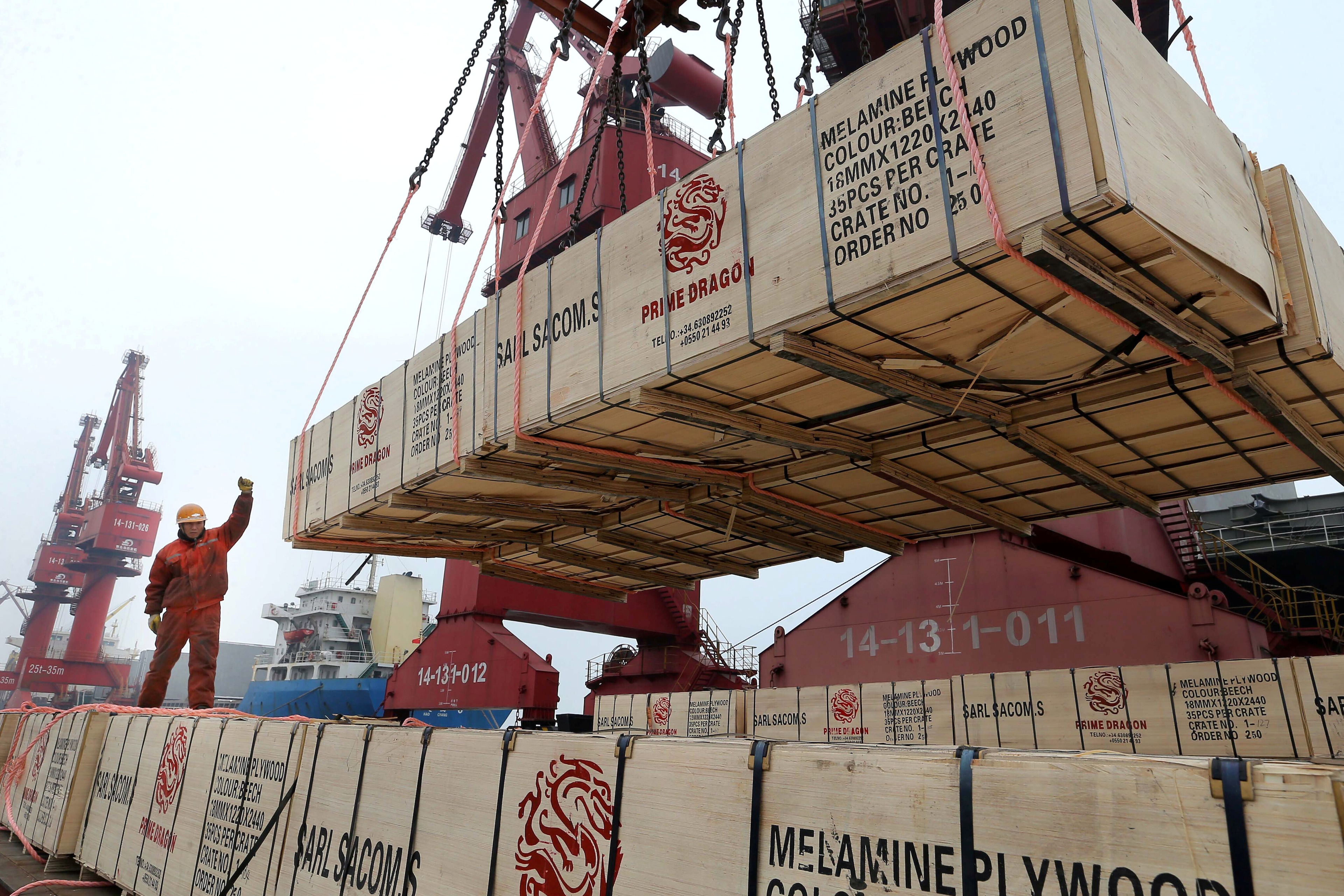
The current tariff environment is also changing globalisation. Image: REUTERS
- Recent disruption and jarring policy shifts have raised questions about the ability of globalisation and its associated benefits to endure.
- But Guy Miller, Chief Market Strategist & Economist at Zurich Insurance, writes that the value of global trade has only been magnified by the turmoil – and it will endure and even thrive as it takes on different forms and patterns.
With the US taking its tariff rates to their highest level in a hundred years, and the COVID-19 crisis having exposed the vulnerabilities of super-efficient supply chains, the death of globalisation is much touted.
I beg to disagree.
I see an increasingly interconnected world with global trade remaining at the heart of driving prosperity. But it will not be the global trade we have become familiar with. Nor will it grow at the same pace of the past three decades, as the fall of the Berlin Wall, the inclusion of China into the World Trade Organization, and insatiable US consumption resulted in super-sized trade agreements and overdependencies.
Things are changing, and I suspect for the better – as globalisation matures into a more organic and nuanced force. Trade is at the heart of global prosperity and market forces are likely to keep it there. Data show that the expansion of global trade is now running below global growth rates, having notably outstripped it in prior decades; but it will remain a key driver of growth.
Fundamentally, consumers want choice in their purchases and lower prices, and companies want lower costs of production to bolster margins and increase market share. These forces will keep trade very much alive, but there have been deficiencies in the status quo that need to be addressed.
Global trade is in the spotlight
It was perhaps COVID-19 that most notably cast the spotlight on globalisation for good and bad. It was truly remarkable how the global trade network managed to cope with unprecedent global disruption, getting goods where they needed to be with surprisingly little interruption (in the context of a global pandemic). That noted, it also revealed overdependencies and vulnerabilities.
Companies had become too efficient in optimising their supply chains, and had mispriced the costs of disruption. Since then, the “China+1” principle has developed, not as a means to cut off Chinese supplies, but to diversify – modestly. Again, market forces are playing their part. While concentration risks were underpriced, companies are diversifying where it makes economic sense.
The current tariff environment is also changing globalisation. While there is perhaps agreement that the US trade deficit had become too extreme, the approach of the US administration is incendiary for a country that has benefitted massively from global trade. Economically, protectionist policies tend to shield inefficient businesses from competition, while the most efficient, globally exposed firms in the US will now face negative headwinds. Again, it is widely known that tariffs are also effectively a regressive consumption tax, impacting the more economically vulnerable while potentially reducing consumer choice and raising prices.
Although the jump in US tariff revenues in May to nearly $23 billion is eye-catching, it should be remembered that these are revenues paid by US households and companies, not foreign bodies. More importantly, tariff uncertainty is impacting confidence and business investment; this is a key reason why onshoring to the US is likely to underwhelm.
Breaking up is never easy
One of the intentions of US tariff policy is to entice production to the US, but erratic policy is not conducive to that, because companies are unclear on where policy will land and how permanent it will be in the context of their own multi-year commitments. Companies have evolved over decades to capitalise on comparative advantage and symbiotic relationships, leading to integrated, complex, and mutually dependent production processes.
This was a key reason why the US ended up holding out an olive branch to China in their tit-for-tat tariff exchanges. Both the US and China need each other, which is most visibly evident in their agreements on rare earths and high-end computer chips. They have bought themselves time for a “conscious uncoupling,” in celebrity divorce parlance, as it has become obvious that replicating high-end imports is not only expensive but also takes time.
Unfortunately, separating integrated cross-border development and production is a loss in terms of the sharing of ideas and co-creation, and it will undoubtedly lead to less efficiency and duplication. Still, a new competitive spirit may ultimately stimulate development.
New deals for a shifting world order are alive and kicking
A new equilibrium is likely to be found, which may ultimately prove productive and long lasting. Figures show that despite COVID-19 and tariff disruptions, global trade continues to prosper. Countries are increasingly seeking bilateral agreements and being opportunistic.
Prior to this year, WTO data showed that the number of trade agreements being struck continued to outstrip the number of trade restrictions. Indeed, many deals were still hefty and broad in nature. The EU-Mercosur Agreement was finalised at the end of last year, and covers around 25% of global GDP. China, South Korea and Taiwan are in the process of joining the Comprehensive and Progressive Trans-Pacific Partnership (CPTPP), in addition to the Regional Comprehensive Economic Partnership (RCEP). And the Institutional Agreement between the EU and Switzerland that has been confirmed is also consequential.
While I suspect that complicated and large-scale agreements will become anomalies, bilateral deals are proliferating. The UK is an obvious example, with several important deals struck post-Brexit. A free trade deal with India sealed in May was a landmark. It aims to raise trade annually by around $35 billion for the world’s sixth- and fifth-largest economies, respectively. There are many examples that challenge the notion of deglobalisation. As demographics increasingly favour many emerging markets, these are the regions where I suspect most of the auspicious new deals will be struck.
Slowing, but also evolving
The demise of globalisation is a myth.
Slowing and changing, yes, but evolutionary and encouraging nonetheless. New technology, digital trade, shifting demographics, and broadening wealth continue to support globalisation, allowing households and companies to benefit from broader product choices, lower prices, and lower costs of production.
Rather than higher tariffs, we need to seek ways of lowering the frictional costs of doing business across borders, while remaining focused on addressing excesses and overdependence.
Guy Miller is a member of the World Economic Forum's Chief Economists Community.
Don't miss any update on this topic
Create a free account and access your personalized content collection with our latest publications and analyses.
License and Republishing
World Economic Forum articles may be republished in accordance with the Creative Commons Attribution-NonCommercial-NoDerivatives 4.0 International Public License, and in accordance with our Terms of Use.
The views expressed in this article are those of the author alone and not the World Economic Forum.
Stay up to date:
The Digital Transformation of Business
Related topics:


Forum Stories newsletter
Bringing you weekly curated insights and analysis on the global issues that matter.
More on Economic GrowthSee all

Sebastián Serrano
February 23, 2026


