How climate proofing our built environment can safeguard future generations

What is the moral imperative behind climate proofing infrastructure? Image: REUTERS/Satish Kumar
- Climate proofing infrastructure is no longer optional; it is central to economic sustainability, public safety and disaster preparedness.
- The decisions we make today will define the safety and prosperity of future generations.
- This makes climate proofing of infrastructure not just a technical or economic imperative, but a moral one.
Infrastructure is legacy, from the roads we drive to the energy grids upon which we rely and the water systems that sustain our cities. These are not short-term investments, but long-lasting foundations that shape the future. The decisions we make today about how we build and where we build will define the safety, sustainability and prosperity of generations to come.
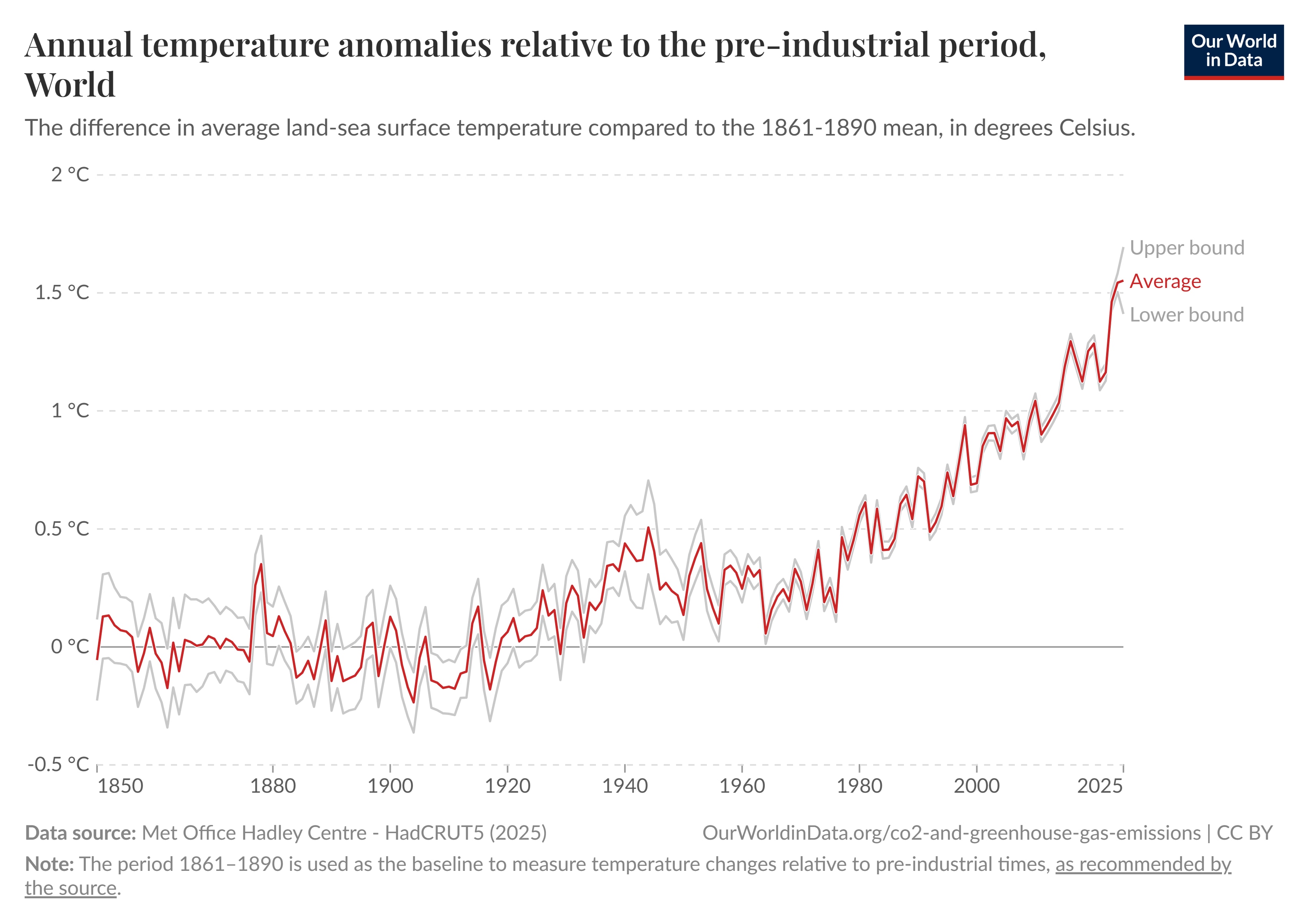
The rapid onset of climate change will undermine the intergenerational benefits of infrastructure. Recent studies show the rate of global warming has increased to a record 0.26°C per decade, while the Intergovernmental Panel on Climate Change (IPCC) projects that the rate of warming from now to 2050 will be about 26% faster than the rate from 1970 to the present day.
This makes climate proofing of infrastructure not just a technical or economic imperative, but a moral one. As the climate changes more rapidly and more severely than in recorded history, we can no longer afford to design infrastructure based on the past. Yet that is exactly what continues to happen: roads, railways, buildings and drainage systems are being built today to climate parameters that will no longer apply in the future. This is not just poor planning; it is unfair to the generations that will inherit the consequences.
Despite this moral imperative, many of the policy tools we use to assess the physical threats to infrastructure and the maintenance of infrastructural integrity are based on prior assumptions that are rapidly becoming outdated. For example, infrastructure cost-benefit analysis (CBA) often relies on expected value calculations based on historical data, assuming climate and weather variability will stay within past norms. However, climate change introduces nonlinearities, tipping points and deep uncertainty, such as the rate of global heating, sea-level rise and extreme weather events.
In light of this, certain commentators argue that CBA must become more holistic, and account for more non-market considerations and “axes of vulnerability” to climate change, such as human health and socio-economic determinants of resilience. Only then can a systems-level, long-term assessment of infrastructural integrity and effectiveness be deeply understood.
In addition, discounting rates – a mainstay in assessing the long-term viability of infrastructure – are also becoming an outdated mechanism in the era of climate change. Discount rates are the rate at which infrastructure is assessed as losing functional public value over time. Instead, economists argue that discount rates must decline over time to account for the global need for intergenerational resilience against uncertainties and tipping points. Likewise, experts argue there is an ethical imperative to reconsider discount rates to care for the well being, prosperity and resilience of future generations.
Changing evidence-based thinking
While many countries are lagging in updating their evidence base for safeguarding future generations, some governments across the world are bringing a long-term view into infrastructure assessments.
For example, projects such as the Sydney Metro have climate resilience embedded into every design stage. Its systems are built to perform in heat and rainfall projections for the year 2070. This proactive design ensures that the infrastructure will remain functional for decades, reducing the likelihood that future users will bear the cost of emergency upgrades, disruptions or failure.
Another example is Worcester, Massachusetts, where short and long-term investments into green infrastructure through the Green Worcester Plan are developing infrastructure, especially stormwater runoff, not for today but for the future.

In cities such as Gothenburg, Sweden, the application of the InVEST tool has enabled long-term integrated water usage to be analysed under four different climate change scenarios across three natural and physical levels (at the building, neighbourhood and city-wide levels). This has empowered planners to make informed long-term decisions under a plurality of climate futures, not just a singular climate future. This results in nature-based solutions with a long-term socio-ecological perspective against future flooding events.
Another example comes from Mozambique, where climate proofing in the coastal city of Beira has contributed to a decrease in flood risk for 40% of its population. Interventions include mangrove restoration, drainage system rehabilitation, flood control stations and water retention basins coupled with an urban green park.
Government departments across the world are shifting their calculation of discount rates to enable a long-term outlook of infrastructure projects. Namely, this often involves reducing the discount rate over time to emphasize the long-term value of infrastructure
For example, New Zealand’s recommended discount rate is 2% for years 1-30, 1.5% for years 31-100 and 1% for years 101 and beyond. This is especially for projects with long-term environmental and intergenerational impacts, such as those susceptible to climate change, or those intended to build climate resilience.
Likewise, the supplementary guidance on discounting in the UK Treasury’s Green Book starts with a base rate discount rate of 3.5%, which declines to 1% after 300 years, further demonstrating an alignment to intergenerational well being and long-termism, valuing future generations in its infrastructure evaluation practices.
A new ethic for infrastructure
Climate proofing infrastructure is no longer optional; it is central to economic sustainability, public safety and disaster preparedness. But it also represents something deeper: a new ethic of planning that centres fairness across time. This is particularly the case for emerging economies, where the risk is most severe and preparedness is comparatively low.
When we have climate-proof infrastructure, we are not just adapting to physical risks – we are acknowledging a duty to those who come next. We are choosing to pass on systems that are functional, affordable and resilient, not fragile and failing. That is the clearest expression of intergenerational fairness in the built environment.
This shift in evidence practices is already underway, just unevenly. To make climate proofing a norm rather than a novelty, we must embed intergenerational principles into infrastructure standards, planning regulations and public investment frameworks. Because infrastructure is never just about today, it is always about tomorrow.
This article is part of the World Economic Forum’s ongoing work on sustainable cities, systemic risk, and climate adaptation.
Don't miss any update on this topic
Create a free account and access your personalized content collection with our latest publications and analyses.
License and Republishing
World Economic Forum articles may be republished in accordance with the Creative Commons Attribution-NonCommercial-NoDerivatives 4.0 International Public License, and in accordance with our Terms of Use.
The views expressed in this article are those of the author alone and not the World Economic Forum.
Stay up to date:
Infrastructure


Forum Stories newsletter
Bringing you weekly curated insights and analysis on the global issues that matter.
More on Climate Action and Waste Reduction See all

Kanni Wignaraja, Marc-André Franche and Azusa Kubota
March 20, 2026