Why humans are the weakest link, and other cybersecurity news
Top cybersecurity news: Hackers are impersonating employees to breach security barriers; OpenAI, Microsoft and Orange are stepping up cybersecurity support for governments. Image: Unsplash/freestocks
Akshay Joshi
Head of the Centre for Cybersecurity, Member of the Executive Committee, World Economic Forum- This regular round-up brings you key cybersecurity stories from the past month.
- Top cybersecurity news: Hackers are impersonating employees to breach security barriers; OpenAI, Microsoft and Orange are stepping up cybersecurity support for governments.
- The World Economic Forum’s Centre for Cybersecurity provides an independent and impartial platform to reinforce the importance of cybersecurity as a strategic imperative and drive global public-private action to address systemic cybersecurity challenges.
1. The weakest link in cybersecurity: humans
A cyber attack on Australian airline Quantas potentially exposing six million customers' data has underscored that humans remain the weakest link in cybersecurity. This is not down to people's negligence but to the increasing sophistication of how cybercriminals operate.
The cyberattack is thought to be the work of Scattered Spider, a group of hackers that has been targeting retailers and airlines across the UK, US and Canada, and is known to target IT help desks using social engineering techniques. They often impersonate employees or contractors to gain access to systems, bypassing multi-factor authentication procedures.
The group has been linked to recent attacks on Marks & Spencer (M&S), Co-op and Harrods in the UK and has also been reported to be targeting airlines and insurance companies.
While Quantas is still gauging the full impact of the attack, M&S has announced that its online operations would only be fully restored by the end of July - more than three months after the ransomware attack originally happened.
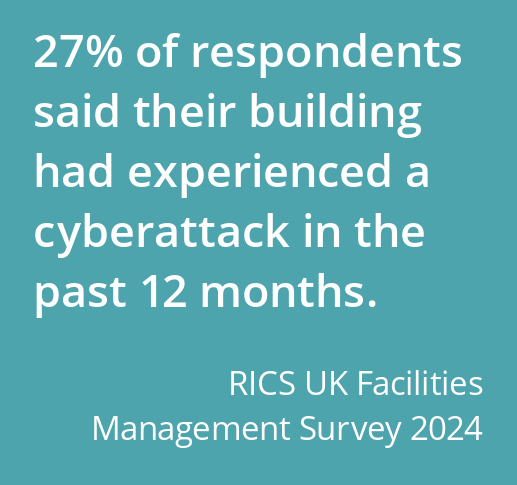
And it's not only big names who are impacted by cyber attacks: in the UK alone, 27% of companies reported that they had suffered cyber attacks over the past year, according to research by the Royal Institution of Chartered Surveyors. This is an increase of 11 percentage points from the previous year.
2. OpenAI to provide cyber defence support to the US government
The company behind the ChatGPT platform, OpenAI, has signed a $200 million contract to help the US Department of Defense (DoD) boost its artificial intelligence (AI) capabilities, particularly in the area of cyber defence. Part of an initiative known as OpenAI for Government, the company will provide AI-driven solutions to improve administrative operations and address national security challenges. The ministry stated that this would extend to both armed conflict and enterprise security.
The DoD’s approach reflects a broader trend of outsourcing advanced AI development to industry leaders to keep pace with rapid technological advancements.
This comes at a time when the US government has issued a warning that Iranian-affiliated hackers may target US companies and critical infrastructure operators in the wake of the recent geopolitical tensions.
After a surge in cyberattacks across Europe linked to Iran, China, North Korea and Russia, Microsoft has offered free of charge cybersecurity services to European governments. Meanwhile, French telco Orange announced that it is creating a new defence and homeland security division to support European organizations in these areas.
3. News in brief: Top cybersecurity stories this month
After a leak of nearly 27 million user data sets, South Korean authorities fined SK Telecom, the country's largest mobile provider. The government mandated that SK Telecom make remedial payments to customers and invest in improved data security.
A new law in Singapore empowers the police to take control of a person's bank account and block money transfers if they suspect the person is the victim of scammers.
North Korean hackers are using fake Zoom updates to trick employees at web3 and crypto organizations into installing malware by posing as trusted contacts.
Similarly, hackers linked to the Russian government posed as US State Department officials in email threads to build trust in order to overcome two-factor authentication and gain access to their victims' email accounts.
In the US, a cyberattack on healthcare services firm Episource earlier in the year has been revealed to have affected more than 5.4 million individuals.
The US House of Representatives banned the Meta-owned WhatsApp service on its devices due to a lack of transparency on data protection and security concerns. The House had also previously banned the use of TikTok.
How the Forum helps leaders understand cyber risk and strengthen digital resilience
4. More about cybersecurity on Forum Stories
Generative artificial intelligence (GenAI) is rapidly transforming entire industries, but with great potential also come great risks.
GenAI has been revealed to pose a significant threat to energy and manufacturing firms' operational technologies, the hardware and software systems controlling their facilities. A new survey from Siemens Energy and Ponemon Institute finds that over 75% of energy and manufacturing companies faced cyberattacks last year, and 50% rated their preparedness as poor and in need of better defences.
As incidents and hazards associated with powerful AI systems grow, rigorous testing for vulnerabilities in these systems before they can be exploited has become crucial. Known as “red teaming”, it's one of the best ways of avoiding GenAI being co-opted for disinformation, fraud or data breaches.
Cybersecurity jobs are on the rise in the US. More than half a million job openings were posted by public and private sector employers in the past 12 months, a year-on-year increase of 12% from the year prior. Cooperation across industries continues to be vital to addressing the widening cyber skills gap, including the use of public-private partnerships.
License and Republishing
World Economic Forum articles may be republished in accordance with the Creative Commons Attribution-NonCommercial-NoDerivatives 4.0 International Public License, and in accordance with our Terms of Use.
The views expressed in this article are those of the author alone and not the World Economic Forum.

Forum Stories newsletter
Bringing you weekly curated insights and analysis on the global issues that matter.
More on CybersecuritySee all

Jeremy Jurgens
February 27, 2026


