These innovators reveal proven principles for effective climate partnerships
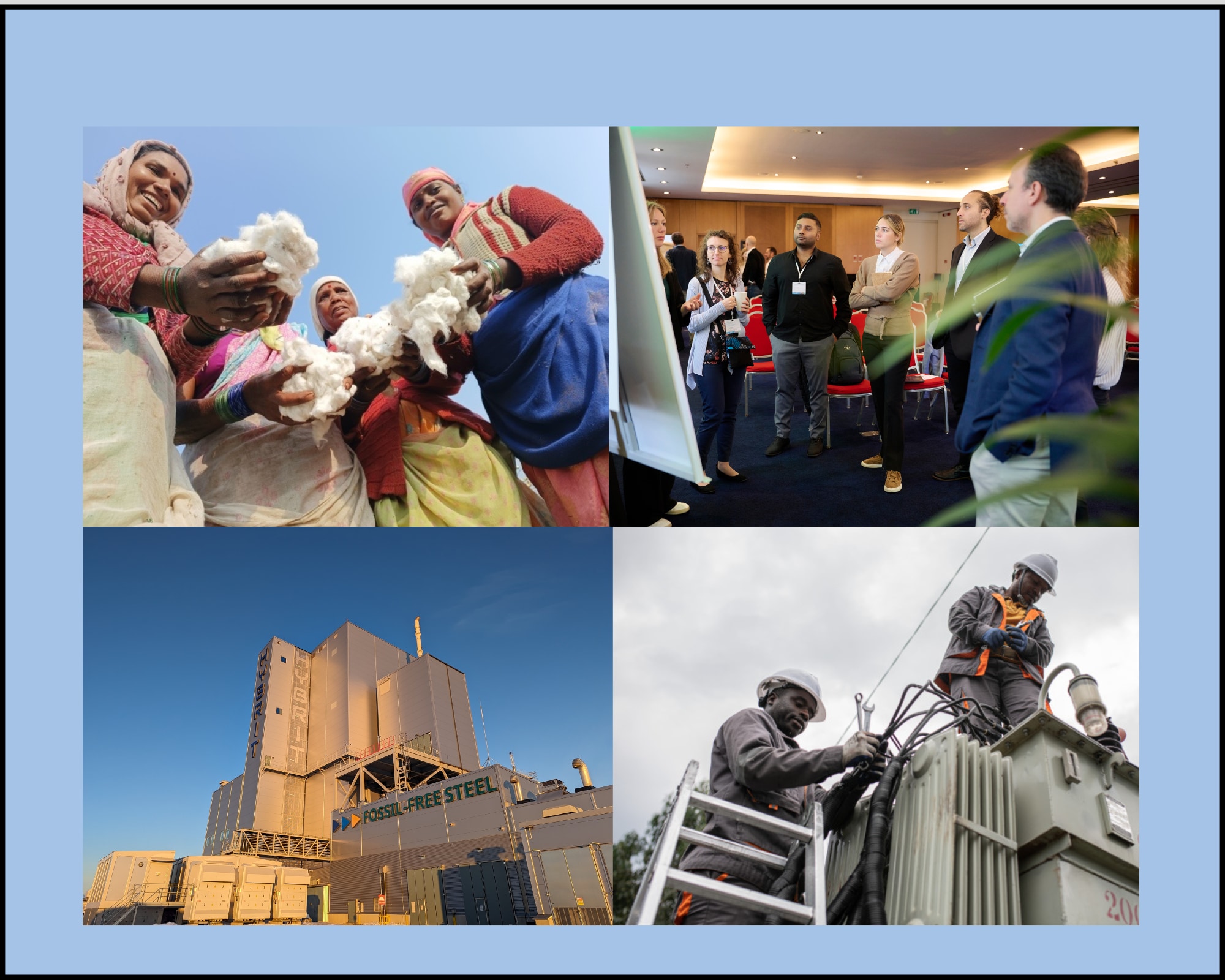
GAEA Award winners and finalists highlight shared insights into what drives effective climate collaboration Image: IDH; Together for Sustainability; HYBRIT; Global Energy Alliance for People and Planet
- Effective partnerships often begin with a focused group of aligned actors and build on pre-existing networks or platforms.
- Successful climate collaborations have clear governance structures, defined roles and inclusive decision-making processes.
- Organizations should design for scalability from the outset – partnerships must be structured to grow across regions, sectors and funding models.
The link between climate change and widespread environmental and economic disruption is widely accepted. From collapsing ecosystems to increasingly frequent natural disasters, the ripple effects are destabilizing global supply chains, threatening food security and deepening inequalities, making the consequences harder to ignore.
At the same time, investing in climate and nature solutions presents a powerful opportunity: in addition to the intrinsic value of restoring and protecting nature, it also boosts gross domestic product, creates jobs, strengthens industries and enhances long-term resilience.
The scale and urgency of the challenge demand a new approach: one rooted in collaboration. Whether restoring degraded landscapes or expanding access to clean energy, the solutions we need require deep, cross-sector coordination that spans governments, companies, civil society and funders.
A new white paper, Making Collaboration Work for Climate and Nature: Practical Insights from GAEA Award-winners, developed by the World Economic Forum’s GAEA (Giving to Amplify Earth Action) Awards team in partnership with global consulting firm Kearney, explores what successful collaboration looks like in action.
Drawing on interviews with awardees, finalists and expert stakeholders, it distils three key lessons for building effective, resilient and scalable partnerships.
3 key principles for effective climate collaboration
1. Start small and build from what works
Successful partnerships often begin modestly – with a focused group of aligned actors or they build on existing platforms. Starting with trusted relationships accelerates decision-making, reduces early complexity and increases traction.
Consider Built by Nature, a GAEA Award winner working to scale sustainable timber in the built environment. The network was founded on existing ties across real estate actors, financial institutions and technical experts. This alignment has allowed it to move quickly and create immediate value.
“The built environment is notoriously fragmented. Creating multi-stakeholder local networks helps to break these silos down, so that everyone can understand the opportunities and challenges from the perspective of others in the value chain,” says Paul King, CEO of Built by Nature.
Together for Sustainability (TfS), a GAEA Awards finalist, also exemplifies this. It scaled from a small group of founding partners to a network of over 50 chemical companies and their suppliers.
Sectors already rich with trade associations, industry groups and philanthropic platforms don’t need to start from scratch. New initiatives can tap into these structures to co-create solutions, share knowledge and scale faster.
2. Centre governance, impact measurement and learning
Successful partnerships do not leave structure to chance – they invest in clear governance and thoughtful measurement. This includes defining roles, enabling inclusive decision-making and establishing mechanisms for accountability and learning.
TfS, as an alliance of major chemical companies, works to harmonize sustainability standards across the sector, using clear governance and standardized tools to drive data sharing across an ordinarily competitive landscape.
“Collaborative innovation among competitors poses unique challenges,” says Gabriele Unger, the general manager for TfS.
“TfS’s approach is phased and pragmatic, supported by clear rules of engagement. This has allowed TfS to create a shared infrastructure which includes solutions such as the Product Carbon Footprint (PCF) Guideline and the PCF Data Exchange solution while allowing members to implement it at their own pace.”
The Global Energy Alliance for People and Planet (GEAPP), another GAEA Awards winner, is a platform that brings together development banks, philanthropies, governments and local actors to expand access to clean energy in emerging markets.
This alliance fosters trust by prioritizing inclusive decision-making and utilizes structured monitoring, evaluation and learning tools, such as its “Partnership Health Check,” to track collaboration quality and impact.
“GEAPP has extensive lived experience working on the ground with varied actors across sectors – from local governments to development banks and the private sector,” explains Agnes Dasewicz, chief investment and programmes officer of GEAPP.
“We turn that experience into shared learning and use it to build Alliances that bring together actors who don’t often work together, helping deliver systemic impact at speed and scale across projects and borders.”
3. Design for scale from the start
To achieve long-term systems change, successful partnerships embed scalability into their DNA from the outset. That means designing governance, data-sharing mechanisms and decision-making processes that are flexible enough to grow across geographies, stakeholder groups and financing models.
Take Built by Nature, for instance, which exemplifies this by creating a governance structure adaptable to local contexts.
While the organization operates globally, its model empowers regional coalitions to tailor decisions to country-specific regulatory, cultural or supply chain realities, helping the initiative grow without compromising on coordination or ambition.
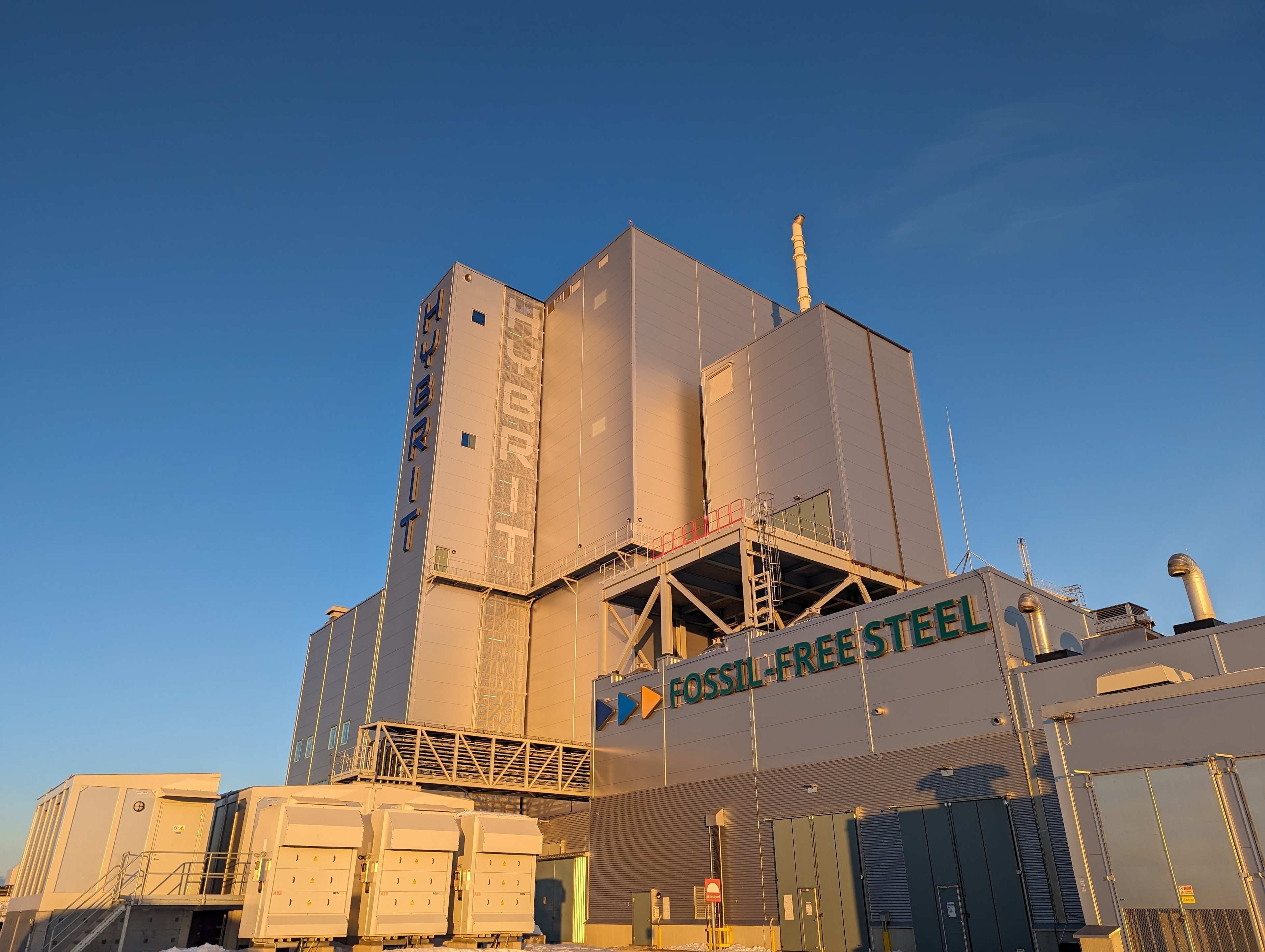
HYBRIT (another Awards winner), the partnership between Swedish steel and mining giants SSAB, LKAB and Vattenfall, has also scaled by design. The trio are collaborating to develop fossil-free steel production using hydrogen instead of coal.
However, rather than keeping the innovation proprietary, they are choosing to license the technology commercially, enabling adoption across the broader steel industry and maximizing the potential for emissions reduction.
For GEAPP, securing sufficient financing has always been essential to achieving scale. Through its Battery Energy Storage Systems Consortium, GEAPP is building a robust pipeline of investable battery energy storage projects in emerging markets.
By bringing in private capital early, GEAPP ensures that solutions aren’t only technically viable but also financially scalable and attractive to investors.
Roadmap for accelerating climate and nature partnerships
In uncertain times, effective partnerships have become one of our most powerful tools for systems change. Whether you’re a government, funder, business or NGO, these lessons from the GAEA Award winners offer a practical roadmap:
Start small, building on existing relationships and networks.Build in mechanisms for learning, measurement, trust and transparency.Design from day one for global relevance and financial viability.
Collaboration is not just a nice-to-have; it’s the engine of progress. And if we do it right, we’ll build a more resilient, inclusive and sustainable global economy.
Read the white paper to understand further how these learnings come to life.
Don't miss any update on this topic
Create a free account and access your personalized content collection with our latest publications and analyses.
License and Republishing
World Economic Forum articles may be republished in accordance with the Creative Commons Attribution-NonCommercial-NoDerivatives 4.0 International Public License, and in accordance with our Terms of Use.
The views expressed in this article are those of the author alone and not the World Economic Forum.
Stay up to date:
Positive Tipping Points
Related topics:


Forum Stories newsletter
Bringing you weekly curated insights and analysis on the global issues that matter.
More on Climate Action and Waste Reduction See all

Temidayo Akenroye and Hushneara Begum
April 10, 2026


