Weather events ‘causing food price spikes’, and other nature and climate news
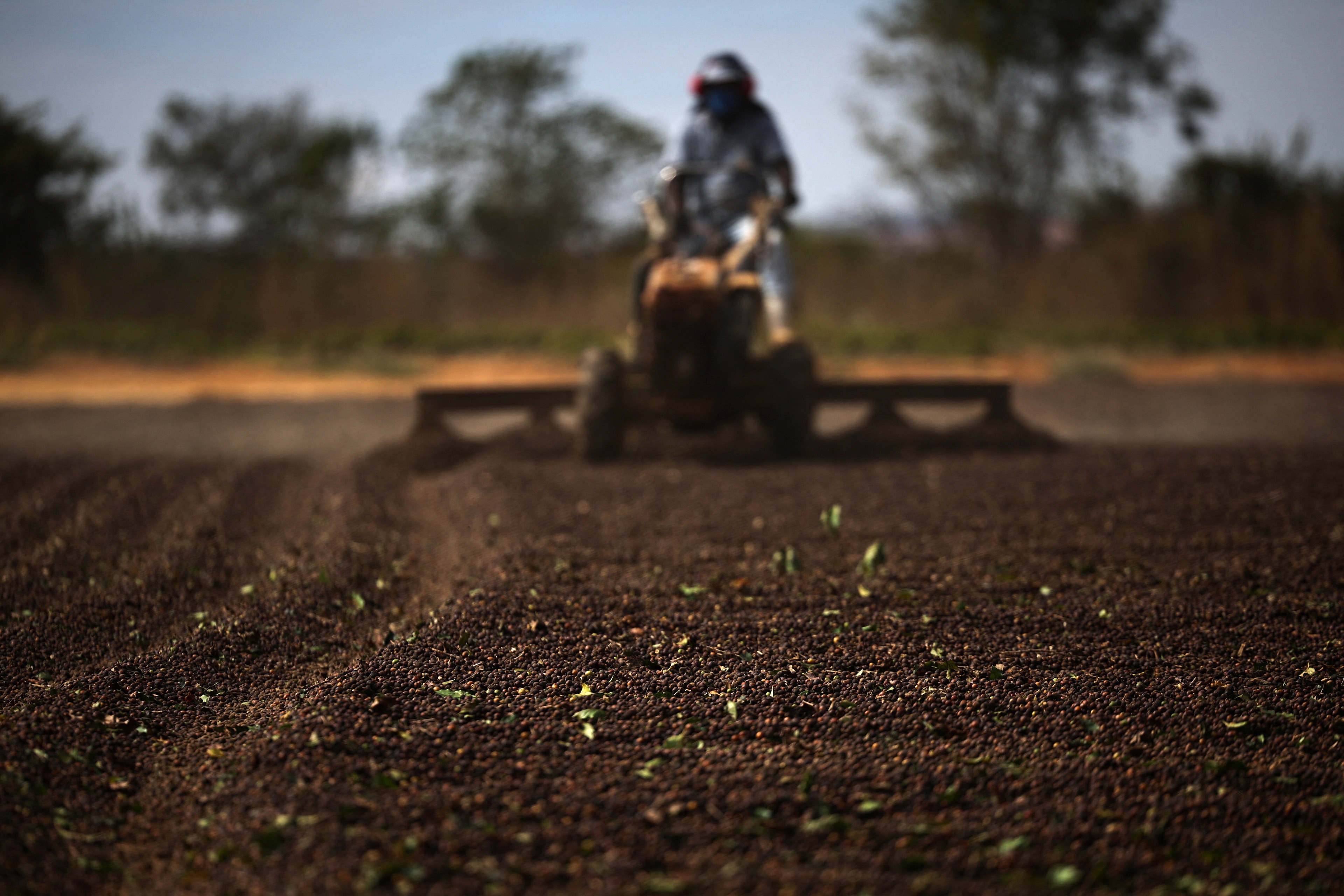
This round-up contains some of the key nature and climate news from the past week. Image: REUTERS/Adriano Machado
- This round-up contains some of the key nature and climate news from the past week.
- Top stories: Food price spikes linked to extreme climate events; Asia monsoon intensifies; UK scientists to analyze ancient Antarctic ice.
1. Food price spikes linked to extreme climate events
Countries across the globe are seeing food price shocks from climate extremes, a new study finds.
Researchers from the Barcelona Supercomputing Center and the European Central Bank traced price jumps to extreme weather linked to the climate crisis. They looked at 16 examples across 18 countries between 2022 and 2024 where price spikes were associated with extreme heat, drought or heavy rain events, including:
- UK potato prices rose 22% between January and February 2024 – after extreme winter rainfall, made 20% heavier and 10 times more likely by climate change, according to scientists.
- Vegetable prices in California and Arizona jumped 80% in November 2022 – following an extreme summer drought across the western United States.
- Global cocoa prices surged 280% in April 2024 – after a February heatwave in Ivory Coast and Ghana that scientists say was intensified by 4°C due to the climate crisis.
- Global coffee prices spiked 55% in August 2024 – linked to a 2023 drought in Brazil that scientists found was up to 30 times more likely because of climate change.
- South Korean cabbage prices increased by 70% in September 2024 – following a major heatwave the previous month.
The findings come just ahead of the United Nations Food Systems Summit Stocktake, where world leaders will discuss threats to the global food system.

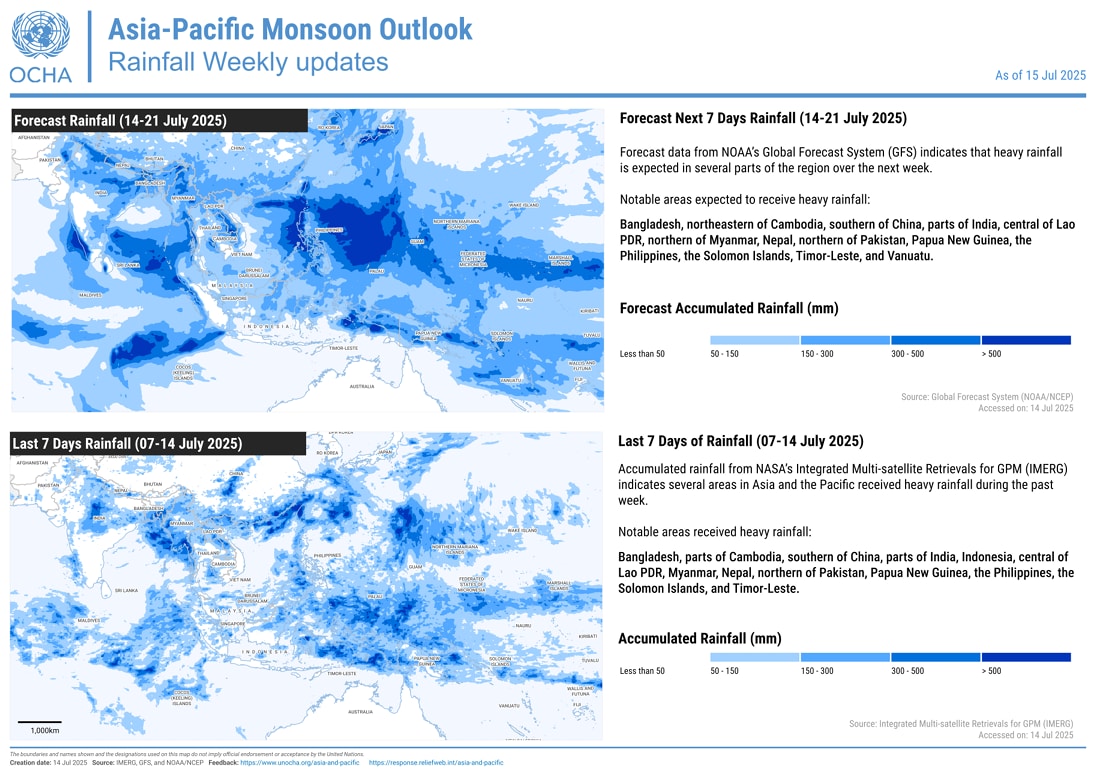
2. Monsoon rains intensify across Asia
Heavy rainfall is continuing to affect many parts of Asia and the Pacific.
In South Korea, torrential rain has led to landslides and floods that have killed at least 18 people and displaced many more. Some areas received up to 800mm of rain in less than five days and a number of places saw a record amount of rain in a single day.
Viet Nam has been bracing for Typhoon Wipha, which brought powerful winds and heavy rainfall, increasing the risk of flash floods and landslides.
The storm previously intensified monsoon rains in the Philippines, where it killed at least three people and forced the evacuation of thousands, and battered Hong Kong. Storms also drenched southern parts of the Chinese mainland, triggering warnings of flash floods and landslides, in Wipha’s wake.
In Pakistan, meanwhile, at least 178 people have been killed in recent weeks amid relentless monsoon rains.
Many places across Asia are no stranger to tropical storms and heavy rains during monsoon seasons. But scientists say such events are becoming more variable with extremes that could be more damaging.
3. News in brief: Other top nature and climate stories this week
Scientists in the UK are set to analyze cylindrical tubes of ancient ice retrieved from depths of up to 2,800 metres in Antarctica. The ice could be more than 1.5 million years old, and it is hoped it will contain vital information about Earth’s climate.
Greece has revealed the boundaries for two planned marine parks in the Ionian and Aegean seas that it wants to establish to protect seabirds, sea mammals and turtles.
The Global Environment Facility – the world’s oldest climate fund – is planning to create wildlife conservation bonds for every country in Africa to save endangered species and ecosystems. Such bonds provide low-cost funding in return for cutting poaching or other measures.
Environmental groups have voiced concerns over the European Commission's proposal for a new long-term European Union (EU) budget, which would merge existing climate and biodiversity budgets, risking a decrease in overall funding for these areas. The Commission says its redesign of the budget will enhance the EU's capacity to address challenges in numerous areas, including the climate.
Governments should consider taxing artificial intelligence and cryptocurrencies to create funds to help address the climate crisis, Laurence Tubiana, one of the architects of the Paris agreement, has said.
How the Forum helps leaders align climate action with nature-positive growth
4. More on the nature and climate crisis from Forum Stories
Artificial intelligence can be used to create convincing fake video and audio content, and this could affect climate action monitoring if deepfake greenwashing is used to falsify sustainability achievements. Strong, forward-looking AI regulations will help to limit the threat.
The methane-tracking satellite MethaneSAT was launched in 2024 to measure climate pollution, track progress and hold countries and companies accountable for cutting it. The project took years to develop and required a huge investment to build and launch, but the satellite recently went dark, permanently losing communication with controllers. Was it worth it? “Emphatically, yes”, says the president of the organization that developed it.
The shipping sector is shifting to sustainable fuels, but it’s a slow process. These two start-ups are developing alternative solutions for slashing emissions using simple chemistry and low-cost materials.
License and Republishing
World Economic Forum articles may be republished in accordance with the Creative Commons Attribution-NonCommercial-NoDerivatives 4.0 International Public License, and in accordance with our Terms of Use.
The views expressed in this article are those of the author alone and not the World Economic Forum.

Forum Stories newsletter
Bringing you weekly curated insights and analysis on the global issues that matter.
More on Climate Action and Waste Reduction See all

Moattar Samim
February 21, 2026


