Why AI fails without streamlined processes - and 3 ways to unlock real value
Don't put the AI horse before the cart of business processes. Image: Getty Images/iStockphoto
- Many AI initiatives are doomed to failure because the underlying business processes have not been optimized to leverage their potential.
- Implementing AI is most effective within a culture of continuous improvement that enhances human capabilities.
- Following a three-phase plan for progressive introduction of the technology creates maximum value.
In the global race to implement artificial intelligence, many organizations are inadvertently putting the technological cart before the process horse.
A new Kaizen Institute poll reveals that 55% of companies cite outdated systems and processes as their biggest hurdle to AI implementation – yet a significant number continue to focus primarily on the technology itself, rather than the underlying operations it will automate.
This disconnect explains why, despite massive investments, many AI initiatives fail to deliver meaningful returns. The solution? An improvement-first approach that eliminates waste and optimizes processes before applying AI – creating a robust foundation where technology can truly thrive.
AI investment without optimization is a recipe for failure
In 2023, McKinsey surveyed executives about digital transformation and found that only 30% reported a significant bottom-line impact. The primary reason wasn't technology limitations, but rather the failure to redesign underlying processes before digitizing them.
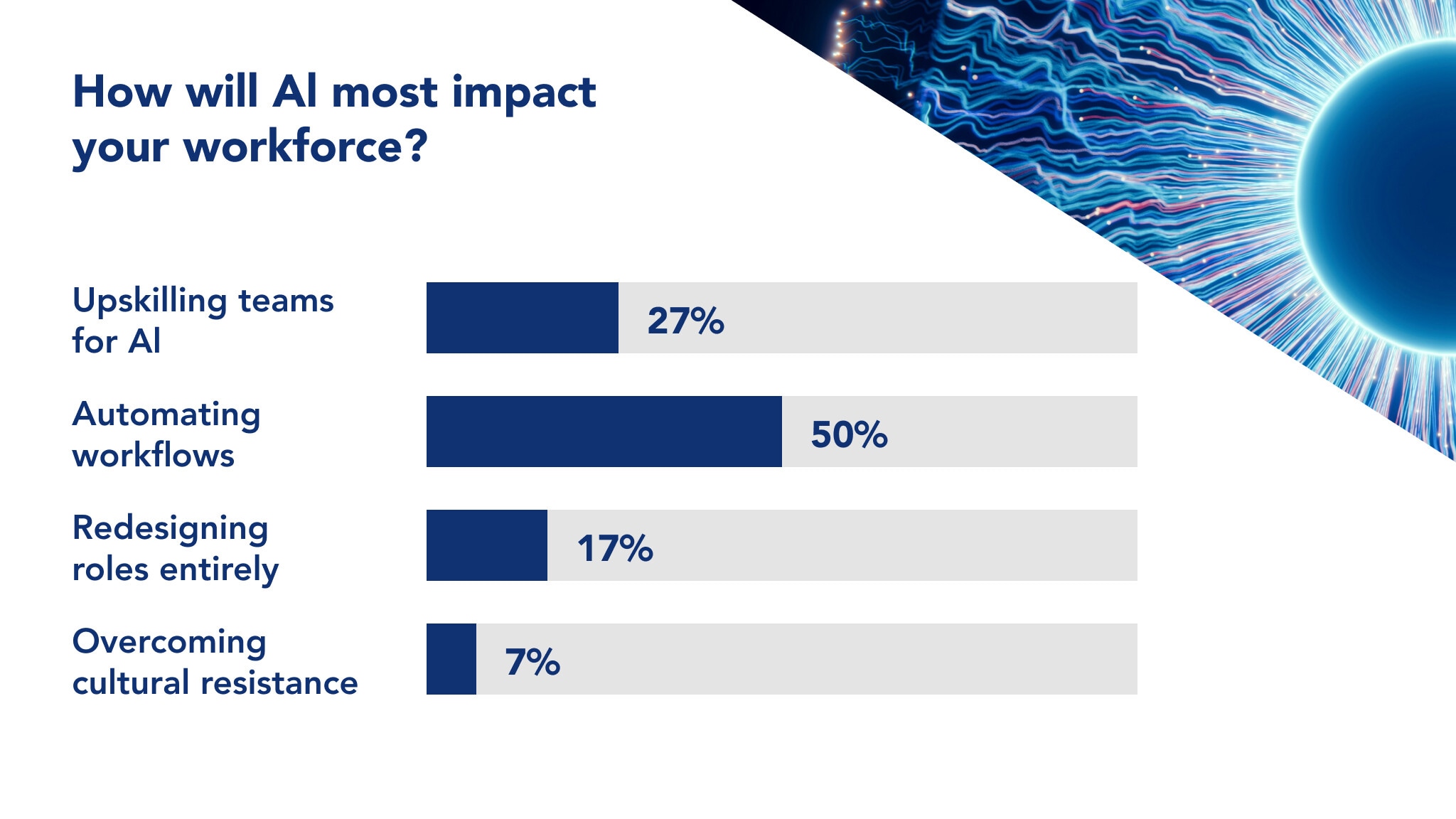
A recent poll of 83 business leaders, conducted by the Kaizen Institute, reinforces this finding. While 50% identified automation as AI's biggest workforce impact, more than half acknowledged their organizations lacked the operational foundation needed for successful implementation. Data from this poll also shows predictive maintenance (48%) and demand forecasting (23%) are top AI investment priorities, highlighting the critical need for effective integration.
The true power of AI emerges when it is integrated into a culture of continuous improvement. Rather than replacing human ingenuity, AI acts as a powerful enabler, enhancing our ability to identify, analyze and act on improvement opportunities. This symbiotic relationship transforms data into actionable insights, leading to significant operational excellence.
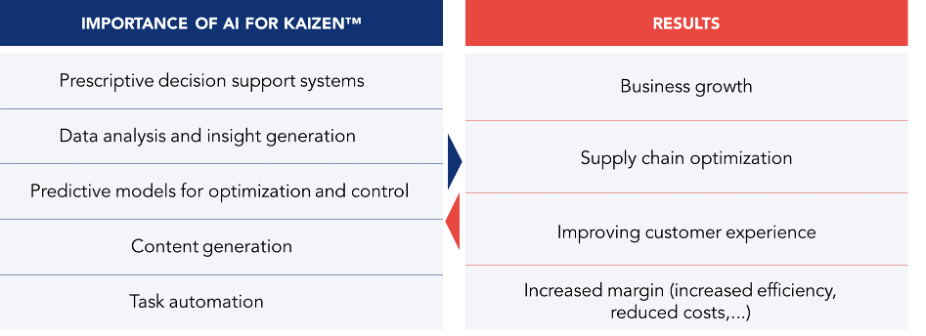
For instance, AI can provide prescriptive decision support systems, guiding teams to optimal actions. It excels at data analysis and insight generation, uncovering patterns that humans might miss. Predictive models for optimization and control become more accurate with clean, structured data. AI can also streamline content generation for reports and automate routine tasks, freeing up human capacity for more strategic, value-adding activities.
The ultimate results are tangible: business growth, optimized supply chains, improved customer experiences, and increased margins through enhanced efficiency and reduced costs.
The three-phase transformation framework
The most successful companies follow a structured approach that combines Lean principles with progressive AI adoption:
Phase 1: Foundation – mapping and optimizing value streams
Before investing in AI, high-performing organizations first map their value streams end-to-end. This process reveals where value is created and where bottlenecks occur. For instance, a UK company in the process industry, which had previously relied on capital investments for improvements, applied Value Stream Analysis to its complex operations. By identifying and prioritizing opportunities, the company achieved annual savings of £3.2 million (about $4.1 million), reduced planned stoppages by 24% and cut energy consumption by 24% – all by optimizing existing processes before introducing new technology.
From our experience, value stream mapping creates a shared understanding across departments. When people visualize the entire process together, silos break down and improvement opportunities become obvious.
Phase 2: Integration – targeted AI implementation
Once processes are streamlined, organizations can strategically introduce AI where it will create maximum value. The key is starting with focused applications that deliver quick wins rather than attempting organization-wide implementation.
In the automotive sector, for example, a supplier can first standardize its maintenance procedures and data collection methods. With this clean data foundation, a targeted AI application for predictive maintenance can analyze real-time operational data from equipment sensors. This approach allows the company to identify potential failures before they lead to unexpected downtimes, significantly improving equipment reliability and ensuring continuous, efficient production.
Beyond predictive maintenance, AI-powered business operations can manifest in various ways:
- Enhanced demand forecasting: AI algorithms analyze historical sales data, market trends and external factors (like weather or economic indicators) to provide highly accurate demand predictions, optimizing inventory and production.
- Optimized quality control: AI vision systems can detect defects on production lines with greater speed and accuracy than human inspection, reducing waste and improving product consistency.
- Streamlined logistics: AI can optimize routing, scheduling and warehouse operations, leading to faster delivery times and reduced transportation costs.
- Personalized customer experiences: AI-driven analytics can segment customers and personalize interactions, improving satisfaction and loyalty.
Companies that succeed with AI start small and prove value. They focus on solving specific problems rather than implementing technology for its own sake.
Phase 3: Scaling – building an AI-enabled learning organization
After establishing proof points, organizations can expand their AI footprint while maintaining a continuous improvement mindset. This phase is about scaling what works while building organizational knowledge.
A global logistics company established digital knowledge-sharing mechanisms that allowed successful AI implementations from one distribution centre to be quickly adapted and deployed across their network. This approach accelerated adoption while ensuring local teams could customize solutions for their specific needs.
How the Forum helps leaders make sense of AI and collaborate on responsible innovation
The combined power of Kaizen and AI
Organizations that follow the Kaizen approach – rooted in the 5S principles – consistently outperform those that implement AI without process optimization first. The ultimate art of combining Kaizen with AI is empowering people to drive change from within.
The companies seeing the greatest AI impact are those with a continuous improvement culture. They use technology to augment human capabilities rather than as a substitute for sound operational design.
Don't miss any update on this topic
Create a free account and access your personalized content collection with our latest publications and analyses.
License and Republishing
World Economic Forum articles may be republished in accordance with the Creative Commons Attribution-NonCommercial-NoDerivatives 4.0 International Public License, and in accordance with our Terms of Use.
The views expressed in this article are those of the author alone and not the World Economic Forum.
Stay up to date:
Artificial Intelligence


Forum Stories newsletter
Bringing you weekly curated insights and analysis on the global issues that matter.
More on Emerging TechnologiesSee all

Markus Kirchschlager and Benedikt Gieger
March 20, 2026


