What climate science can teach companies about resilience
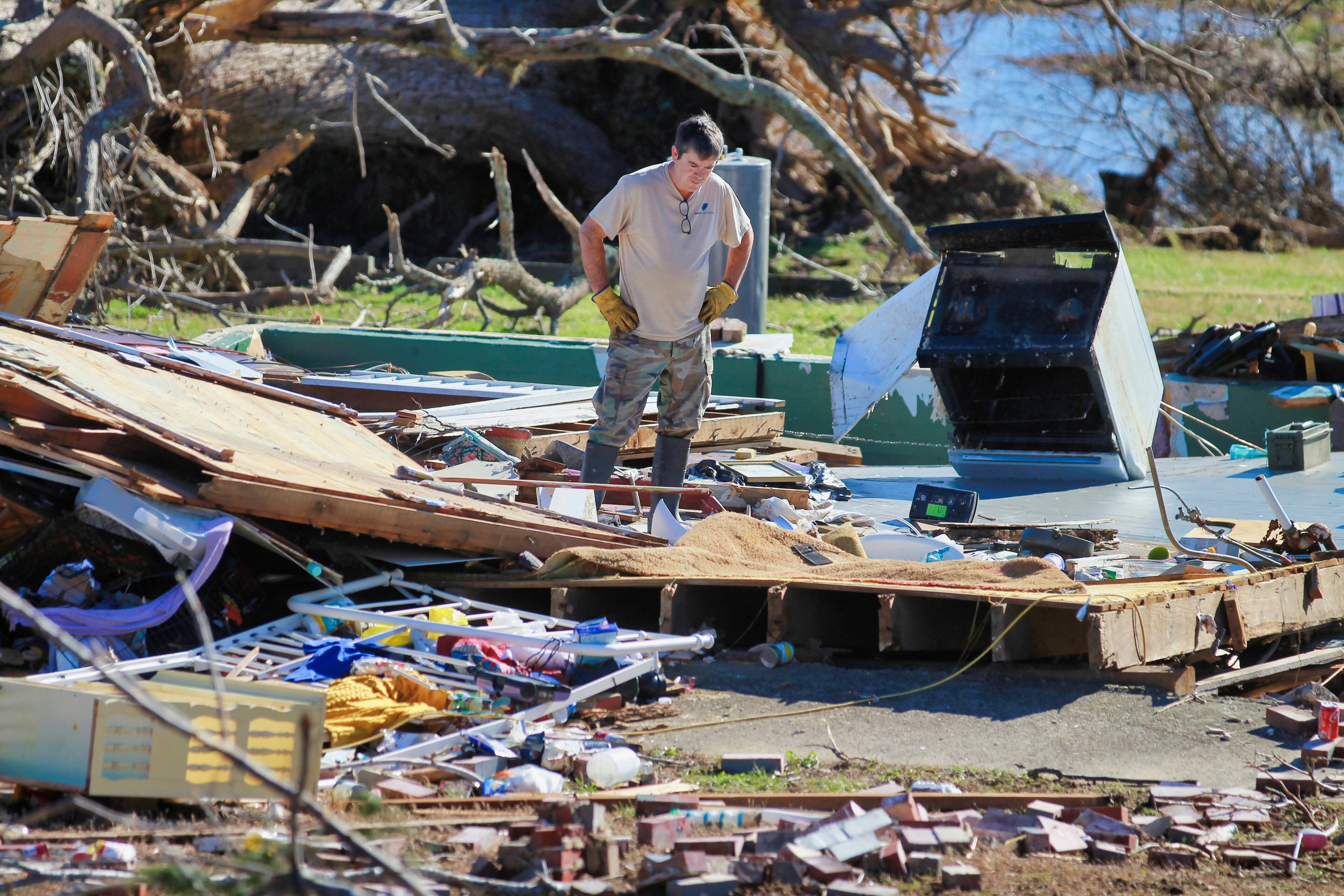
Cambridge Shores, Kentucky, USA. A man surveys property damage after a tornado. Climate science can help businesses create a more resilient and sustainable economy. Image: Unsplash/Chandler Cruttenden
Emily Bayley
Head, Private Sector Engagement, Environmental, Social and Governance Initiative, World Economic Forum- Some estimates suggest climate change has cost the global economy more than $2 trillion over the decade to 2024.
- Integrating climate science into business strategy can create a more resilient and sustainable global economy.
- Policy support and input from climate science researchers and civil society representatives will ensure the profit motive doesn’t weaken wider efforts to limit global warming.
Global temperatures rose 1.5 degrees Celsius above pre-industrial levels last year, making 2024 the warmest on record. This breach was temporary, but there is an 80% chance it will happen again in the next five years, according to the World Meteorological Organization.
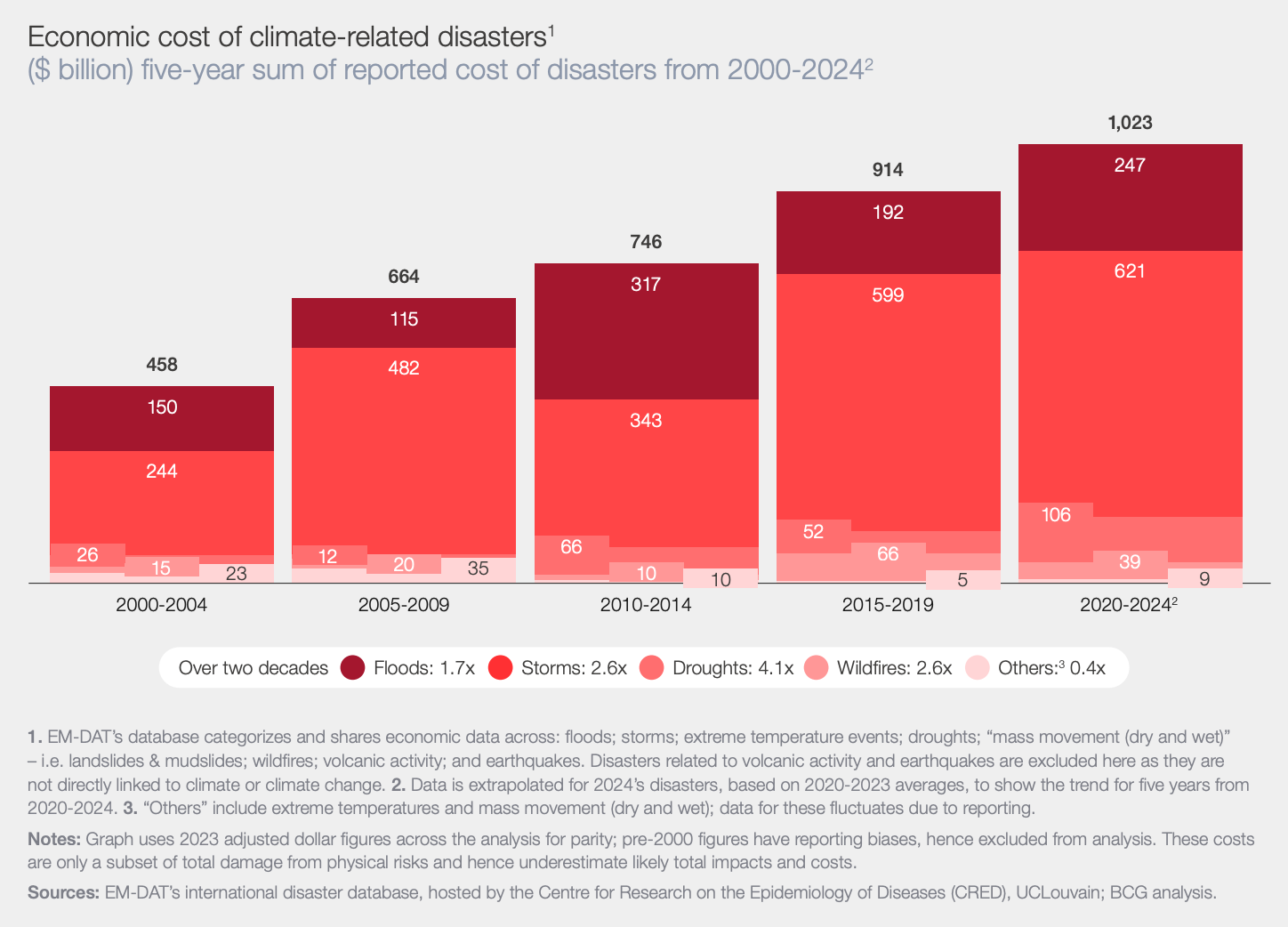
The costs of climate-related damage have risen from around $450 billion between 2000 and 2004, to more than $1 trillion 20 years later, according to a World Economic Forum report The Cost of Inaction. Significant action is sorely needed to prevent more lives and livelihoods from being lost due to climate change.
Geopolitical tension and a changing political picture have increased uncertainty for businesses trying to manage climate risk. But on a recent episode of Radio Davos, How climate science can save the planet while strengthening the economy, experts discussed how integrating climate science into strategic decision-making could help to strengthen companies, industries and the economy – creating a more resilient and sustainable world.
Climate science status check
Just like the effects of gravity are an accepted fact, it has been “unequivocally established” that greenhouse gasses cause global warming, which creates climate change and triggers extreme weather events as average temperatures climb, Professor Johan Rockström, Director of the Potsdam Institute for Climate Impact Research, said on the Radio Davos episode.
Climate change “fundamentally undermines what we call life support for humanity, or the basis for the global economy,” Rockström continued. “Namely, the stability of the environmental systems that we all depend on – everything from sea levels to forest systems to soils.” Climate-related extreme weather events have cost the global economy more than $2 trillion over the decade to 2024, according to the International Chamber of Commerce.
And an acceleration of global warming in recent years could cause such costs to increase. “We're at a point where there's only going to be an overshoot,” said Sumant Sinha, Chairman and CEO of Indian renewable energy company ReNew, on the same episode. “I don't know whether we're ever going to be able to get back to where we need to get to given how fragmented the geopolitical situation is right now.”
But while some businesses and entire industries have continued to address climate change in recent years, policy – once a significant driver of businesses’ sustainability strategies – is now at risk of falling behind. This is happening at the individual government level, but also due to a move away from multilateralism.
“What we're seeing at the global level [is] ambiguity in the policy space and [. . .] a retreat on ambitious decarbonization policies, if you will – at least in certain parts of the world,” Pim Valdre, Head, Climate and Nature Agenda at the World Economic Forum, said during the episode. “But at the same time, we're seeing the increased physical impact of climate and that's hitting the real economy. It's hitting food price inflation. It's hitting insurance premium prices.”
Valdre went on to list more effects – from destroying infrastructure and disrupting value chains, to impacting businesses and the communities that rely on a stable and liveable climate for their livelihoods.
Climate science as a decision-making tool
In this environment, climate science is like “a piece of insider information”, according to Rockström. Boards can use it to become more competitive “on pure market parameters, but also in terms of protecting the value chains or the companies against extreme events”, he explained.
This would help CEOs future-proof their businesses, Sinha agreed, adding: “Climate change is going to impact their supply chains. It's going to affect their production facilities. It’s going to impact customer behaviour at some point in the future. And there are going to be serious financial consequences, which obviously every CEO is tasked with protecting at the company level.”
Sinha warned against focusing entirely on profit maximisation and excluding carbon emissions and climate change from the equation, however. This would risk weakening the wider effort to reduce emissions and limit global warming.
Moving forward with climate science
While businesses “stepped on board in a remarkable way” when climate-focussed policies proliferated globally following the 2015 Paris Agreement, many industries are now struggling to maintain this momentum, Rockström said. This is often because of a lack of new policies to support further development. A surge in electric vehicle manufacturing, for example, has been stymied by a lack of charging infrastructure in some countries. “Suddenly you have a mismatch between policy [...] versus industry innovation and scalability,” he explained.
Green hydrogen is another example of a new energy solution that has so far failed to fulfil its potential as a renewable fuel for industries like shipping and aviation, according to Sinha. “The cost was high [. . .] So, what we really required was either mandates on companies to shift to green hydrogen or subsidies to help them pay for the cost of green hydrogen,” he explained. “A lot of the optimism around green hydrogen being the next big thing is falling behind because policies have not kept up support of moving in that direction.”
The Radio Davos interviewees believe one solution would be to transition the Conference of Parties (COP) process – the international climate summits attended by countries that are party to the United Nations Framework Convention on Climate Change (UNFCCC) – into “delivery mode”, with future meetings held to report on progress rather than negotiate pledges. Ideally, smaller and more frequent working sessions would integrate government, business, research and civil society representatives, using majority rather than consensus decision-making.
Speaking after the podcast, Valdre pointed out that the COP process will continue to play an important role in ensuring ambition and action on climate change. “Climate change is a global challenge and must be solved through multilateral negotiations alongside individual country-level ambition through Nationally Determined Contributions,” she added.
“Businesses really do need to be part of this whole process,” Sinha said during the episode. “Businesses have to carry out a lot of these actions because they are responsible for a majority of the carbon emissions through their operations and supply chains.”
So, while policy is important, businesses must also incorporate climate risk into their strategic decision-making. After all, industry is set to continue to play a crucial role in addressing climate change.
Don't miss any update on this topic
Create a free account and access your personalized content collection with our latest publications and analyses.
License and Republishing
World Economic Forum articles may be republished in accordance with the Creative Commons Attribution-NonCommercial-NoDerivatives 4.0 International Public License, and in accordance with our Terms of Use.
The views expressed in this article are those of the author alone and not the World Economic Forum.
Stay up to date:
Climate and Health
Related topics:


Forum Stories newsletter
Bringing you weekly curated insights and analysis on the global issues that matter.
More on Climate Action and Waste Reduction See all

Lin O’Grady and Alice Charles
April 7, 2026


