Extreme wildfires are here to stay – fighting them requires a fundamental and structural shift
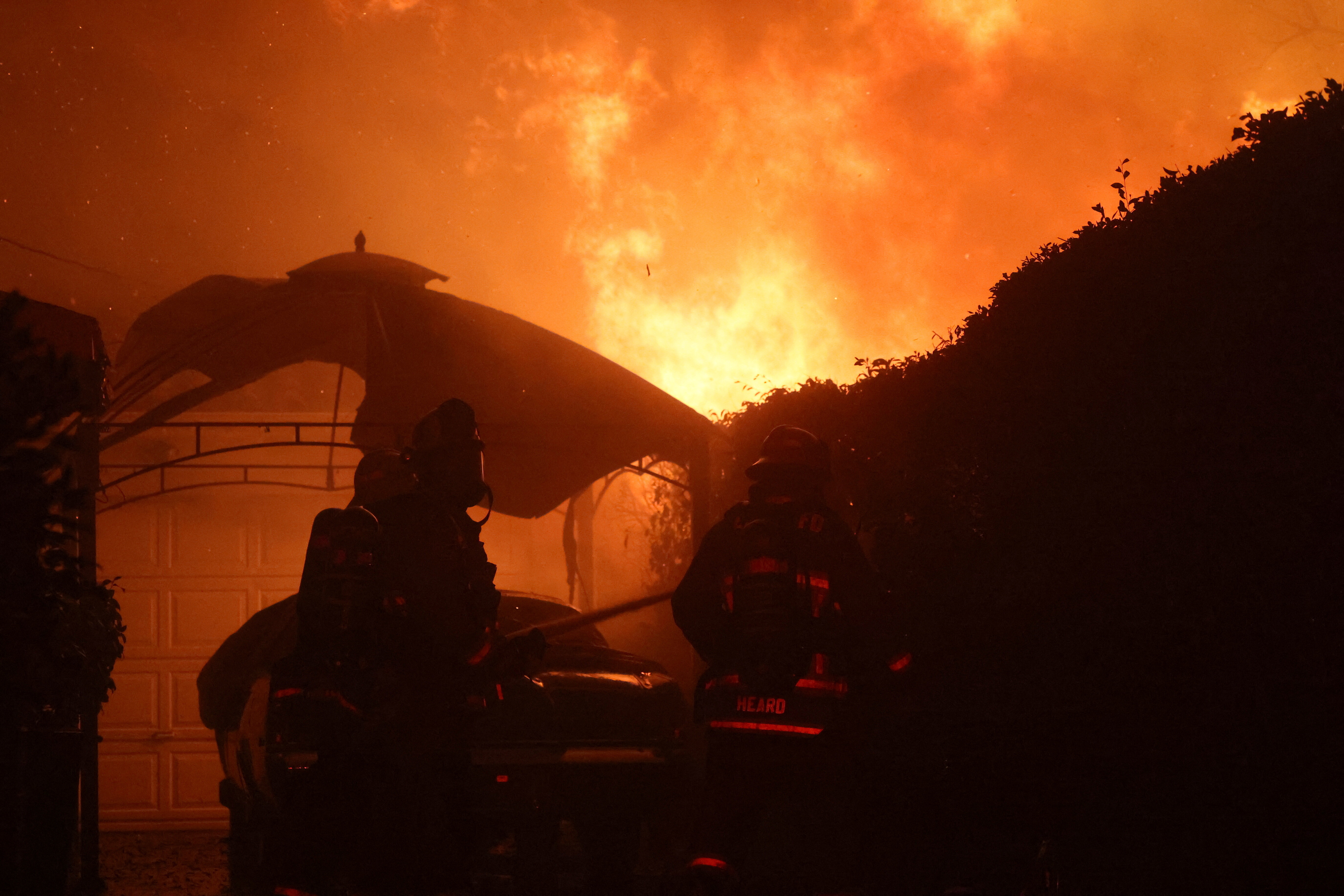
Human-caused climate change is increasing the likelihood of extreme climate-driven wildfires Image: REUTERS/Mario Anzuoni
- Human-caused climate change is increasing the likelihood of extreme climate-driven wildfires, globally.
- Rather than as isolated local emergencies, wildfires must be tackled as a global, structural threat, applying a five-pillar coordinated response strategy.
- Economic analyses can help implement effective fire management techniques centred around the five Rs of review and analysis, risk reduction, readiness, response to fires and recovery.
Recent research in the natural sciences journal Nature Communications confirmed an already well-held belief, that “human-caused climate change is raising the odds of extreme climate-driven fire years across forested regions of the globe.”
Fire has long played a natural role in shaping the world’s landscapes. In certain regions, fires are necessary and beneficial but not all fires are created equal.
As highlighted in a recent collection published on the World Economic Forum’s Strategic Intelligence platform, rising temperatures, lower humidity and prolonged drought have transformed fire into a destructive force.
These supercharged wildfires now rank among the greatest threats to forests worldwide. They threaten the stability of ecosystems and communities and increase net carbon emissions from forests and other ecosystems, long considered stable carbon vaults.
Transitioning from an 'emergency response' mode to building long-term resilience to wildfires will not be cheap but the cost of inaction is much higher.
”This pulse of emissions from natural systems threatens to fuel dangerous feedback loops that intensify global warming and set the stage for even more severe fires. In 2024 alone, 6.7 million hectares of tropical primary forest were lost to fire, emitting 3 billion tonnes of carbon dioxide – more than India’s total annual fossil fuel emissions.
Intensifying in frequency, scale and unpredictability, wildfires are already exposing more people to hazardous levels of smoke each year. According to a report from the Network for Greening the Financial System, annual global direct damages from these events reached $275 billion in 2022, more than doubling from the early 2000s.
Future projections paint an equally grim picture. The incidence of catastrophic wildfires is projected to surge by about 5% by 2030, a third by 2050 and over 50% by the end of the century. The social, economic and cultural implications are especially severe for Indigenous and traditional forest communities who are losing ancestral lands, homes and livelihoods.
Fortunately, world leaders are recognizing that existing fire and forest governance and response and recovery strategies are not meeting societal needs. While stopping deforestation must remain a priority, finding ways to manage fires must also be addressed.
5 pillars for sustainably managing wildfires
Instead of isolated local emergencies, we need to treat wildfires as a global, structural threat.
This requires a fundamentally new, multi-national and tightly-coordinated effort, resting on five key pillars:
1. Global fire intelligence and early-warning systems
Initiatives such as FireSat, a pioneering satellite constellation led by Environmental Defense Fund partner, the Earth Fire Alliance, could ensure that every fire, anywhere on Earth, is visible and understood in near real-time.
When fully operational, fire managers will have information at their fingertips to make optimal decisions to reduce unwanted destruction and encourage beneficial wildfire.
2. Precise science, modelling etc.
As fire regimes change, we must better understand their behaviour and impact across different ecosystems. This will require an increase in basic and applied research and development of tools and technologies to aid fire and land managers in decision-making.
3. Improved international cooperation and transparency
This includes exploring ways to account for fire emissions and total forest loss on countries’ climate ledgers in a supportive, non-punitive manner. What gets measured gets managed.
4. Building on existing knowledge
Research spanning over two decades in Western Australia demonstrated significantly improved fire patterns on Aboriginal-owned land under the leadership of traditional owner groups.
Platforms for cooperation, such as the FAO FireHub, offer avenues for integrating traditional and Indigenous knowledge into other management systems and further building local government and tribal capacities for Integrated Fire Management.
5. Scaling up access to finance
Transitioning from an “emergency response” mode to building long-term resilience to wildfires will not be cheap but the cost of inaction is much higher.
We need robust economic analyses that can inform the implementation of fire management techniques applying the “five Rs”:
- Review and analysis: Data collection and analysis on the environmental and social context of fire, changes over time and opportunities for intervention.
- Risk reduction: Proactive actions to reduce the probability, severity and impact of undesired wildfires.
- Readiness: Preparation for unplanned fire events, both within communities and government agencies.
- Response to fires: Coordinated and effective management of fires when they occur.
- Recovery: Remediation of human and ecological values post-wildfire using adaptive strategies.
Additional financing for wildfire management could be earmarked under mechanisms such as the Green Climate Fund and the Global Environment Facility, leveraging existing and emerging climate and forest financing instruments. We will also develop ways to attract private investment through tools such as parametric insurance and risk pooling.
As we approach the 2025 UN Climate Conference (COP30), a pivotal moment to align global action for safeguarding forests, countries must adopt a holistic, ecosystem-specific and inclusive approach to fire resilience. And it should come alongside a coordinated model that blends high-tech tools, Indigenous wisdom and long-term planning.
The World Economic Forum's Global Wildfire Leadership Network is bringing together innovators, industry leaders, and communities to accelerate action and investment in wildfire resilience, under the 1t.org Hub – a platform for the community striving to conserve, restore and grow a trillion trees by 2030. Get in touch to find out how to get involved: Natalie Cilem, Community Lead, Global Network for Wildfire Leadership, natalie.cilem@weforum.org.
Don't miss any update on this topic
Create a free account and access your personalized content collection with our latest publications and analyses.
License and Republishing
World Economic Forum articles may be republished in accordance with the Creative Commons Attribution-NonCommercial-NoDerivatives 4.0 International Public License, and in accordance with our Terms of Use.
The views expressed in this article are those of the author alone and not the World Economic Forum.
Stay up to date:
Wildfires
Related topics:


Forum Stories newsletter
Bringing you weekly curated insights and analysis on the global issues that matter.
More on Climate Action and Waste Reduction See all

Steve Rochlin and Judith Ketelslegers
March 26, 2026


