4 priorities for global leaders on the road to the 2026 UN Water Conference

The 2026 UN Water Conference is a chance to turn ambition into action. Image: Unsplash/Joseph Barrientos
Jean-Philippe Salcedo
Programme Lead, Economics of Freshwater and Ecosystems Services, World Economic Forum- Water is not only a victim of climate impacts but it is also a critical enabler for renewable energy, food security and industry.
- The 2026 UN Water Conference will be a pivotal implementation moment, focusing on mobilizing action and placing water on the global agenda.
- Four urgent priorities must shape the agenda for water around a shared framework, scaleable investment, basin-level initiatives and policy reform.
As Stockholm hosts World Water Week, leaders leave with an understanding that water is both on the frontlines of climate impacts and an essential solution vector. From enabling renewable energy systems and industrial processes to underpinning food production, water resilience is a lever for climate action and economic stability.
With just 15 months until the 2026 UN Water Conference, the world faces a critical opportunity: will this moment become a turning point, where bold public-private collaboration moves water from the margins of global agendas to their core?
The water risk era is already here
By 2030, global demand for water will outpace supply by 40%, according to the most prominent survey on water by the International Resource Panel in 2016. Nearly 4 billion people – half the global population – already experience severe water scarcity for at least one month each year and 44% of companies report substantial water-related challenges.
Pollution, rising demand and climate extremes are converging to escalate global water stress faster than our ability to respond. At the same time, the disruption of the global hydrological cycle is triggering unpredictable rainfall patterns, droughts and declining water quality, transforming water risk into a systemic threat and positioning water as a strategic entry point for resilience.
The World Economic Forum's 2025 Global Risks Report highlights the escalating threat of water-related environmental risks for the next decade. This inertia is dangerous but it is also a missed opportunity. As the Forum's 2025 Global Cooperation Barometer indicates, cooperation on climate and natural capital needs to improve significantly and rapidly.
From commitments to implementation
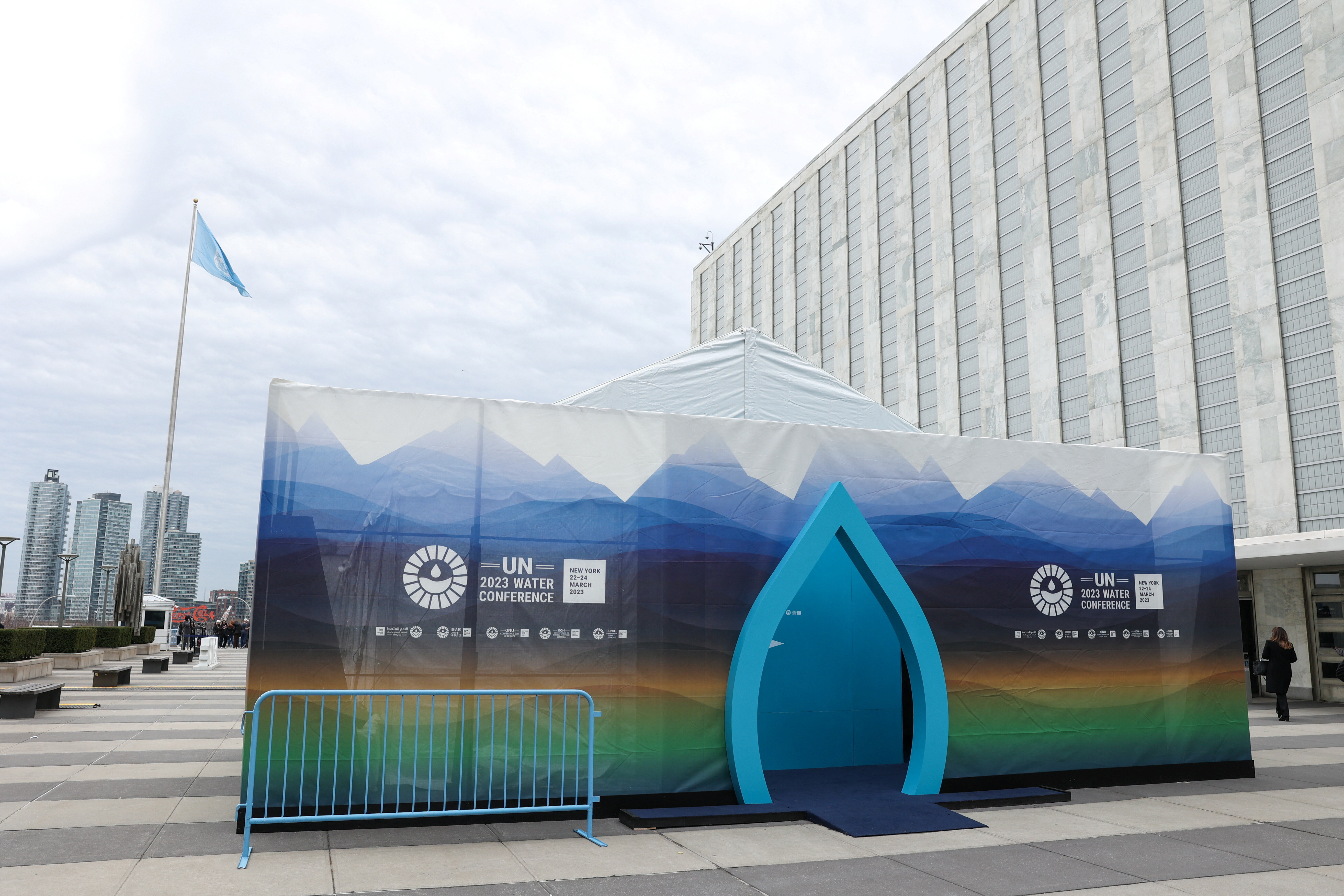
The 2023 UN Water Conference was a historic step in spotlighting water on the global stage. The 2026 and 2028 editions signal a longer-term institutionalization of water, which still lacks a dedicated global agreement akin to climate or biodiversity frameworks.
At the UN General Assembly preparatory meeting on 9 July 2025, member states unanimously endorsed six thematic areas for the 2026 Conference, signalling a shift from high-level commitments to implementation. One of those, “Investments for Water”, directly acknowledges the need to unlock capital, innovation and delivery mechanisms.
Crucially, unlike the plastics treaty negotiations (INC-5.2), which ended on 15 August 2025 with delegates failing to reach consensus, the UN Water Conference is not about negotiating a treaty but about implementation.
This provides a unique opportunity to turn ambition into action, free from procedural deadlock. It opens a vital window for global leaders to take concrete steps in preparation now. The recently published Water Futures Report outlines four practical, high-impact priorities to mobilize the private sector and public-private partnerships, which must shape the next phase of global collaboration on water:
1. Create a shared framework for valuing water and risk
We cannot manage what we don’t value and water is still undervalued across markets and systems. Despite its central role in nearly every industry and ecosystem, most financial and policy frameworks still fail to reflect water’s true worth.
From agriculture to semiconductors, value chains depend on reliable water. However, only 26% of Fortune Global 500 companies have freshwater consumption targets and less than 1% understand their nature dependencies, according to a forthcoming report from the Forum's Centre for Nature and Climate and consulting firm Oliver Wyman.
A global water valuation and risk framework – building on existing ones and aiming for wider recognition – could clarify investment, policy and supply chain decisions. Currently, no unified framework exists.
2. Unlock scaleable mechanisms for water investment
The World Bank has said that by 2030, the world will need $7 trillion by 2030 to finance global water infrastructure. Past multilateral conferences have generated big pledges but disbursement has lagged or mechanisms were not actionable for the private sector.
To close the gap, the focus must shift to identifying scaleable financial mechanisms, incubating new ones and aligning them with real-world delivery. A step change is needed to mobilize private sector investments and philanthropic financing to where they drive the greatest impact.
3. Scale what already works, especially at the basin level
Not every solution needs to be invented. Successful models and initiatives already exist, especially at watershed and river basin levels.
Local and regional efforts on restoration, replenishment and sustainable management show real impact but often remain isolated or underfunded.
To effectively scale these initiatives, it’s crucial to learn from existing processes to inform governance practices and frameworks, ensuring they create an enabling environment for basin-level partnerships.
Scaling these requires structured collaboration across public, private and community actors and rightsholders. What’s needed now is to replicate and scale successes and secure long-term financing and continuity.
4. Showcase policy success stories that help innovation scale
One of the biggest barriers to water innovation is not a lack of technology; it’s policy lag. Too many solutions remain stuck at the pilot stage or are unable to scale due to outdated regulations, fragmented governance or a lack of market access.
Countries that have bridged this gap – for example, Singapore’s integrated water reuse system or Rwanda’s national catchment management plans – show that enabling policy can unlock major impact. Sharing these examples can create templates for reform elsewhere.
As the world edges closer to the 2026 UN Water Conference, global attention must shift from ambition to action.
Milestone events, including the UN General Assembly in September, the Forum’s Annual Meeting in Davos, Switzerland, in January and regional ministerial summits, offer concrete opportunities for leaders to align on priorities, announce new initiatives and signal readiness.
It’s time to use the conference not just to reflect but to lean into water resilience as a defining pillar of future-proof economies.
Don't miss any update on this topic
Create a free account and access your personalized content collection with our latest publications and analyses.
License and Republishing
World Economic Forum articles may be republished in accordance with the Creative Commons Attribution-NonCommercial-NoDerivatives 4.0 International Public License, and in accordance with our Terms of Use.
The views expressed in this article are those of the author alone and not the World Economic Forum.
Stay up to date:
SDG 06: Clean Water and Sanitation


Forum Stories newsletter
Bringing you weekly curated insights and analysis on the global issues that matter.
More on Food, Water and Clean AirSee all

Michael Colarossi
April 7, 2026


