Five reasons why all nations need a space strategy
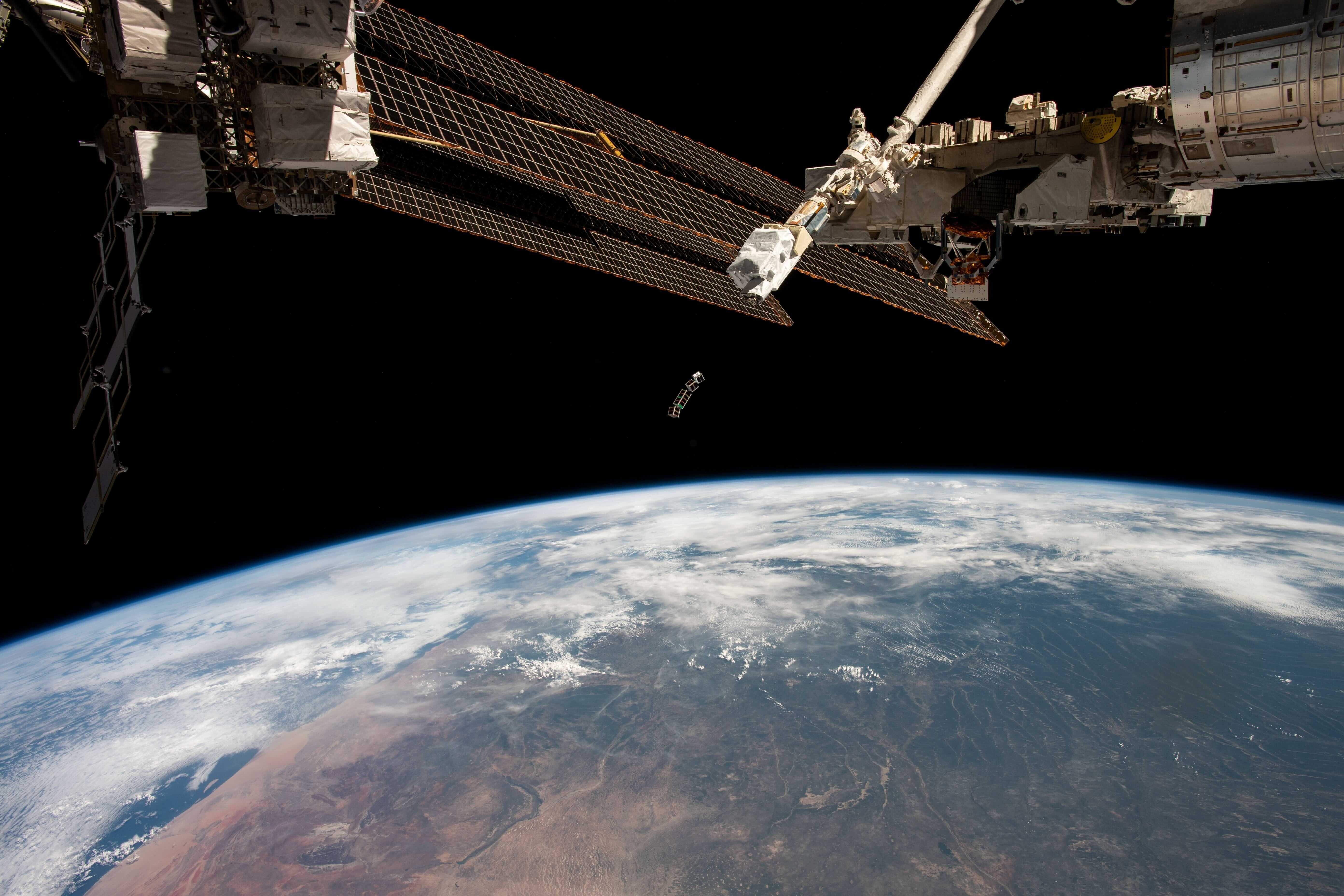
The National Space Strategy Toolkit is designed to support national actors in developing sustainable, efficient and focused space strategies. Image: JAXA/NASA
- Space is now infrastructure critical for growth, security and resilience.
- Space-based services are critical for supporting disaster management, agriculture, urban development and more.
- The World Economic Forum, in collaboration with PwC, is launching the National Space Strategy Toolkit, designed to help nations develop their national space strategy, optimize resources and build a resilient ecosystem.
As an essential enabler of economic growth, technological innovation and societal transformation, space is no longer optional, but a necessity for national actors. Over time, space has evolved from science fiction to infrastructure critical for growth, security and resilience. Space-based services, such as Earth Observation (EO), Positioning, Navigation and Timing (PNT) and satellite communications, are critical for supporting disaster management, agriculture, urban development and more.
Space has, for the past 50 years, been a force for good, supporting nations’ efforts through countless ways, such as nature and climate monitoring and connecting remote communities. The numerous benefits that space provides to all of society are the reason that the European Space Agency has been supporting the space programmes of member states in Europe and emerging spacefaring countries around the world.
”Over a decade ago, only a few dozen nations had active space programmes. Today, over 90 countries have launched satellites and 80 space agencies operate worldwide. With this growth, the question for governments can no longer be whether to engage in space activities, but how to do so in a manner that drives development and supports national objectives in the most cost-efficient way possible. As the means of accessing space become easier and more affordable, more national actors can utilize space capabilities than ever before.
Five reasons nations cannot overlook space
1. Space for sustainable development
According to the UN Office for Outer Space Affairs, nearly 40% of the 169 Sustainable Development Goal (SDG) targets are directly supported by space-based services. As global challenges intensify, integrating space into national SDG strategies becomes increasingly vital for timely, data-driven interventions and sustainable progress.
2. Efficient entry points
While space systems can be complex, the rise of space-based services offers more accessible technology adoption, without involvement in traditional, resource-intensive space activities. Therefore, focusing on targeted development of capabilities within the space technology stack enables the efficient use of resources to develop practical applications aligned with national needs.
3. Diplomacy beyond borders
In today’s fragmented geopolitical landscape, participating in the United Nations Committee on the Peaceful Uses of Outer Space (COPUOS) and similar forums are increasingly beneficial, offering a pathway to influence global governance, build strategic partnerships and elevate national prestige. Space diplomacy reinforces peaceful collaboration and shared responsibility in a domain that transcends borders.
4. Space as an economic engine
Private investment in space grew by 20% between 2023 and 2024, reaching €7 billion. Additionally, space activities generate substantial spillovers, where the development of space infrastructure can lead to 1.8 to 3.2 times additional spillover revenues and its exploitation can lead to 4 to 8 times additional spillover revenues in the economy.
5. Acceleration of global space activity
There are around 12,000 active satellites orbiting Earth, with more than 80% residing in Low Earth Orbit (LEO). In 2024, there were 259 launches, sending a total of 2,873 spacecraft into orbit, 70% of which were launched by commercial providers. With advancements in commercial space services and the decreasing costs of access to space, the benefits of space capabilities are no longer reserved for the wealthiest countries.
Many nations that are not legacy spacefaring nations find innovative ways to leverage space data in support of their country’s precise needs.
In Senegal, high-resolution satellite imagery was used to map flood-prone areas, supporting urban planning and enhancing disaster preparedness in vulnerable regions.
The Philippines launched its first dedicated internet satellite to support the Free Wi-Fi for All initiative, expanding affordable connectivity to underserved and remote communities.
In the Galápagos Islands, high-precision PNT data was used to accurately map an island and monitor the reintroduced Española Island tortoises, supporting the restoration of the ecological balance on the island.
These cases illustrate how the integration of space capabilities across diverse applications strengthens evidence-based decision-making, promotes resilience and supports inclusive development.
How is the sector evolving and what are the challenges?
With the development of the space ecosystem, the role for governments and space agencies has evolved with it. Historically, space agencies have focused on large-scale scientific missions and space exploration. However, developing a space programme no longer requires developing a satellite or rocket from scratch. Space agencies are adopting innovative approaches by strengthening international collaboration and fostering commercial space activities through public-private partnerships.
These newer strategies reflect a shift towards integrating space capabilities that deliver the greatest impact and serve broader national priorities.
The evolving space ecosystem is a dynamic network of science, industry, government and economic development. To ensure sustainable progress, scientific discoveries must inform space strategies, mission planning, policy and regulations.
”Nevertheless, building a sustainable space programme is not an easy feat. Nations face challenges, such as limited resources or shifting political priorities. Additionally, space offers immense opportunities and the sheer range of options can be overwhelming. From investing in upstream capabilities, including subsystems or satellite manufacturing, to developing downstream services, such as EO data analytics or location-based applications, deciding the way forward can pose a significant challenge. Without a clear national space strategy, nations risk fragmented investments, misaligned priorities and inefficient use of resources, which can hinder them from capturing the full benefits of space.
The National Space Strategy Toolkit
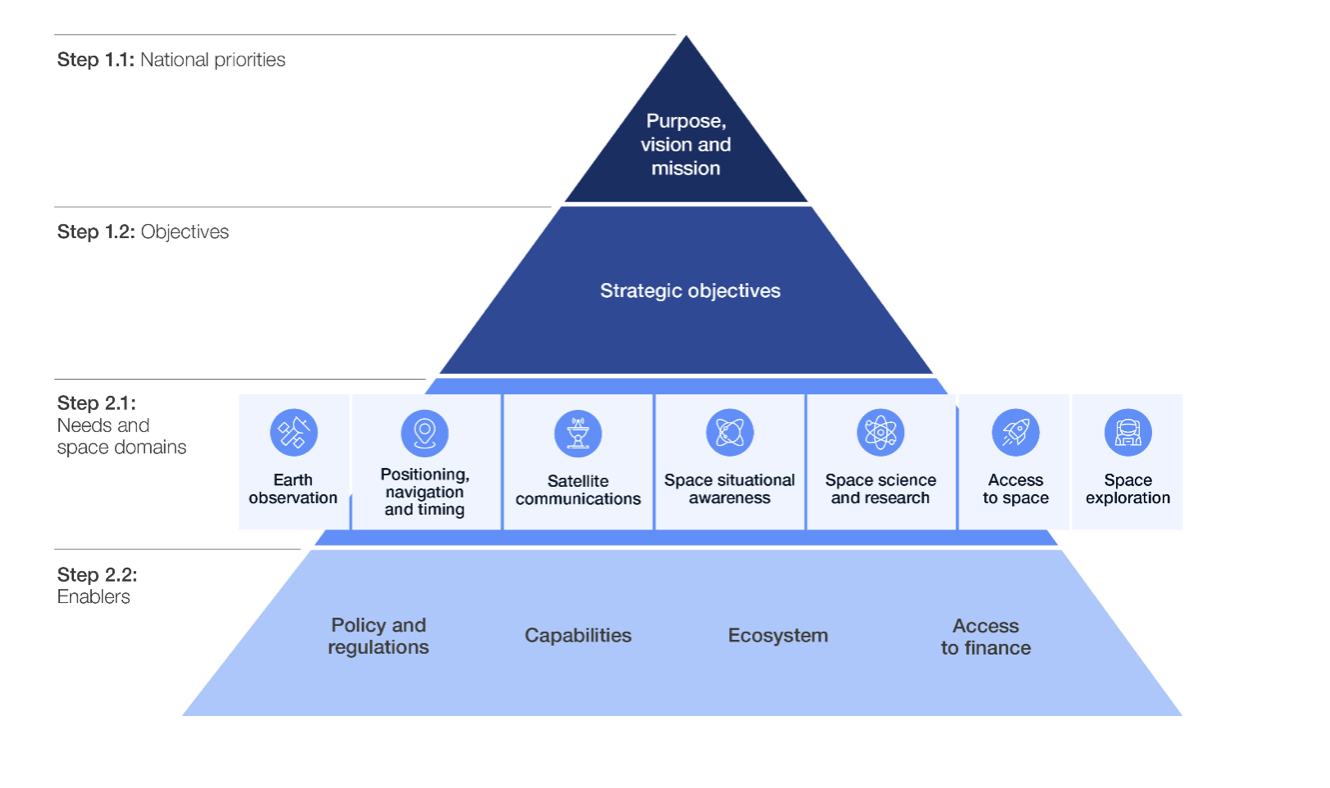
In light of this evolution, the World Economic Forum is launching the National Space Strategy Toolkit, developed in collaboration with PwC. The toolkit aims to help any nation develop or refine its national space strategy, optimize resource allocation, enhance coordination and build a resilient ecosystem through actionable recommendations.
National priorities serve as a roadmap for development and guide governmental efforts towards issues that most impact citizens' well-being. The toolkit supports nations in aligning their space strategy with their national priorities for lasting socio-economic impact. Drawing on a comprehensive analysis of global space strategies and best practices, the toolkit provides recommendations based on illustrative use cases, outlining the costs, time frame, considerations and prerequisites for each recommended action.
Why do nations need to act now?
Space is a critical driver of development, sustainability and resilience. Delaying action risks missing economic opportunities, as trillions of dollars in value are being generated across different sectors on Earth, from ridesharing to precision farming. Without investing in domestic space activities, nations risk falling behind in innovation and long-term reliance on external providers for critical services and data. Furthermore, global forums are currently deciding rules for orbital traffic, space resources and spectrum allocation that will impact present and future spacefaring nations. Without a seat at the table, nations risk having their interests sidelined. To maximize the benefits of space for their citizens, nations must become active space players.
Earth observation has the potential to add a cumulative $3.8 trillion to global GDP by 2030 and delivers a holistic view of complex system dynamics. For emerging economies, this represents a unique opportunity to leapfrog traditional development models by deploying data-driven, systemic solutions that align economic growth with environmental stewardship. By planning across decades to enact policies that outpace change, emerging economies can lay the groundwork for tomorrow’s champion economies.
”With the National Space Strategy Toolkit, nations have a practical guide to design strategies that align space with their national development agenda. For governments, the message is clear: to secure economic growth, sustainability and influence in the decades ahead, the time to act on space is today.
Don't miss any update on this topic
Create a free account and access your personalized content collection with our latest publications and analyses.
License and Republishing
World Economic Forum articles may be republished in accordance with the Creative Commons Attribution-NonCommercial-NoDerivatives 4.0 International Public License, and in accordance with our Terms of Use.
The views expressed in this article are those of the author alone and not the World Economic Forum.
Stay up to date:
Space


Forum Stories newsletter
Bringing you weekly curated insights and analysis on the global issues that matter.
More on Emerging TechnologiesSee all

Douglas Broom and Rebecca Geldard
February 10, 2026


