How China and South Korea are building social innovation ecosystems
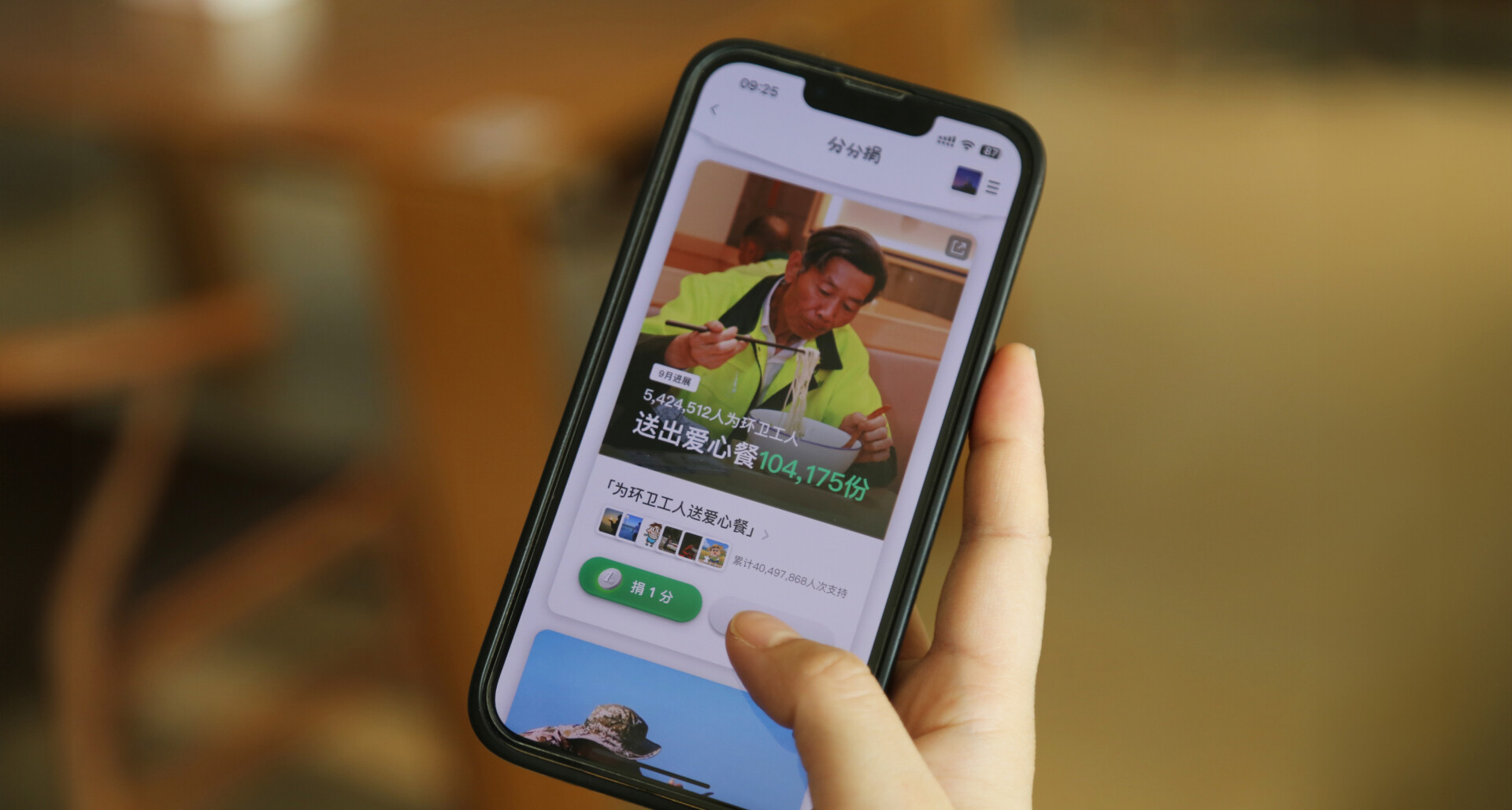
Social innovation generates trillions for the economy. Image: Tencent
Francois Bonnici
Director, Schwab Foundation for Social Entrepreneurship; Head of Foundations, World Economic Forum- 10 million social enterprises worldwide generate $2 trillion in revenue each year.
- South Korea and China offer two models for scaling social innovation, one through government-backed policies and the other by integrating social values into large corporations.
- This article first appeared on Eco-Business.
Adopting alternative business structures that value environmental and social capital alongside profit seemed radical two decades ago but is now a mainstream movement.
There are an estimated 10 million social enterprises worldwide generating roughly $2 trillion in revenue each year and employing nearly 200 million people, according to the Schwab Foundation’s State of Social Enterprise report.
The number of B Corps has reached 9,500 companies spanning 102 countries, while more capital than ever is being allocated to social and environmental returns and the global impact investing market in 2024 estimated at $1.571 trillion.
For a view into how these trends might evolve to become sophisticated markets as part of the main economy, we can look at what is happening in South Korea, a trailblazer in this space.
Lessons can also be drawn from China, which hosted the World Economic Forum Annual Meeting of the New Champions 2025 under the theme “Entrepreneurship for a New Era.”
The theme reflects the need for innovative solutions to revive cooperation, growth and address global challenges alongside rapid technological change.
Whether it involves technology, new business models or innovative approaches to sustainability, social entrepreneurs and innovators offer pathways to drive more inclusive economic growth and to navigate our biggest challenges.
South Korea: A model for progress
South Korea’s government and private sector have made a definitive pivot to support small and medium-sized enterprises (SMEs), start-ups and community solution providers to diversify the economy and reduce its reliance on large corporations.
From incubators and advisory programmes to enabling policies, support is also largely geared towards strengthening the for-profit social innovation ecosystem. Indeed, it is the only country in the world with a dedicated agency for social enterprise and an investor-backed pipeline.
Today, the Republic of Korea ranks sixth in the Global Innovation Index (2024), excelling in research and development, infrastructure and high-tech production.
The region provides an important model, demonstrating how social enterprises can be included in the mainstream economy and the benefits this brings.
Take, for example, the country’s Social Progress Credit programme, which was launched in 2015 by SK Group in collaboration with the Center for Social Value Enhancement Studies. The initiative links financial incentives to measurable outcomes, generating more than $360 million in verified social value.
Meanwhile, over 400 social enterprises have received more than $52 million in rewards, as well as greater legitimacy.
China’s tech-driven approach to social innovation
Elsewhere in Asia, China provides a different model. In South Korea, social innovation has emerged through a vast network of SMEs and startups supported by business. China has also seen the principles of social innovation take root within large, established corporations.
Consider the tech company, Tencent. In 2021, it established the Sustainable Social Value (SSV) organization, an internal engine leveraging its technological and business capabilities to deliver social value. Its communication app, Weixin in mainland China and WeChat elsewhere, connects over a billion people but it has now also evolved into a platform to drive real social good.
For instance, it has lowered barriers to charitable donations, allowing users to contribute as little as one cent at their fingertips. The platform also builds trust through real-time feedback, making charity more accessible, transparent and impactful.
Over the last decade, users have contributed about $4.9 billion on the platform to support more than 137,000 charity projects and this has coincided with a four-times increase in the proportion of people donating in the country.
The app’s real-time communication capability has also proven valuable in health emergencies, enabling prompt intervention.
SSV has collaborated with local hospitals and emergency helplines to create a robust rescue network that enables medical professionals to guide bystanders via video calls and mobilizes trained volunteers to coordinate rescue efforts. This system has raised survival rates of out-of-hospital cardiac arrest from 2% to 17% in pilot cities.
Rethinking sustainability with social entrepreneurship
Confidence in environmental, social and governance frameworks is waning and with a marked drop in global development commitments, we urgently need new approaches to creating economies that allow societies to thrive alongside nature.
Declining investment in international development, with USAID cuts in particular, is driving a projected one-third reduction from peak aid contributions in 2023. This has made clear the limitations of driving global progress through government funding alone. Nor can we rely on private or corporate philanthropy to fill the funding gap, with 45% of philanthropic organizations expressing concerns about their long-term financial sustainability.
We require a radical rethink of structures and for key influencers to understand the value of social enterprises as an important tool for development. These enterprises are adopting a market-driven approach, without compromising on the well-being of people and planet. They are locally led, self-sustaining and creating jobs and solutions that can be scaled for global impact.
What’s next?
Traditional development paradigms are facing a new world order. Social innovation and entrepreneurship offer alternative ways forward and both South Korea and China have demonstrated how it can be integrated into the mainstream and leverage market mechanisms.
Traditional business and social enterprise do not need to be distinct from one another. In fact, the synergy is increasingly evident and they are already converging towards what is commonly described in East Asia as “inclusive businesses.”
It is the idea that organizations can be commercially viable while advancing environmental and social goals, helping to institutionalize sustainable development for the long term.
This is a future of entrepreneurship from which we can all benefit, both economically and in creating better societies.
Don't miss any update on this topic
Create a free account and access your personalized content collection with our latest publications and analyses.
License and Republishing
World Economic Forum articles may be republished in accordance with the Creative Commons Attribution-NonCommercial-NoDerivatives 4.0 International Public License, and in accordance with our Terms of Use.
The views expressed in this article are those of the author alone and not the World Economic Forum.
Stay up to date:
Social Innovation
Related topics:


Forum Stories newsletter
Bringing you weekly curated insights and analysis on the global issues that matter.
More on Social InnovationSee all

Mona Mourshed and Nalini Tarakeshwar
April 7, 2026


