Climate and health: How global healthcare can adapt to a warming world
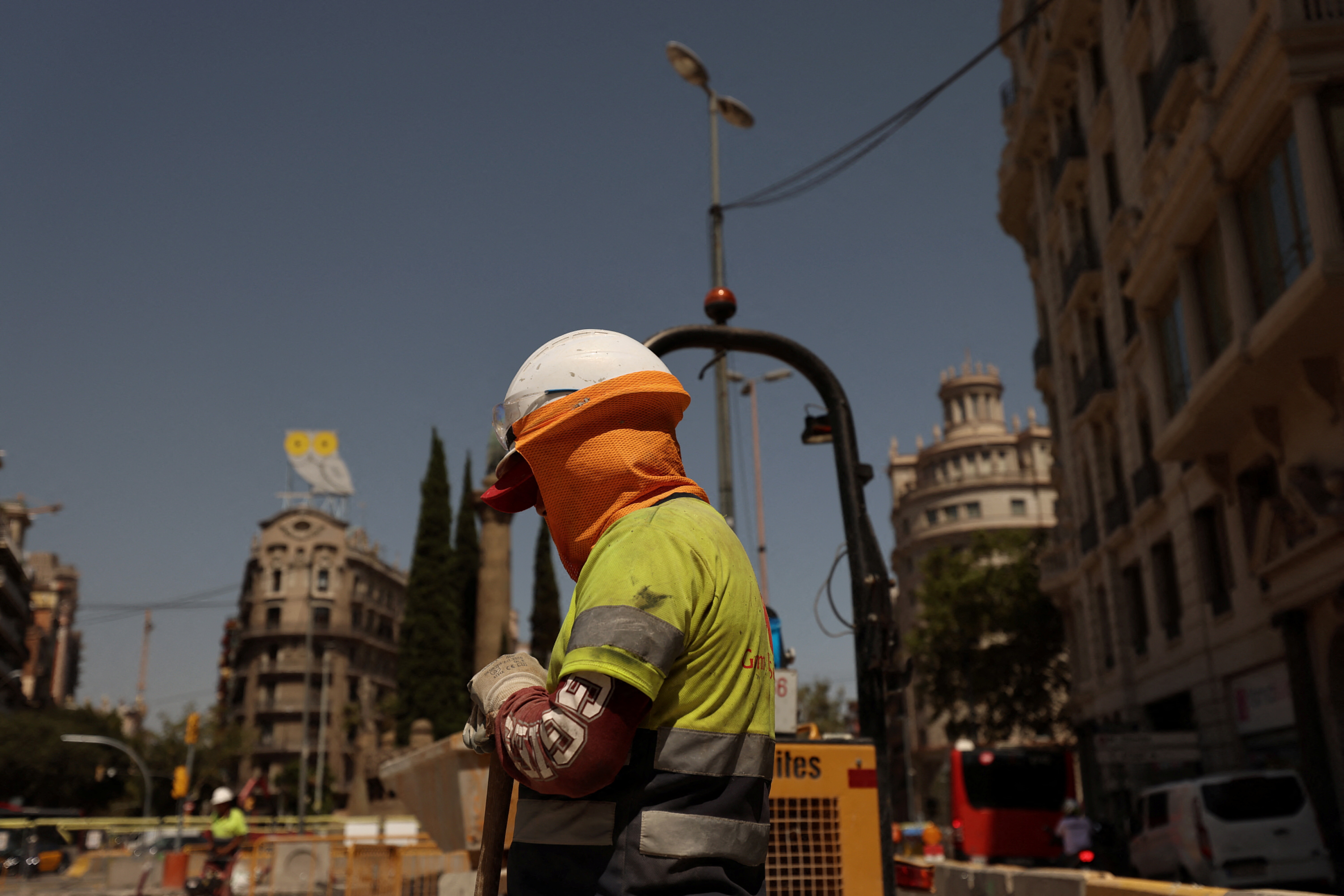
Climate risk factors, such as extreme heat, have a substantial impact on human health. Image: REUTERS/Nacho Doce
- Climate change is reshaping human health. Urgent action can lessen disease impacts and safeguard vulnerable communities.
- Strengthening resilience can protect the global economy from projected losses of over $1.5 trillion between 2025 and 2050 due to reduced worker availability.
- A new report from the World Economic Forum and Boston Consulting Group emphasizes the need for cross-sector collaboration and investment across healthcare and other critical systems to prevent climate-related health risks.
As climate change reshapes our world, it creates an urgent opportunity to build healthier, more resilient societies. We are already seeing the effects of extreme weather events on lives and livelihoods - with the world’s most disadvantaged regions disproportionately affected.
Beyond the human impact, the economic case for action is clear. A new report from the World Economic Forum finds that worker availability losses from climate-induced injuries and illnesses across four critical sectors alone will account for a loss of more than $1.5 trillion.
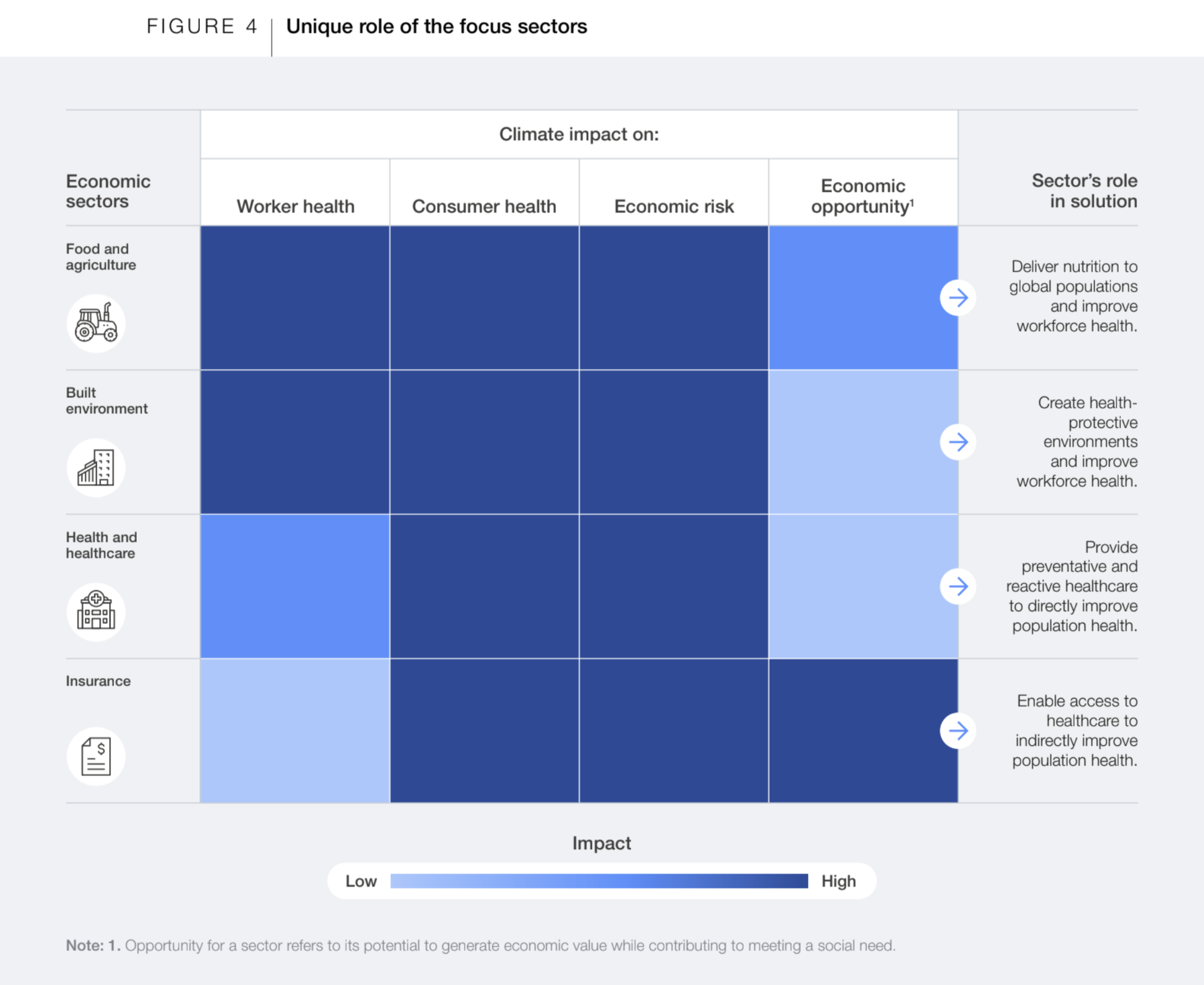
Building Economic Resilience to the Health Impacts of Climate Change, examines climate-driven health risks across four sectors – food and agriculture, the built environment, and health and healthcare. It examines how each industry can safeguard workers' health, build operational resilience and scale up innovation to address the impacts of climate change.
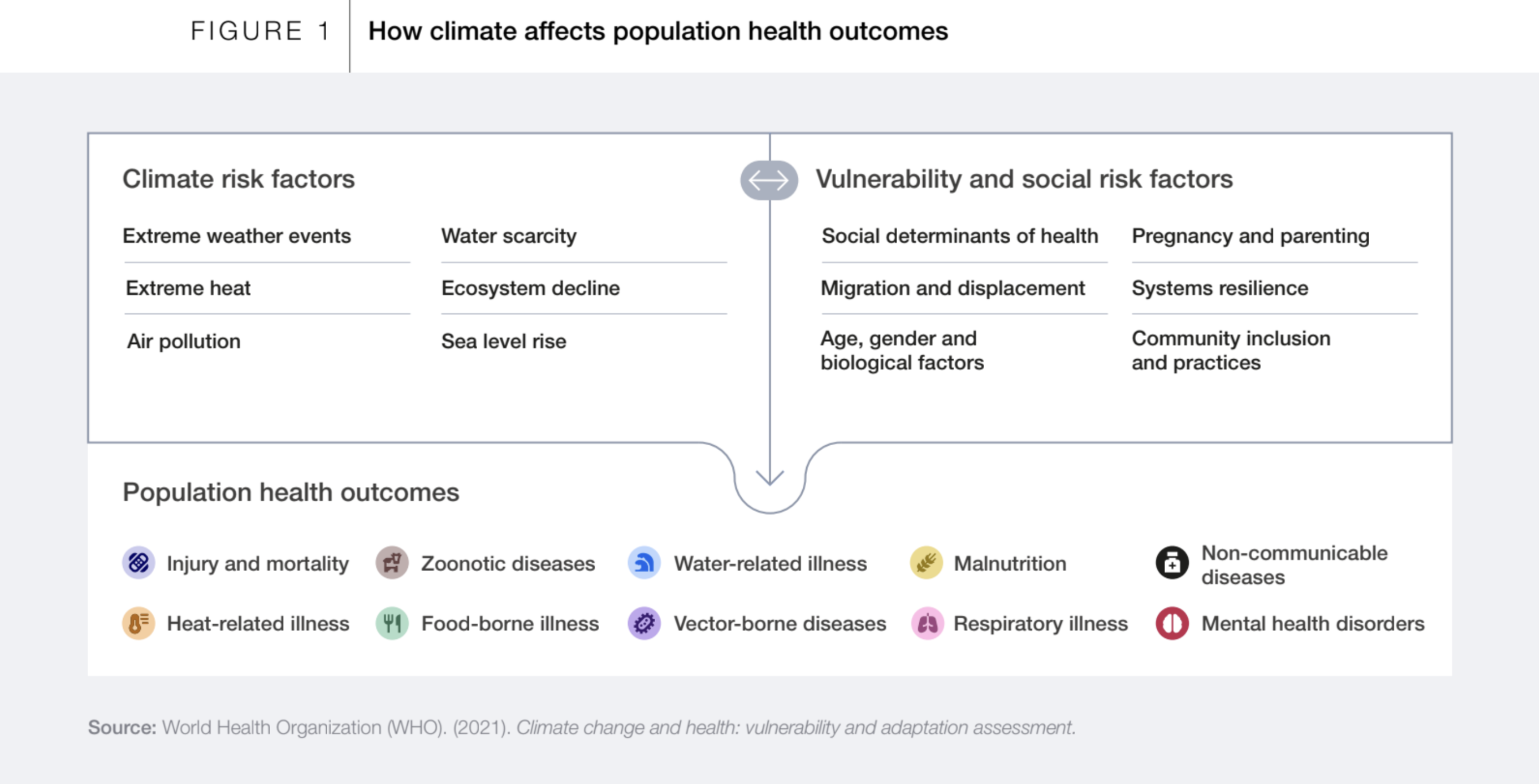
How does climate change affect human health?
Climate risk factors, including extreme weather events, water scarcity, extreme heat and air pollution, as well as their effects on declining ecosystems and rising sea levels, have a substantial impact on human health.
Illnesses from respiratory, food and water-borne sources to zoonotic and vector-borne diseases like Ebola, COVID-19 and Zika all increase due to climate change. Indirectly, it leads to malnutrition and food insecurity-related diseases due to disruptions in the food and agriculture sectors.
Climate-driven health risks disproportionately affect poor communities with limited infrastructure, access to healthcare and emergency preparedness, which already account for 90% of climate-, weather- and water-related deaths. They also impact gravely on vulnerable groups like women, children, the elderly, displaced individuals and those with underlying health conditions.
Mirai Chatterjee, chair of India’s Self-Employed Women's Association (SEWA), describes how these dynamics affect women in India:
“We have long, hot summers, and 45°C is not uncommon. However, what has become more difficult is extended periods of heat. It makes it very difficult for women to work, but they can't afford to stay home. So, we have seen more cases of heatstroke, dehydration, irritability and also more skin infections, particularly in children.”
“And then on the other side, we have excess rainfall. Now we're seeing a lot of diseases we didn’t previously see. For example, in the northeast of India, we didn't use to have much dengue, a mosquito-borne disease, but we do now.”
Helen Stoop, Head of Public Affairs at Takeda Vaccines, adds: “Climate change is causing mosquitoes to move to areas where they are going to thrive because of the heat. They really love to stand in water, and they love to bite during the day. They're very, very adaptable. This puts an increased burden on new populations at risk of the diseases they carry.”
What are the impacts on the economy?
For the economy, the impacts are far-reaching, from changing demand and consumer needs to worker shortages due to illness and injury, supply chain disruptions and loss of productivity. This, in turn, causes strains on capital as medical liabilities and insurance premiums rise.
Food and agriculture are particularly affected, being at the frontline of climate change. The sector is threatened by a 35% drop in crop production by 2050, all while facing a 50% rise in global demand. This gap could result in a 20% rise in malnutrition and an increase in food-borne diseases, especially in vulnerable communities.
Daniella Foster, Senior Vice President and Global Head of Public Affairs, Market Access and Sustainability at Bayer, points out: “Take smallholder farmers: they produce a third of the world's food. They are typically found in low- and middle-income countries. Disproportionately, they tend to be women. And at the same time, they are on the front lines of the climate crisis. So they're experiencing more extreme weather events. They're seeing challenges with harvest. They also tend to be in health deserts and in food deserts and are food insecure themselves.”
In the built environment, climate-health impacts could lead to $570 billion in worker availability losses between 2025 and 2050, the report predicts. Construction workers face health risks ranging from poor air quality and exposure to mosquitoes to extreme heat and severe weather events. Migrant and informal workers with no labour or social protection and lacking access to healthcare are particularly vulnerable.
Ensuring a more resilient workforce is vital, Foster adds. “We need to work on very practical solutions, whether that's solutions to climate resilience on the ground or closing the access to care gap that means half of the world still lacks access to basic and essential care.”
How does climate change affect the healthcare sector?
In Hong Kong, every 1°C of temperature above 29°C equates to a 4.5% rise in hospital admissions. With health resources already unevenly distributed, climate change will leave a depleted healthcare sector unless it can be addressed effectively, the Forum's report warns.
The focus on resilience needs to address both the impact on the population at large and healthcare workers themselves. Healthcare facilities will be more strained, and climate-driven disease outbreaks – like dengue, malaria or Zika – could overwhelm facilities and staff.
The same issues will affect the other side of the healthcare system, the pharmaceutical industry, which produces medicines and vaccines. With losses of productivity due to illness and extreme weather events affecting production sites and supply chains, building resilience will be vital here, too.
“Agility, adaptability are the first things to think of here. It's one of the fundamental things we have as humans and it's going to be essential as we think through and work on solutions,” says Bayer’s Foster.
What can we do to mitigate climate health impacts?
The Forum’s report offers detailed recommendations on how to mitigate the health impacts of climate change.
This starts with food and agriculture, where significant investment is needed in resilient precision agriculture to meet growing global food demand. There is also an opportunity to develop climate-resilient crops with a high nutrient density, improve animal health through adjusted livestock handling, and modify working practices to avoid peak heat.
The built environment also affects our climate resilience and health. Here, the Forum emphasizes the need for energy-efficient, climate-resilient buildings that can not only protect the people working inside but also reduce insurance costs and increase durability.
Insurance also has a major role to play. As climate change increases health costs and threatens profitability, the sector must develop tailored solutions for the most affected communities and focus on the prevention of climate-related diseases. Insurance has a unique opportunity to incentivize other sectors to reduce their climate risks.
Ultimately, the health and healthcare sector requires support to become more resilient, as medicine supplies and healthcare workers are under pressure from climate change. Treatments for climate-related illnesses and preventative healthcare must scale up, and new drugs should target diseases worsened by climate change. To achieve this, pharmaceuticals and the life sciences, healthcare facilities, the workforce and patient care must work together to invest in adaptation measures.
Closing the healthcare gap through collaboration
Vanina Laurent-Ledru, Director General at Foundation S, explains: “If we do not make this investment now, we will just see every health benefit we have gained in the past 40 to 50 years go away. Think of all the progress that's been made in maternal health, in communicable diseases and in non-communicable diseases. These are going to be wiped away by climate change if we don’t act.”
In particular, this means focusing on those communities most affected by the health impacts of climate change, she says.
The key to tackling the significant challenge climate change poses to health and healthcare is collaboration, the Forum highlights in its report. The private sector must partner with public agencies, non-governmental organizations, and philanthropic groups, and work across sectors to proactively build resilience to climate-driven health risks.
Strengthening healthcare systems against the impact of climate change will be a discussion point at the World Economic Forum’s Sustainable Development Impact Meetings, 22-26 September 2025.
Don't miss any update on this topic
Create a free account and access your personalized content collection with our latest publications and analyses.
License and Republishing
World Economic Forum articles may be republished in accordance with the Creative Commons Attribution-NonCommercial-NoDerivatives 4.0 International Public License, and in accordance with our Terms of Use.
The views expressed in this article are those of the author alone and not the World Economic Forum.
Stay up to date:
Climate and Health


Forum Stories newsletter
Bringing you weekly curated insights and analysis on the global issues that matter.
More on Health and Healthcare SystemsSee all

Shyam Bishen
April 9, 2026


