Embodied AI could help robots take flight, benefitting travel, logistics and many other industries
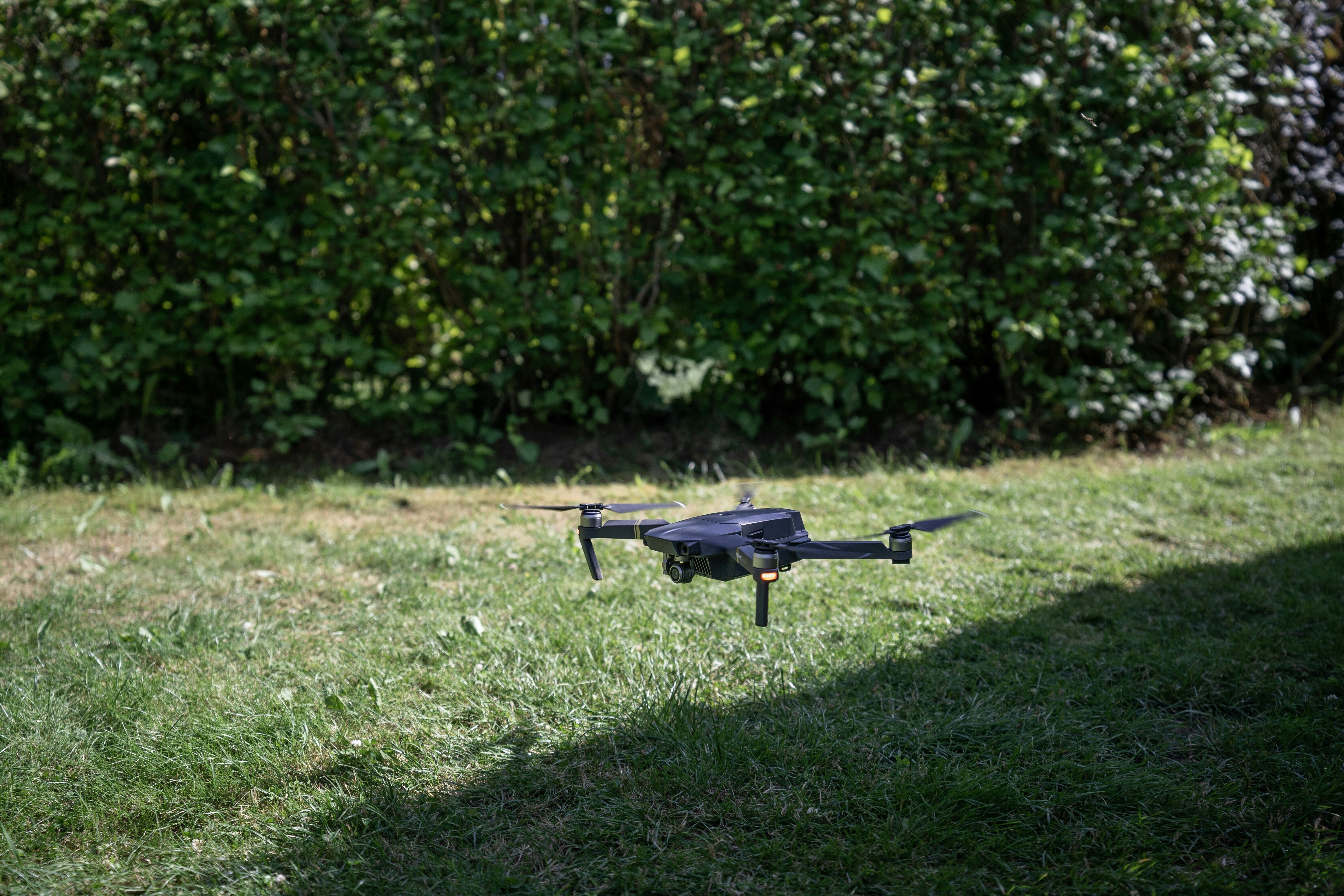
Advanced Air Mobility (AAM) is a particularly promising but also challenging focal point for embodied AI development. Image: Unsplash/Marcis Berzins
- Advanced Air Mobility (AAM) encompasses the airborne frontier of embodied artificial intelligence (AI) – robots that can perceive, decide and act in complex aerial environments.
- Autonomous capabilities could unlock AAM to enable safer, 24/7 operations in areas such as air travel and infrastructure inspection.
- As embodied AI becomes more capable, responsible implementation will help to address the critical risks and challenges of AAM.
Artificial intelligence (AI) has advanced rapidly in recent years, particularly in digital domains like language, vision and code. Now it’s also extending into the physical world. This evolution marks the emergence of a new class of systems called embodied AI.
Embodied AI refers to physical systems, such as robots, that can perceive, decide and act in dynamic real-world environments. Unlike conventional automation, these machines must continuously interpret sensor data, reason about uncertainty and translate decisions into precise movements. This combination of hardware and AI is already reshaping sectors from logistics to manufacturing.
These four types of embodied AI are currently showing most promise (ordered from most to least mature):
- Industrial robotic arms have been deployed in manufacturing for decades and they are now using AI to deliver more gains in productivity, quality and flexibility
- Autonomous mobile robots are used in ground-based logistics and service environments such as hospitals, hotels and retail stores. In these controlled environments there is little unpredictability compared to more open environments where robots might face an infinite number of new situations.
- Advanced mobility systems, which include autonomous vehicles, cargo ships and delivery drones, can operate in unstructured, open environments, navigating unpredictable conditions and complex regulatory frameworks
- Humanoid robots are distinguished by their human-like form and have the potential to operate in diverse environments, but commercial deployment remains nascent.
Within advanced mobility, one particularly promising and challenging domain has emerged as a focal point for embodied AI development: Advanced Air Mobility (AAM). This includes electric vertical takeoff and landing (eVTOLs) aircraft, drones and autonomous fixed-wing aircraft and it represents the aerial branch of the embodied AI revolution.
How embodied AI can unlock AAM
Autonomous systems are fundamental to making AAM both operationally feasible and financially viable at scale. While autonomy refers to a system’s ability to make decisions and operate without real-time human control, embodied AI encompasses the full physical expression of that autonomy – sensing, processing and acting through hardware in the real world.
From a safety perspective, high levels of automation could support humans in reducing errors, which is the primary cause of accidents and incidents. Autonomous systems can maintain consistent performance, conduct real-time diagnostics and execute automated decision-making protocols that respond faster than any human operator.
The economic case is equally strong. Autonomous systems also improve operational efficiency and could lead to safe remote fleet management, unlocking 24/7 operations. Combined with ground-based embodied AI, such as autonomous tug vehicles and self-docking charging stations for autonomous aircraft, this makes greater scale and continuous operations even more likely for AAM.
And as autonomy increases in the air and on the ground, the number of operationally feasible and financially viable use cases expands. From medical delivery and infrastructure inspection to passenger transportation, market forecasts estimate that AAM could unlock more than $80 billion in value by 2034,
But such growth will only materialize if embodied AI continues to advance – not just technologically, but across the full operational ecosystem.
Why is responsible AAM implementation needed?
Despite this momentum, significant challenges remain for AAM. The most important is certification. Regulators including the US Federal Aviation Administration (FAA) and the European Union Aviation Safety Agency (EASA) are building new frameworks to certify Advanced Air Mobility, but the road to autonomy is still long.
While some systems with high levels of automation have existed in aviation for a long time, full autonomy and the certification of such a system that's capable of managing complex, interdependent subsystems have not yet been reached. This reflects the nature of embodied AI, where perception, cognition and actuation must function reliably as a whole and adapt to a variety of scenarios, including some that are previously unknown.
Technical approval is only part of the equation, however. AAM also faces economic uncertainty. Most companies in the space are still pre-revenue, operating in a fragile supply chain where unit costs, infrastructure pricing and battery performance can shift business models dramatically. Securing long-term investment requires clarity on operating models, regulation and public support.
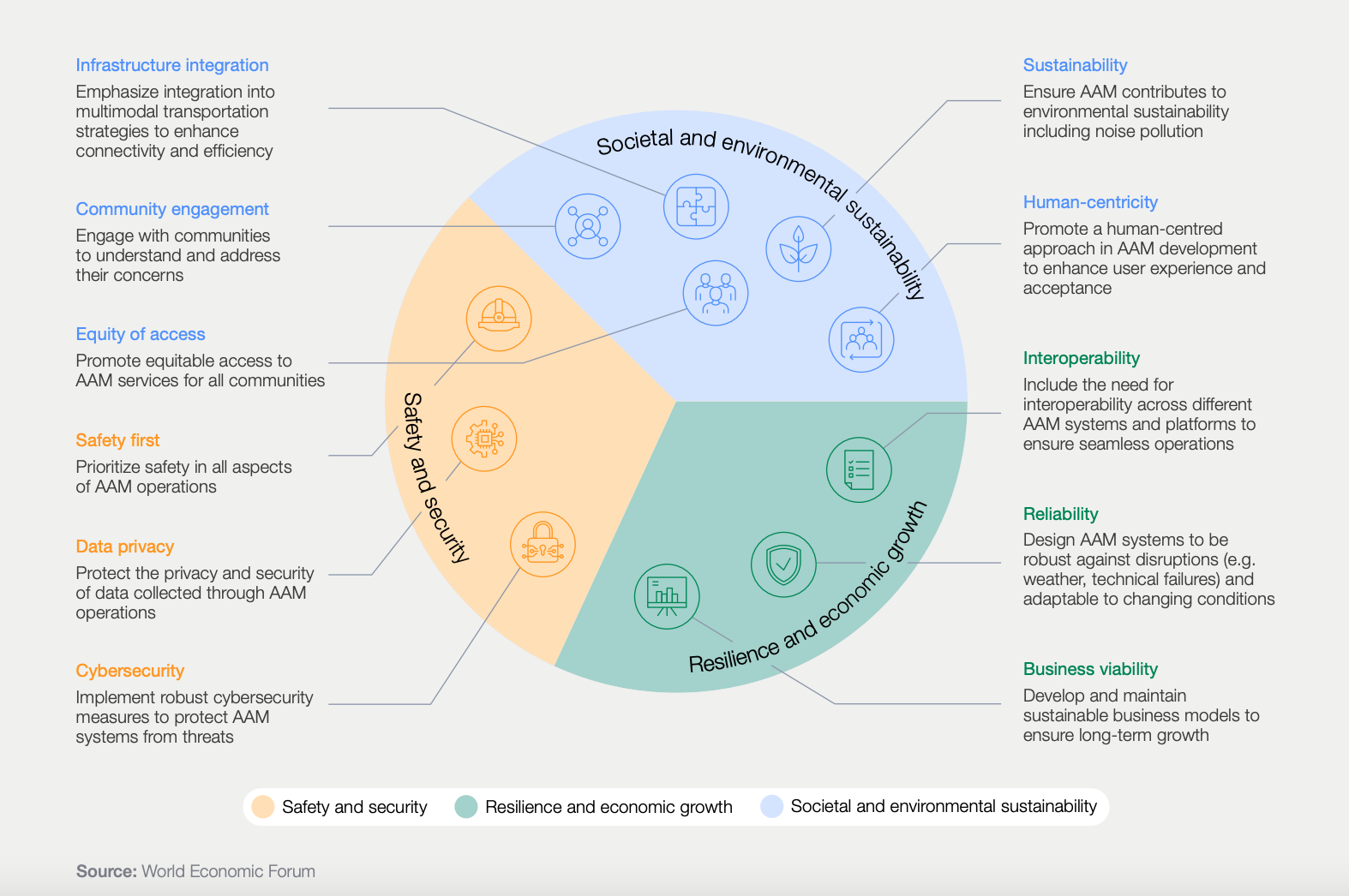
Public support is important and communities are already asking fair questions: Who benefits from AAM? Will noise disrupt daily life? Are these services accessible to all, or only to a few?
Lessons from other robotics domains show that public trust is not a given, it must be earned through transparency, inclusion and demonstrated value. This means responsible AAM implementation must become a priority, with safety as a guiding principle, just as it has always been in the aviation industry. While technical improvements such as specified safety standards, aligned software architecture and data simulations will help, cultivating a strong safety mindset, values and behaviours will unlock trust and adoption.
Cybersecurity and AI governance are rising concerns too. Every connected sensor, remote update and cloud link creates an attack surface. As these aircraft transition from testbeds to real-world fleets, their resilience must be built into the system from day one. Standards for explainability, robustness and fail-safe design are essential.
The flight path for AAM
AAM is already being applied in ways that directly benefit society, from saving lives with medical deliveries to fighting wildfires and protecting fragile ecosystems. These early examples show how autonomous systems can unlock new use cases for aircraft, enabling the next era of public AI benefits to be delivered by air.
The challenges AAM faces – social acceptance, safety and regulatory frameworks – are ecosystem-wide and cannot be addressed by any one actor alone. Even technical elements like data sources, training models and interoperability will require close collaboration. Those who can foster partnerships across the industry, the public sector, academia and civil society will help to lead this new era.
Ultimately, while these collaboration and ecosystem challenges are especially critical for embodied AI in the air, they will be equally important across most other categories too. With the right approach and collaboration, embodied AI, in the form of advanced mobility and autonomous robots or humanoids, could unlock many use cases for safer, more inclusive and more resilient societies.
Don't miss any update on this topic
Create a free account and access your personalized content collection with our latest publications and analyses.
License and Republishing
World Economic Forum articles may be republished in accordance with the Creative Commons Attribution-NonCommercial-NoDerivatives 4.0 International Public License, and in accordance with our Terms of Use.
The views expressed in this article are those of the author alone and not the World Economic Forum.
Stay up to date:
Artificial Intelligence
Related topics:


Forum Stories newsletter
Bringing you weekly curated insights and analysis on the global issues that matter.
More on Emerging TechnologiesSee all

Tom Crowfoot
March 18, 2026


