The data is in: Gen Z face a more competitive job market than their predecessors

New data reveals the challenge Gen Z face as they enter the global job market. Image: REUTERS/Gonzalo Fuentes
- New data reveals state of job market for new entries, and how Gen Z operate compared with previous generations.
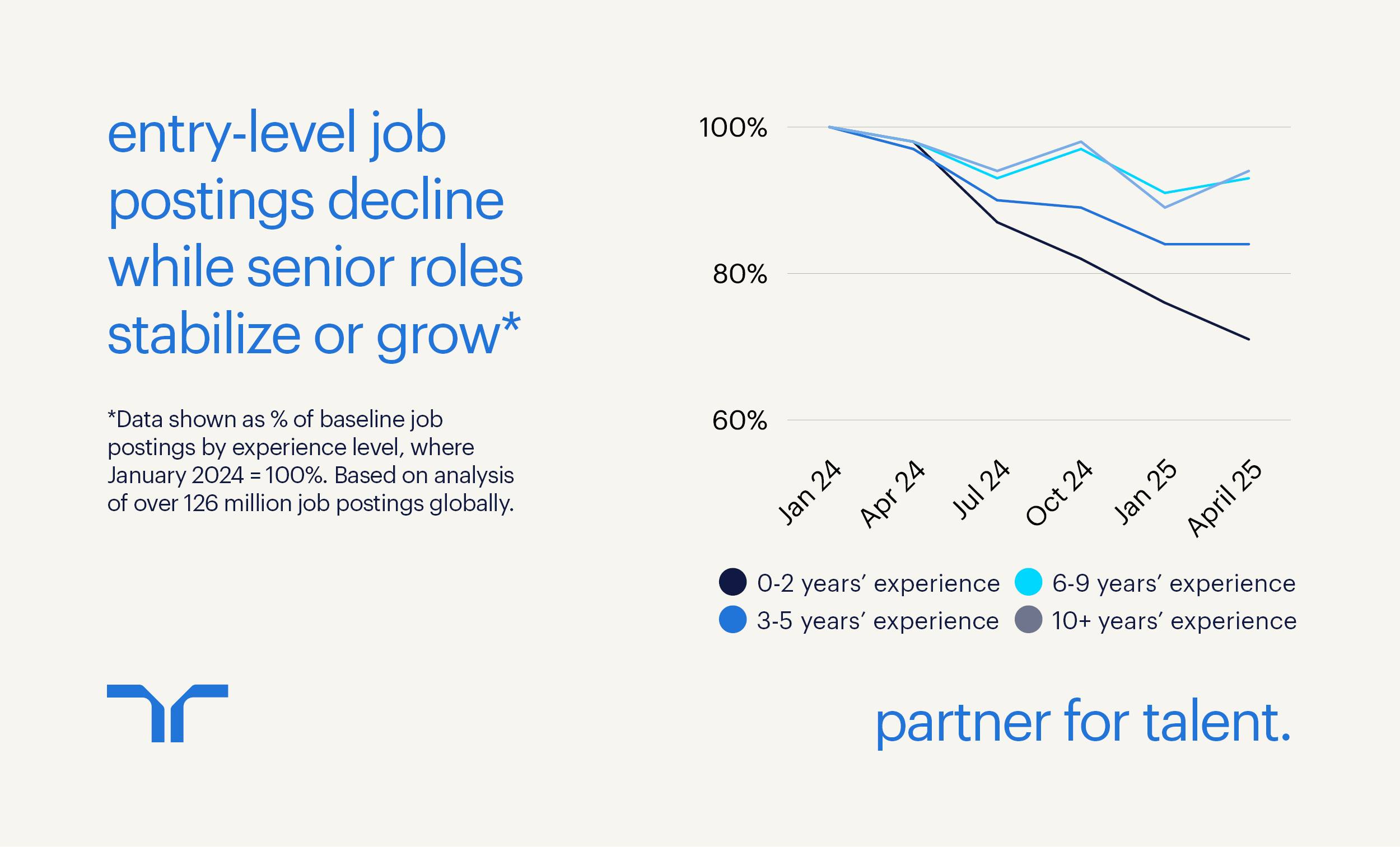
- Entry-level job postings have fallen by 29 percentage points since January 2024.
- Gen Z are moving between jobs faster, but are filled with ambition.
Entering the workforce for the first time is, and always has been, a daunting prospect. But Gen Z – the generation of talent starting out on this journey – are beginning their careers at a time of huge disruption, facing higher competition for roles, technological change and uncertain growth paths.
Drawing on a survey of 11,250 talent and an analysis of 126 million job postings globally, Randstad’s latest research shows that despite rising levels of talent scarcity, there is a steady decline in entry-level roles across sectors.
This complex work environment fosters a core paradox: Gen Z are ambitious and capable – but struggling to find a foothold.
The data paints a picture of a generation that is both determined and disoriented. And employers will need to reimagine career paths if they are to inspire and retain young workers.
A confidence gap and fewer entry-level opportunities
Central to the challenges Gen Z talent face is the decline in available roles. Our analysis shows that global entry-level job postings have fallen by 29 percentage points since January 2024.
This, of course, results in greater competition, and accordingly, Gen Z talent appear to be settling for opportunities that don’t fit their long-term ambitions. In fact, almost half say that their current role does not align with their dream career.
Gen Z are also moving on faster from roles than their older peers at the same point in their careers. Their average tenure stands at just 1.1 years in the first five years of their career, compared with 1.8 for millennials, 2.8 for Gen X and 2.9 for baby boomers at the same career point.
Around two in five Gen Z feel their education – or lack thereof – is a barrier to achieving their dream role. This figure is markedly higher than for millennials (39%), Gen X (34%) and the baby boomer generation (27%).
Similarly, 40% say that their personal background – their demographics or family circumstances, for example – prevents them from going after their ideal career. This is nearly twice the share of baby boomers (24%) who express the same concern.
It’s a concerning signal that such a significant number of Gen Z talent feel held back by barriers outside their control, from education concerns to socioeconomic background or family responsibilities. These constraints risk staling ambition at a critical stage in their careers.
Gen Z's excitement and concern for AI
When it comes to new technology, and especially AI, Gen Z enter the workforce with strong abilities and high optimism.
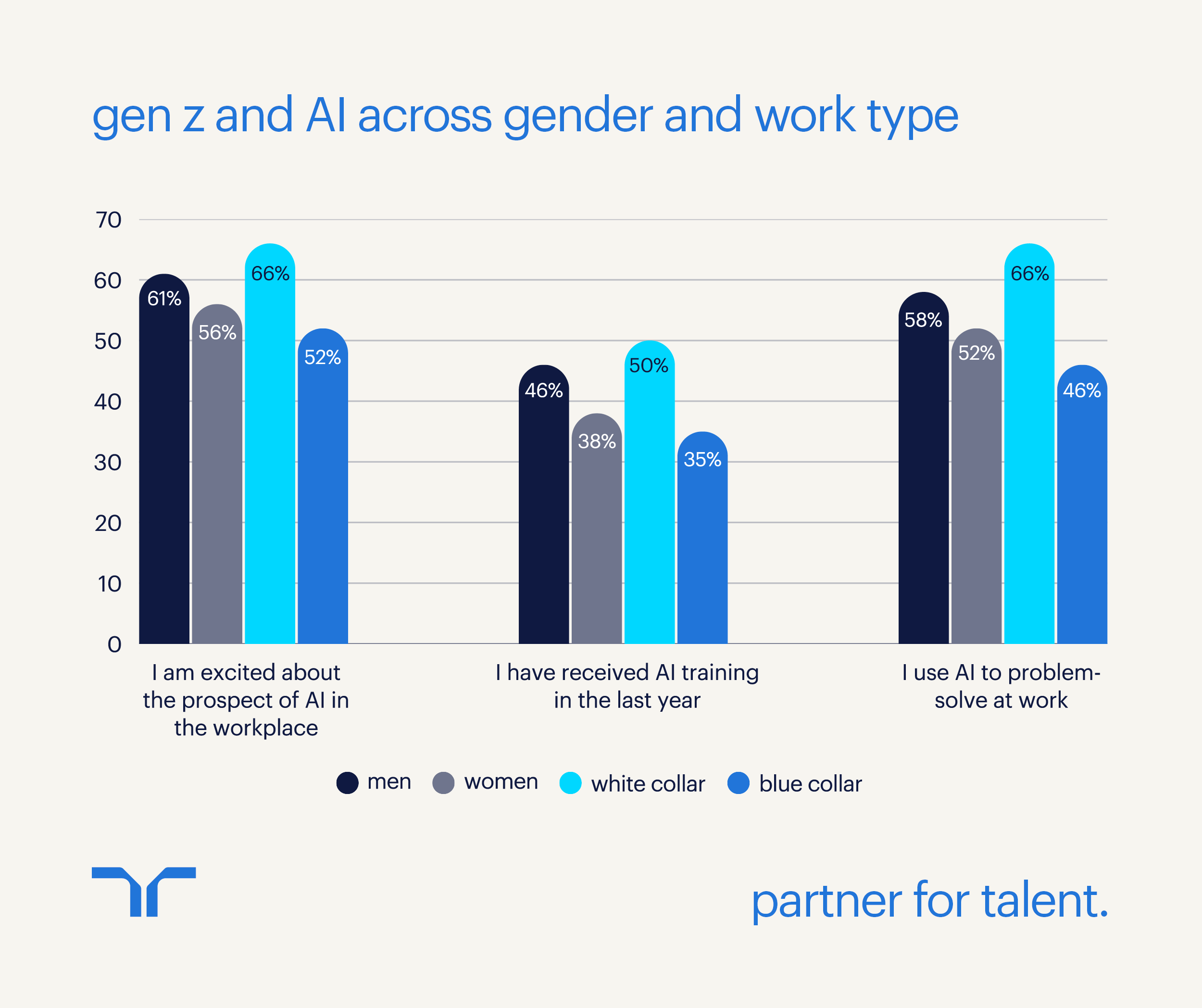
More than half say they already use AI to problem-solve at work (55%). This is well above the global average and the highest of all generations. It is also a significant jump from last year, when only 48% of Gen Z said they were using AI in their job.
Encouragingly, around three in five are also excited about its potential, only slightly less than millennials (60%), but ahead of Gen X (52%) and baby boomers (46%).
Employers have an opportunity to harness this uptake and optimism, bringing through a generation of talent supercharged by AI. However, they must first ensure all talent have the equitable opportunities to train with and use the technology at work. While 46% of Gen Z men report having received AI training at work, this falls to 38% among women.
And while they show general excitement about the prospects of AI and the generation’s digital savviness, Gen Z’s self-doubt extends to technology. They make up the largest share of those worried about the impact of AI on their job (46%).
Employers will need to work closely with talent to navigate this nuance and ensure Gen Z do not become disillusioned with AI.
Long-term career plans, but quick to move on from roles
Despite their concerns, Gen Z talent are still future-focused and ambitious. Two in five always consider their long-term career goals when making job change decisions, indicating they have an eye on the bigger picture. While this ambition is a quality many businesses will admire in potential talent, they will need to provide clear pathways to success for their young workers — second only to pay, the next most common reason to look for new roles is a reported lack of career progression opportunities.
Perhaps more concerningly for organizations, over half (54%) report that they are actively job hunting, and only 11% plan to stay in their current roles long term. With their future focus and willingness to look for new opportunities, employers will need to take steps to redefine career paths and ensure Gen Z workers feel they are progressing.
Here are four steps to help them meet their ambitions:
1. Ensure career pathways provide milestones
Gen Z want to feel a sense of forward momentum. By providing career pathways that clearly mark progression and offer regular, tangible rewards, employers can inspire confidence that their organization is a place in which Gen Z talent can develop for the future.
2. Invest in early development
Employers must make investments in entry-level roles and early career development programmes. Nurturing talent now will ensure businesses can succeed long into the future.
3. Modernize learning strategies
As a generation of digital natives, Gen Z expects their learning experience at work to reflect the methods and techniques they have become used to at school and in their personal lives. Employers should provide practical, digital-first skilling opportunities –including the use of AI tools.
4. Create a confidence-boosting culture
The data shows that Gen Z talent feels a significant sense of self-doubt. Creating a culture that boosts confidence and helps younger talent overcome any disadvantages will help organizations create a workforce ready to face the future.
Ultimately, Gen Z has given us their blueprint. They've made it clear that they are ambitious, eager to learn and willing to embrace new technology like AI. But they need more than just a paycheck; they need purpose and a clear path forward.
To unlock Gen Z’s potential, we must create environments where ambition is matched with opportunity, and where purpose drives progress. As leaders, we have a responsibility to make the first move. By modernizing our approach to career development and creating a culture that builds confidence, we stand not only to attract this new generation of talent, but empower them to become the innovators and pipeline of future leaders we need to thrive.
Don't miss any update on this topic
Create a free account and access your personalized content collection with our latest publications and analyses.
License and Republishing
World Economic Forum articles may be republished in accordance with the Creative Commons Attribution-NonCommercial-NoDerivatives 4.0 International Public License, and in accordance with our Terms of Use.
The views expressed in this article are those of the author alone and not the World Economic Forum.
Stay up to date:
Future of Work


Forum Stories newsletter
Bringing you weekly curated insights and analysis on the global issues that matter.
More on Jobs and the Future of WorkSee all

John Letzing
February 19, 2026


