Meet the finalists of the 2026 Schwab Foundation Awards
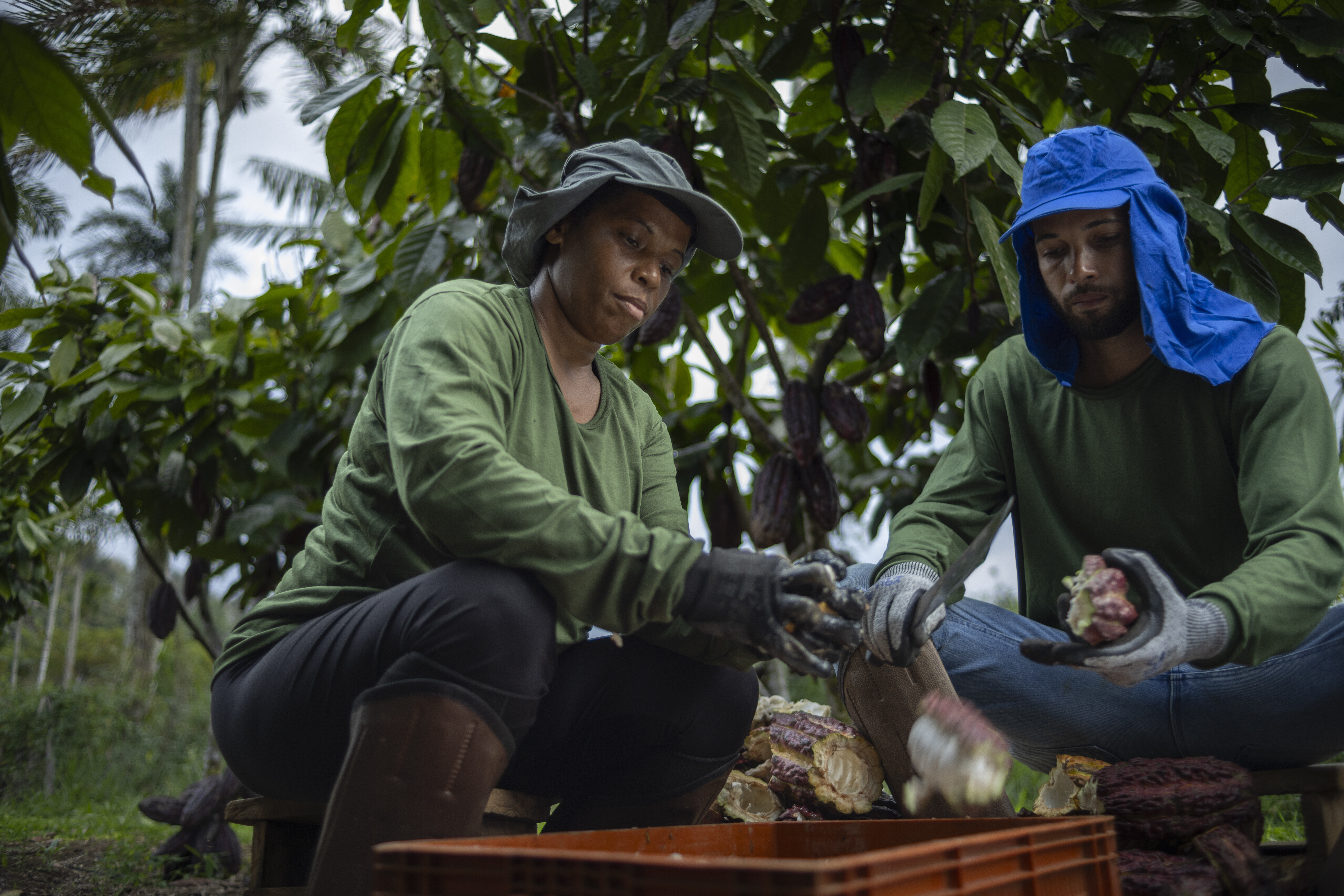
Belterra, a 2026 Schwab Foundation Awards winner, partners with small and medium-sized farmers to create productive forests in degraded areas. Image: Belterra Agroflorestas/RENATO STOCKLER
Maria Inés Martin
Selections, Community and Impact Lead, Schwab Foundation for Social Entrepreneurship- Since 1998, the Schwab Foundation for Social Entrepreneurship has brought together pioneering social innovators across diverse sectors and geographies.
- Its annual Schwab Foundation Awards identify and promote the adoption of innovative and systemic solutions to address social inequality and environmental challenges worldwide.
- Here are the 18 finalists of the 2026 Schwab Foundation Awards.
Since 1998, the Schwab Foundation for Social Entrepreneurship has been at the forefront of bringing together pioneering social entrepreneurs and innovators across diverse sectors, industries and geographical areas.
Each year, the Foundation recognizes a new cohort of outstanding individuals and organizations through its Schwab Foundation Awards. The awards honour leaders across four categories who are tackling systemic challenges with solutions that improve the lives of millions and demonstrate that real alternatives exist where traditional markets or development efforts have fallen short.
After a rigorous selection process, the Schwab Foundation is delighted to present 24 individuals from 18 organizations as the 2026 Schwab Foundation Awards finalists. Representing 16 countries across five continents, they demonstrate how bold ideas rooted in local realities can be scaled into sustainable and economically viable solutions.
From addressing human trafficking to rethinking educational systems, delivering safe drinking water and providing dignified livelihoods, their work positively impacts lives while transforming the systems in which they operate, paving the way for more inclusive, equitable and sustainable societies.
Rethinking systems to tackle inequality
Many of the 2026 finalists are tackling inequalities with models that empower communities while shaping and changing national systems.
Omar Itani founded FabricAID to address Lebanon’s solid waste crisis and the lack of affordable clothing for low-income communities. Since 2017, FabricAID's fully circular model has collected, sorted and resold over 1 million clothing items, reaching more than 200,000 people and diverting 129.5 tonnes of textile waste from landfills in 2023 alone. The organization’s vocational programme creates over 115 full-time jobs for youth and refugees and the upcycling business generated $330,000 in 2024.
In Nigeria, Olivia Onyemaobi of Pad-Up Creations is addressing period poverty with biodegradable, reusable pads made from agricultural by-products. Beyond products, her model trains 22,000 rural women as micro-entrepreneurs, distributing 12.9 million pads and reaching nearly 700,000 girls, while shaping national policy reforms. This model ensures that girls stay in school, women secure dignified livelihoods and entire communities break free from dependence on unsafe or exploitative alternatives.
In Chile, Ana María Raad of Fundación Reimagina is addressing the regional education gap, where half of 15-year-olds struggle with basic reading. By mobilizing ministries, teachers and civil society to create digital and teaching tools, over 1.2 million teachers have received professional development and 70% report improvements in their classroom practice. Chile, Ecuador and Paraguay have incorporated Reimagina's methods into national policy, bringing about lasting change in public education.
These innovators demonstrate that addressing inequality is about service delivery and reconfiguring the systems that perpetuate exclusion.
Building social good into business
The Corporate Social Innovator finalists show that when social value is integrated into business strategy, companies can drive meaningful change. They also highlight a shift: social innovation is no longer confined to philanthropy; it is now embedded in the way companies operate and grow.
In Kenya, Karen Mbasiye of Safaricom's Technology for Development Unit supports farmers through Digifarm, a mobile platform that offers training, market access and $7.2 million in credit. Safaricom's e-subsidy platform has reached over 3.3 million farmers, showing how corporations can provide inclusive services at scale.
In France, François-Ghislain Morillion and Sébastien Kopp, co-founders of VEJA, have spent the last 20 years building a global sneaker brand that combines social projects, economic justice and environmentally-friendly materials. They source rubber and cotton directly from 4,500 smallholder families in Brazil, paying well above market rates. VEJA has paid over $10 million in fair-trade premiums and uses satellite monitoring to protect 840,000 hectares of the Amazon rainforest. Their example demonstrates that global brands can thrive without compromising social or environmental values.
Working together for lasting change
Some challenges are too big for one organization. The Collective Innovation finalists show how networks can turn individual efforts into lasting, systemic solutions.
The RAED Network in Egypt, led by Emad Adly and Ghada Ahmadein, supports over 275 organizations in North Africa and West Asia to tackle climate change. Their training and regional dialogues help communities act locally and influence global decisions, with over 200,000 citizens signing a regional climate code of conduct.
In the United States, Beyond100K, co-led by Talia Milgrom-Elcott and Maya Morales Garcia, is addressing the STEM teacher shortage by uniting over 200 partner organizations. They have prepared more than 100,000 educators and reached 11 million students. Their work combines national advocacy with on-the-ground support to ensure diverse teachers reach the students who need them most.
Technology as a human-centred catalyst
In Bangladesh, Minhaj Chowdhury co-founded Drinkwell to address the clean water crisis through patented nanotechnology resin, providing a more efficient and lower-cost alternative to reverse osmosis. This technology removes heavy metals while conserving water and energy. Through public-private partnerships, Drinkwell has delivered safe water to 2.4 million people while ensuring affordability for marginalized communities.
In Colombia, Movilizatorio, led by Juliana Uribe Villegas, Lina Torres, and Mariana Díaz, uses technology to empower over 150,000 citizen leaders who otherwise face systemic exclusion from civic participation and decision-making. Through digital tools, training and networks, they support grassroots leaders in running campaigns that shape social and environmental policy. Their work has reached more than 670,000 people directly and inspired millions more.
These organizations demonstrate that when designed inclusively, technology can build resilience, amplify the voices of marginalized individuals and foster accountability.
Why this matters
From equitable education in Chile to ethical fashion in France, farmer resilience in Kenya to climate advocacy in Egypt, the 2026 Schwab Foundation Awards finalists prove that solutions to our greatest challenges exist. Their impact is significant, but their real contribution lies in shaping the rules of the game: shifting markets, influencing policy and building collective power.
The winners of the Schwab Foundation Awards will be announced at the Annual Meeting of the World Economic Forum in January 2026, marking the beginning of a three-year journey to nurture the social innovators and their organizations to scale their impact further.
Join us in celebrating the incredible work of the finalists and follow the Schwab Foundation for Social Entrepreneurship on LinkedIn for more insights from the foremost global community of pioneering social innovators driving systemic change.
The 2026 Schwab Foundation Awards finalists
The awards honour social innovators across four categories:
Social Entrepreneurs Awards
These are established leaders who employ innovative, market-based approaches to directly address social issues.
• Ana María Raad Briz, Fundación Reimagina, Chile
• Ioana Bauer Sandescu, eLiberare, Romania
• Kibret Abebe, Tebita Ambulance, Ethiopia
• Johanna Cordovez Amador, Tirando x Colombia, Colombia
• Minhaj Chowdhury, Drinkwell, Bangladesh
• Olivia Onyemaobi, Pad-Up Creations, Nigeria
• Omar Itani, FabricAID, Lebanon
• Piyush Tewari, SaveLIFE Foundation, India
• Zaheera Mohamed, Ilifa Labantwana, South Africa
Corporate Social Innovators Awards
These are leaders within multinational or regional companies who drive the development of new products, services, initiatives or business models that address societal and environmental challenges.
• François-Ghislain Morillion and Sébastien Kopp, VEJA, France
• Hamzah Sarwar, Reckitt Catalyst, United Kingdom
• Karen Mbasiye, Safaricom T4D Unit, Kenya
Collective Social Innovation Awards
These are leaders who bring together organizations to solve complex problems that cannot be tackled by individual actors.
• Emad Adly and Ghada Ahmadein, RAED Network, Egypt
• Etienne Salborn, Social Innovation Academy (SINA), Uganda
• Juliana Uribe Villegas, Lina Torres and Mariana Díaz, Movilizatorio, Colombia
• Mahendra Pandey, Global Migrant Workers Network (GMWN), India
• Talia Milgrom-Elcott and Maya Morales Garcia, Beyond100K, United States
• Mithika J. Mwenda and Augustine Njamnshi, Pan African Climate Justice Alliance (PACJA)
Public Social Innovators Awards
These are leaders in the public sector in government or in international organizations who harness the power of social innovation to create public good through policy, regulation or public initiatives.
This list will be unveiled at the Annual Meeting 2026.
Ignacio Moreno, Selections, Community and Impact Specialist, also contributed to this article.
Don't miss any update on this topic
Create a free account and access your personalized content collection with our latest publications and analyses.
License and Republishing
World Economic Forum articles may be republished in accordance with the Creative Commons Attribution-NonCommercial-NoDerivatives 4.0 International Public License, and in accordance with our Terms of Use.
The views expressed in this article are those of the author alone and not the World Economic Forum.
Stay up to date:
Social Innovation


Forum Stories newsletter
Bringing you weekly curated insights and analysis on the global issues that matter.
More on Social InnovationSee all

Mona Mourshed and Nalini Tarakeshwar
April 7, 2026


