Trust, technology and leadership key to winning the STEM talent race

Lack of STEM talent can impact national competitiveness, economic resilience and innovation. Image: Freepik
- The race for STEM talent has reached a tipping point, and many nations risk falling behind due to systemic gaps in leadership, infrastructure and trust.
- Lack of STEM talent is a strategic issue that touches upon national competitiveness, economic resilience and the future of innovation itself.
- The global race for STEM talent is intense and organizations must adapt by developing leadership that inspires not just manages, or risk irrelevance.
The race for talent in science, technology, engineering and mathematics, commonly known as STEM, has reached a tipping point.
Economies like Switzerland, Singapore and South Korea are investing heavily in innovation and are actively attracting the world’s brightest minds. Meanwhile, other nations risk falling behind, not due to lack of ambition, but owing to systemic gaps in leadership, infrastructure and trust.
This is no longer a challenge confined to HR departments. It’s a strategic issue that touches national competitiveness, economic resilience and the future of innovation itself.
Drawing on two key pieces of research by SThree – How the STEM World Works, a global survey of STEM professionals and the STEM Skills Index, a comparative measure of how nations perform in cultivating and retaining STEM capabilities – we have found that even countries that consistently rank high in digital innovation are struggling to retain their professionals in the field.
Germany, once Europe’s STEM powerhouse, is losing ground to agile Nordic nations. Meanwhile, the US, despite its tech dominance, ranks just 18th globally in STEM talent competitiveness. And in the UK, professionals report that companies are falling behind global peers in specialised education and research.
The consequences are tangible. STEM professionals are losing nearly six hours a week due to outdated systems and inadequate support – equivalent to 34 working days per year, per employee. In a world where Singapore leads in tech integration and Switzerland dominates life sciences, such inefficiency is unsustainable.
STEM talent is scarce, and the whole world is competing for it. Understanding what drives these professionals isn’t optional; it’s urgent. Those who fail to act risk falling behind in the industries that will define our future.
The cost of the STEM brain drain
The STEM brain drain creates a vicious cycle. As top talent leaves for better opportunities, those who remain face heavier workloads and slower systems. This accelerates burnout and further attrition. Countries like Italy, Japan and Greece already face demographic challenges with ageing STEM workforces. Others risk following suit.
Leadership gaps compound the crisis, with nearly half of STEM professionals saying their leaders don’t understand the productivity potential of tech upgrades. In South Korea, where R&D investment reaches 4.9% of GDP, nearly double the OECD average, this disconnect is economically challenging. When leadership fails to grasp the strategic value of innovation, organizations can lose their edge and their talent.
There is, however, a clear path forward. Research shows that trust is an essential asset in the global talent market. Over 75% of employees who trust their leadership are motivated to go above and beyond compared to just 2% in low-trust environments.
If you make a commitment to your workforce, you need to follow through. When employees see their leaders as dependable and reliable, loyalty and productivity naturally follow.
Yet many organisations still promote based on technical expertise alone. While 60% of STEM professionals say soft skills matter more in leadership, this insight is often ignored. The result is that talent flows to competitors who understand that innovation requires inspiration not just instruction.
Reversing the brain drain: what works
Reversing the STEM brain drain requires more than financial incentives, it demands a fundamental shift in how organisations think about talent, technology and leadership. The most successful nations and companies are those that integrate innovation into their culture, not just their strategy.
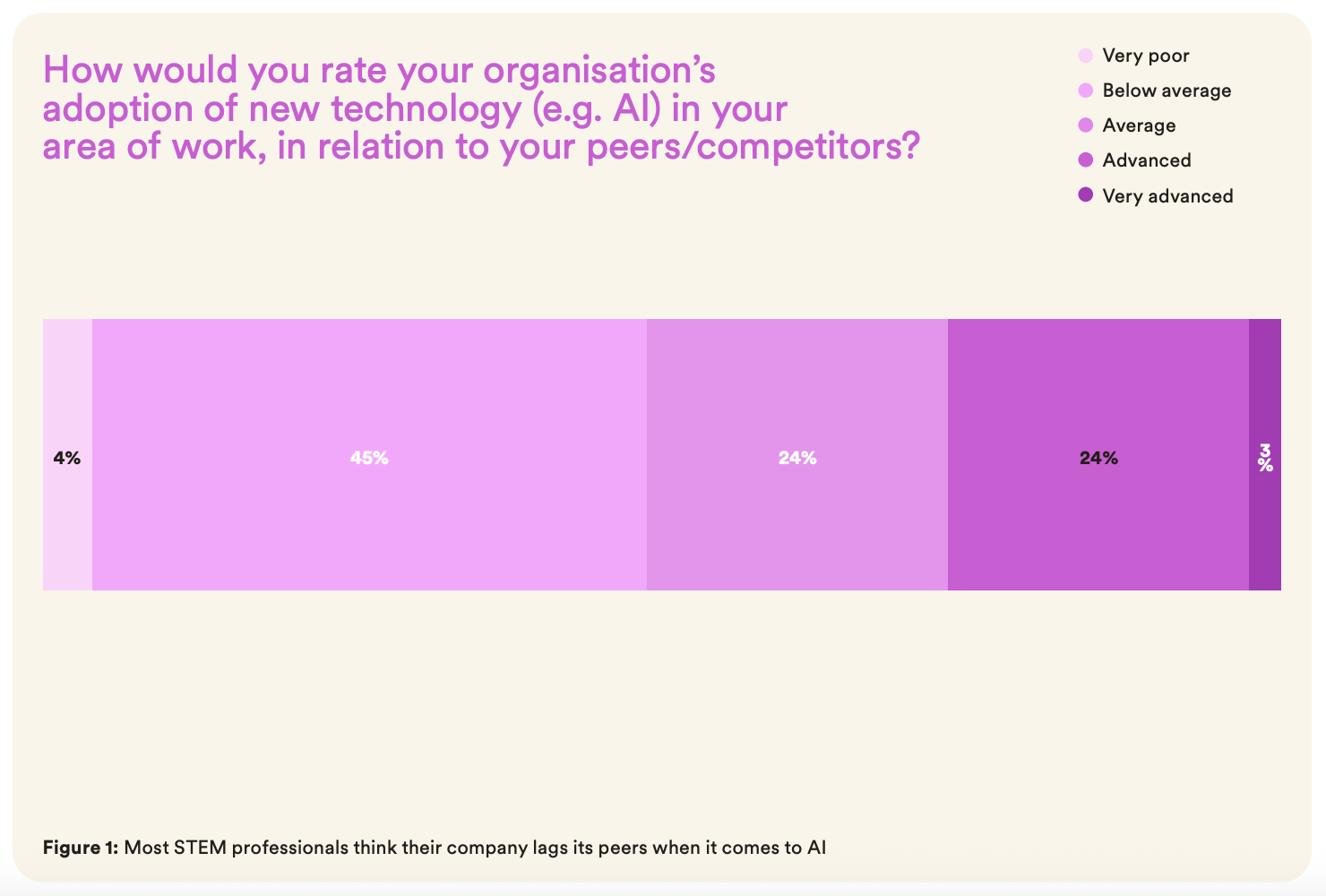
Take technology: nearly half of STEM professionals believe their organizations lag behind in adopting AI and emerging tools. In a world where digital transformation is a baseline, not a differentiator, this gap is critical. Accordingly, organizations must move beyond implementation and become champions of technological progress.
Equally important is the environment in which people work. Countries like the Netherlands demonstrate that combining robust digital infrastructure with genuine work-life balance creates a magnetic pull for talent. When professionals feel supported both technically and personally, they are more likely to stay and contribute meaningfully.
Leadership also plays a decisive role. STEM professionals consistently cite the importance of leaders who communicate clearly, act with integrity and understand the human side of innovation.
Organizations must adapt in STEM talent race
The global race for STEM talent is intense, and the pace of change is relentless. Organizations must adapt or risk irrelevance. This means developing leadership that inspires not just manages. Emotional intelligence, transparency and purpose-driven decision-making are essential traits for those at the helm.
It also means treating technology as a strategic imperative. Innovation must be embedded into every layer of the organization, from operations to culture. Those who lead with AI, automation and data-driven thinking will set the pace, not follow it.
Finally, trust must become a cornerstone of organizational culture. When professionals feel valued, heard and empowered, they don’t just stay they thrive. In high-trust environments, productivity rises, loyalty deepens and innovation flourishes.
In this era of global mobility, retaining STEM talent isn’t about building barriers. It’s about creating futures so compelling, inclusive and forward-looking that the world’s brightest minds choose to stay, grow and lead.
Don't miss any update on this topic
Create a free account and access your personalized content collection with our latest publications and analyses.
License and Republishing
World Economic Forum articles may be republished in accordance with the Creative Commons Attribution-NonCommercial-NoDerivatives 4.0 International Public License, and in accordance with our Terms of Use.
The views expressed in this article are those of the author alone and not the World Economic Forum.
Stay up to date:
Cybersecurity
Related topics:


Forum Stories newsletter
Bringing you weekly curated insights and analysis on the global issues that matter.
More on Jobs and the Future of WorkSee all

John Letzing
February 19, 2026


