Beyond the desk: How AI is transforming the frontline workforce
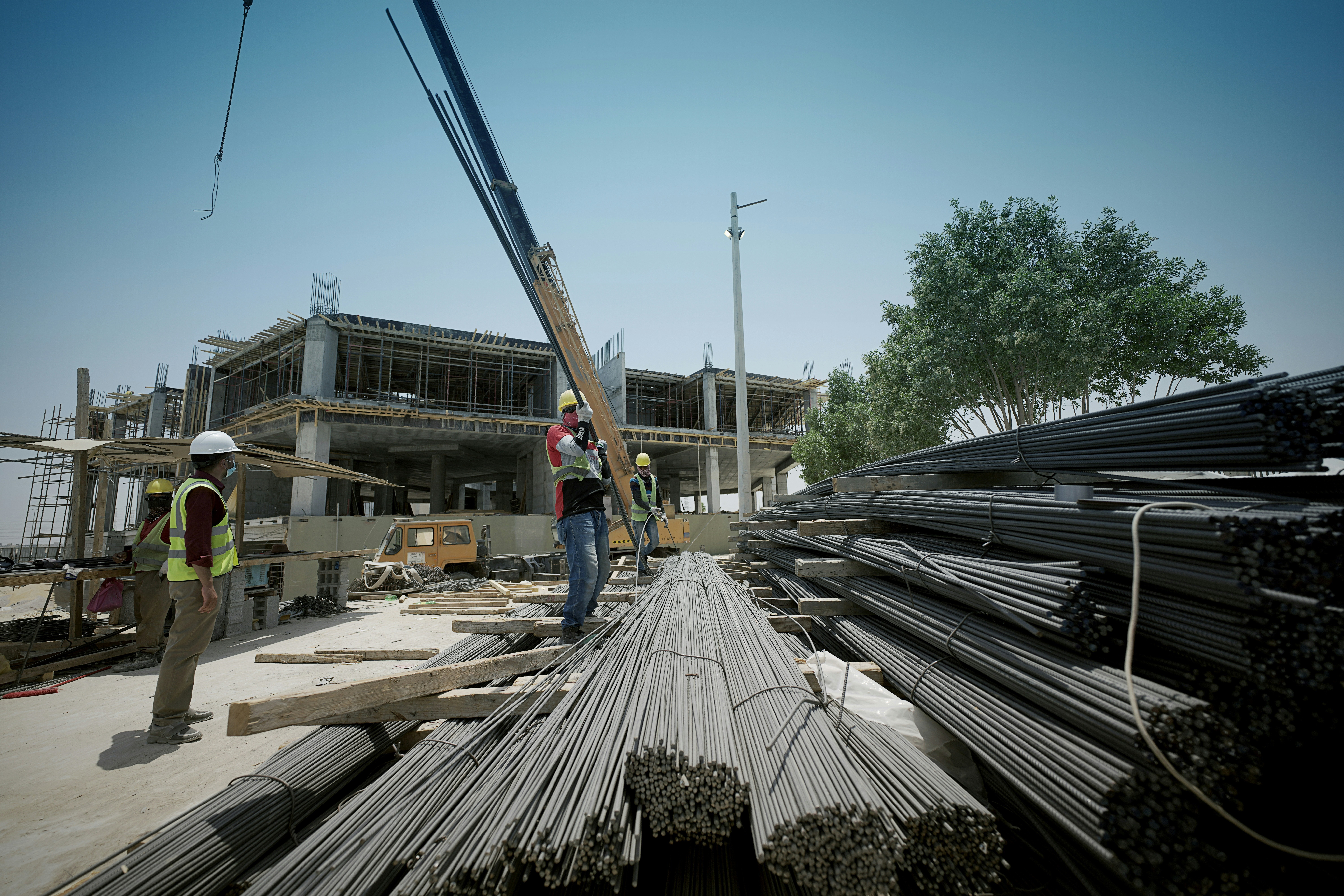
Long excluded from digital transformation, sectors like construction could benefit from AI. Image: Unsplash/Glenov Brankovic
- AI has been lauded for its impact on desk-based work – but it has enormous potential to reshape frontline activities.
- Though frontline workflows have remained traditionally rigid, AI could now streamline everything from hiring, to scheduling, to coaching.
- Done right, frontline AI could help break the loops of inefficiency and instability that are critical in an era of volatile business.
The global conversation on AI and the future of work is dominated by the office. From HR management platforms to coding co-pilots and productivity tools, AI is quickly reshaping knowledge work. Yet this overlooks the vast majority of the world’s workers – the 80% (roughly 2.7 billion) who are not desk-based.
In warehouses, logistics centres, construction sites and manufacturing plants, a quieter but equally profound AI revolution is already under way. These frontline sectors, long excluded from digital transformation, are now seeing profound shifts in how AI is changing workplaces, redefining how people are recruited, scheduled, trained and supported.
The first true transformation for frontline work
Unlike office-based roles, which have benefited from decades of tools – from spreadsheets, Slack and Zoom to generative assistants – the basic structure of frontline work has changed remarkably little. Hiring still takes weeks. Schedules remain unpredictable. Feedback is inconsistent at best, non-existent at worst. For many, career development feels out of reach.
While the pandemic underscored their critical role in sustaining economies, it did little to change these systemic issues for frontline workers. Many operations still depend on paper-based shift planning, manual clocking and ad hoc phone calls or WhatsApp messages; slow and outdated processes that make it difficult to operate efficiently or grow sustainably.
The International Labour Organization’s World Employment and Social Outlook 2024 highlights persistent shortages of essential workers in manufacturing, retail, construction and transport, linked not only to demographic pressures but also to poor job quality. These are precisely the industries that experience volatile demand and acute seasonal surges that make workforce agility all the more crucial.
For workers, volatility often translates into unstable schedules, unpredictable earnings and high turnover. For businesses, it means scrambling to fill shifts while balancing costs and quality. The result is a cycle of inefficiency and stress on both sides. AI now offers a way to break this loop. Deployed responsibly, the technology can expand access to jobs, create more predictable and equitable scheduling, accelerate on-the-job training, provide coaching and boost productivity in an era where volatility is the new normal.
A new generation of AI technologies – from intelligent scheduling and predictive analytics to conversational AI agents – is emerging to reimagine how frontline work is organized. Together, these systems form a new layer of “frontline AI”: tools that combine large-scale data processing with personalized, real-time support and proactive actions. They go beyond automation; they coordinate workflows, connect data across systems, and give both workers and managers greater control and transparency.
The building blocks of frontline AI
- Hiring and matching. Intelligent AI recruiters interview, screen and shortlist candidates, 24/7 and in any language, reducing time-to-hire from weeks to days, and improving fit and retention.
- Scheduling and predictive planning. Algorithms forecast demand and fill shifts automatically. By balancing fairness with business needs, they stabilize attendance while ensuring workers get more predictable schedules.
- Performance and feedback. AI turns fragmented data into clear insights on attendance, productivity and engagement – helping managers coach, not chase. Integrated ratings systems create two-way, equitable feedback channels for both workers and supervisors.
- Coaching and training. Conversational agents deliver coaching sessions, enable microlearning and provide on-the-job support in multiple languages.
- Safety and well-being. Predictive analytics can anticipate risks, flag fatigue or absenteeism, and embed safety reminders into daily routines, creating safer, more resilient workplaces.
- Operational intelligence. AI systems and agents can connect frontline data from across the organization – from hiring, to scheduling and performance – into one adaptive system that learns and improves every day.
If deployed responsibly, these advances result in a more transparent and accountable workplace that benefits both sides: Workers gain more agency and stability while employers achieve agility and resilience under economic pressure.
The risks of getting it wrong
For frontline AI to deliver on its promise, safety, transparency and human oversight must be built in from the start. The Future of Jobs Report 2025 identifies AI and information technologies as the most transformative force for business over the coming decade, yet also one that will both create and displace millions of jobs. Without intentional design, AI systems risk amplifying bias, misusing sensitive data, or shifting risk onto workers.
Algorithmic scheduling, for instance, can give workers more predictability – but if poorly designed, it can just as easily lock them into rigid patterns or penalize them unfairly. Similarly, digital training tools can empower workers, but only if they are accessible, multilingual and designed with inclusivity in mind.
That is why guardrails matter. Employers, policy-makers and technology providers must work together on frameworks that ensure fairness, dignity and transparency – without stifling innovation. Emerging legislation, such as the European Union’s AI Act, can take important steps toward defining shared standards of accountability and trust that will ultimately enable sustainable innovation.
The frontline is the future
The next AI revolution is not unfolding in gleaming offices but on warehouse floors, in logistics centres and in retail supply chains. It is here – among the 2.7 billion deskless workers who keep economies running – that AI will determine whether technology becomes a force for resilience and inclusion or for deeper precarity.
The pandemic showed us that frontline workers are essential. AI gives us the chance to finally treat them that way: by building systems that lower barriers, improve safety and stability, and allow businesses to thrive without passing volatility onto their people.
How the Forum helps leaders make sense of AI and collaborate on responsible innovation
The future of AI will not just be written in code or experienced on screens. It will be lived in the warehouses, factories and shops that move our economies. If we design with intention, it can be a future where technology enables resilience for businesses and dignity for workers alike.
Don't miss any update on this topic
Create a free account and access your personalized content collection with our latest publications and analyses.
License and Republishing
World Economic Forum articles may be republished in accordance with the Creative Commons Attribution-NonCommercial-NoDerivatives 4.0 International Public License, and in accordance with our Terms of Use.
The views expressed in this article are those of the author alone and not the World Economic Forum.
Stay up to date:
Future of Work
Related topics:


Forum Stories newsletter
Bringing you weekly curated insights and analysis on the global issues that matter.
More on Emerging TechnologiesSee all

Justin Cyrus
September 15, 2026