'AI is a new oil': UAE cyber chief details key pillars of digital resilience
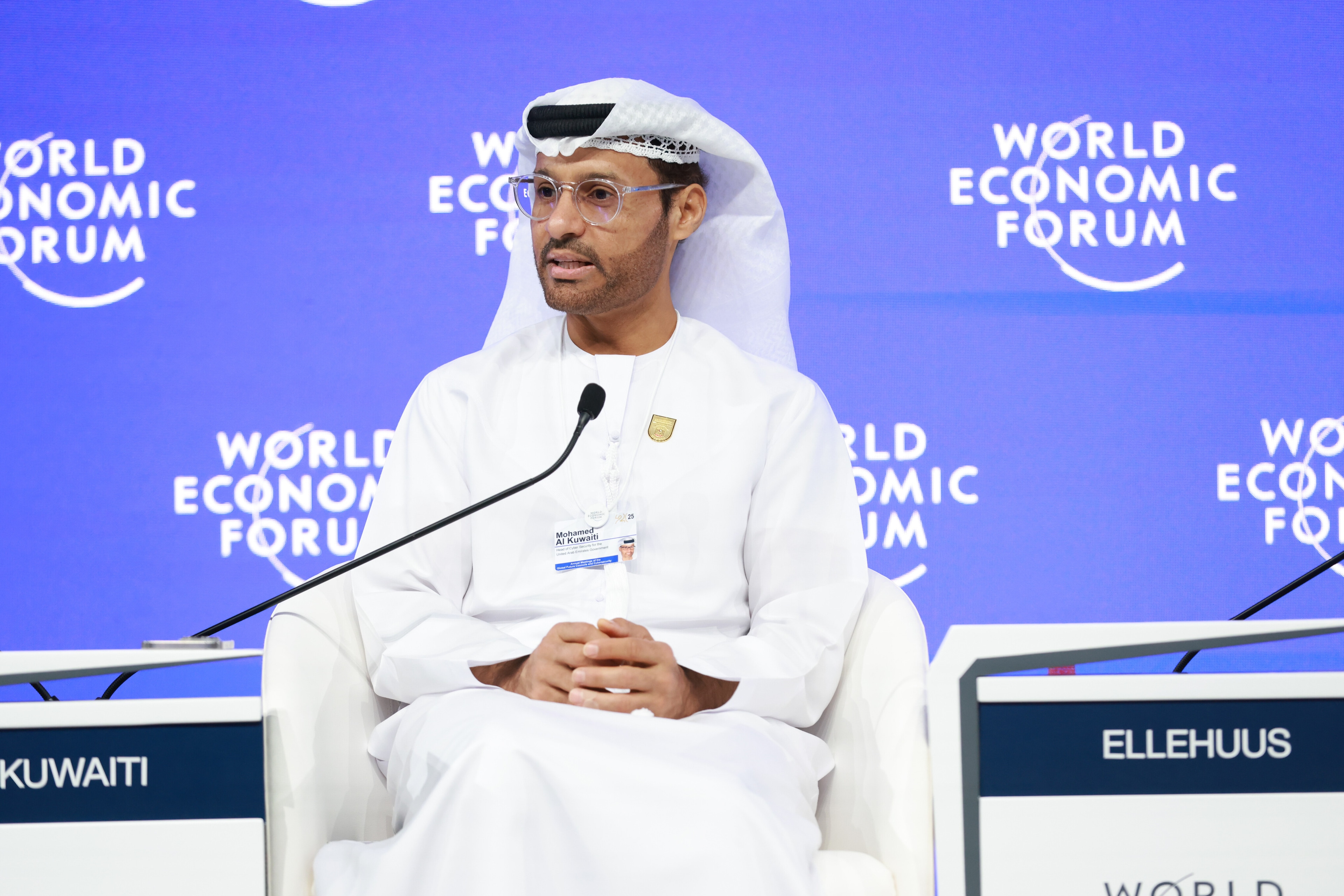
AI could change how we deal with technology in multiple sectors, said Mohamed Al Kuwaiti, UAE Head of Cybersecurity. Image: World Economic Forum
- The UAE maintains a robust digital economy.
- Hundreds of experts are gathering in Dubai for the Annual Meetings of the Global Future Councils and Cybersecurity 2025.
- In a public session, UAE Head of Cybersecurity Mohamed Al Kuwaiti detailed the impact that AI is having on cybersecurity.
Artificial intelligence (AI) is reshaping the cybersecurity landscape, transforming both the nature of cyber threats and the tools used to defend against them.
The intersection of AI and cybersecurity is a major topic of discussion this week at the World Economic Forum’s Annual Meetings of the Global Future Councils and Cybersecurity (AMGFCC) in Dubai, United Arab Emirates. The gathering brought together hundreds of global leaders and interdisciplinary specialists, including more than 150 top cybersecurity experts, to explore how emerging technologies are redefining digital security.
“AI is a new oil into so many sectors that we have,” said Mohamed Al Kuwaiti, the UAE’s Head of Cybersecurity. “It could change a lot of the way we see and deal with technology.”
During a public session, The New Cyber Order: Cooperation Amid Turbulence, Al Kuwaiti detailed an approach that the UAE is pursuing to reinforce its cyber resilience. The plan is based on five pillars: partnership, governance, protection, innovation and technology building. The various applications of AI, Al Kuwaiti added, are key to the strategy.
“We need to innovate,” Al Kuwaiti noted. “Not only thinking of those conventional old types of legacy systems or even teams, but really to come out of this box and think of how to use AI for the benefit of many of those aspects.”
The UAE maintains a robust digital ecosystem, ranking high among the top tier of countries detailed in the Global Cybersecurity Index, an annual report published by the International Telecommunication Union.
Furthermore, the State of the UAE Cybersecurity Report 2025, a publication developed by the UAE Cyber Security Council and the cybersecurity firm CPX, found that nefarious cyber actors are increasingly using AI to deploy cyber threats. These include AI-powered phishing attacks and the deployment of misinformation at scale.
Earlier this year, the UAE government formally approved the 5-pillar National Cybersecurity Strategy, noting in a statement that the plan aims to “enable the safe and swift adoption of innovations” and “enhance national capabilities in digitization and cybersecurity.” The statement adds that the country also aims to “bolster partnerships and collaborative relations at both national and international levels.”
In the AMGFCC session, Al Kuwaiti noted that it is partnerships that reinforce cyber resilience: "Partnership with the private sector, partnership with the government and partnership with multi-stakeholders.”
The need for strong collaboration was stressed by other panellists, too. Rachel Ellehuus, the Director-General of the Royal United Services Institute, noted that governments need to improve joint cybersecurity efforts and expand their pool of partners.
Meanwhile, Helmut Reisinger, the CEO of Europe, Middle East and Africa at Palo Alto Networks, stressed the need to “have a holistic approach in AI security”.
Don't miss any update on this topic
Create a free account and access your personalized content collection with our latest publications and analyses.
License and Republishing
World Economic Forum articles may be republished in accordance with the Creative Commons Attribution-NonCommercial-NoDerivatives 4.0 International Public License, and in accordance with our Terms of Use.
The views expressed in this article are those of the author alone and not the World Economic Forum.
Stay up to date:
United Arab Emirates


Forum Stories newsletter
Bringing you weekly curated insights and analysis on the global issues that matter.
More on CybersecuritySee all

Tal Goldstein and Giulia Moschetta
March 31, 2026