Cybersecurity and other critical issues take centre stage as experts meet in Dubai
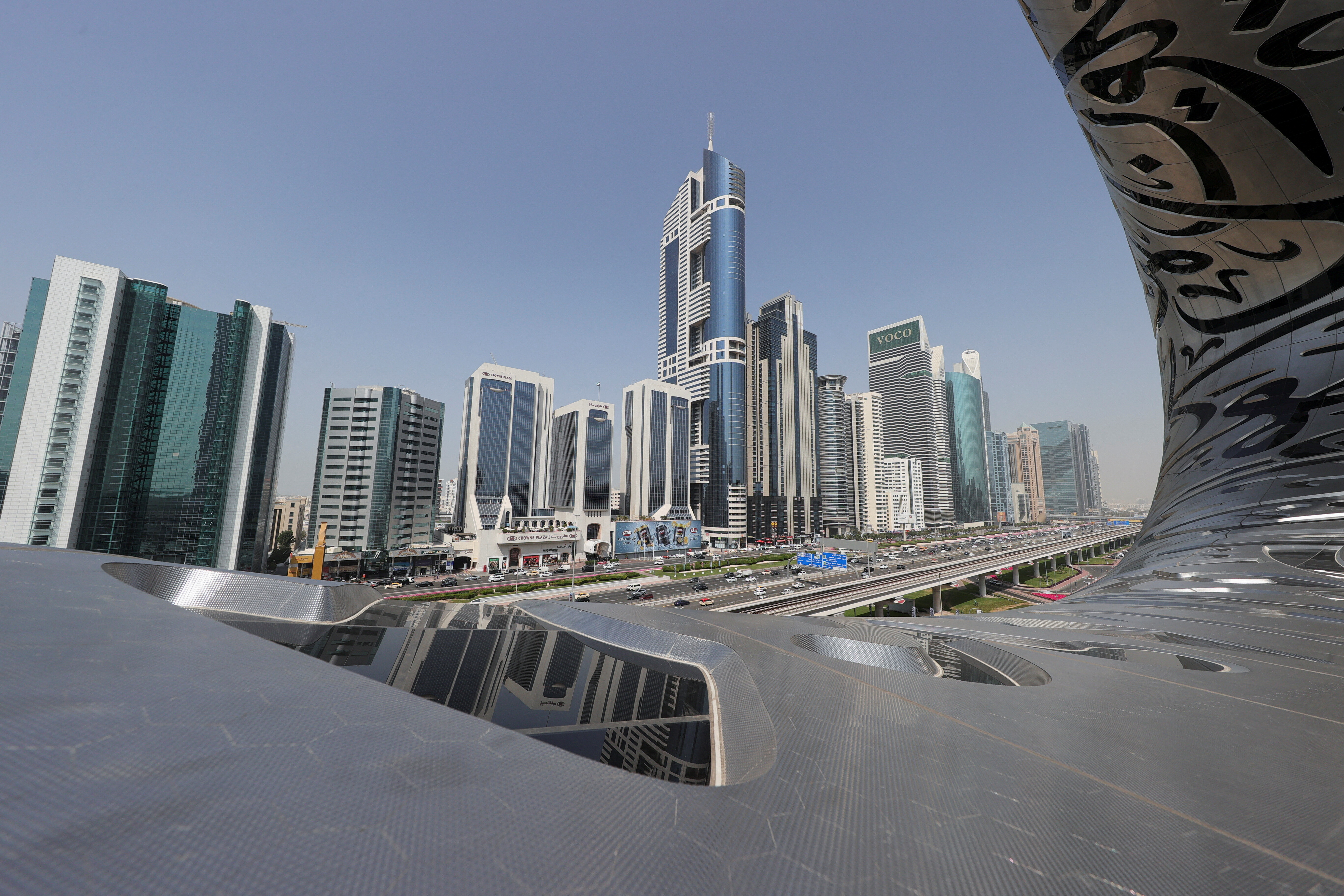
Follow along on social media with #AMGFCC25. Image: REUTERS/Christopher Pike
- Hundreds of experts gathered in Dubai for the World Economic Forum's Annual Meetings of the Global Future Councils and Cybersecurity 2025.
- The meeting took place against a backdrop of profound geo-economic and geopolitical shifts, accelerated by the rise of technologies like artificial intelligence.
- Here's a rundown of highlights from Dubai.
Hundreds of experts on a wide range of critical topics converged on Dubai, United Arab Emirates, this week for the World Economic Forum’s Annual Meetings of the Global Future Councils and Cybersecurity (AMGFCC).
The joint gathering between the Annual Meeting of the Global Future Councils (AMGFC) and the Annual Meeting on Cybersecurity (AMC) took place against a backdrop of jarring geopolitical shifts and advances in artificial intelligence, a hardening of multipolarity, and increased vulnerability to cyber threats and disinformation.
AMGFCC participants, which included roughly 150 cyber experts, explored the ways in which emerging technologies like AI and quantum computing are redefining global risks, and sought to develop actionable ideas that can inform decision-making everywhere.
What are the GFCs and the Centre for Cybersecurity?
The Network of Global Future Councils operates as a think-tank made up of 37 thematic councils identifying and disseminating transformative ideas with the potential for positive global impact. The councils focus on a wide range of topics including cybersecurity, artificial general intelligence, economic growth, and frontier technologies. One-third of GFC members come from the business world, one-third is from academia and think tanks, and the remaining third represents public figures, international organizations and civil society.
The Forum’s Centre for Cybersecurity provides an independent and impartial platform to reinforce the importance of cybersecurity as a strategic priority and drive public-private action to address challenges. It engages hundreds of business partners and dozens of public-sector partners in different initiatives.
Public sessions and expert insights
AMGFCC featured 19 public sessions. Here are some of the key highlights.
The New Cyber Order: Cooperation Amid Turbulence: In this session, panellists explored the seismic shifts in technology, geopolitics and the global economy that have reshaped the cyber landscape.
Participants noted that cybersecurity today sits at the intersection of national security, technological innovation and requires international cooperation. Mohamed Al Kuwaiti, the UAE's Head of Cybersecurity, stressed that bolstering cyber resilience is about partnerships: "Partnership with the private sector, partnership with the government and the partnership with the multi-stakeholders."
Meanwhile, Rachel Ellehuus, the Director-General of the Royal United Services Institute, added that "investing in security by design or resilience by design is seen as a shared responsibility."

Opening Remarks and Opening Plenary: World Economic Forum President and CEO Børge Brende provided the opening remarks for the meetings, nodding to the major geopolitical shifts and rapid technological advancements that create an urgent need for agile, collaborative thinking.
"In this new era, dialogue is our first line of defense, and our greatest source of innovation," Brende said.
The Opening Plenary began with World Economic Forum Managing Director Saadia Zahidi noting that an expression often being heard is that "this time really is different." She asked panelists how that's being interpreted in their fields.
UAE Minister of State for Artificial Intelligence, Digital Economy and Remote Work Applications Omar bin Sultan Al Olama acknowledged the doom and gloom frequently clouding the outlook for our collective technological future, but he advocated for optimism.
“The world needs positive visions,” he said. “We’re driving forward looking through the rearview mirror, and I think we need to drive forward looking through the windshield.”
Mission Blue Foundation Creator and AMGFCC 2025 Co-Chair Sylvia Earle said that when it comes to aligning progress with planetary health, “This is the best time ever to be a human because of what we know, but we should always keep front and center the magnitude of what we don’t know.”
Economies Amid Geostrategic Shifts: This panel zeroed in on the intensifying strategic competition among major powers and shifting economic alliances that are reshaping the global order.
"We understand that the new currency in a fragmented world is trust," said UAE Minister of the Economy Abdulla Bin Touq Al Marri.
Added Juan Carlos Pinzón Bueno, a visiting professor and lecturer at Princeton University who hails from Colombia: "Countries like mine, instead of focusing on the fight, need to focus on opportunity."
What Is the Cost of Underinvesting in Health?: Every $1 invested in health yields up to $4 in economic return, yet health systems remain chronically underfunded. From antimicrobial resistance to air pollution, aid cuts and digital health gaps, the cost of inaction is mounting.
Panellists discussed the societal and economic consequences of underinvesting in health and how to begin addressing them.
Inside the Cyber Criminal Mind: Recent anti-cybercrime breakthroughs are outsmarting criminals by going beyond technology, leveraging financial and psychological tactics to turn the tables.
In this session, Max Smeets, Co-Director of Virtual Routes, and Neal Jetton, Director of the Cybercrime Directorate at INTERPOL, explored the cyber skills and strategies that drove breakthroughs in 2025 and examined ways to further mitigate cybercrime.
"We have a tendency to share stories when these cybercriminals were successful," Smeets said. "It's equally important to share the stories where you had cases of prevention and also where cybercriminals failed."

AI's Scaling Dilemma: As AI systems grow in scale and complexity, the necessary infrastructure must evolve to balance performance with energy efficiency.
In this session, panellists explored how more sustainable infrastructure like data centres can keep pace with extraordinary demand. “The investments in the next few years are going to be in the trillions of dollars,” said DAMAC International Managing Director of Operations, Finance & Hospitality Ali Sajwani.
Avoiding a Two-Speed Energy Transition: From AI-driven grid optimization to advanced energy storage, innovation is reshaping the energy transition landscape. Uneven adoption, however, risks creating a two-speed transition.
In this session, panellists examined what strategies can better align innovation with real energy transition needs.
Riding Out Cyber Storms: Some 71% of respondents to the World Economic Forum’s Global Cybersecurity Outlook reported an increase in cyber risks driven by geopolitical tensions, supply chain complexity, rapid AI deployment and other factors.
In this session, panellists explored the emerging trends that are redefining the future of cybersecurity and examined how leaders can harness insights to align priorities and drive coordinated action.
"We have to take care of everyone within the system," said Dario Leandro Genua, Secretary of Innovation, Science and Technology of Argentina. "We're only going to be as strong as the weakest link in the network."
What Will Drive Future Growth and What Will Not: With global growth projected to hover around a sluggish 3.2% over the next five years, many are putting their faith in technology and science as potential drivers of a future upturn.
Panellists participating in this session discussed the cultural elements and business models likely to make a meaningful impact, and nodded to the work of recipients of the Nobel economics prize earlier this week.
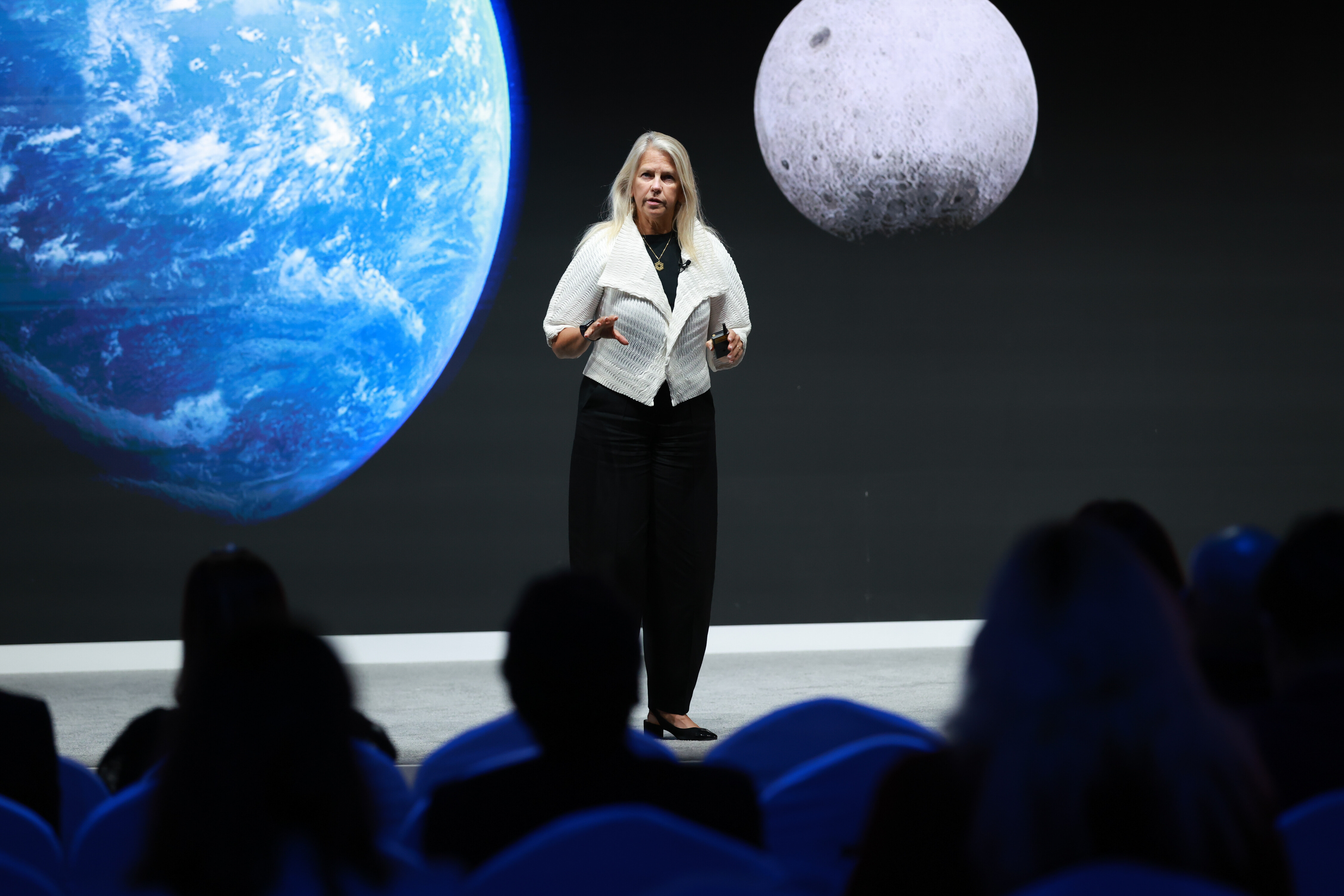
What Space Can Teach Us: The world faces a series of interlinked and complex challenges – from geoeconomic instability to industry disruptions. But what if some of the solutions were hundreds of kilometres above us?
In this session, space leaders explored the latest plans for space exploration and discussed how some of the most exciting developments – from space research to emerging technologies – can help us tackle challenges on Earth.
Top 10 Emerging Technologies for the Planet: Climate disasters are disrupting industries from agriculture to finance, exposing deep vulnerabilities in supply chains, infrastructure and communities worldwide.
In this session, panellists reviewed some of the most promising emerging technologies that can strengthen planetary resilience.

Taming Trade: Trade reforms and tariff uncertainty have heightened security concerns, making it increasingly challenging to protect critical industries and technologies while striving to maintain open markets. In this session, panellists examined how global collaboration can be strengthened to address emerging threats and safeguard the integrity of the international trading system.
"A rules-based system creates certainty for businesses, creates opportunity for small businesses," said Sarah Thorn, Vice-President of Global Government Affairs and International Sourcing at Walmart. "If you have rules changing every day, your engine of growth which is largely your small businesses, have a very hard time adjusting."
UAE Minister of Foreign Trade Thani Ahmed Al Zeyoudi added that "the main issue for the businesses is the unpredictability," noting that amidst uncertainty "no one can stick to a business plan, no one can have a long term plan."
Neurotechnology: Striking the Right Balance: Neurotechnology holds immense promise – not just for treating neurological conditions but also for enhancing well-being, cognitive liberty, and self-determination. At the same time, it raises profound ethical and societal questions.
Panellists in this session explored how technologies can be developed in ways that are safe and equitable.
Regulation: Friend or Foe?: Emerging technologies like AI, quantum computing and synthetic biology are poised to reshape economies and societies. Regulators face mounting pressure to keep pace.
Panellists discussed ways to help governments stay ahead of rapid change and make regulatory systems more agile and forward-looking.
"One of the greatest dangers related to a technology is not that it will be used, it’s that it won't be,” said SandboxAQ CEO Jack Hidary.
Closing Plenary: Panellists participating in the plenary discussed some of the most promising approaches to building intelligent economies and societies.
“Technology should be part of the solution, but it begins with people,” said MIT Computer Science and Artificial Intelligence Laboratory Director Daniela Rus.
“The next frontier of innovation is not artificial intelligence, but awakened intelligence,” added Social Innovation Park Founder Penny Low.
UAE Minister of Education Sarah bint Yousif Al Amiri emphasized the power of education to “create a world that is better and more stable than what we see today.”
With that, the Annual Meetings of the Global Future Councils and Cybersecurity drew to a close.
New reports and analyses
A broader jobs impact: The impact of artificial intelligence on knowledge workers has dominated the news, but transformative technologies will ultimately exert a much broader influence on the global workforce. The new report, Jobs of Tomorrow: Technology and the Future of the World's Largest Workforces, explores how AI, robotics, energy and network technologies are reshaping seven major job families including agriculture and healthcare, which employ a combined 80% of the world’s workers.
Cybercrime Atlas: In a world where cyber defenders often work in isolation, the Cybercrime Atlas gives experts and organizations a platform to multiply the impact of their individual efforts. Learn more in the Cybercrime Atlas: Impact Report 2025.



The role of CISOs: Having evolved beyond their traditional boundaries, chief information security officers (CISOs) must navigate geopolitical volatility, technological disruption and systemic cyber risks in order to defend their organizations against expanding attack surfaces. A new report, Elevating Cybersecurity: Ensuring Strategic and Sustainable Impact for CISOs, spotlights cybersecurity as a strategic enabler in every organization to drive growth, trust and innovation in the digital age.
Buying green: Businesses are under increasing pressure from boards, investors and regulators to drive progress on both economic returns and climate goals. A new report, Green Procurement Playbook: The CPO’s Guide to Delivering Value for Business and Planet, serves as an assessment tool for chief procurement officer that helps identify what to prioritize and where to focus. The report identifies eight building blocks that are critical to delivering sustainability without compromising business value.
Staying within limits: Seven of Earth’s nine planetary boundaries – the natural systems that keep it stable – have now been breached. A new report, the World Economic Forum’s 10 Emerging Technology Solutions for Planetary Health, produced in collaboration with open-access academic publisher Frontiers, highlights how innovation can help restore balance within these limits. From precision fermentation and green ammonia production to modular geothermal energy and regenerative desalination, the report showcases breakthrough technologies tackling the planet’s most urgent environmental challenges.
From Dubai to Davos
The AMGFCC was used to conduct survey research that will inform World Economic Forum publications released during the Annual Meeting 2026 in Davos, Switzerland.
This includes the Global Risks Report 2026, Global Cooperation Barometer 2026 and Global Cybersecurity Outlook 2026.
Explore more on Forum Stories


License and Republishing
World Economic Forum articles may be republished in accordance with the Creative Commons Attribution-NonCommercial-NoDerivatives 4.0 International Public License, and in accordance with our Terms of Use.
The views expressed in this article are those of the author alone and not the World Economic Forum.

Forum Stories newsletter
Bringing you weekly curated insights and analysis on the global issues that matter.
More on Forum in FocusSee all

Rashimah Binte Rajah
October 6, 2026


