How we can turn automotive plastics into a circular asset
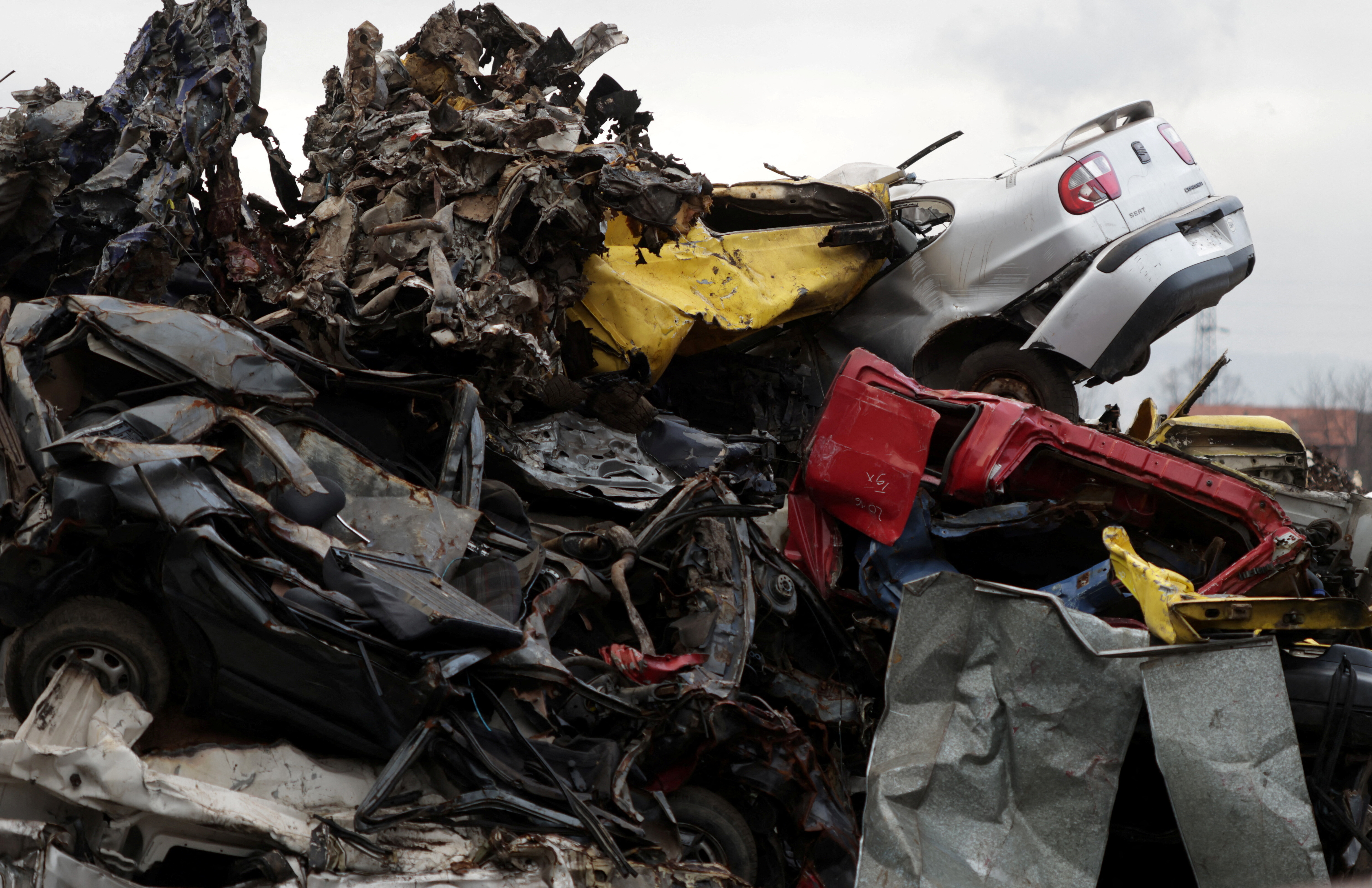
Automotive plastics is a growing challenge with very little recycled. Image: REUTERS/Dado Ruvic
- Plastics in cars pose a growing challenge; while they enhance efficiency and safety, most end up as waste, particularly difficult-to-recycle composites.
- Regulation is progressing circularity, with the EU preparing to mandate up to 25% recycled plastic content in new vehicles, including from end-of-life cars.
- Solutions require innovation and collaboration, from new recycling methods to bio-based materials and design for disassembly.
Plastics have helped make cars lighter, safer and more efficient but at the end of their life, most of those materials end up as waste. As the automotive industry races toward a more sustainable future, plastics are emerging as both a significant hurdle and a substantial opportunity in closing the loop.
Circularity in automotive plastics is no longer a nice-to-have. With regulators pushing for recycled content in new vehicles and consumer expectations shifting toward greener products, the industry is facing mounting pressure to rethink how plastics are designed, used and reused.
Achieving this will require technical innovation as well as systemic collaboration among automakers, suppliers, recyclers and policymakers. So what are the challenges and emerging solutions shaping the transition toward circularity in automotive plastics?
Automative sector’s place in the circular economy
The circular economy is an economic model that moves away from “take-make-dispose.” The idea is to maximize the use of materials and then recover and regenerate products at the end of their life.
The automotive industry could integrate circularity into its manufacturing cycle when it comes to dismantling and reusing parts at the end of a vehicle’s life.
These parts are often sold as spares or used for small repairs, giving these components a second life.
However, major challenges remain in automotive recycling with regard to the primary materials of cars and other vehicles – metals and plastics.
In particular, fibre reinforced plastics, often used in "lightweighting" i.e. reducing vehicle weight and thus improving fuel efficiency, are rarely recycled. As fibre length decreases or breaks down during the recycling process, de-valorizing the material.
An analysis by the EU’s Joint Research Centre found that about 3% of plastics that go into car manufacturing end up in the recyclates market. This undermines sustainability goals and contributes to a growing environmental problem.
New technology from Brightlands Material Centre, powered by TNO, prevents fibre breakage, allowing the reuse of these relatively high-value plastics. Most end up as waste. In 2023, globally, approximately 13,000 kilotons of fibre-reinforced plastics were produced, with 3 megatons used in the automotive sector.
An expanding compliance environment
The EU is currently negotiating a landmark revision of its End-of-Life Vehicles framework, which would for the first time mandate minimum thresholds for recycled plastic content in new vehicles.
Under proposals backed by European Parliament committees, new vehicles would be required to contain 20% recycled plastic within six years of the regulation’s entry into force, rising to 25% recycled content within 10 years, if sufficient supply and price conditions allow.
Crucially, a portion of that recycled content must come from end-of-life vehicles, rather than only pre-consumer or industrial waste streams.
Circularity is no longer optional; it’s a regulatory, environmental and economic imperative.
”The regulation also empowers the European Commission to grant temporary derogations if the availability of recycled plastic or price constraints make compliance unfeasible – a recognition of real-world supply chain challenges.
This regulatory shift marks a turning point, as it elevates plastics in vehicles from an optional sustainability consideration to a legally enforceable component of design. OEMs (original equipment manufacturers), recyclers and material suppliers will have to collaborate across the entire value chain to meet these thresholds.
That means redesigning components for disassembly, qualifying recycled plastics to automotive-grade standards, and scaling collection and processing infrastructure.
Recycling pathways
Not all plastics are created equal and neither are the methods for giving them a second life. A car contains dozens of different plastic types – polypropylene, polyurethanes (mostly foam), nylon, polyethene and others – used in bumpers, seats, seatbelts, interior trim, door panels, dashboards, battery cases, fuel tanks, wheel covers and more.
Each material presents its own unique challenges, meaning there’s no single “silver bullet” solution. Instead, a patchwork of recycling technologies is emerging, each with strengths and limitations, and together they’re beginning to shape the future of automotive plastics:
- Mechanical recycling: The most established method involves using mechanical means to recycle components, such as shredding to reduce their size before they are reused. This is suitable for thermoplastics but is limited when dealing with complex composites and compounds.
- Composite recycling: This includes thermo-mechanical recycling – a physical recycling method that melts and reforms plastics while trying to retain as much of their original structure and properties as possible. Fibre-reinforced thermoplastic composites (TPCs) are critical for “lightweighting,” yet notoriously difficult to recycle due to their long fibres.
- Physical recycling: Techniques such as dissolution, which selectively dissolve only the desired polymer and not the unwanted polymers in plastics, additives or contaminants, can break plastics down into their molecular building blocks, enabling high-quality reuse.
Design for recyclability
While advancements in recycling technologies are critical for closing the loop on automotive plastics, the journey toward true circularity begins much earlier, at the design stage.
There are now innovative approaches that incorporate new materials and design principles from the outset.
Among these, the use of bio-based materials – fibre-reinforced thermoplastics that make use of hemp, flax or bamboo and biobased polymers, such as PHA or PLA, is gaining traction, offering the potential to reduce reliance on fossil resources and lower the overall environmental footprint of vehicles.
These fibres and polymers sometimes have even negative carbon footprints as they use CO2 during their growth. One company, Bcomp, is working to develop these materials for the automotive industry
The integration of bio-based materials into automotive design complements recycling efforts and supports the broader transition to a circular economy. However, they are still only used in relatively small volumes.
Their replacement of fossil-based plastics is challenging as a newcomer and change requires significant efforts, time and costs. It will take time to build these supply chains and let markets adopt. In parallel, we should not let materials currently in use in automotive markets fall by the wayside.
Recycling and reusing them maximises their performance without the need for new materials. Therefore, keeping them in the supply chain improves circularity.
Plastic use accelerating
The automotive sector accounts for 12–15% of global plastic demand, and as electric vehicle (EV) adoption accelerates, the use of plastics and fibre-reinforced plastics is set to rise due to their lightweight yet mechanical strength, which helps extend EV range.
Therefore, without scaleable recycling solutions, the industry risks creating a new wave of waste. Circularity is no longer optional; it’s a regulatory, environmental and economic imperative.
No single player can solve this challenge alone. Success relies on collaboration between OEMs, material suppliers, recyclers and research organizations. For instance, brand owners could share detailed information about the materials used in car components and their design for recycling, making dismantling easier.
Dismantlers and recyclers can partner to scale up innovative separation, collection, and processing facilities. At the same time, OEMs and brand owners can incorporate more recycled materials into new products, while recyclers work with dismantlers to ensure consistent waste quality, improving the reliability of recycled materials.
A systems approach is essential: all parties aim to generate profit, and consumers may need to cover higher end-of-life solution costs. That additional revenue should be shared fairly across the entire end-of-life treatment supply chain.
Initiatives such as the Global Impact Coalition’s Automotive Plastics Circularity project are fostering this collaboration, while events such as the K 2025 trade fair for plastics and rubber in Düsseldorf, Germany, provide platforms to share solutions.
What’s more, without circular plastics, the EV transition risks trading one sustainability problem for another.
TNO is working to address innovation challenges via a multistakeholder approach, seeking to align interests, break systemic lock-ins and create shared roadmaps that can catalyze circular and sustainable solutions. Learn more about our approach at: Strengthening and sustaining thermoplastic composites | TNO.
Don't miss any update on this topic
Create a free account and access your personalized content collection with our latest publications and analyses.
License and Republishing
World Economic Forum articles may be republished in accordance with the Creative Commons Attribution-NonCommercial-NoDerivatives 4.0 International Public License, and in accordance with our Terms of Use.
The views expressed in this article are those of the author alone and not the World Economic Forum.

Forum Stories newsletter
Bringing you weekly curated insights and analysis on the global issues that matter.
More on Circular EconomySee all

Yun B. Choi and Kijune Kim
January 7, 2026