The $3.3 trillion climate question: Can data centres take the heat?

Data centres' energy use is inextricably linked to the climate crisis Image: Getty Images/iStockphoto
- AI is driving data centre proliferation, but climate hazards pose a growing and under appreciated threat to infrastructure efficiency.
- Extreme heat, drought and other climate hazards could raise cumulative annual running costs of data centres in operation today by $3.3 trillion by 2055.
- Balancing growth and risk requires smarter energy and cooling systems alongside better diagnostic and governance capabilities.
The AI-driven data centre boom has been likened to a gold rush. Economies across the world are racing to attract investment in digital infrastructure to boost sovereignty and competitiveness. Environmental risks, however, cannot be overlooked when locating these vast banks of servers that underpin our modern economy.
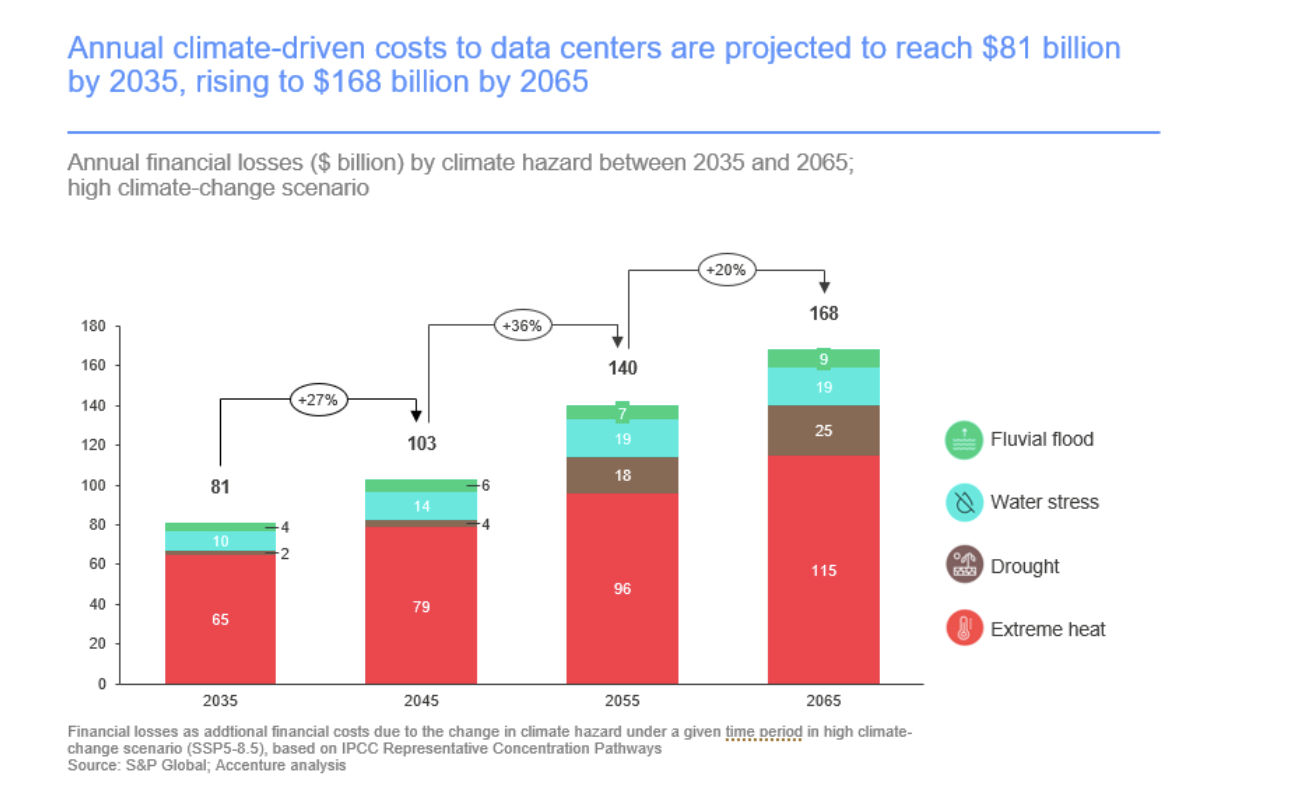
Analysis by the World Economic Forum finds that extreme heat, drought and other climate hazards could drive annual costs up at data centres globally by $81 billion by 2035, rising to $168 billion by 2065.
As the world has digitized, the importance of data centres has risen. From streaming movies and online shopping, to supply chain management and financial transactions, consumers and businesses alike rely heavily on this largely hidden infrastructure. In the age of AI, this trend has further accelerated: global data centre capacity is expected to almost triple by 2030.
Decisions on where to locate these data centres have become more complex over recent years. Traditional considerations, such as connectivity and space remain important, but energy and resilience are rising up the agenda.
Racks of the latest AI chips consume more than ten times as much energy as their predecessors and generate so much heat that air conditioning is no longer sufficient to keep them cool. Operators must now use liquid cooling: cold water pumped into server rooms to take the heat away.
The rising cost of climate hazards
The increased frequency and intensity of climate hazards – especially extreme heat and drought – threatens to compound soaring data centre running costs in multiple ways:
- Higher operational expenses: Extreme heat requires data centres to operate cooling systems at higher capacity, driving up electricity consumption and other expenses. Droughts and increased water-stress force facilities reliant on water-based cooling to seek alternative solutions, often at greater financial cost.
- Revenue losses from business interruptions: Extreme weather events increasingly cause outages and service disruptions, leading to breached contracts, customer attrition and millions in lost revenues for essential digital services.
- Repairs for physical damage: Direct exposure to hazards results in costly repairs or replacement of servers, power and cooling systems.
- Decreased employee productivity: Staff face health and safety risks from heat and poor air quality, travel disruptions and increased stress, all of which reduce their ability to maintain reliable operations and respond efficiently to emergencies.
Put together, our analysis of data from S&P suggests that annual climate-driven costs could reach the equivalent of 9.5% of total data centre asset value by 2055 under a high-emissions scenario. Total cumulative losses could reach $3.3 trillion over the same time period, with extreme heat accounting for more than two-thirds of the impact, followed by drought and water stress.
Moreover, climate-driven disruption extends deep into their value chains. Data centre customers can expect to suffer from multiple ripple effects, such as delayed payments, lost data or day-to-day processes grinding to a halt. These, in turn, present tangible business costs; for example, contractual penalties, customer attrition, supply chain friction and data recovery.
Future-proofing data centres against climate disruption
Building data centres that are resilient to climate hazards is critical given their importance to the global economy.
One key issue for data centre operators is breaking the vicious cycle of escalating resource demands, as cooling systems work harder to maintain optimal operating conditions, simultaneously driving massive increases in water consumption. Our assessment of twelve potential solutions, evaluated across two dimensions — feasibility and impact — identifies three investment priorities:
1. Cold/hot containment systems
Physical barriers that separate hot and cold air streams prevent mixing, increasing cooling efficiency by up to 40% and reducing energy costs.
2. Real-time environmental monitoring
Continuous visibility into temperature and humidity, preventing outages and reducing downtime to optimize energy and cooling usage.
3. Economizer and free-cooling systems
Using cool outside air or cold condenser water to cut chiller run-time, improving system effectiveness and lowering energy and water costs.
Beyond operations themselves, both data centre operators and organizations downstream should build resilience to climate hazards by strengthening their diagnostic and governance capabilities. This includes better understanding of vulnerabilities and interdependencies and regular stress-testing to inform resource allocation and disruption-planning decisions.
While these measures may appear onerous in terms of cost and time, AI-powered technologies from supply chain digital twins to N-tier network mapping are already being employed to boost operational stability and reduce vulnerability to systemic shocks.
Such solutions are sorely needed, although rising demand for AI is itself intensifying pressure on scarce resources. Finding a balance between seemingly inexorable growth in data centre capacity and climate hazard mitigation is likely to be one of the global economy’s stiffest and most critical challenges over the coming decades.
Don't miss any update on this topic
Create a free account and access your personalized content collection with our latest publications and analyses.
License and Republishing
World Economic Forum articles may be republished in accordance with the Creative Commons Attribution-NonCommercial-NoDerivatives 4.0 International Public License, and in accordance with our Terms of Use.
The views expressed in this article are those of the author alone and not the World Economic Forum.
Stay up to date:
Data Policy
Related topics:


Forum Stories newsletter
Bringing you weekly curated insights and analysis on the global issues that matter.
More on Climate Action and Waste Reduction See all

Jean Chrysostome Ngabitsinze
March 30, 2026


