How the ocean economy can catalyse sustainable growth
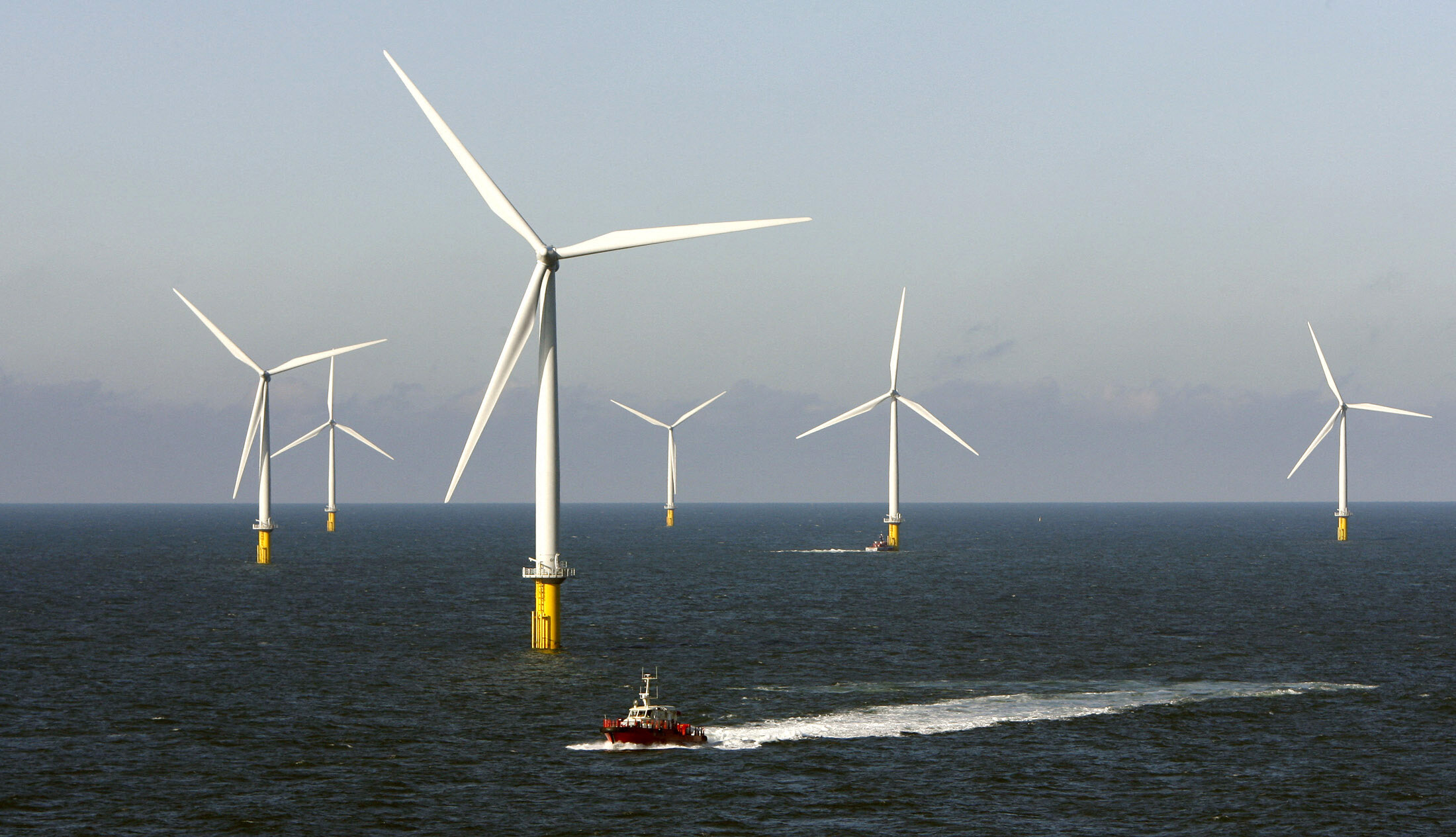
The ocean economy is a high-potential investment frontier. Image: REUTERS/Bob Strong
- Over half the world’s gross domestic product depends on nature but increasing environmental and climate degradation are pushing ecosystems towards critical tipping points, exposing markets to major long-term risks.
- The ocean economy is a powerful driver of sustainable growth, and a high-potential investment frontier that can generate jobs and economic value while restoring ecosystems.
- Despite currently receiving less than 1% of official development assistance, ocean-focused investments are expanding rapidly, such as with blue bonds and specialized ocean investment funds.
Nature is the foundation of all economic activity. Any business, in every sector, ultimately depends on the stability and productivity of natural systems.
The “nature economy” recognizes this interdependence, viewing natural capital as a critical asset underpinning global prosperity. Clean water, fertile soil and pollination, among other elements, represent the living infrastructure of our economies.
However, these assets are in rapid decline. Accelerating climate change, biodiversity loss, pollution and unsustainable resource use – compounded by rising geopolitical and socio-economic instability – are pushing the planet toward dangerous tipping points, recently crossing the planetary boundary on ocean acidification.
These events are exposing global markets to escalating systemic and long-term investment risks. In fact, over half of global gross domestic product, an estimated $44 trillion in economic value, is moderately or highly dependent on nature’s services.
The World Conservation Congress, organized by the International Union for the Conservation of Nature (IUCN) in early October, reaffirmed that despite decades of conservation efforts, the world remains on an unsustainable trajectory.
However, there is reason for optimism: if the 1,400+ participants from governments, businesses and civil society integrate regenerative practices into their operations, significant progress can be made. According to the World Economic Forum, nature-positive business models could unlock $10.1 trillion in annual opportunities and create 395 million new jobs by 2030.
Have you read?
A major contributor to the state of nature is the health of our ocean. As the planet’s largest carbon sink, absorbing over 90% of the excess heat from our emissions, the ocean plays a critical role in regulating our climate. It also underpins the livelihoods of billions of people and directly employs over 100 million people worldwide.
To drive meaningful progress toward a regenerative future, corporations must embed ocean-positive strategies within their business models.
This year’s UN Ocean Conference in June 2025, underscored a pivotal shift: the emergence of a new blue economy narrative, one that recognizes the ocean economy's remarkable resilience over the past few decades and positions the ocean as a key enabler of future sustainable growth and job creation.
Companies are already innovating in this space: electrifying maritime transport, restoring mangroves as natural coastal defences, scaling up technologies for water treatment and desalination and investing in coral reef regeneration. To realize the full potential of a regenerative blue economy, financial systems and investment models must evolve too.
The breadth and depth of the ocean economy
As defined by the World Bank, the blue economy refers to the sustainable use, restoration and stewardship of ocean and coastal resources to generate economic value while preserving ecosystem integrity. Valued at approximately $1.3 trillion in 1995, the blue economy has since doubled to $2.6 trillion by 2020 and is projected to quadruple by 2050, reflecting its transformative potential.
The World Economic Forum, in collaboration with ORRAAA, Builders Vision and Katapult, published the Making Waves in the Regenerative and Sustainable Ocean Economy report and found that there are six critical sustainable and regenerative blue economy sectors with a median potential global investment of $550 billion per annum to 2030:
- Ocean conservation: Investment into projects to improve biodiversity and resilience in coastal communities, creating business opportunities through marine protected areas, ecotourism, payments for ecosystem services and blue carbon.
- Sustainable fisheries and aquaculture: Capital and technical resources for best practice aquaculture and wild-caught seafood businesses and supply chains, particularly in emerging markets and small island developing states, that can be certified sustainable and access high-value markets globally.
- Circular economy and blue technology: Businesses that leverage ocean assets or directly prevent ocean degradation by using innovative new techniques or technologies, such as plastic upcycling and waste management.
- Ocean-based renewable energy: Wave, solar and tidal power where the investment provides innovation or uniquely leverages the ocean without detriment to biodiversity.
- Sustainable blue infrastructure: Technologies and efficiencies, including green/blue solutions to freight and passenger shipping and green ports.
- Ridge to reef: Investment into integrated solutions, including agriculture, sustainable forestry and land use, recognizing the importance of watersheds and coastal management.
The diversity and size of these solutions highlight the ocean economy as a high-potential investment frontier, where business opportunities are forecasted to deliver sustainable growth, beyond the pure conservation agenda.
Ocean finance: Financial opportunity, not philanthropy
Today, less than 1% of official development assistance and under 1% of philanthropic capital are directed toward supporting the regenerative blue economy.
Yet, ocean-positive solutions represent one of the largest and most undercapitalized market opportunities for future growth. Companies that invest early in blue economy innovation will be better equipped to manage risks, strengthen supply chain resilience and tap into new sources of sustainable growth.
Capital providers often complain about a lack of bankable, investment-ready projects in the regenerative blue economy. Making Waves in the Regenerative and Sustainable Ocean Economy highlights more than 45 investment opportunities designed to inspire confidence and demonstrate the viability and long-term resilience of ocean-positive projects, particularly in emerging and developing economies.
Since 2018, the number of ocean-focused investment funds has grown tenfold, with notable examples including the Global Fund for Coral Reefs, Outrigger Impact, Katapult Ocean, SWEN Capital Partners’ Blue Ocean Fund and the Ocean 14 Capital Fund, among others.
Alongside these, innovative financial instruments such as the Nautilus Blue Guarantee Company and the Blue Finance Facility are helping to mobilize capital and enable investments at scale.
Blue bonds are also emerging as the latest frontier in capital markets. The most recent case was announced by First Abu Dhabi Bank during the IUCN World Conservation Congress: a $20 million bond designed to support the conservation of marine resources, protect coastlines and enhance blue carbon ecosystems.
In addition to describing funds and investment platforms available for larger capital providers, the report also describes over 25 case studies of concrete initiatives and small- and medium-sized enterprises.
These represent investment-ready projects, underscoring that a growing pipeline of bankable, ocean-positive projects is already taking shape.
The message is clear: The ocean is no longer a niche market for impact investors and philanthropies. It is increasingly becoming a high-potential sector where financial returns align with nature-positive impact.
Don't miss any update on this topic
Create a free account and access your personalized content collection with our latest publications and analyses.
License and Republishing
World Economic Forum articles may be republished in accordance with the Creative Commons Attribution-NonCommercial-NoDerivatives 4.0 International Public License, and in accordance with our Terms of Use.
The views expressed in this article are those of the author alone and not the World Economic Forum.
Stay up to date:
Ocean


Forum Stories newsletter
Bringing you weekly curated insights and analysis on the global issues that matter.
More on Nature and BiodiversitySee all

Julia Strong and Susan Cook-Patton
September 28, 2026


