How to build ocean industries that heal, not harm
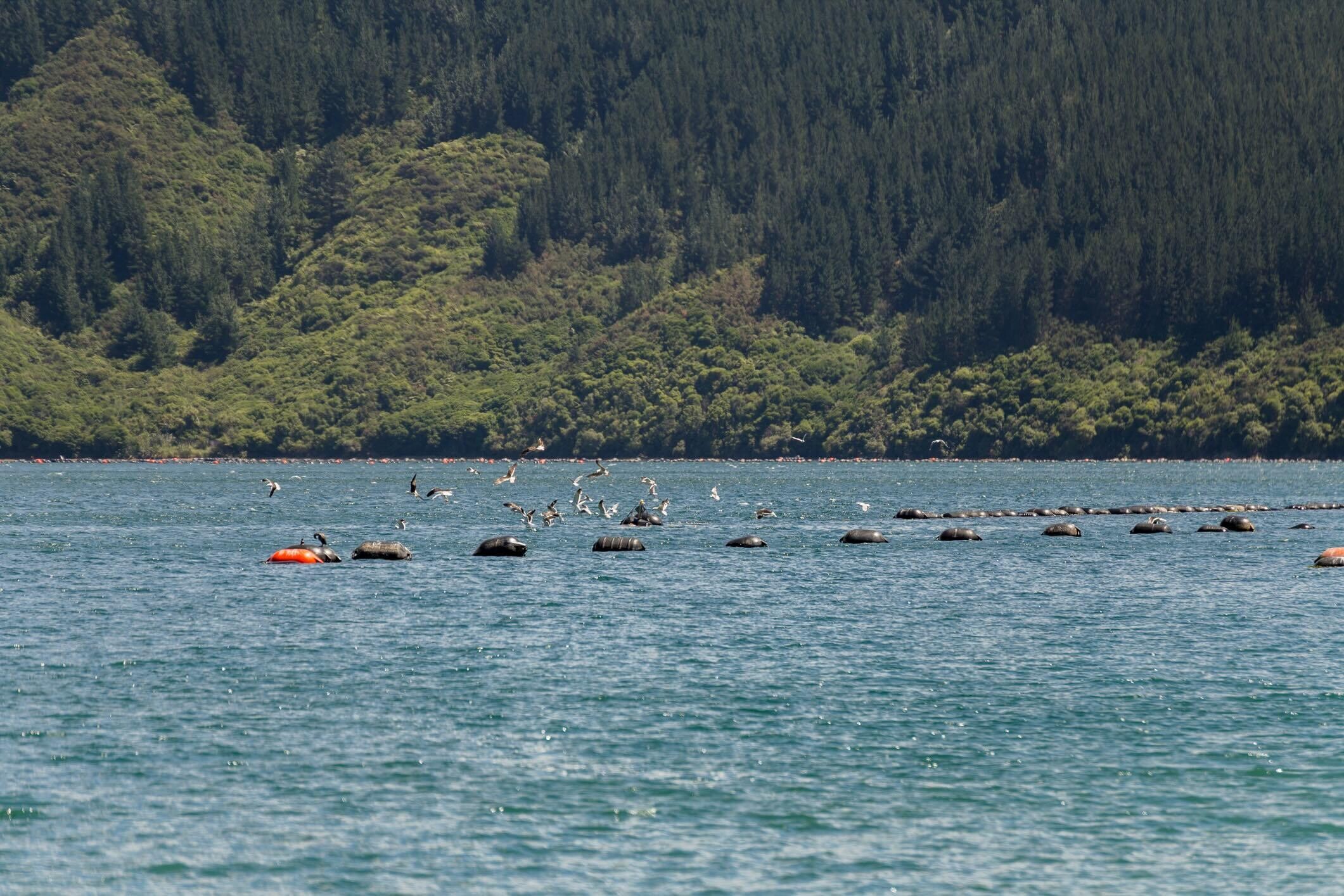
New Zealand's mussel industry is a prime example of how high-value, highly mechanized industries can work with the environment rather than against it. Image: Getty Images/iStockphoto
- As most measures of ocean health continue to decline, we must move beyond sustainability and build a blue economy that regenerates.
- Regenerative approaches ensure thriving ecosystems translate into resilient markets and communities.
- A regenerative blue economy channels investment and policy support towards sectors that deliver these outcomes and gradually phases out those that cannot.
As most measures of ocean health continue to decline, it's imperative that we move beyond sustainability and build an ocean economy that regenerates. Every major sector that depends on the sea — fisheries, aquaculture, shipping, tourism, energy, biotechnology — faces the same test: can it evolve in ways that make ocean recovery the foundation of long-term business success?
Regeneration is not an abstract goal; it is the practical recognition that maintaining a degraded ocean undermines economic prospects and human well-being. Regenerative approaches align ecological recovery with long-term profitability and social prosperity, ensuring thriving ecosystems translate into resilient markets and communities.
The question is not whether ocean industries will continue to grow, but how that growth can be reimagined within planetary boundaries to support shared prosperity. A regenerative blue economy measures success by recovery and value enhancement: reefs that rebuild, fisheries that rebound, coasts that protect livelihoods and communities that thrive. The challenge is to make those outcomes the norm, not the exception.
Shifting from extraction to regeneration
For decades, the blue economy was defined by growth in industrial metrics: cargo tonnage, fish landings, installed energy capacity and visitor arrivals. Regeneration asks whether activity across these sectors collectively enhances the ocean’s capacity to sustain life. Some sectors are nearing their ecological limits, others have room to expand under stronger safeguards and new ones are emerging around restoration and data.
Wild-capture fisheries remain near 90 million tonnes a year, effectively flat for a decade. Aquaculture surpassed wild catch in 2022 for the first time at 94.4 million tonnes, reflecting a structural shift in supply. The future of capture fisheries lies not in increased extraction, but in rebuilding stocks, restoring habitats and securing small-scale fishers’ rights. Shipping, which carries more than 80% of global trade by volume and emits about 2% of global greenhouse gases, is similarly re‑evaluating its trajectory under the International Maritime Organization’s net‑zero‑by‑2050 strategy. Progress will depend on cleaner fuels, new designs and consistent regulations that reward verified emissions reductions.
Offshore renewables are expanding rapidly, with global installed offshore wind capacity reaching 83 gigawatts in 2024 — more than triple the capacity of a decade ago — and projected to reach 2000 gigawatts by 2050. This sector demonstrates how growth and regeneration can converge: by delivering low-carbon energy, creating coastal jobs and, when responsibly sited, supporting marine habitat restoration and co-use with fisheries.
Planning for transition and resilience
Countries are beginning to integrate regeneration into national ocean planning. The High‑Level Panel for a Sustainable Ocean Economy calls on all coastal and island states to adopt Sustainable Ocean Plans that align ocean industries with ecosystem health and climate goals. Such plans help governments anticipate sectoral transitions — retiring harmful practices, scaling restoration and supporting emerging opportunities. Indonesia’s plan to expand its promising seaweed industry within its National Blue Economy Roadmap exemplifies this approach, linking seaweed expansion with downstream processing, livelihood creation and low‑impact aquaculture.
In the United Kingdom, Biodiversity Net Gain regulations now require measurable improvement in nature as a condition for planning approval, with Marine Net Gain under consideration. The European Union’s Nature Restoration Law mandates restoration of at least 20% of degraded land and sea by 2030 and all ecosystems in need by 2050. In China, the high-level policy doctrine of ‘ecological civilization’ is redefining coastal policy through red‑line zoning and integrated marine management tied to metrics for ecosystem functioning. Together, these developments signal a governance shift: restoration is moving beyond voluntary practice, it is increasingly embedded in legal, planning and economic instruments.
The rise of restoration and frontier innovation
Ocean restoration is now approaching infrastructure scale. Mangroves, seagrasses and coral reefs underpin food security and carbon storage, yet they require stable finance, credible monitoring and long‑term custodianship to become investable. The EU law and UN Decade on Ecosystem Restoration are driving demand for data systems, standards, and skills, laying the foundation for a restoration industry that values ecological recovery as a service.
Emerging technologies are widening the frontier. Marine carbon dioxide removal (mCDR) approaches — such as ocean alkalinity enhancement and large‑scale macroalgae cultivation — may contribute to future climate strategies, but they remain in early research. The US National Academies and others call for rigorous trials, monitoring, and governance before deployment. For now, mCDR should be viewed as a scientific frontier, not a mitigation tool.
Closing the equity gap
Low‑impact aquaculture, offshore renewables, restoration and transparent data systems are drawing capital, yet developing coastal states face structural barriers: borrowing costs 8-12% above OECD averages, limited fiscal space and exposure to climate shocks. Without concessional finance and technology partnerships, these economies risk being left behind. Blended finance, blue bonds and debt‑for‑nature swaps can help, but long‑term progress depends on building domestic capacity to plan, enforce and monitor. True equity means rebalancing who benefits from the emerging blue economy, ensuring that capital, technology and market access empower those who depend most on the ocean. Without this shift, the blue transition risks repeating past patterns of resource dependence instead of fostering inclusive and resilient ocean prosperity.
Signals of change and what comes next
Across the spectrum of ocean industries, trajectories are already diverging:
Fisheries and energy extraction remain foundational but face ecological ceilings that will cap growth and reorient competition towards efficiency, transparency and verified impact. Aquaculture, offshore renewables and coastal tourism have room to expand if they embed biodiversity safeguards and fair labour practices and continue to push the boundaries of industry-led regenerative approaches. Meanwhile, blue biotechnology, ecosystem restoration and ocean data services are moving from niche to frontier, forming what could become a global industry dedicated to regeneration itself.
These shifts are not uniform. Mature sectors are under pressure to decarbonize and restore ecological functions and emerging ones must build legitimacy through science, monitoring and equitable benefit-sharing. Together they outline a portfolio view of the ocean economy: one where long-term value accrues to industries that replenish the natural capital they depend on.
The next wave will, therefore, not be measured by output alone, but by its contribution to recovery — how much biomass is rebuilt, how much carbon is avoided or sequestered, how much biodiversity is restored and how many livelihoods are made more resilient in the process.
A regenerative blue economy will channel investment and policy support towards sectors that deliver these outcomes and will gradually phase out those that cannot.
Don't miss any update on this topic
Create a free account and access your personalized content collection with our latest publications and analyses.
License and Republishing
World Economic Forum articles may be republished in accordance with the Creative Commons Attribution-NonCommercial-NoDerivatives 4.0 International Public License, and in accordance with our Terms of Use.
The views expressed in this article are those of the author alone and not the World Economic Forum.
Stay up to date:
Ocean


Forum Stories newsletter
Bringing you weekly curated insights and analysis on the global issues that matter.
More on Nature and BiodiversitySee all

Priyanka Ramchurn, Derek Baraldi and Laura Fisher
March 17, 2026