In Japan, simple exercise routines strengthen health, community ties and resilience
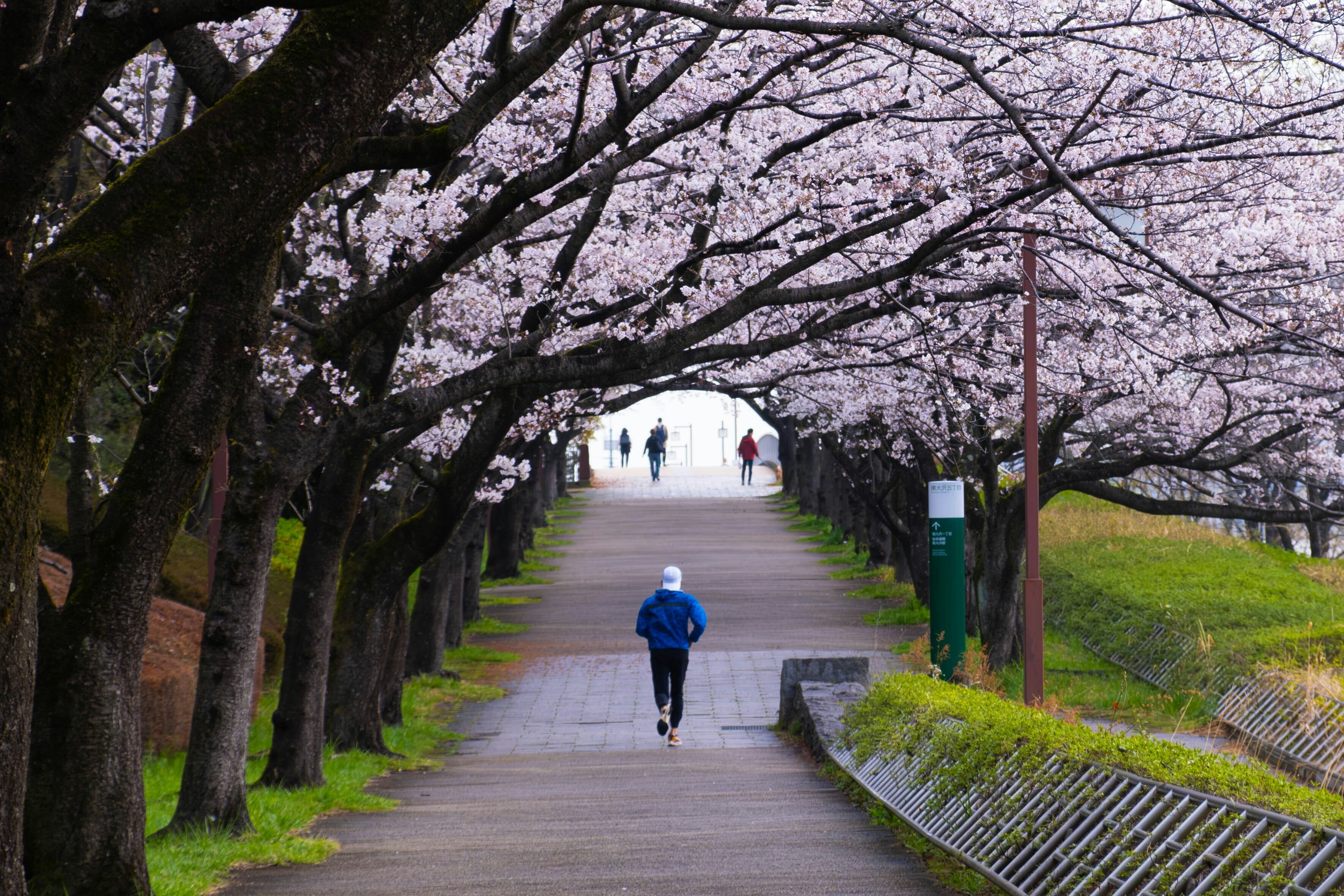
Minami-Ōsawa, Hachioji, Tokyo, Japan. Long-standing exercise habits support public health, workplace productivity and community resilience in Japan. Image: Unsplash/FumiakiHayashi
- Daily sedentary time in Japan is among the longest of any country and the global shift to remote work has further reduced step counts.
- However, more than half of people in Japan play a sport once a week – a significant increase from 24% in 1992.
- Regular exercise – including daily radio taiso and an annual national sports day – also contributes to healthier ageing, stronger workplaces and more resilient communities in Japan.
Regular physical activity is essential for both physical and mental wellbeing. But around 30% of adults and 80% of adolescents globally don't exercise enough, according to the World Health Organization (WHO).
Exercise helps prevent and manage noncommunicable diseases including cardiovascular disease, cancer and diabetes, while also alleviating symptoms of depression and anxiety and supporting brain health. Among children and adolescents, physical activity also promotes bone and muscle development as well as motor and cognitive growth.
If current levels of inactivity persist, the WHO estimates the global cost to public healthcare systems between 2020 and 2030 could reach approximately $300 billion or $27 billion every year.
In Japan, exercise trends reflect these challenges, but also some progress.
Occupational physical activity has declined by an average of 10% over the past five to six decades, while average daily sedentary time now exceeds 420 minutes – among the longest daily sitting time globally. The shift to remote work has further reduced daily step counts.
At the same time, however, sports participation has steadily increased in Japan. A 2024 survey of 3,000 adults found that 54.8% played sports at least once a week. While slightly below pre-pandemic levels, this represents a marked rise from just 23.7% in 1992.
Amid these shifts, Japan’s long-standing exercise habits continue to support public health, workplace productivity and community resilience. Radio taiso (radio calisthenics), school and community sports festivals, and the annual national holiday Sports Day all provide accessible opportunities for movement.
Sports Day, established to commemorate the 1964 Tokyo Olympics and now held every October, brings people together nationwide to engage in physical activity and celebrate sport. Japan is also home to more than 210,000 sports and gym facilities, approximately 50,000 of which are public. And 86% of public schools open their facilities to the wider community, ensuring affordable and inclusive opportunities to exercise across generations.
Radio taiso: Exercise for all
First introduced in 1928 by the Simple Life Insurance Bureau of the Ministry of Communications (today’s Japan Post Insurance), radio taiso remains one of Japan’s most widely recognized exercise routines. Broadcast daily at 6.30 am, the three-minute radio programme incorporates exercises that enhance flexibility, balance, lower-body strength and endurance. Recognized by nearly 97% of people, radio taiso is firmly embedded in schools, workplaces and communities as an activity that anyone can do anytime, anywhere.
Many companies, particularly those in physically demanding industries such as construction, begin their workday with group radio calisthenics to reduce fatigue and injuries while strengthening team cohesion. Research also highlights its benefits for older adults, with a 12-week programme showing improved balance and endurance among participants, while a longitudinal study of over 11,000 elderly people found an 18% lower risk of dementia among those who practice regularly.
Such simple routines can play an important role in supporting healthy ageing. And beyond health, radio taiso also represents cultural continuity, a shared ritual that links generations and embeds exercise into daily life.
Sports festivals as community connectors
Sports festivals, or undokai, were introduced to higher education in the 1870s and later became a staple of elementary and secondary school schedules. Today, they extend beyond education into workplaces and communities, fostering physical activity, teamwork and intergenerational connection.
Typically, participants are divided into two teams to compete in a variety of events, with preparation and training often beginning months in advance. Both training and competing create opportunities for collaboration, as well as physical activity.
Some organizations have embraced sports festivals as part of their health and productivity management strategies too. HR service firm Pasona Group, for example, is hosting the upcoming Undokai World Cup 2025, featuring inclusive activities designed to enhance employee wellbeing and community engagement.
Corporate-led sports festivals of this kind not only improve employee health, they also strengthen ties within society more generally. More recently, specialized service providers have started to design and manage undokai for companies and communities, reflecting growing demand for these sports festivals.
Exercise as social infrastructure
As Japan’s population ages, policy priorities are shifting from merely extending life expectancy to extending healthy life expectancy. Physical activity is central to physical capacity, but also to mental and cognitive health.
Shared routines such as radio taiso and sports festivals go beyond exercise by strengthening workplace bonds, enhancing community cohesion and building social resilience. They also highlight how low-cost, widely accessible exercise can complement high-tech healthcare or policy interventions, offering scalable solutions that empower people while reinforcing wellbeing.
As Japan shows, exercise can also function as a form of social infrastructure. By embedding movement into daily life and creating spaces for connection across generations, these practices contribute to healthier ageing, stronger workplaces and more resilient communities.
As other societies face rising healthcare costs and ageing demographics, Japan offers valuable insights into how simple, inclusive and community-based approaches can help build more sustainable and wellbeing-oriented futures worldwide.
Don't miss any update on this topic
Create a free account and access your personalized content collection with our latest publications and analyses.
License and Republishing
World Economic Forum articles may be republished in accordance with the Creative Commons Attribution-NonCommercial-NoDerivatives 4.0 International Public License, and in accordance with our Terms of Use.
The views expressed in this article are those of the author alone and not the World Economic Forum.
Stay up to date:
Longevity Economy
Related topics:


Forum Stories newsletter
Bringing you weekly curated insights and analysis on the global issues that matter.
More on Health and Healthcare SystemsSee all

Saia Ma’u Piukala
April 5, 2026


