3 ways nature-based solutions are tackling climate displacement in the Global South
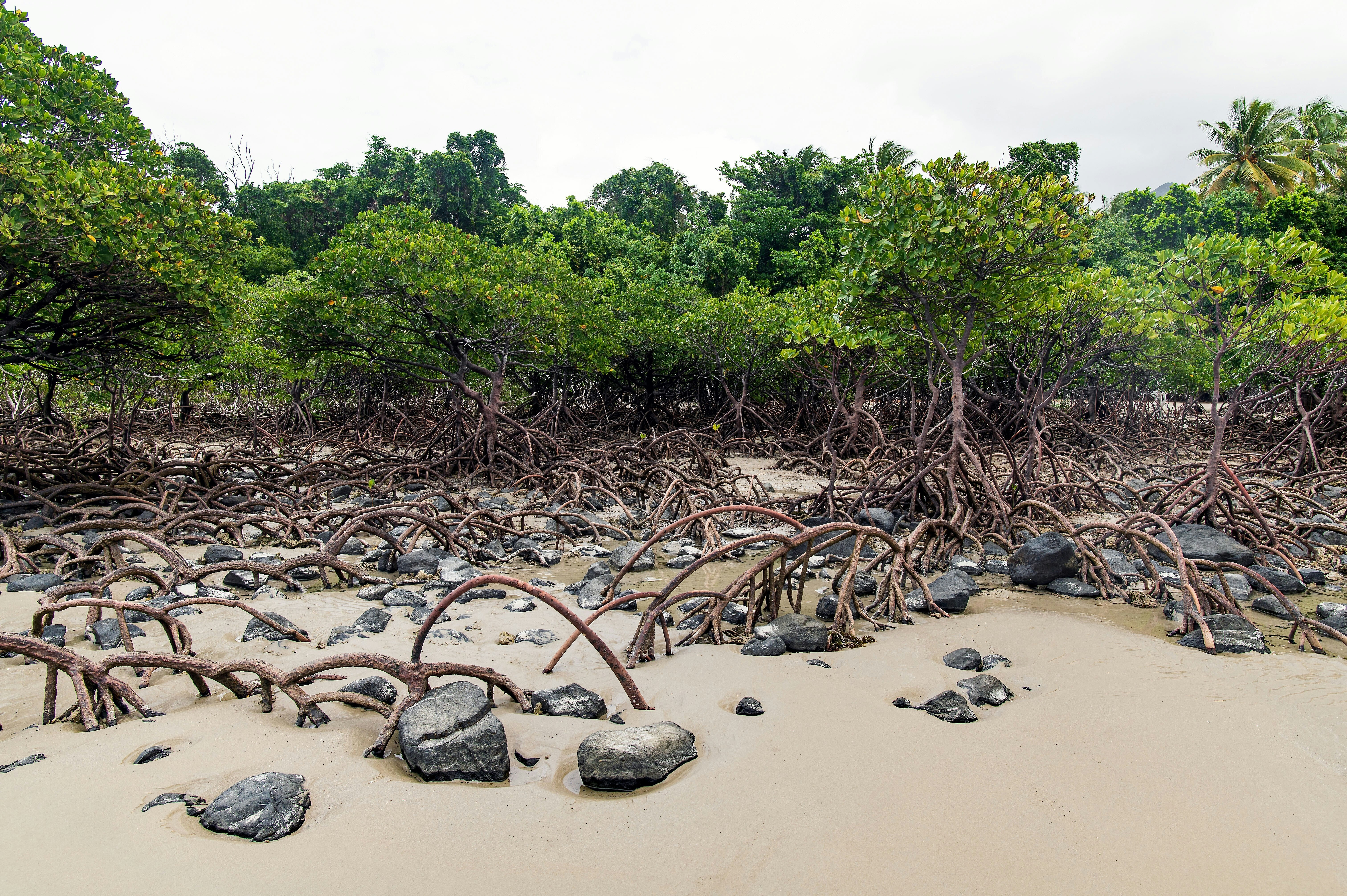
Mangrove trees are a nature-based solution to coastal flooding already being used in the Indus Delta of South Pakistan. Image: David Clode/Unsplash
Shahrukh Shahnawaz
High Court Lawyer; Member Environmental Committee of the Sindh High Court Bar Association, High Court of Sindh- In the past 10 years, climate disasters forced 60,000 people from their homes every day.
- By 2050, climate change is projected to displace around 143 million people across the Global South.
- Discover three ways nature-based solutions are helping communities in the Global South stay rooted in their lands.
The accelerating impacts of climate change are driving people from their homes in unprecedented numbers.
Rising seas, extreme drought and land degradation are not just environmental crises - they are drivers of human displacement. The UN reports that in the past decade, weather-related disasters have triggered around 220 million internal displacements, the equivalent of 60,000 people forced from their homes every single day. This warning is echoed by a University of Oxford report, which finds that in climate hotspots, even a 1°C rise in temperature could drive a tenfold increase in displacement.
In the Global South, these challenges are even more acute. By 2050, climate change is projected to displace around 143 million people across Sub-Saharan Africa, South Asia and Latin America.
To address this growing crisis, nature-based solutions, which involve restoring and managing ecosystems to tackle societal challenges, offer a cost-effective and scaleable way forward.
Nature-based solutions help communities adapt to climate impacts and could deliver up to one-third of the greenhouse gas reductions needed to meet the Paris Agreement goals. By reducing disaster risk and strengthening livelihoods, they directly ease the pressures that drive climate migration.
How the Forum helps leaders align climate action with nature-positive growth
Here are three ways nature-based solutions are already helping communities in the Global South stay rooted in their lands.
1. Coastal resilience in South Pakistan
In the Indus Delta of South Pakistan, fishing and farming communities in the Keti Bunder village face the twin threats of sea-level rise and saltwater intrusion. Every year, tidal surges destroy homes, submerge fields and erode fertile land. Nature-based solutions, such as mangrove restoration, offer a natural defence. Conservative estimates indicate that more than 1.2 million people have already been displaced from their homes, with around 4.2 million acres of land submerged by rising sea levels.
Nature-based solutions have, however, started to make an impact. Acting as 'green sea walls', mangroves buffer storm surges, stabilize shorelines and slow sea intrusion. They also provide fish nurseries and fuelwood, sustaining local livelihoods. In Keti Bunder, community-led projects supported by NGOs and government agencies have replanted thousands of hectares of mangroves. The results are tangible: reduced coastal erosion, improved fish catches and stronger protection for villages. By preserving homes and incomes, mangroves reduce the push factors that drive families inland to already crowded cities. This is a striking example of how ecological restoration doubles as a climate displacement prevention strategy.
2. Forest buffer corridors in Latin America
Mountain communities in the Andes and Amazon face repeated landslides, floods and river erosion. Deforestation for farming and mining has stripped natural buffers, leaving slopes unstable and rivers prone to destructive flows. Each extreme weather event displaces families, damages farmland and disrupts livelihoods. Restoring forest corridors offers a long-term solution.
By replanting slopes, stabilizing soils and reconnecting fragmented ecosystems, these 'green buffers' regulate water flows and reduce disaster intensity. They also strengthen community resilience, helping people remain in place, rather than being forced to migrate. A compelling example is Acción Andina, a multi-country restoration initiative spanning five Andean nations, including Colombia, Ecuador, Peru, Bolivia and Venezuela.
Since 2018, it has engaged over 40,000 people to restore nearly 5,000 hectares of Andean forest and protect more than 11,250 hectares of existing woodland. By drawing on such nature-based solutions, forest buffers can be scaled across Latin America. If replicated more widely, these corridors have the potential to buffer countless talled communities from climate-induced disasters and help stem the rising tide of displacement.
3. Farmer-managed natural regeneration in Africa
Known as the Horn of Africa, the Sahel faces one of the harshest combinations of drought, desertification and food insecurity. For decades, recurring crop failures have forced families into migration, often across borders. One of the most effective solutions has come not from large-scale projects, but from farmers themselves.
Farmer-Managed Natural Regeneration (FMNR) is a community-led practice of regenerating trees and shrubs from existing root systems on degraded farmland. Instead of costly tree planting, farmers allow shoots to regrow, selectively pruning and protecting them. Within a few years, degraded lands are restored with tree cover.
The benefits are striking. FMNR improves soil fertility, increases water retention and boosts crop yields. In Niger alone, more than 5 million hectares of land have been restored this way, improving food security for millions. By stabilizing harvests and incomes, FMNR reduces the need for families to leave their villages in search of survival.
Don't miss any update on this topic
Create a free account and access your personalized content collection with our latest publications and analyses.
License and Republishing
World Economic Forum articles may be republished in accordance with the Creative Commons Attribution-NonCommercial-NoDerivatives 4.0 International Public License, and in accordance with our Terms of Use.
The views expressed in this article are those of the author alone and not the World Economic Forum.
Stay up to date:
Climate Crisis


Forum Stories newsletter
Bringing you weekly curated insights and analysis on the global issues that matter.
More on Climate Action and Waste Reduction See all

Darlington Sibanda
March 25, 2026


