Not just trash: Why plastic pollution is an economic and ecological emergency
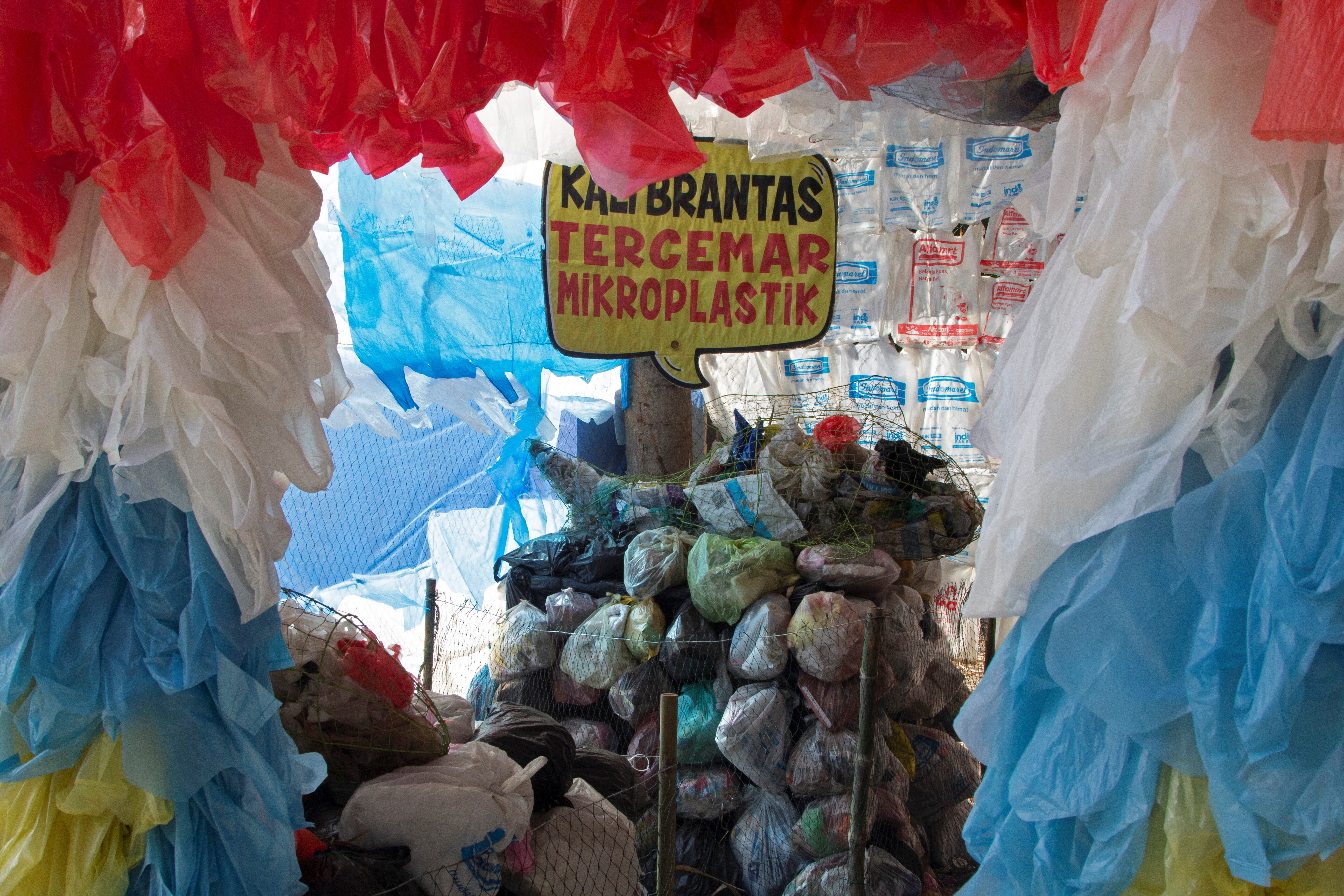
Plastic pollution solutions are underway at the national and grassroots levels Image: REUTERS/Prasto Wardoyo
Shreya Anand
Specialist, Plastic and Biodiversity, Global Plastic Action Partnership, World Economic Forum- Plastic pollution is an ecological and economic crisis as it impacts biodiversity, public health and coastal livelihoods while undermining key sectors such as tourism, fisheries and agriculture.
- Indonesia and global community-led initiatives demonstrate that solutions are possible, ranging from national action to grassroots models led by women, youth and Indigenous peoples.
- Despite stalled Global Plastics Treaty talks, momentum is growing through national action plans, circular design policies and other initiatives.
In the waters of Indonesia’s Anambas Islands, sea turtles that once nested undisturbed now push through shorelines littered with plastic. In Ghana, plastic bottles wash into lagoons that formerly fed local fisheries. And in Colombia, mangrove roots, critical nurseries for marine life, are tangled in bags and microplastic sludge.
Such widespread pollution is a biodiversity crisis, a public health threat and an economic emergency unfolding in slow motion.
An estimated 20 million metric tons of plastic litter end up in the environment every year. They break down into tiny particles that infiltrate ecosystems, food chains and even human blood, strangling coral reefs; poisoning fish and degrading critical habitats such as seagrass beds and mangrove ecosystems that buffer coastlines from storms and feed millions.
Addressing plastic pollution and biodiversity loss together delivers both environmental and economic gains.
”Plastic pollution has quietly become a major disruptor of economies, livelihoods and biodiversity, especially in coastal nations that depend on tourism and fisheries.
Such biodiversity loss also impacts business, as natural capital in the form of renewable and non-renewable resources underpins economies and societies. According to research by PwC, 55% of global gross domestic product (GDP) depends directly on biodiversity and ecosystem services.
Tourism is projected to add $16 trillion to global GDP by 2034, creating opportunities for jobs, innovation and inclusive growth. However, without decisive action, the sector could generate up to 205 million tonnes of waste annually – much of it plastic, threatening the very ecosystems that sustain it.
Marine plastic pollution already costs some countries hundreds of millions in lost tourism revenue, depleted fisheries and cleanup, with the greatest burden falling on Global South communities least equipped to manage it.
At the same time, over 90% of plastic goes unrecycled, representing a missed economic opportunity. With improved systems, incentives and technologies, this waste could be converted into valuable resources, protecting biodiversity while driving sustainable growth.
Confronting Indonesia’s plastic pollution crisis
An estimated 600,000 tonnes of plastic enter the ocean from Indonesia each year. This prompted the government to urgently act to prevent further harm to the country’s rich natural heritage and ecosystems.
As the second most megabiodiverse nation in the world, surpassed only by Brazil, Indonesia’s vast marine and terrestrial ecosystems are also critical for millions of livelihoods and for food security.
The direct impacts of plastic pollution on ecosystems and biodiversity have been well documented. Microplastics are widespread in Indonesian waters and soils, where they damage crops, degrade soil health and could cut global food yields by 4-14%. Economically, ocean plastic leakage is estimated to cost Indonesia IDR 225 trillion ($13.7 billion) annually.
The Government of Indonesia has sought various policies and interventions in response:
- Implementing the National Action Plan on Marine Debris Reduction, which successfully reduced plastic waste leakage by 41.68% between 2018 and 2023.
- Mandating local governments to transition to environmentally sound waste management practices by upgrading to sanitary or controlled landfills.
- Enforcing the Ministerial Regulation on the Roadmap for Waste Reduction by Producers, with a 30% target of reducing producer generated waste by 2029.
- Phasing out single-use plastics, such as plastic bags and straws by 2029.
- Setting waste management, including plastic waste, as a national priority requiring urgent action.
While the most recent round of global plastics treaty negotiations ended without agreement on a final text, progress is far from stalled.
Globally, countries, companies and communities are driving real change through voluntary action. Indonesia is a leading example via its National Plastic Action Partnership (NPAP), which is targeting a 70% reduction in marine plastic leakage by 2025, in alignment with national waste and marine debris strategies.
As part of the World Economic Forum’s Global Plastic Action Partnership (GPAP), NPAP Indonesia demonstrates how national action can be supported and scaled through global collaboration, ensuring lessons and solutions flow both ways.
With support from the Government of Canada, GPAP is now strengthening this work by addressing the critical link between plastic pollution and biodiversity, ensuring that efforts protect ecosystems and livelihoods as well as reduce waste.
Action on the frontlines
Funded by Canada and implemented through GPAP, the Biodiversity Small Funds Initiative supports grassroots groups tackling plastic pollution and biodiversity loss. By empowering local actors, it protects ecosystems, strengthens livelihoods and advances inclusive climate solutions.
With equity, science and circularity at its core, collective action can turn the tide.
”At the UN Ocean Conference 2025 (UNOC-3) in Nice, the winners of this initiative were announced: 20 community-led projects from Asia (including eight from Indonesia), Africa and Latin America. Their innovative approaches showcase new ways of managing plastic waste, restoring ecosystems and creating livelihoods.
Among them:
- Fundación Carvajal: Piangüeras – women who conserve mangrove ecosystems and piangua mollusc harvesting – in Colombia recover 3,000 kg of plastic monthly from mangroves.
- Sustainable Actions for Nature: Nigerian youth restore mangroves and transform plastic waste into saleable bricks and mats.
- Project Nomad: Indonesian “plastic factories” convert waste into reusable products and plastic credits.
- REGEN: Indigenous communities in Peru create biodegradable alternatives from natural materials.
These are not one-off clean-ups but regenerative, circular models led by women, youth, Indigenous peoples and informal workers. They demonstrate that those most affected by plastic pollution are also best placed to drive its solutions.
Despite their diversity, all projects underscored a shared insight: addressing plastic pollution and biodiversity loss together unlocks both environmental and economic gains.
Turning the tide together
Community leaders have shown that bottom-up innovation is already driving change, but scaling impact requires top-down support, through financing, policy alignment and global frameworks.
While negotiations on a Global Plastics Treaty are stalled, momentum is building through national action plans, circular design policies and the Kunming-Montréal Global Biodiversity Framework, which links plastics to broader ecosystem protection.
For businesses, governments and communities alike, investing in these solutions is no longer optional but necessary risk management, smart policy and a path to resilience.
As attention shifts to the Sustainable Development Impact Meetings at Climate Week 2025, the task is clear: carry the spirit of UNOC-3 into concrete action. This is a once-in-a-generation chance to align global ambition with local realities and to move from pledges to pathways.
With equity, science and circularity at its core, collective action can turn the tide, protecting biodiversity, restoring ecosystems and unlocking a just, regenerative economy.
Don't miss any update on this topic
Create a free account and access your personalized content collection with our latest publications and analyses.
License and Republishing
World Economic Forum articles may be republished in accordance with the Creative Commons Attribution-NonCommercial-NoDerivatives 4.0 International Public License, and in accordance with our Terms of Use.
The views expressed in this article are those of the author alone and not the World Economic Forum.
Stay up to date:
Plastic Pollution


Forum Stories newsletter
Bringing you weekly curated insights and analysis on the global issues that matter.
More on Climate Action and Waste Reduction See all

Lin O’Grady and Alice Charles
April 7, 2026


