Beyond the treaty table: Advancing action on plastic pollution
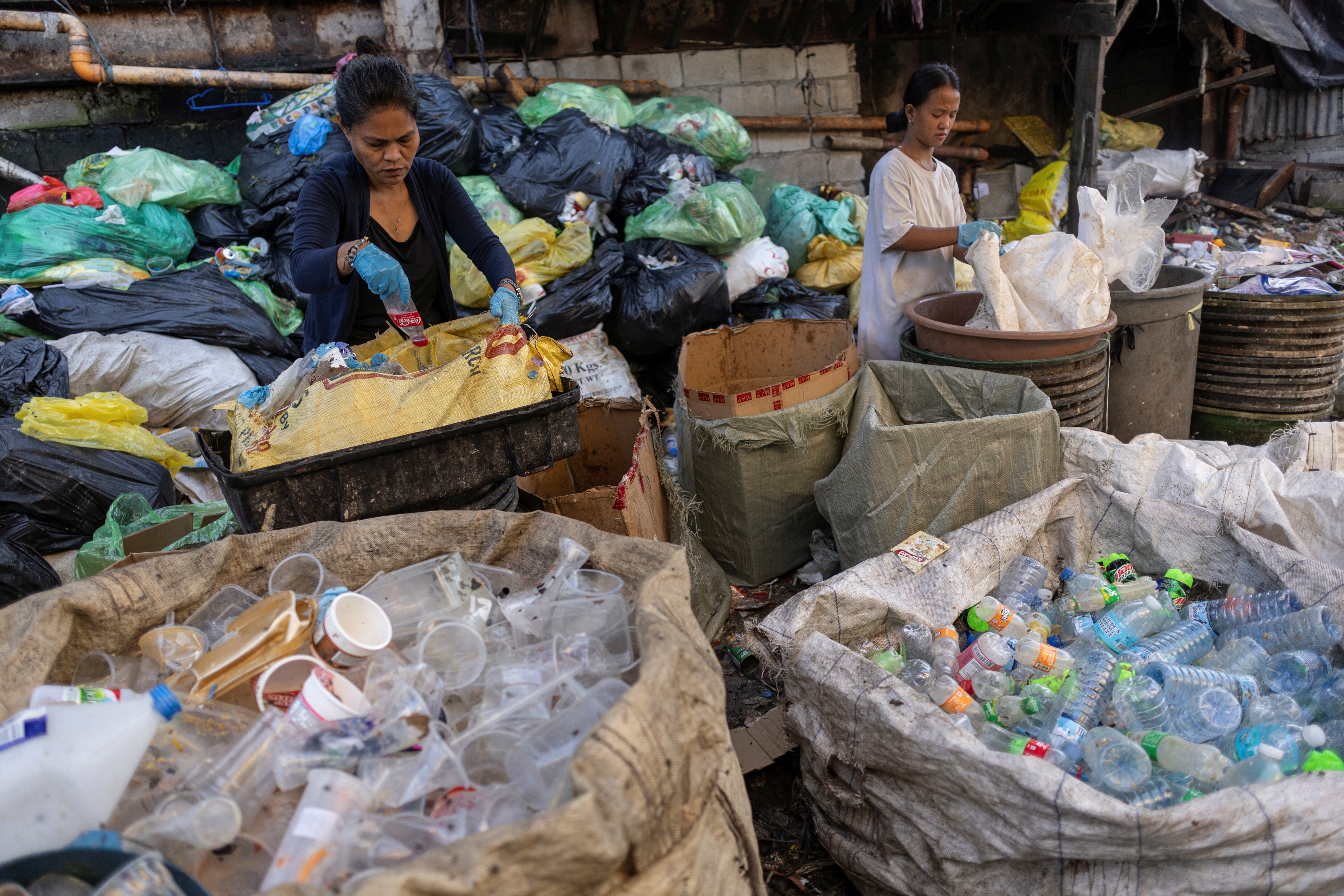
Communities aren't waiting for a binding treaty on plastic pollution Image: REUTERS/Eloisa Lopez
- Countries, businesses and communities are moving forward with national plastic action plans, recycling systems and innovative local solutions, despite stalled treaty talks.
- From waste pickers in Ghana to plastic reduction efforts in the Galapagos, community and regional collaborations are showing measurable progress.
- This article was first published in The Jakarta Post, read it here.
It is tempting to view the inconclusive global plastic treaty talks as evidence of stalled progress. The level of ambition, priorities and the right balance between measures related to production and consumption and improving waste management remain fiercely debated.
Yet this narrative overlooks what is unfolding on the ground, in boardrooms, government ministries and cities worldwide. The real source of hope lies not in waiting for a treaty but in the momentum of action already underway.
The recent resumption of global plastics treaty negotiations in Geneva drew worldwide attention as thousands of environmental leaders came together to tackle one of the planet’s most urgent crises: plastic pollution.
Momentum has long been building towards a legally binding agreement – often compared to the Paris climate change accords – but the latest session ended without a final text, revealing both the complexity of the issue and the challenge of uniting nearly 180 nations behind a common plan.
Negotiations are only one part of the story
International agreements are, by nature, difficult to achieve, especially on issues as widespread and interdisciplinary as plastic pollution. But while leaders debate legal text and seek consensus, much of the world is not standing still. Governments, companies and communities are moving ahead, shaping national plastic action plans, investing in better collection and recycling systems, and setting new standards for product design and disclosure.
Experience across more than two dozen countries in the Global Plastic Action Partnership (GPAP) shows how transformative national and local leadership can be. Through National Plastic Action Partnerships (NPAPs) – national platforms that unite key stakeholders to develop and implement solutions – progress is accelerating.
While negotiations seek global consensus, regions can and are acting now.
”In Ghana, women in Kumasi have received financial literacy training, while waste pickers in Tamale formed the Gbalahi Zoho Informal Waste Actors Association, gaining recognition and safer working conditions. This community-level action is reinforced by national leadership, with Ghana’s president endorsing the NPAP and calling for a regional framework through the Economic Community of West African States (ECOWAS).
In Ecuador, the NPAP is driving action in the Galapagos Islands, where protecting biodiversity depends on innovative approaches to plastics management.
Together, these examples show how countries are turning ambition into action, even as treaty negotiations continue.
From policy blueprints to ground-level solutions
Practical tools to tackle plastic pollution are already in hand. Countries are adopting systems such as extended producer responsibility, which sets clear targets for producers.
In the Philippines, the Flexible Plastic Recycling Working Group brings together recyclers, consumer goods companies and policy-makers to design circular solutions and scale local innovations into broader impact.
These efforts are not isolated. What works in one country is being adapted and scaled in others, with GPAP facilitating data exchange, best practices and lessons learned. The message from these efforts is clear: progress comes from implementation, not intention.
Montreal Protocol markets respond to certainty and drive innovation
An often-overlooked ingredient for success is regulatory clarity. When governments align rules, standardize definitions and make data interoperable, compliance costs fall and private investment is de-risked.
The 1987 Montreal Protocol proves this point: in just three decades, it drove a 99% global phase-out of ozone-depleting substances. Clarity in policy gives markets the confidence to back new business models, leading to safer refrigerants and cooling technologies that not only slowed ozone depletion but also improved energy efficiency.
For businesses and investors, action on plastics is not just a compliance obligation; it is an opportunity. Those who move early are best placed to benefit from new consumer expectations, more efficient logistics and rising demand for sustainable goods. The environmental imperative and economic and societal benefit go hand in hand, reinforcing the idea that investing in a circular plastics economy is both prudent and profitable.
Regional cooperation builds bridges while global talks continue
While negotiations seek global consensus, regions can and are acting now. By harmonizing standards, mutually recognizing regulations and coordinating market incentives, countries can significantly cut trade friction and raise the overall bar for ambition. Regions that collaborate in this manner become testbeds for innovation, showcasing what is possible and accelerating change far beyond their borders.
For example, the ASEAN Regional Action Plan for Combating Marine Debris demonstrates South-East Asia’s collective effort against plastic pollution, while West African nations are currently developing a similar regional plan to tackle the issue, clear evidence that regional cooperation and coordination are already happening.
Plastic pollution does not stop at borders. Regional cooperation means strategies are designed for real-world complexity and can deliver results while the world works towards eventual alignment at a global level.
Why hope is grounded in progress, not promises
Across continents, governments and businesses recognize the urgency reflected in scientific research: plastics pose not only an environmental threat but also growing risks to human health, food systems and the global economy.
National policies, regional platforms and ready-to-use toolkits are already reducing plastic leakage. GPAP focuses on turning theory into practice by combining data-driven policymaking, on-the-ground action and multistakeholder partnerships.
Through its NPAPs, the GPAP supports countries in designing evidence-based roadmaps, pilot innovative financing models and align ministries, businesses and civil society on priority actions. These are the building blocks of real change and the infrastructure that will allow even greater progress when a global accord is reached.
A treaty is vital to align incentives, synchronize ambition and level the playing field. But its absence is no reason for inaction – it is a call to accelerate what works, test bold policies and prove that ending plastic pollution cannot and must not, wait.
Don't miss any update on this topic
Create a free account and access your personalized content collection with our latest publications and analyses.
License and Republishing
World Economic Forum articles may be republished in accordance with the Creative Commons Attribution-NonCommercial-NoDerivatives 4.0 International Public License, and in accordance with our Terms of Use.
The views expressed in this article are those of the author alone and not the World Economic Forum.
Stay up to date:
Plastic Pollution


Forum Stories newsletter
Bringing you weekly curated insights and analysis on the global issues that matter.
More on Circular EconomySee all

François Bonnici, Maria Inés Martin and Adam Gavin
September 29, 2026


