How we can rethink humanitarian supply chains for the 21st century
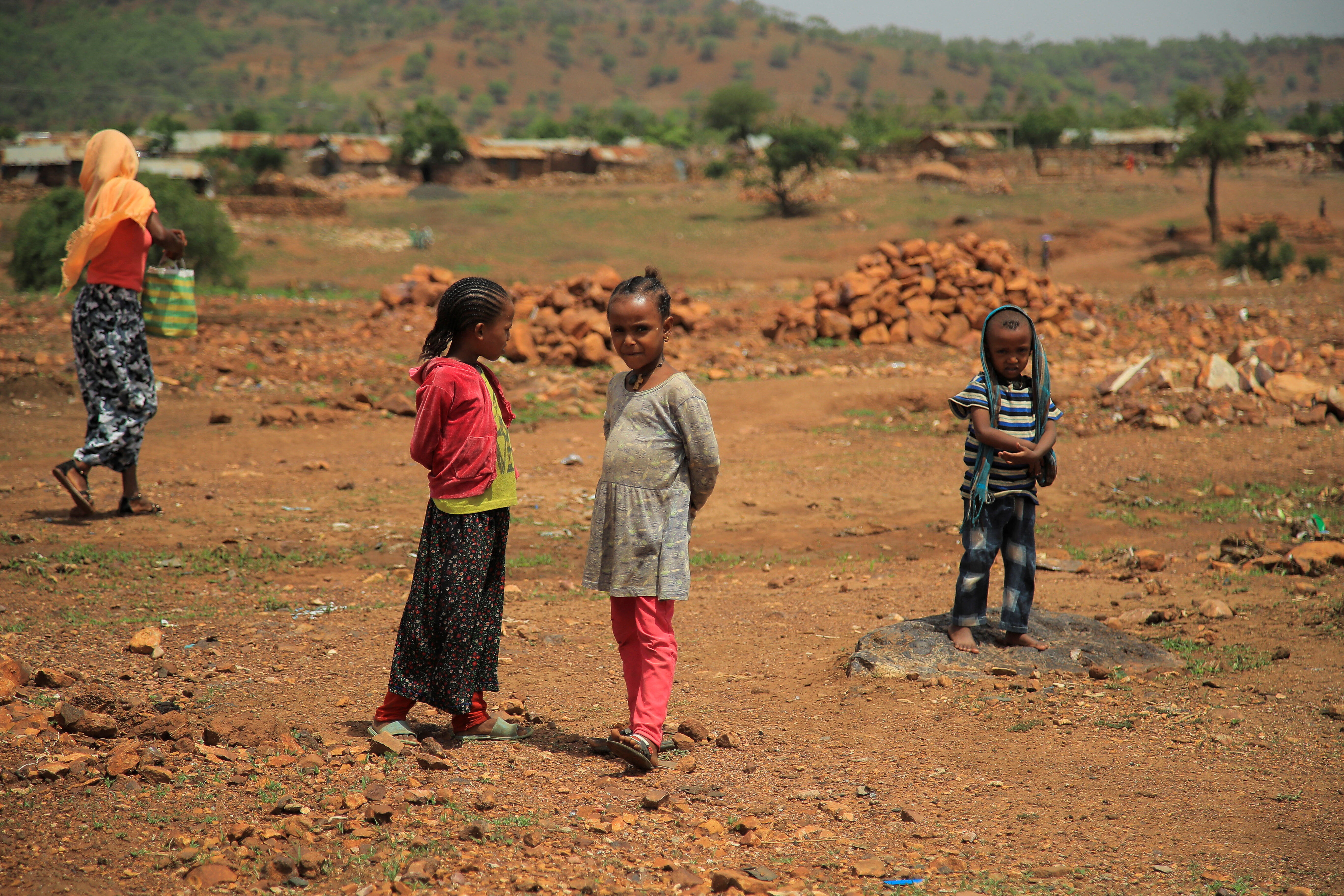
Humanitarian supply chains can create economies of scale and efficiencies in humanitarian assistance. Image: REUTERS/Tiksa Negeri/File Photo
- Across 72 countries, 300 million people are currently in need of humanitarian assistance.
- Recent individual government foreign aid cuts will have a profound impact on the lives of millions of people and on global stability and security.
- Supply chains, which are responsible for 60-80% of response costs and essential for delivering life-saving assistance, have a central impact on humanitarian support systems; it's time to recognize this.
In a world marked by climate-driven disasters, protracted conflict and forced displacement, 300 million people are currently in need of humanitarian assistance across 72 countries. Yet, multiple major donors have slashed funding. These cuts are part of a global trend by individual governments and will have a profound impact on the lives of millions of people and on global stability and security.
This crisis presents a challenge, but also a once-in-a-generation opportunity for reform in the humanitarian sector.
The supply chain is emerging as a critical lever for this reform, yet it remains one of the most overlooked. Responsible for 60-80% of response costs and essential for delivering life-saving assistance, supply chains are central to humanitarian impact. Despite this, they have developed over decades in institutional silos with little strategic coordination across humanitarian actors, leading to fragmentation, duplication and inefficiencies. Even within organizations, the supply chain is too often treated as a support function, rather than a strategic capability and is excluded from early planning and high-level decision-making. As a result, opportunities for shared services, joint sourcing or coordinated stock visibility across organizations often go unrealized.
Five workshops, one ambition
Addressing these challenges requires more than technical fixes; it calls for an overarching strategic approach. A paradigm shift. This is why the European Commission, one of the leading donors of humanitarian aid in the world, together with its Member States, with €2.3 billion ($2.71 billion) committed in 2025 so far, is spearheading an initiative to convene the humanitarian community around a shared vision for the future of the supply chain. The High-Level Group on Supply Chain (HLGSC) initiative will define clear priorities and lay the groundwork for leaders to align, commit and act.
The initiative is structured around five workshops: procurement, localization, preparedness, environmental sustainability and digitalization. The digitalization workshop, co-hosted by the World Economic Forum and the International Rescue Committee (IRC) on 1-2 July 2025 in Geneva, brought together leaders across the humanitarian, donor, research and private sectors. With HELP Logistics in an advisory role, the discussion centred on a single ambition: to reimagine an agile humanitarian supply chain, with future-ready systems underpinned by a shared digital infrastructure.
The digitalization imperative
Digital transformation offers one of the greatest opportunities to improve the speed, scale and precision of humanitarian supply chains. With the right systems in place, organizations can anticipate demand, coordinate across actors in real time and allocate resources where they are needed most — faster and more efficiently. Done right, digitalization can unlock major cost savings, strengthen resilience and expand the reach of assistance. Given the scale of current challenges, this is no longer optional; it’s an operational imperative.
Yet, despite this potential, digital initiatives in the sector remain fragmented and held back by inconsistent data standards and limited system interoperability. These technical barriers hinder coordination, create inefficiencies and often exclude local organizations due to high complexity and cost, reinforcing a digital divide.
Underlying this fragmentation is a lack of governance and long-term investment. Digital systems are frequently treated as project overheads, rather than strategic infrastructure, which leads to duplicating solutions and undermines sustainability. Meanwhile, persistent skill gaps among staff result in low adoption and limited return on digital investments. Without addressing these structural and human factors, technology alone will not deliver transformation.
From diagnosis to commitment
The collective diagnosis is clear: realizing the potential of digital transformation requires strong, coordinated leadership and a shared commitment to action. Agreement is emerging around common priorities, such as adopting core data standards, ensuring system interoperability and scaling inclusive, fit-for-purpose tools.
This will depend on clearly defined, complementary roles: donors can shape the enabling environment by linking funding to open standards and inclusive design; humanitarian agencies must drive implementation by adopting shared taxonomies and building institutional digital capacity; the private sector brings the modular, interoperable solutions needed to scale; and research and network bodies will ensure accountability through evidence, shared learning and monitoring progress. Moving from fragmented efforts to a coordinated digital ecosystem is not just feasible — it’s essential, particularly in a sector already in the midst of profound change.
A launchpad for private sector engagement
The transformation of humanitarian supply chains cannot be achieved by the humanitarian community alone. The private sector — particularly logistics providers, technology firms and data infrastructure players — brings essential expertise and capabilities that must be leveraged more systematically. But this requires a shift in mindset: from short-term collaborations to enduring public-private partnerships grounded in shared goals and co-designed tools. These partnerships must be anchored in humanitarian principles, ensuring commercial logic does not override equity, neutrality or inclusion.
The aim is not to commercialize humanitarian response, but to professionalize the systems that support it. The supply chain offers a natural bridge. It is a space with a common operational language between private and public sector and where private-sector innovations (in AI, telemetry, traceability and modular infrastructure) can be applied to humanitarian challenges with real impact. The World Economic Forum, the European Commission and HELP Logistics (amongst others) are working to create the platforms where such principled partnerships can thrive, building trust, aligning incentives and enabling co-investment in scalable, interoperable systems.
A call to action
In December 2024, humanitarian leaders gathered in Brussels to endorse a process to unlock the potential of supply chains. Tasked with coming back one year later with proposals bold enough and specific enough to drive system change, the supply chain community is now getting ready to deliver.
In December 2025, at the final high-level conference of the HLGSC initiative, hosted by the European Commission, leaders will again need to pick up the baton. Supply chain transformation, driven by digital change, needs to be put at the heart of the agenda. Leaders will need to hold their organizations accountable to make this shift. It will be a shift that is primarily cultural - it will not come naturally to embed supply chain thinking across departments. It will be difficult to direct resources to system change when operations across many emergencies are being cut. However, it is also inexcusable to continue to use scant funds to replicate functions across organizations and not work as jointly and effectively as possible to save lives. More people in need will benefit. Cooperation and consolidation must happen.
Seán Rafter, Managing Director of Help Logistics at the Kühne Foundation; Dr. Jonas Stumpf, Regional Director Europe at Help Logistics at the Kühne Foundation; and, Richard Kneller, Civil Protection Programme Officer at the European Commission, also contributed to this piece.
Don't miss any update on this topic
Create a free account and access your personalized content collection with our latest publications and analyses.
License and Republishing
World Economic Forum articles may be republished in accordance with the Creative Commons Attribution-NonCommercial-NoDerivatives 4.0 International Public License, and in accordance with our Terms of Use.
The views expressed in this article are those of the author alone and not the World Economic Forum.
Stay up to date:
Humanitarian Action
Related topics:


Forum Stories newsletter
Bringing you weekly curated insights and analysis on the global issues that matter.
More on Resilience, Peace and SecuritySee all

Zainab Azizi
April 7, 2026


