Space in focus: The rise of Earth Observation – and other news to watch in frontier tech
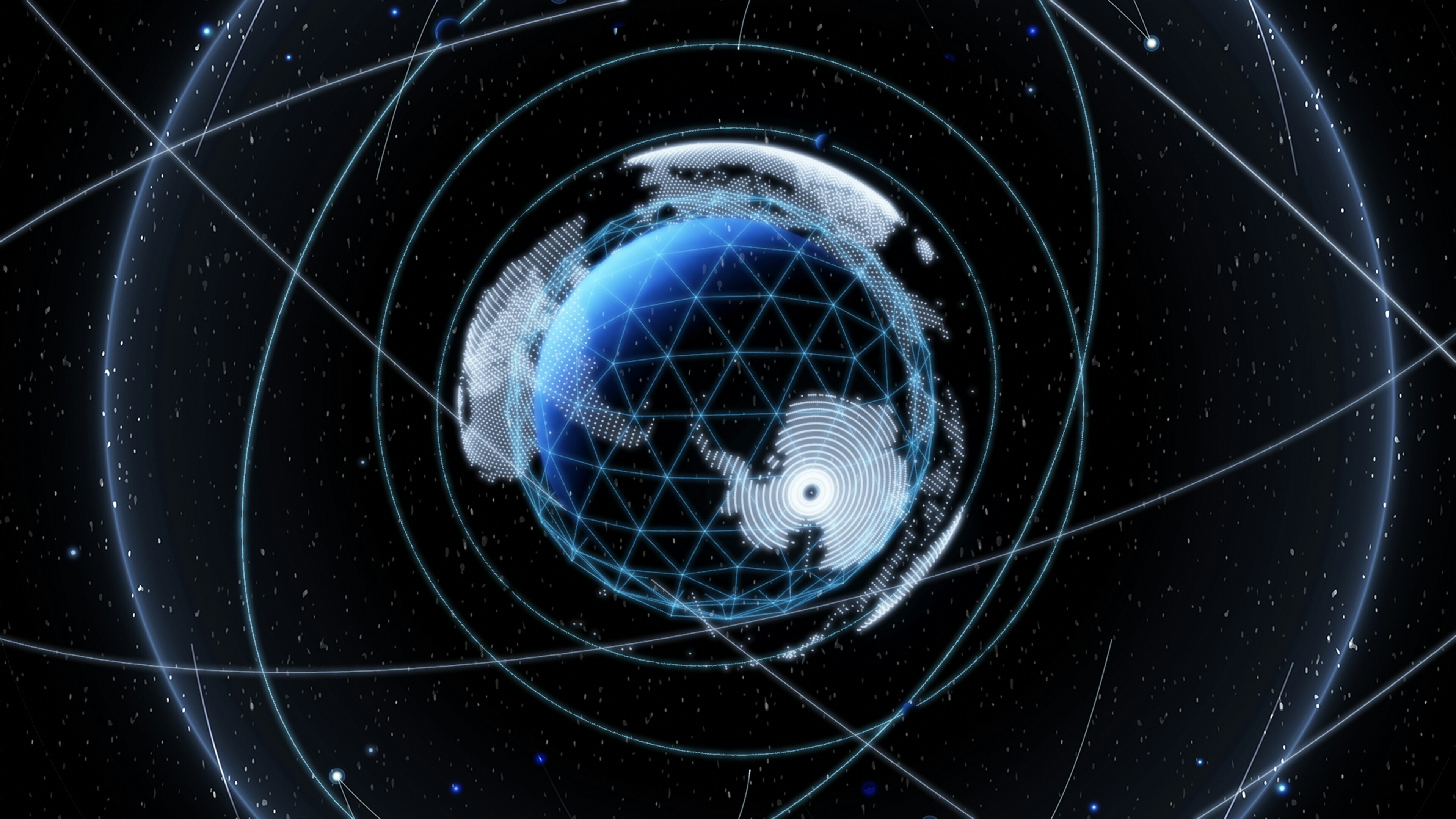
From wonder to action ... how Earth Observation is becoming a $3.8 trillion industry. Image: Unsplash/Zyanya Citlalli
As World Space Week wraps up, this edition of the Frontier Technologies & Innovation wrapper dives into Earth Observation's growing role in decision-making for business and policy, while examining its rapidly expanding practical applications – from monitoring climate risks to strengthening food and water security.
We also feature an interview with start-up Constellr on their 'real-time atlas' of the planet’s health, and highlight the latest breakthroughs across frontier tech and climate innovation.
1. Deep dive: Earth Observation’s growing role in a changing world
In the 17th century, German astronomer Johannes Kepler wasn't just charting planetary motion. In his novel Somnium (or 'The Dream', written in Latin and often described as the first known work of science fiction), he imagined a voyage to the Moon that would allow Earth to be seen in a new light.
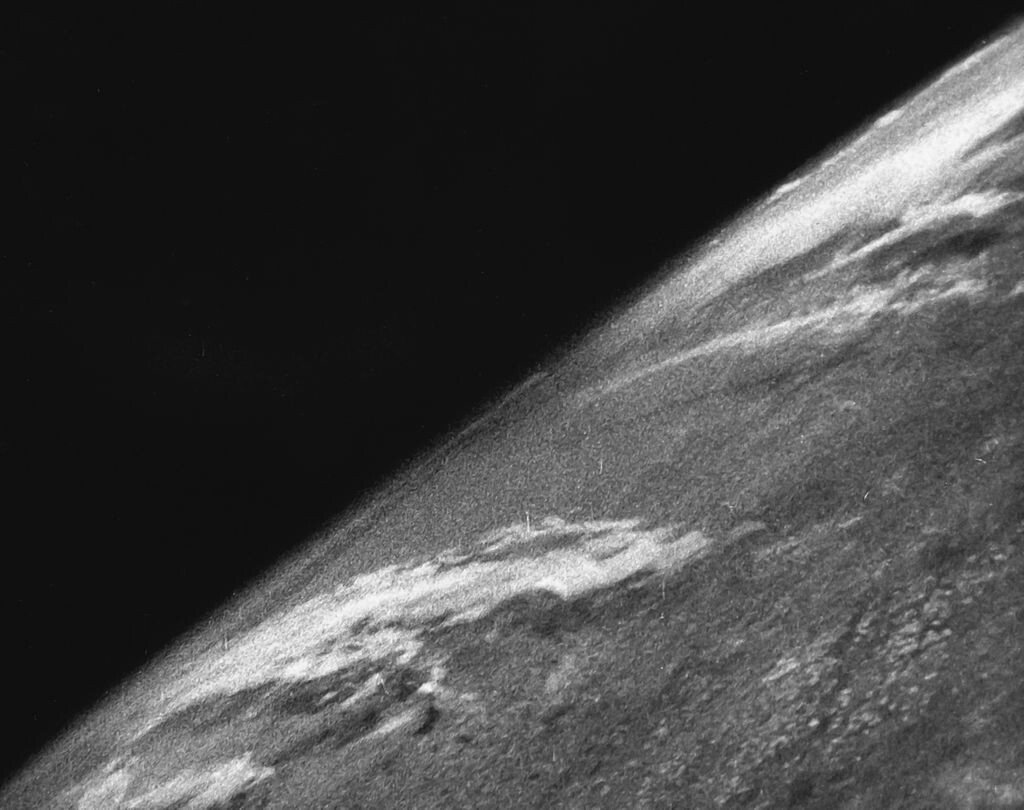
That vision edged closer to reality in October 1946, when US scientists launched a V-2 rocket that captured the first crude image of Earth from space. Sputnik's 1957 launch proved that sustained access to orbit was possible and, in 1960, NASA's TIROS-1 became 'a spiritual predecessor' to today's Earth Observation fleet, showing that satellites could deliver weather imagery with real-world value.
This was followed by Apollo 17's iconic Blue Marble image in 1972, which etched into the public imagination the idea that seeing Earth from space wasn't just possible – it was vital to understanding and protecting it.
Today, as the world reflects on World Space Week (4–10 October), Earth Observation (EO) stands out as one of the most practical and fast-growing applications of space. It is now less about wonder alone and more about harnessing vast streams of satellite data to support real-world decisions – from tracking climate risks to managing resources and infrastructure.
In fact, many tasks are now cheaper to perform from space than from Earth, including monitoring farmland, tracking power systems and discovering new mineral resources. At the same time, EO’s capabilities are expanding with advances in hyperspectral imaging, synthetic aperture radar and algorithmic techniques that reveal the planet's systems in unprecedented detail.
These dynamics reinforce why EO itself is projected to be such a powerful driver of value. According to a new playbook on Earth Observation, published by the World Economic Forum, the industry could add $3.8 trillion to global GDP by 2030, while helping eliminate two gigatonnes of greenhouse gas emissions annually. Yet much of this value remains untapped, in part because adoption lags behind supply-side innovation.
Earth Observation: industry at a crossroads
The playbook makes clear the Earth Observation industry is at a crossroads. While commercial players now dominate satellite launches – 90% in 2023, compared to just 15% in 2014 – adoption still primarily clusters around public-sector use cases. To unlock the industry's full value, organizations need to move from experimentation to systematic integration.
The playbook recommends a three-step approach for leaders:
- Articulate the value proposition: EO excels where issues span large areas, require frequent monitoring, or combine spatial and non-spatial data.
- Bolster strategic alignment: Position EO as a cross-functional enabler connecting strategy, finance, operations, sustainability – not a side project.
- Chart the execution strategy: Decide when to use open-source data, partner with commercial providers, or combine EO with proprietary datasets.
Earth Observation is already proving its worth in areas such as precision agriculture, supply chain monitoring, ESG reporting and early warning systems for disasters. But as the report stresses, adoption requires organizational confidence as much as technical capability.
Dig Deeper:
- Read our explainer on how EO can help tackle global challenges from space, or browse the full report 'The Executive’s Playbook on Earth Observation'.
- Explore related work from the Forum's Earth Observation community.
2. Start-up spotlight: Constellr
Start-ups like Constellr are beginning to show how Earth Observation can move from policy frameworks into practical, commercial use.
We spoke with Max Gulde, co-founder and CEO of Constellr, about their 'real-time atlas' of the planet’s health – a system that uses satellites to track the temperature, water and carbon cycles.
➡️ The challenge: understanding Earth’s health
The big challenge Constellr is tackling is how to measure and monitor the planet’s health in real time. Gulde explains that everything comes down to three fundamental systems: the water cycle, the energy cycle and the carbon cycle.
"So if we look at climate change, the basic variable there is temperature. And temperature is influencing these three cycles." That single factor, he notes in an example, affects everything from food security to water use – yet today, there is no consistent, real-time system to measure it at scale.
➡️ The fix: building a real-time atlas of Earth
Constellr’s solution is what Gulde calls an Atlas: "Imagine Google Earth, but imagine it being not three months old or six months old or two years old in data, but being real-time in data. And also not just looking at the visual reality but looking at the physical state of our planet. So what Constellr does is creating exactly that atlas – a real-time digital representation of the health of our planet and we start with temperature as the base variable.”
➡️ How they do it: satellites, software and AI
Constellr has already launched two satellites and is preparing its third. Gulde credits a mix of cheaper launches, technological leaps and AI for making this possible. "One ingredient is that the launch prices came down. Right now, a launch is around 20% of the cost of a satellite, and if you look at the satellite class we are employing – which is about a 100-200kg satellite – it’s not the majority of the cost any more."
"With the technology we're employing, we're able to do similar things as large satellites in performance. And if I say similar, it actually means better, but at less than 1% of the cost. And that obviously is an absolute game changer."
AI plays a role too – not in building the satellites, but in making the data usable:
"A lot of the challenges in the adoption of the technology lie in the fact that it still needs to be tailor-made for the respective customers. Now you can use AI to adapt it relatively quickly and that is a big advantage. So we are heavily employing AI across the value chain, from mission planning to processing and so forth."
➡️ Reality check: scaling under pressure
For Gulde, the real risk is that short-term crises may distract from long-term priorities. “On one hand, what's keeping me up at night is that the short-term challenges are distracting us from the long-term challenges, which are far more important. Whenever we're in panic mode, we're not looking at long-term strategy."
At the same time, he sees opportunity in Europe’s push for sovereignty and dual-use applications of EO data. “The same systems which can detect if there's activity in an ammunition manufacturing site can also solve the long-term challenge we actually have, looking at generational problems like climate change.”
3. On our radar: 3 tech breakthroughs
- Harvard and MIT researchers just built a quantum computer that ran continuously for over two hours, and as the Harvard Crimson reports, several of them said the machine could, in theory, run indefinitely. Why does it matter? For years, most quantum computers could only operate for milliseconds and even advanced machines would function for just about 13 seconds at a time. But the latest development marks a major breakthrough in qubit stability and could allow us to have quantum computers that can run forever in about 'three short years'. Read our explainer on quantum technology for more.
- An all-weather humanoid robot unveiled by China's Deep robotics is being billed as the world's first 'to achieve full-body IP66 waterproof and dustproof protection'. Standing 175cm tall, it mimics human build and is capable of withstanding 20°C to 55°C environments to perform tasks such as factory operations and outdoor security patrols, reports Technode.
- Scientists in China have addressed a key challenge in the development of next-generation solid-state batteries that could 'power everything from smartphones to electric cars up to three times longer on a single charge', SCMP reports. They developed a self-healing interface that acts like a liquid seal, filling gaps between battery layers without needing the heavy pressure that previous designs required.
4. Frontier tech at the Forum: what's next?
- Watch our session What Space can teach us at the Annual Meeting of the Global Future Councils and Cybersecurity
Live on October 15 2025, 17:45–18:15 (GMT+4)
Tune into our livestream session from Dubai, where space leaders talk about the latest plans for space exploration. They'll discuss how some of the most exciting developments – from space research to the latest technologies – can help us tackle challenges on Earth. Speakers include Dava Newman, Apollo Program Professor of Astronautics at MIT, and Steven Freeland, Emeritus Professor of International Law at Western Sydney University.
- New report: 10 Emerging Technology Solutions for Planetary Health
Releasing on October 15 2025
The first 10 Emerging Technology Solutions for Planetary Health report will spotlight technology solutions that can help the world adapt to climate change, protect nature and build resilience. It will showcase breakthrough science tackling today’s environmental challenges and share strategies for putting these solutions into action while respecting the planet’s limits.
Additional reporting by Rachel Dooley and Pooja Chhabria.
License and Republishing
World Economic Forum articles may be republished in accordance with the Creative Commons Attribution-NonCommercial-NoDerivatives 4.0 International Public License, and in accordance with our Terms of Use.
The views expressed in this article are those of the author alone and not the World Economic Forum.

Forum Stories newsletter
Bringing you weekly curated insights and analysis on the global issues that matter.
More on Emerging TechnologiesSee all

Alireza Haghighi and Khalid Alaamer
February 24, 2026


