What is Creative Commons – and how is AI turning it on its head?
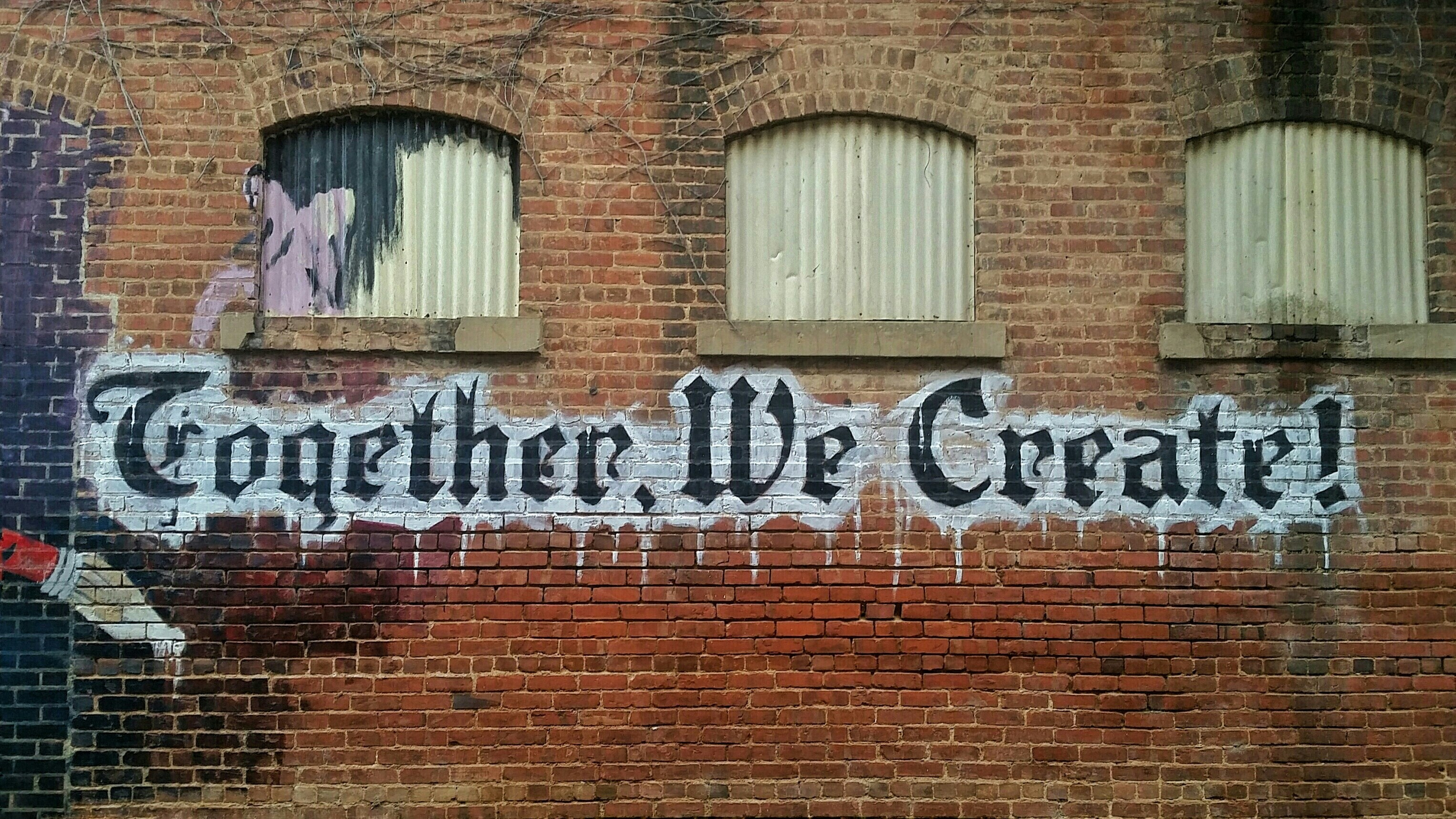
Creative Commons is based on open sharing and reciprocity. Image: Unsplash
- The "Creative Commons" model, a fundamental internet principle enabling open sharing of creative work since the early 2000s, is being challenged by generative AI.
- Amid large-scale, unattributed content scraping, Creative Commons CEO Anna Tumadóttir proposes a system of ethical AI use based on reciprocity.
- A World Economic Forum report, Advancing Responsible AI Innovation: A Playbook, details ethical AI innovation to ensure transparency, accountability, collaboration and reciprocity across the AI value chain.
The “Creative Commons” model of copyright licensing is inextricably linked with the rise of the internet since the early 2000s: Wikipedia, digital museum collections and open textbooks could not exist without “CC”.
However, the advent of generative AI is proving a stress test to its philosophy of the open sharing of creative work. Large Language Models harvest public content at scale, often stripping out any reference to the original creator and ignoring their wish to share their work reciprocally.
At the Sustainable Development Impact Meetings 2025, the World Economic Forum spoke to Anna Tumadóttir, CEO of Creative Commons, about this tension and how it can be resolved.
What is Creative Commons and how does it work?
CC licences were developed in 2001, during the early days of the internet, to address the limitations of traditional copyright, enabling the open sharing and legal reuse of creative works.
Issuing its first licences in 2002, it created a basis for people who wanted to share or jointly work on projects under stable conditions.
“When folks were first getting online, they wanted to share and work on things together. And at the time, copyright was too restrictive to allow for this free flow of knowledge,” said Tumadóttir.
Rather than the traditional “all rights reserved” copyright model, CC created the "some rights reserved" concept to help creators specify how their work can be reused or adapted.
“But the core tenet of it all is attribution. It's this idea that you give credit back to the original creator. And in this beautiful way, the web of creativity and knowledge spreads throughout the world."
Along with the attribution, there are some other rights a creator might want to reserve. CC caters for this with different licence types, including options such as only allowing non-commercial use of their intellectual property, or stipulating that any adaptations must also be made available openly, or restricting any changes.
Why is Creative Commons important?
CC has been a key enabler for the expansion and success of the internet as a shared global resource. Today, its licences cover more than 2.5 billion works on 9 million websites globally, from creative work like music and photography to educational resources and scientific research.
Wikipedia is likely the most prominent example of CC licensing. Platforms like Flickr, YouTube and Vimeo all support the use of CC licences, as does the Arabic TV station Al Jazeera, government data archives, academia and many publishers.
Underlying this is the element of reciprocity that has infused CC since its inception, says Tumadóttir – an ethos that goes beyond a one-to-one exchange:
We have a shared body of works that we as humans can all benefit from.
—Anna Tumadóttir, CEO, Creative Commons”How is AI affecting the use of Creative Commons?
With the advent of AI, this reciprocal relationship and the social agreement underpinning it have been coming under increasing threat, Tumadóttir cautioned.
“There has always been the case that there is going to be a disproportionate benefit from the Commons. This has been massively accelerated with the large-scale crawling of the web and the use of web content for training AI models.”
As AI platforms crawl and scrape vast amounts of content from across the internet both for their training and their responses, attribution and reciprocity are falling by the wayside. Even with traffic referral through links, as a minimum token of reciprocity and where they are provided, users don’t necessarily have to follow them to get answers.
The risk is that organizations or individuals might spend significant time and effort to produce creative work or original research, yet have this content scraped by AI without links to the source, credit, compensation or give-and-take arrangements. To date, more than 50 lawsuits have been filed for copyright infringement.
How can reciprocity be restored in the age of generative AI?
Tumadóttir explained how openness was embraced as a value and a sense of direction for the creative communities. AI, however, has changed the dynamics.
"The advent of AI, and creators having less agency and control over how their works are used, has raised questions about whether this openness is still the right way to think about sharing, or whether we need to collectively and collaboratively rethink our definition of openness,” Tumadóttir said.
She believes the solution lies in the ethical or public-interest use of AI, based on organizations giving back to the open communities and ecosystems they have benefitted from.
“If you are a major technology company, and you have massive revenues as a result of training on the Commons, our strong preference would be that you consider how you can reciprocate back to that ecosystem. Because, fundamentally, that is the ecosystem on which this innovation and technology has taken place,” said Tumadóttir.
In line with this, a recent World Economic Forum report, Advancing Responsible AI Innovation: A Playbook, highlights that organizations globally remain at early stages of responsible AI maturity, with less than 1% having fully operational frameworks. The report outlines nine strategic ‘plays’ for advancing ethical AI innovation to ensure transparency, accountability, collaboration and reciprocity, including protection of intellectual property across the AI value chain.
As generative AI reshapes how creativity is shared and valued, we face a choice: allow innovation to outpace ethics, or build systems that honour the creators who make it possible. The CC philosophy of reciprocity offers a powerful blueprint for this next chapter — one grounded in openness, fairness and respect. By embedding responsible AI practices and transparent data governance into every stage of innovation, organizations can ensure technology strengthens, rather than erases, our collective creativity.
License and Republishing
World Economic Forum articles may be republished in accordance with the Creative Commons Attribution-NonCommercial-NoDerivatives 4.0 International Public License, and in accordance with our Terms of Use.
The views expressed in this article are those of the author alone and not the World Economic Forum.

Forum Stories newsletter
Bringing you weekly curated insights and analysis on the global issues that matter.
More on Artificial IntelligenceSee all

Reese Wong
September 15, 2026


