Why Asia-Pacific could lead the next wave of AI
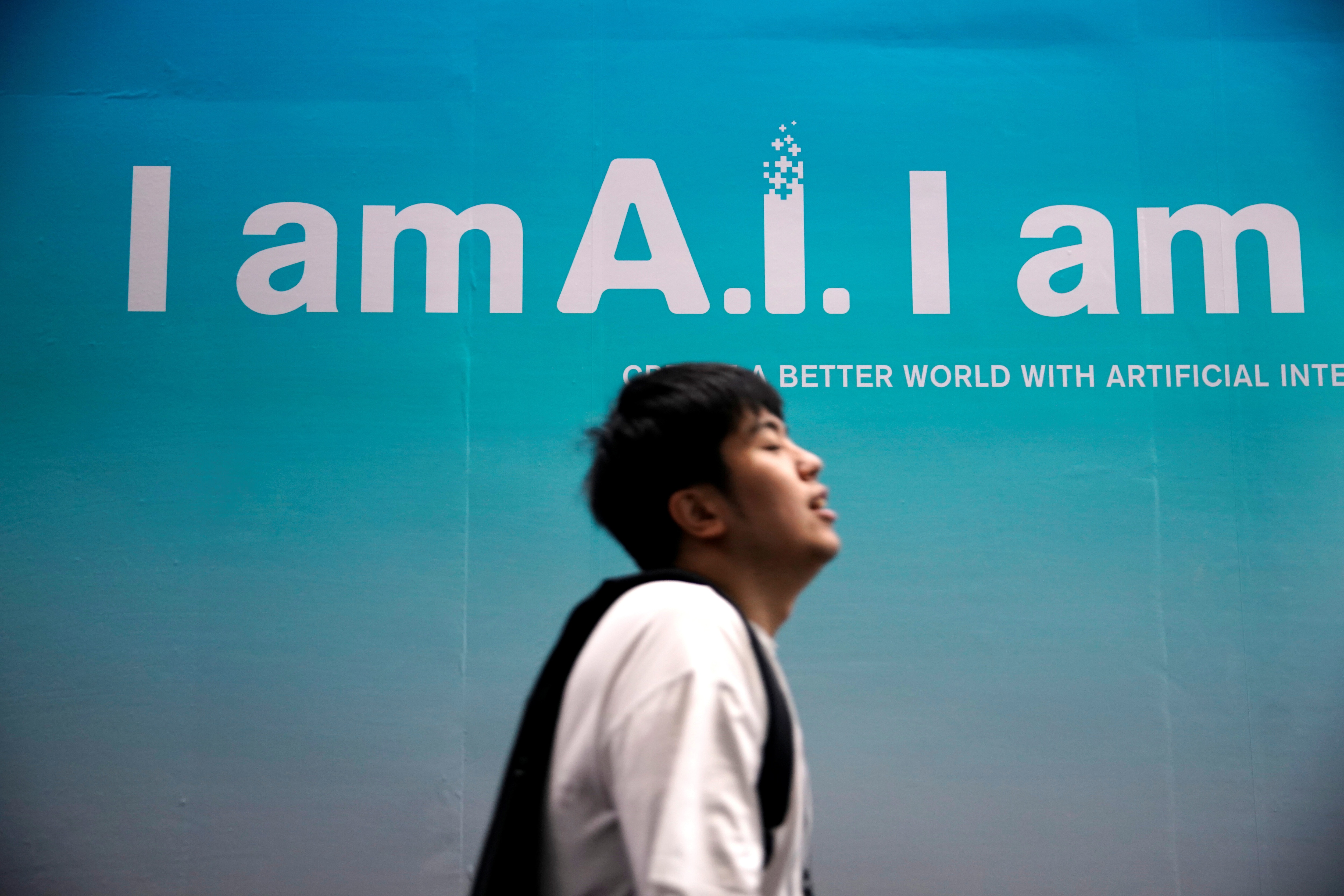
Asia-Pacific is well positioned to lead the next wave of AI Image: REUTERS/Aly Song
- Asia-Pacific has structural advantages in the next wave of artificial intelligence (AI): the region sits at the centre of the AI value chain, while ageing populations and shrinking workforces drive the need for automation.
- Organizations must think about how work is done and possibly redesign workflows when implementing AI, rather than adding it to existing processes.
- AI should be treated as a strategic business issue rather than a technology initiative delegated to IT teams to lead in the next wave of AI.
Artificial intelligence (AI) has advanced at an extraordinary speed; now the next phase of AI will be increasingly defined by compute, data and physical deployment.
It will bring intelligence out of the digital realm and into factories, supply chains, healthcare systems, transportation networks and robots operating in the real world.
Asia-Pacific enters this phase with significant advantages but leading the next phase of AI will require embedding decisions around AI into leadership or business strategy, rather than leaving these within the technological domain.
Despite its strong position, much of Asia-Pacific is not moving quickly enough to convert potential into leadership.
”What is Asia-Pacific’s regional AI advantage?
Asia-Pacific occupies a central position in the AI value chain. Taiwan manufactures the world’s most advanced semiconductors. South Korea is a global leader in high-bandwidth memory, a critical component of AI infrastructure.
Japan remains a leader in advanced materials, precision manufacturing equipment and industrial robotics. Mainland China has emerged as one of the world’s largest markets for industrial automation and AI deployment. Together, these capabilities place Asia-Pacific at the heart of the infrastructure required to power the next generation of AI.
The second advantage is that for much of Asia-Pacific, automation is a demographic necessity. Japan’s working-age population is projected to decline by approximately 14 million people by 2043. Around 40% of South Korea’s population will be over 65 by 2050.
Mainland China is confronting the consequences of decades of constrained birth rates. These realities are creating an urgency around automation that differs from that in other regions.
In 2024, 74% of all newly installed industrial robots worldwide were deployed across Asian factories. South Korea remains the global leader in robot density. Mainland China operates more than two million industrial robots, while Japan continues to be one of the world’s most advanced automation economies.
BCG research shows that 70% of frontline employees across the region already use AI regularly in their work.
Third, societies across much of Asia-Pacific have historically shown a greater willingness to view robots and intelligent machines as complements to human capabilities rather than as replacements for them. This has reduced social resistance to automation and created a favourable environment for experimentation.
Taken together, these strengths create a compelling case for the region’s leadership in the era of physical AI. However, structural advantages alone do not determine outcomes. Despite its strong position, much of Asia-Pacific is not moving quickly enough to convert potential into leadership.
What is the transformation gap in AI deployment?
Most organizations have already begun deploying AI tools but this is not changing how work gets done. Too often, AI is introduced into existing workflows without a rethink of the underlying process.
This may improve efficiency at the margin but it doesn’t change the economics of the business. Durable value emerges when organizations reshape work around the capabilities of machine intelligence.
A credit approval process designed around human review cycles looks different when AI assesses risk in real time. A supply chain planning function built around weekly forecasting cycles looks different when intelligent systems adapt to live operational signals.
A manufacturing operation built around periodic inspections looks different when AI-enabled systems monitor, diagnose and optimize performance continuously.
The organizations that create a durable advantage will not simply automate existing activities. They will reshape workflows, decision rights and operating models around what AI makes possible.
The organizations and economies that emerge as leaders in the next wave of AI will be those that move beyond adoption to transformation, build distinctive data assets and help create governance frameworks needed for AI to scale responsibly.
”How can Asia-Pacific players combat the leadership gap?
BCG’s research consistently finds that one of the strongest predictors of AI value realization is leadership commitment. Organizations move faster when CEOs and senior leaders actively experiment with AI, visibly support learning and iteration, and take ownership of transformation.
In many Asia-Pacific organizations, AI remains largely delegated to technology functions. Even though it requires decisions about how organizations operate, how people and machines collaborate and where value is created. These are leadership questions, not technology questions.
There are three shifts Asia-Pacific leaders should prioritize:
1. Reshape work, do not just deploy tools
Leaders should ask a simple question: if we were building this organization today with AI as a given, what would it look like?
Answering that requires challenging long-established processes, structures and assumptions. It requires accepting short-term disruption in exchange for long-term advantage. Most importantly, it requires direct leadership ownership.
Organizations that reshape workflows around AI will compound their lead in ways that technology investments alone cannot close.
2. Build proprietary operational data assets
The next phase of AI will be powered not only by foundation models but also by proprietary operational data generated through real-world processes.
For manufacturers, this may be decades of production, maintenance and quality-control data. For financial institutions, it may be accumulated knowledge embedded in customer interactions and risk decisions. For healthcare organizations, it may be clinical decision patterns developed through years of practice.
These data assets become even more valuable in the age of physical AI, where intelligent systems learn from real-world environments and operational outcomes rather than purely digital interactions.
Organizations that identify, structure and operationalize these assets will build advantages that are difficult to replicate.
3. Help build coordinated governance frameworks
As AI moves from generating content to taking actions in the physical world, effective governance becomes increasingly important.
Questions around safety, accountability, interoperability, liability and cross-border standards will become more complex as AI systems become embedded in factories, transportation networks, healthcare environments and critical infrastructure.
These challenges cannot be solved by governments acting alone. They require collaboration among policymakers, technology providers, manufacturers and industry participants. The challenge is to create frameworks that enable innovation while maintaining trust, safety, and accountability.
Asia-Pacific’s voice will be stronger if the region can articulate common principles and shared priorities. The region already has powerful examples, from Japanese elder-care robotics and South Korea’s AI-enabled manufacturing to Singapore’s smart-city infrastructure and the increasingly intelligent logistics networks within the Association of Southeast Asian Nations.
These experiences can help shape practical approaches to governing AI in the physical world.
Who will be the future AI leaders?
The window for Asia-Pacific to move from structural advantage to durable leadership is real but not permanent.
The organizations and economies that emerge as leaders in the next wave of AI will be those that move beyond adoption to transformation, build distinctive data assets and help create governance frameworks needed for AI to scale responsibly.
If Asia-Pacific can do that, it will be able to go beyond being a participant in the next phase of AI to meaningfully define it.
Don't miss any update on this topic
Create a free account and access your personalized content collection with our latest publications and analyses.
License and Republishing
World Economic Forum articles may be republished in accordance with the Creative Commons Attribution-NonCommercial-NoDerivatives 4.0 International Public License, and in accordance with our Terms of Use.
The views expressed in this article are those of the author alone and not the World Economic Forum.
Related topics:

Forum Stories newsletter
Bringing you weekly curated insights and analysis on the global issues that matter.
More on Artificial IntelligenceSee all

Reese Wong
September 15, 2026


