How Africa can thrive with agentic AI
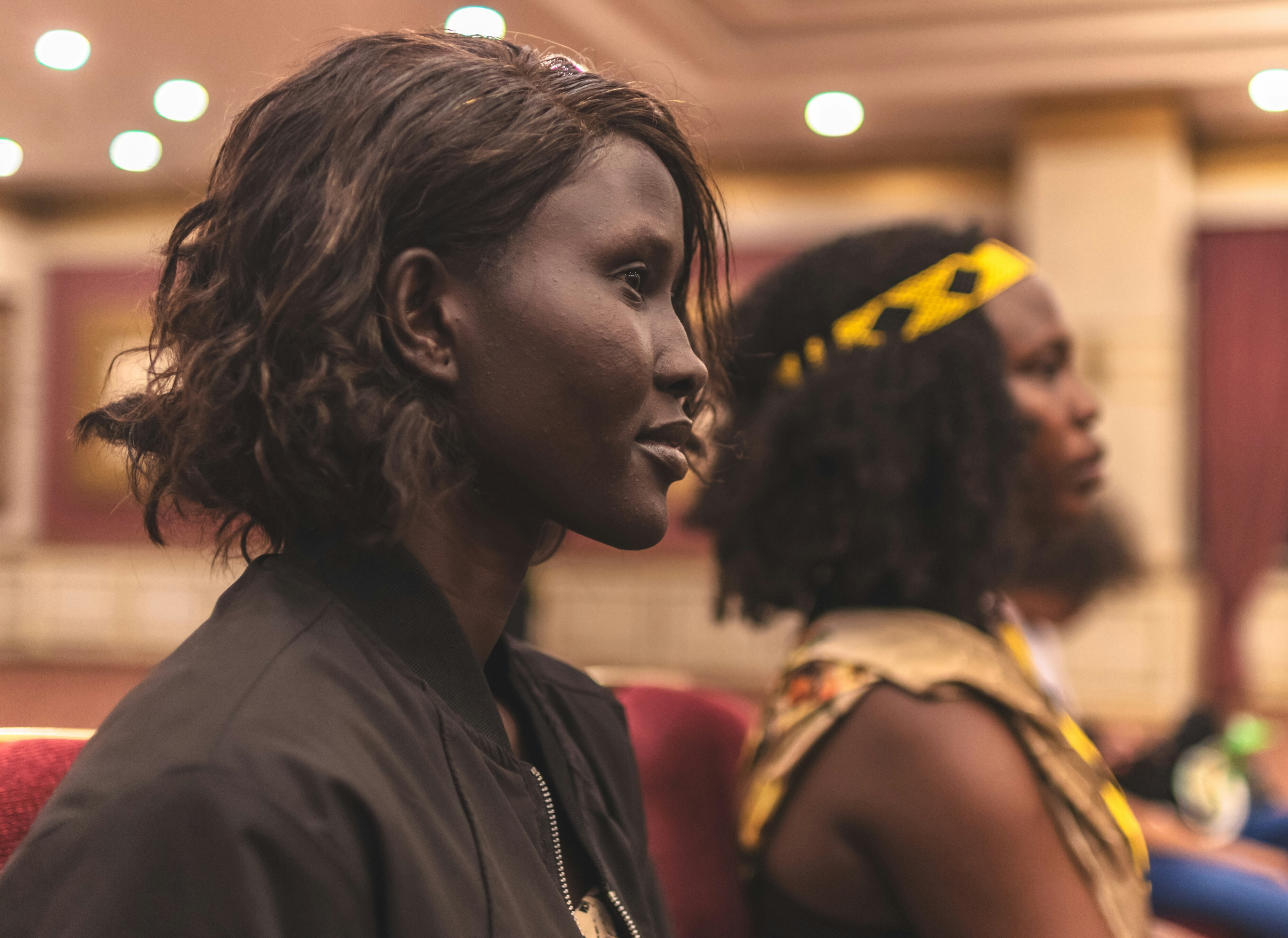
Agentic AI will drive great gains in Africa with the right investment Image: Unsplash/Lisa Marie Theck
- Agentic artificial intelligence (AI) will have a major impact on Africa but while some are already investing in AI strategies and innovation, Africa remains underrepresented in global AI development.
- Many AI tools used in Africa rely on Western datasets, not reflective of African populations or realities, meaning AI systems perform less effectively for African patients and communities.
- AI can improve healthcare and other facets of African society if there is investment in African talent, data infrastructure and economic development.
The theme of this month's World Economic Forum Annual Meeting of the New Champions in Dalian, China is “Innovating at Scale.”
This is exactly the right challenge to address and there is a response the global agenda has not yet fully confronted. The distance between technological breakthrough and broad-based human benefit is a problem that affects us all.
Nowhere is that gap more consequential than in the rise of agentic artificial intelligence (AI) – AI systems that can take actions, make decisions and operate autonomously – and its implications for the world’s youngest continent, Africa.
I was recently reminded of a chapter I wrote in 2020 about the world wide web and the fight for universal access. Re-reading it now feels like opening a letter from a different era.
The arguments were sound enough for their moment but the ground shifted faster than almost anyone anticipated and the institutions, frameworks and vocabulary we built to govern the digital world are now chasing a revolution that has moved at least two steps ahead of them.
As the world’s most youthful continent, this is where the reality of the AI era will be felt most profoundly.
”There is no cross-border approach to AI
The difference between the web and this new generation of AI is not one of degree. It is one of kind. The web was about the freedom to access information, and this new generation of AI is more concerned with the kind of freedom it enables. The web was about the freedom to access information. This new AI is about the freedom to act.
Who acts, on whose behalf, trained on whose data, accountable to whom: these are political questions as much as technological ones but they are being answered right now, largely by default, in the absence of the international norms and frameworks that the moment demands.
Nobody has cracked this. In Asia, China has moved furthest and fastest, embedding AI into public services and infrastructure with a coherent, if contested, theory of how technology should serve state and social goals.
India has advanced its model of state-built, open digital systems; Japan has moved with caution with its innovation-first AI state framework, emphasising trustworthy AI; Korea has leaned in harder, passing the world's first law to integrate AI strategy, promotion and regulation in a single statute.
Across Southeast Asia, entire populations are leaping from mobile-first connectivity into a world mediated by AI agents. The approaches, governance and formalized rules all differ and remain in flux.
African countries are increasingly adopting AI innovation
Africa is not waiting to be invited to this conversation. As the world’s most youthful continent, this is where the reality of the AI era will be felt most profoundly. Kenya has a national AI strategy and is home to one of the continent’s most dynamic innovation ecosystems.
Rwanda is positioning itself as Africa’s AI Lab. The African Development Bank and UN Development Programme launched a $10 billion AI initiative at the Nairobi AI Forum this year, targeting 40 million new jobs by 2035.
At the grassroots level, Masakhane, a pan-African research community whose name means “we build together” in isiZulu, is building datasets in African languages. Yet the global architecture of AI development is not centred on Africa.
The Kigali Declaration on AI, signed by 54 African nations in April 2025, identified the starkest measure of this: African datasets represent just 1% of global data, despite Africa being home to 17% of humanity.
With barely 3% of the global AI talent pool on the continent, Africa risks having the technology’s most consequential decisions made entirely elsewhere.
Getting AI right in Africa is a test case for whether international cooperation on AI can work at all.
”African context is underrepresented in datasets
In the health sector, African researchers call this “health data poverty,” a self-reinforcing cycle in which underrepresentation in global datasets produces tools that fail African patients, reducing trust and uptake, which in turn reduces available data and so on.
Research from the University of Cape Town found that even AI tools built by African startups for African communities are forced to draw on Western datasets, importing assumptions that don’t fit the populations they serve.
As Hardy Pemhiwa, one of Africa’s most prominent technology leaders, put it at the Kigali summit: “We don’t just want a seat at the global AI table, we’re building our own table.”
So Africa is where “innovating at scale” either means something or it doesn’t.
Africa has already named its own destination: Agenda 2063, the African Union’s (AU) blueprint built through consultation with Africa’s youth and civil society, calls for healthy citizens, educated young people and economies driven by Africans themselves.
The AU’s Continental AI Strategy is explicit that AI is not the goal but a driving force toward it. At ONE, we have our own shorthand for what that destination looks like: every child born today should survive, thrive, and drive their own story and their country’s future.
What problems can AI solve in Africa?
Almost 5 million children still die before the age of five every year, nearly three million of them in Africa. AI offers real possibilities for reaching them: supporting community health workers, identifying disease markers specific to African populations, optimizing vaccine supply chains.
However, children survive when economies are growing. ONE’s Priced Out analysis found that African borrowing costs rose 91% between 2020 and 2024, forcing governments to choose between debt and investing in people. That is not a separate conversation from AI.
Young people thrive when innovation converts into real jobs and shared prosperity. They drive when the systems shaping their lives are ones they helped build, not algorithms trained on someone else’s data or models designed in distant capitals. Getting AI right in Africa is a test case for whether international cooperation on AI can work at all.
The choices being made now about who builds these systems, whose data trains them or what governance frameworks hold them to account, will define whether the freedom to survive and thrive in an age of agentic AI belongs to every young person in every region, or only to some.
The convening in Dalian brings together people who came into their fields, such as technology, business, policy and finance, because they believed they could make the world better. Africa is where that belief will be tested.
Don't miss any update on this topic
Create a free account and access your personalized content collection with our latest publications and analyses.
License and Republishing
World Economic Forum articles may be republished in accordance with the Creative Commons Attribution-NonCommercial-NoDerivatives 4.0 International Public License, and in accordance with our Terms of Use.
The views expressed in this article are those of the author alone and not the World Economic Forum.
Stay up to date:
Africa


Forum Stories newsletter
Bringing you weekly curated insights and analysis on the global issues that matter.
More on Artificial IntelligenceSee all

Jessica Finn
July 29, 2026


