China’s climate pledge breaks new ground
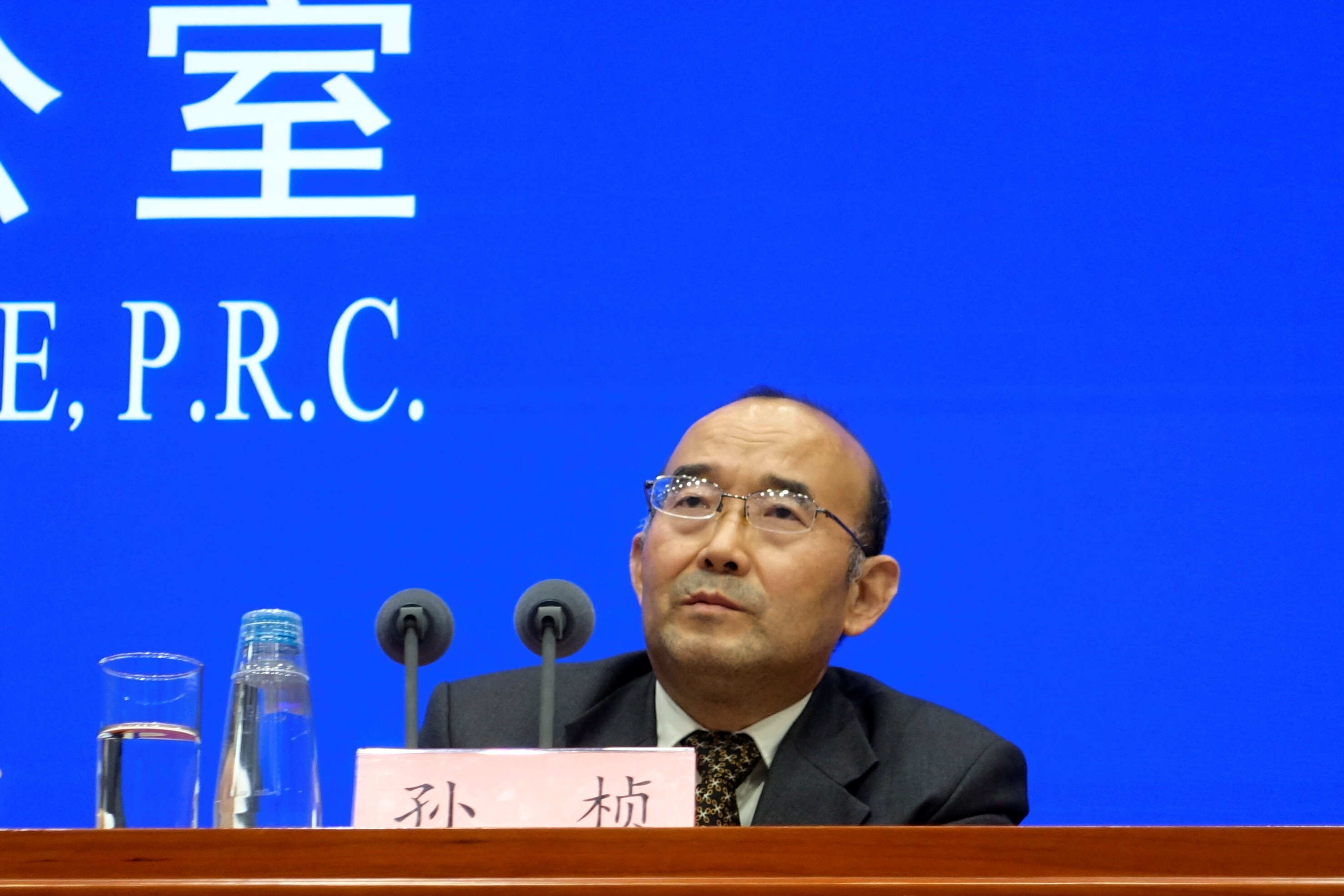
China has made a climate pledge of an absolute reduction in greenhouse gases Image: REUTERS/Martin Pollard
- For the first time, China has committed to an absolute reduction in greenhouse gases, including non-carbon dioxide gases such as methane and nitrous oxide.
- Policies promoting electric vehicles and improved fuel efficiency have led to a plateau in transport fuel demand since 2024.
- This article was first published in Caixin Global, read it here.
In the face of rising geopolitical tensions and faltering international climate cooperation, China’s newly announced 2035 climate targets landed with mixed reviews.
While they fall short of the most ambitious expectations, the pledge still breaks important ground: for the first time, China has committed to an absolute reduction in greenhouse gas (GHG) emissions, a potential absolute reduction in coal consumption and crucially, the target covers all gases, not just carbon dioxide (CO2).
This marks a structural shift in China’s climate strategy and helps anchor global mitigation efforts at a time when neither the United States nor the European Union has announced updated climate pledges. China’s move sets a floor for future ambition and keeps global momentum from stalling entirely.
Beyond the headline goal, however, lie two overlooked yet promising developments: controlling oil consumption and mitigating greenhouse gases other than CO2.
A quiet oil peak
While international discourse often fixates on coal, China has quietly pursued policies to peak oil consumption. China has adopted a vision to plateau oil consumption during its 15th Five-Year Plan, before 2030, in China’s MidCentury strategy submitted to UN Framework Convention on Climate Change in 2020 and its national strategy in 2021. That goal may already be partially realized.
According to the International Energy Agency, China’s demand for transport fuels – including gasoline, diesel and jet fuel – plateaued in 2024 around 8.1 million barrels per day, slightly below its 2021 peak.
This trend reflects rapid structural shifts, especially in transport electrification. Over 30% of new vehicle sales in China are now electric, driven by strong domestic policy support and cost competitiveness. Increasing sales of electric trucks in China is also helping to bring down demand for transport fuels.
The quiet plateau in transport fuel use and the emergence of a national non-CO2 strategy suggest that real system-level changes are underway.
”Meanwhile, total oil demand continues to grow, albeit more slowly. The increase is driven largely by petrochemical feedstocks – used in plastics, fertilizers and other chemical products.
Despite this, China’s oil-plateau vision creates a platform for managing both transport and industrial oil use. It promotes the scaling of electric vehicles, fuel-efficiency standards and eventually cleaner feedstock alternatives in the petrochemical sector.
If China achieves a full oil demand peak in the next several years, it would mark a structural break in global fossil fuel consumption.
Non-CO2 gases now in focus
Another underappreciated shift in China’s pledge is the formal inclusion of all greenhouse gases. This expands the scope of the target to include methane, hydrouorocarbons (HFCs) and nitrous oxide (N2O) — gases that are shorterlived but far more potent than CO2.
These gases account for roughly 20% to 25% of China’s total emissions, according to China’s ofcial data. Yet they have historically received less policy attention than energy-related CO2.
That’s beginning to change. A recent report from the Institute for Global Decarbonization Progress nds that China could cut 380 million tons CO2-equivalent annually by 2030 through measures that are already costeffective and technically proven. These include:
- Methane capture from coal mines and landfills.
- Nitrogen-use efficiency improvements in agriculture and installation of N2O reduction technologies in industry.
- Phasing down HFCs in refrigeration and air conditioning.
Many of these actions are already underway at a pilot or provincial level. But with the 2035 pledge now including these gases, non-CO2 mitigation has now gained new political momentum and can be integrated into national climate strategy.
This opens the door to more quantified sub-targets in future pledges — similar to those in the Global Methane Pledge — and may accelerate sector-specific policies in agriculture, energy, waste and industrial processes.
A foundation for long-term ambition
While China’s 2035 target may not satisfy those hoping for steeper emissions cuts, it reflects a deeper evolution in how climate targets are framed and implemented:
- From intensity-based target to absolute reduction goals.
- From CO2-only accounting to all-GHG coverage.
- And from policy ambition to implementation credibility.
The quiet plateau in transport fuel use and the emergence of a national non-CO2 strategy suggest that real system-level changes are underway. These shifts aren’t just promises — they are already observable in the data.
In a moment where global climate momentum is uneven and multilateral processes remain fragile, these trends offer some of the most encouraging signals from any major emitter. They may not grab headlines — but they are the real good news.
Don't miss any update on this topic
Create a free account and access your personalized content collection with our latest publications and analyses.
License and Republishing
World Economic Forum articles may be republished in accordance with the Creative Commons Attribution-NonCommercial-NoDerivatives 4.0 International Public License, and in accordance with our Terms of Use.
The views expressed in this article are those of the author alone and not the World Economic Forum.
Stay up to date:
SDG 13: Climate Action
Related topics:


Forum Stories newsletter
Bringing you weekly curated insights and analysis on the global issues that matter.
More on Energy TransitionSee all

Renée van Heusden
April 6, 2026


