Collaboration isn't broken, it's just hard – here's what it takes to succeed
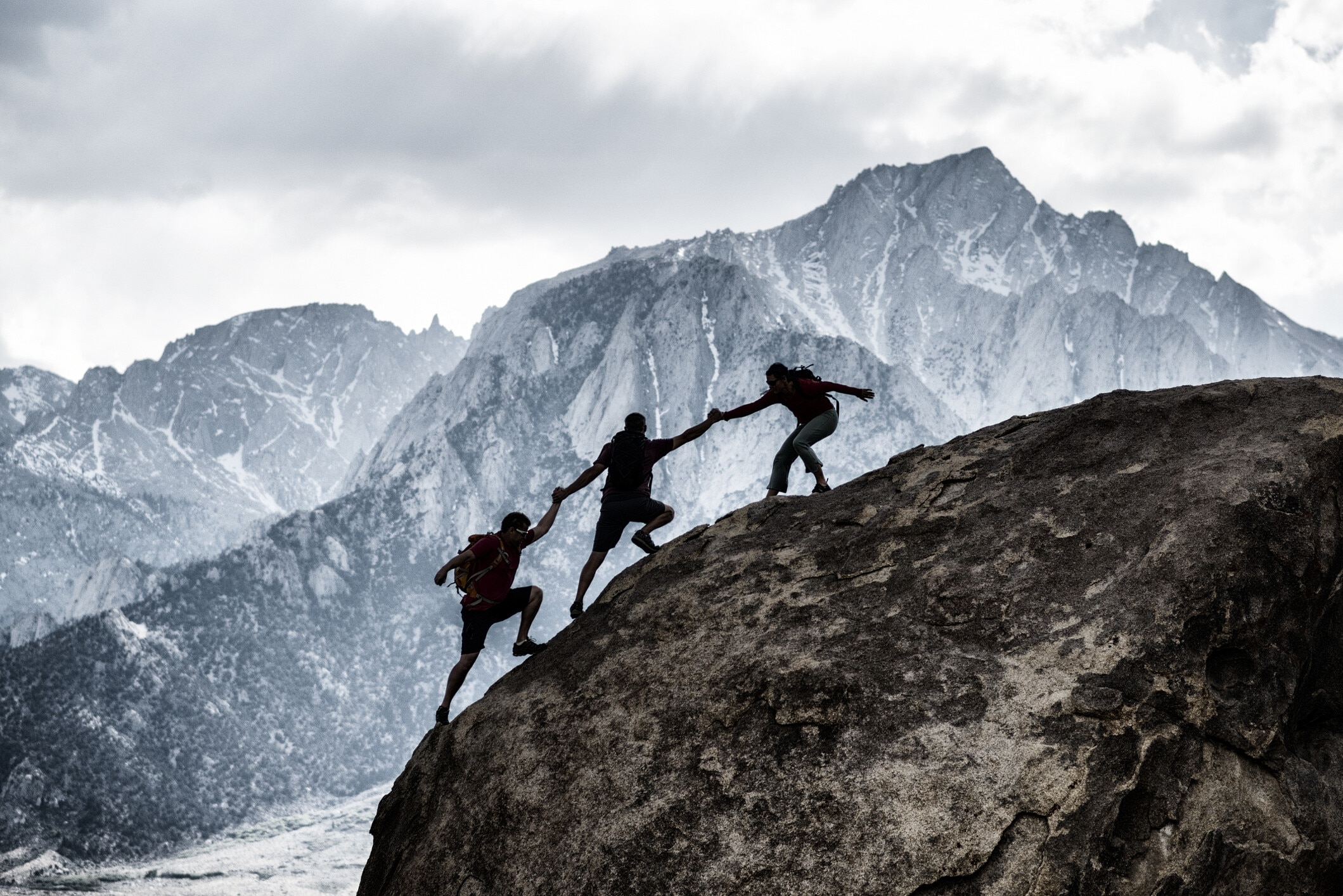
Collaboration should be a key leadership trait. Image: Getty Images
- True systemic change depends on treating collaboration and orchestration as core leadership competencies – supported by trust, governance and financing.
- While traditional multilateralism is under strain, new forms of cooperation – grounded in trust, shared governance and blended finance – are emerging to complement and strengthen it.
- The 2026 GAEA Awards winners demonstrate that structured collaboration, through shared vision, inclusivity and long-term commitment, can convert ambition into measurable impact.
The climate crisis is testing not just our technology or policies but our ability to work together. As global challenges outpace traditional institutions, collaboration has become both our greatest asset and our hardest skill.
The 2026 GAEA (Giving to Amplify Earth Action) Awards showcase what effective collaboration for climate and nature looks like. Five winning initiatives from around the world prove that when trust, governance, inclusivity and long-term commitment come together, collaboration doesn’t just work, it transforms systems.
These partnerships bridge evidence and action, unlock capital, redistribute power and accelerate change where traditional multilateralism alone cannot keep pace. Together, they show that collaboration is not broken; it is simply hard and mastering it is what leadership now requires.
Treat collaboration as a core competency: fund it, empower senior champions and hone it over time.
”From pledges to practice
A decade after the Paris Agreement, climate projections remain stark. The Emissions Gap Report 2025 indicates multi-decadal average global temperature rise will likely exceed 1.5 degrees Celsius and be difficult to reverse.
Current policies point to about 2.8 degrees Celsius by century’s end, while full implementation of nationally determined contributions – many of which are currently under review at COP30 – could reduce this to roughly 2.3-2.5 degrees Celsius. Every fraction of a degree counts and a far stronger collective action and global cooperation are still essential.
There are signs of tentative progress. The World Economic Forum’s Global Cooperation Barometer 2025 notes a post-pandemic rise in climate partnerships. Yet only 17% of the UN Sustainable Development Goals are on track.
The problem is not a lack of ambition but of follow-through: collaboration has often been treated as a value rather than a discipline. Short political cycles, eroding institutional trust, power imbalances and regulatory constraints all block collective action.
The GAEA Award winners demonstrate how intentionally designed partnerships can close the gap between pledges and practice, turning critics, competitors and communities into enduring allies and moving from single interventions to systems-level change.
Bringing collaboration to life
The necessary elements for collaboration deliver:
1. Trust as infrastructure
Trust is the first and hardest currency of collaboration. The Lancet Countdown on Health and Climate Change shows how transparency and rigorous science create credibility: a global network of over 300 researchers produces harmonized, evidence-based indicators linking climate to health.
That robust data, translated into actionable policy, builds trust with policymakers and stakeholders and drives accountability.
2. Sharing the vision
Common goals unite diverse actors. Canopy brings together more than 1,000 brands, innovators and Indigenous communities around a shared vision to transform paper, packaging and textiles into forest-friendly, circular alternatives.
This aligned ambition enables collective financing, policy engagement and supply-chain reform, shifting markets that were once thought immovable.
3. Robust and fair governance
Accountability keeps partnerships credible and equitable. The Plastics Pact Network unites over 900 organizations in a multistakeholder framework with shared targets on design, reuse and recycling.
Its voluntary governance yields measurable progress, promotes a just transition and ensures collective accountability across the global plastics system.
4. Scalable financing and resource commitment
Lasting change demands patient, innovative capital. The Sustainable Sovereign Debt Hub is reworking the sovereign debt market with sustainability-linked instruments, aligning governments, investors and technical partners to unlock finance for development outcomes.
By embedding sustainability into debt structures – for example, enabling swaps that channel capital to climate and nature – the hub helps build a fairer, more resilient financial architecture.
5. Inclusivity and power redistribution
True collaboration shifts power, not just resources. The Self-Employed Women’s Association (SEWA) in Gujarat, India, empowers low-income women salt farmers to become solar entrepreneurs, replacing diesel pumps, avoiding roughly 18,900 tonnes of carbon dioxide annually and boosting incomes by up to 600%.
By redistributing decision-making and building local leadership, SEWA ensures that the benefits of clean energy reach those who need them most.
What these stories reveal
The winners share a fundamental insight: each treats collaboration as a core capability rather than an aspiration. Partnership design – the mechanisms of governance, financing, trust-building and inclusivity – determines whether ambition becomes delivery.
Even if questions around what to partner on and how to go about it are dependent on the precise problem to solve for, across these efforts, five building blocks recur: trust as infrastructure; a shared vision that balances near-term wins and long-term goals; inclusive, adaptive governance; financing that scales with purpose; and equity that redistributes power.
When these elements align, collaboration becomes the architecture of systemic change. It’s also why the GAEA Awards have been designed around these levers of system change with its five categories.
The next era of leadership
While traditional multilateralism is under strain, new forms of cooperation – grounded in trust, shared governance and blended finance – are emerging to complement and strengthen it. Forward-looking organizations are investing in the craft of collaboration: building, governing and scaling alliances with intent and treating partnership orchestration as a leadership competency.
The World Economic Forum provides a platform to nurture such efforts and to celebrate partnerships that move beyond single interventions. The 2026 GAEA Award winners remind us that systemic change is attainable when stakeholders join forces within the right frameworks and commit the necessary governance, capital and time.
Collaboration, done well, is already delivering the future we say we want. The question is whether leaders are ready to fund it, empower senior champions and hone these capabilities over time.
Every fraction of a degree, each conserved acre and every species protected counts and the orchestration of collaboration will determine how quickly we secure a safer, fairer climate future.
Don't miss any update on this topic
Create a free account and access your personalized content collection with our latest publications and analyses.
License and Republishing
World Economic Forum articles may be republished in accordance with the Creative Commons Attribution-NonCommercial-NoDerivatives 4.0 International Public License, and in accordance with our Terms of Use.
The views expressed in this article are those of the author alone and not the World Economic Forum.
Stay up to date:
Sustainable Development
Related topics:


Forum Stories newsletter
Bringing you weekly curated insights and analysis on the global issues that matter.
More on Global CooperationSee all

Jack Barrie and Janez Potocnik
April 2, 2026