Maintaining momentum: decision-makers weigh in on the practical necessities of the green transition
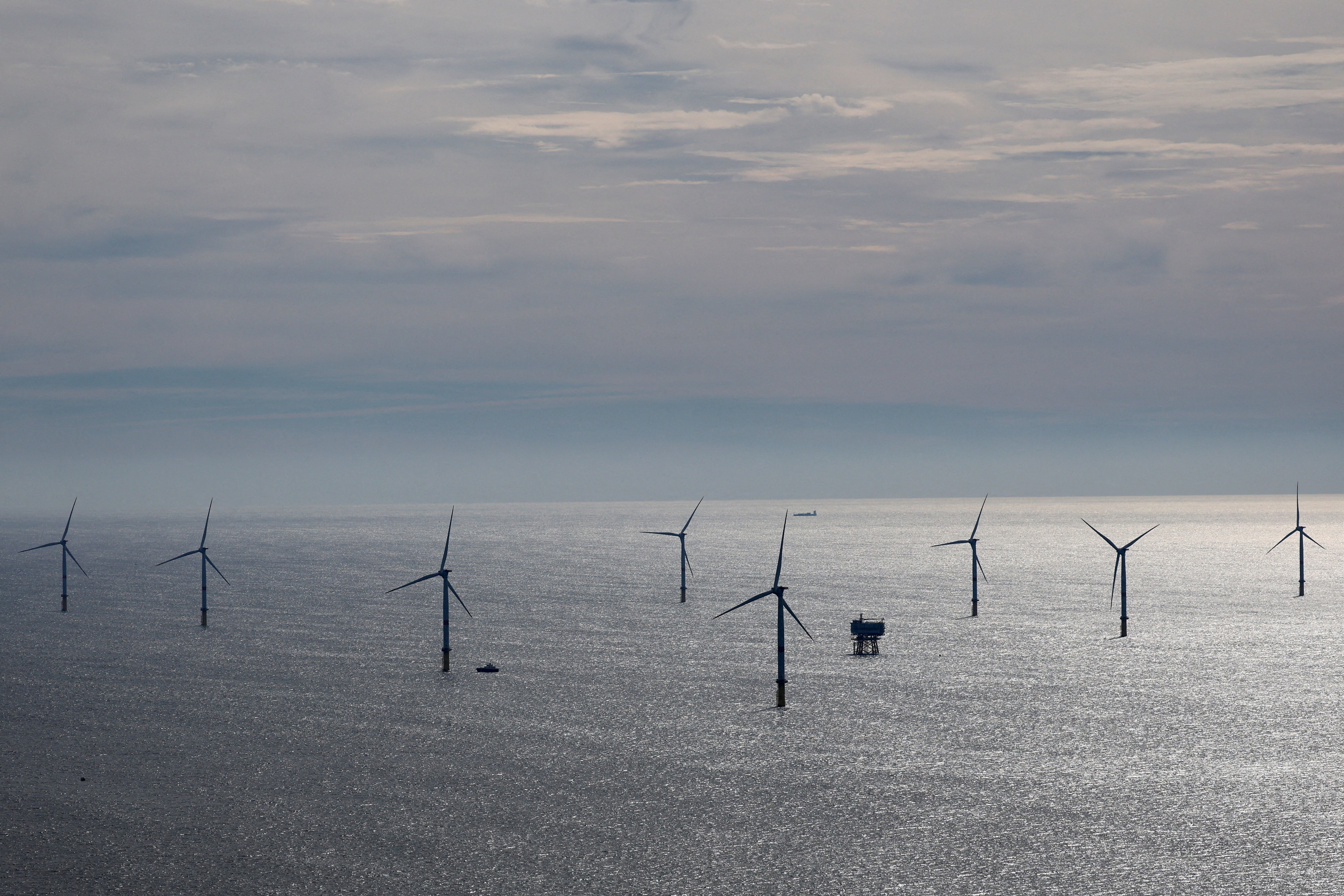
A new report underlines the need to better take contemporary realities into account for green-transition efforts. Image: REUTERS/Stephane Mahe
- Progress on climate action remains possible if attention is paid to shifting priorities and minimizing socioeconomic burdens, according to a new World Economic Forum and McKinsey & Company report.
- The report, Making the Green Transition Work for People and the Economy, outlines ways companies can be more mindful of practical needs amid geopolitical disruption, rising inflation and inequality.
- We asked several global leaders to respond to one question: Amid the upheaval, what’s the single-most important thing a company can do now to help maintain the green transition’s momentum?
No one said it would be easy.
But the sheer magnitude of recent geopolitical and trade disruption, inflationary pressure, jarring technology advances, and rising inequality have created an extraordinary set of challenges for companies trying to shift to more sustainable practices.
The new report Making the Green Transition Work for People and the Economy, published by the Forum together with McKinsey & Company, makes clear that progress remains possible – if change-makers remain focused on practical needs.
Companies play an essential role in this progress as sources of investment, innovation, and jobs, said Sharan Burrow, Visiting Professor at Practice to the Grantham Research Institute on Climate Change and the Environment. The corporate considerations offered up in the Forum’s report are cause for optimism, Burrow added, “because they help companies embed a just-transition mindset.”
“When transitions are designed around people and places, they build resilience, trust, and shared prosperity,” she said.
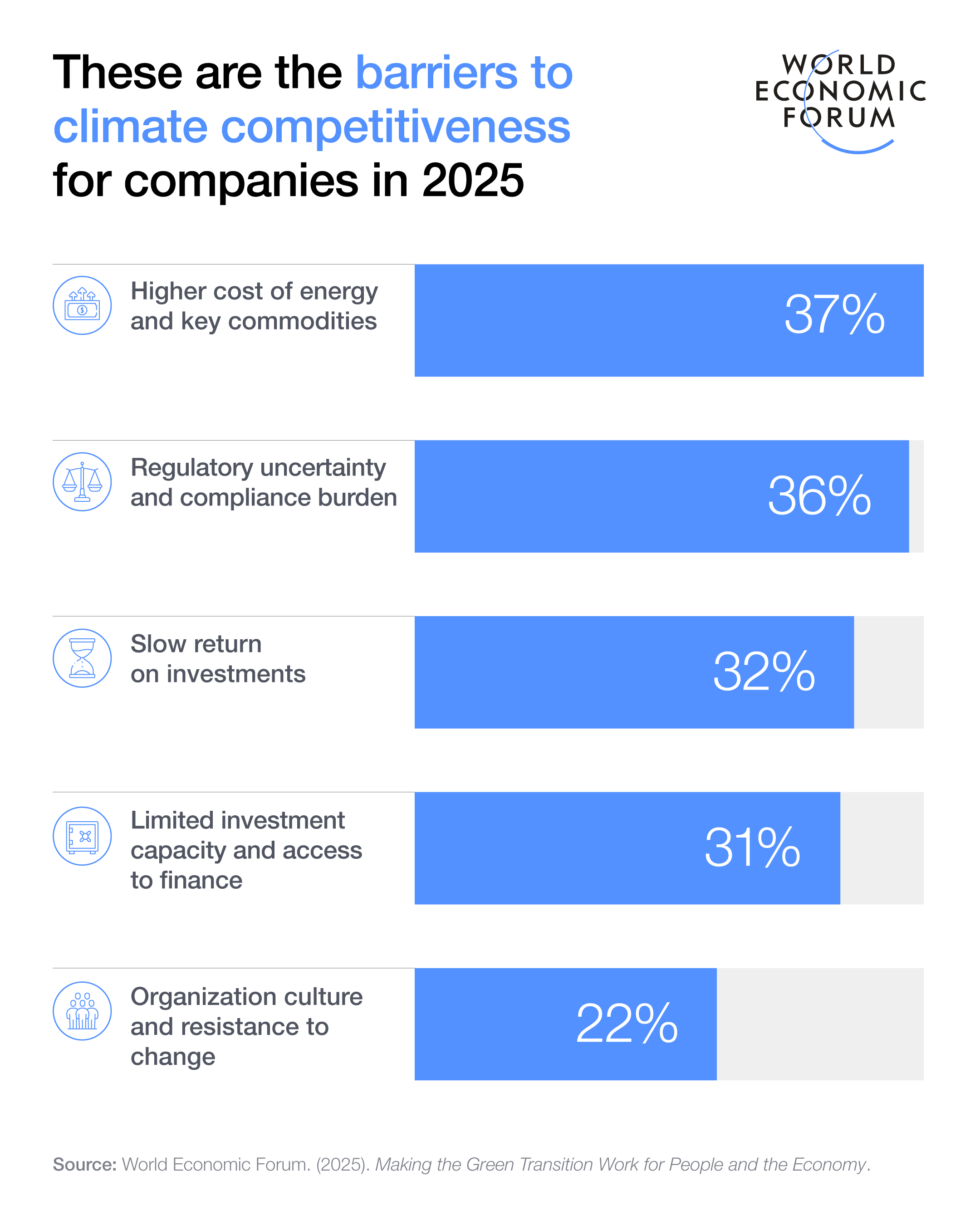
Efforts that ignore the impacts of current economic realities, however, may be self-defeating. Different regions have different challenges, according to the report. In Germany, executives overwhelmingly cited higher energy and commodity costs as a factor likely to challenge their ability to remain competitive throughout the green transition. Among countries deemed ‘green developers’ like the US, consumer affordability and demand for green products emerged as a significant worry.
The stakes are high: the transition could potentially create nearly 10 million new jobs globally by 2030, but a lack of support for impacted workers could result in a loss of some 2.4 million jobs.
We asked leaders from around the world to weigh in on what the single-most important thing is that a company can do now to help maintain the green transition’s momentum.
Karen Pflug, Chief Sustainability Officer, Ingka Group (the holding company that includes IKEA)
"In an era marked by uncertainty, the most critical action a company can take to sustain momentum in the green transition is to strategically integrate sustainability, transforming it from an optional initiative into an inherent component of its core business model.
"We often say 'sustainability and business success go hand in hand.' This notion extends beyond compliance or reputation; it is fundamental to long-term value creation and operational resilience. Sustainability enables long-term business success.
"By embedding sustainable practices throughout our operations – from strategic investments in renewable energy and ambitious net-zero targets, to fostering circular economy principles in our customer offer and ensuring responsible practices across our value chain – we can mitigate systemic risks, optimize operational costs, and unlock new avenues for innovation and market differentiation."
Luc Triangle, General Secretary, International Trade Union Confederation
"Companies should ensure strong worker involvement through representative unions in all green transition planning and implementation, regarding both mitigation and adaptation. This will help protect the workforce from the increasing impacts of climate change, which are already heavily affecting workers’ health, incomes and livelihoods – along with productivity. Workers have the best knowledge of what is happening on the factory floor and in company offices, and can contribute to identifying innovative, place-based solutions to the challenges facing corporate actors worldwide.
"Including workers and their representatives at the table – through collective bargaining processes, not just broader stakeholder engagement – is also the only way to ensure worker and broader community buy-in for the changes that need to happen. As the Forum’s new report demonstrates, social protection systems are also key to preventing job losses in the transition. Companies should see operating in these environments as an advantage, and support the strengthening of social protection across their global value chains. Business as usual in a heating planet is simply not an option."
Anne-Sophie Castelnau, Global Head of Sustainability, ING Group
"It’s vital that the transition to a low-carbon economy leaves no-one behind. We want to play a leading role in accelerating the transition – and our approach recognizes that social priorities are inextricably intertwined with action on climate and nature. Our main impact comes from advising and financing clients to help them drive down emissions and build up the solutions, technologies and infrastructure needed for a sustainable future – with robust environmental and social risk management embedded in our decision-making.
"But for true systemic change that includes everyone, we believe partnership, collaboration and advocacy with a wide range of public, private and civil society stakeholders is essential – with the collective aim that finance flows to innovation and decarbonization, as well as to investments in skills, inclusion and the resilience of local communities and economies. The key considerations in the World Economic Forum’s new report support a more comprehensive assessment of social and economic impacts in transition planning, and are a welcome addition to this dynamic landscape."
Roberto Suárez Santos, Secretary-General, International Organisation of Employers
"Companies should demonstrate – quickly and visibly – that sustainable activities can create real economic value and quality jobs, particularly in middle-income countries and the informal economy. Nothing is more unsustainable for the planet than a society without proper job opportunities. This includes making sustained, targeted investments in decarbonization and green innovation, even in the face of uncertainty or economic difficulty. Momentum will only hold if people see tangible benefits in their communities; not only creating decent work, but also helping to transition workers from the informal sector through sustainable activities.
"Companies have to work with governments, and engage with employers’ organizations, to ensure that policies and measures provide incentives and supportive frameworks for more sustainable business activities. This includes advocating for and supporting a proper business environment that empowers innovators and entrepreneurs to bring forward solutions. However, we also have to call out and improve policies that can be counteractive and lead to unmitigated job losses. Without this enabling environment, sustainability outcomes are slowed, competitiveness is weakened, and transitions risk becoming inequitable."
Morten Bo Christiansen, SVP, Head of Energy Transition, A.P. Moller – Maersk
"We see the energy transition as a catalyst for long-term resilience and value creation across global supply chains. From electrifying terminals to adopting new technological pathways for our vessel fleet, and supporting our logistics partners in decarbonization, we’re taking action to reduce emissions while enabling smarter, more efficient logistics.
"We’re proud to be featured in the Forum’s new report, which highlights how we’re embedding energy transition into our strategy and operations to drive progress for our customers and the communities we serve."
Allen Blue, Co-Founder and Vice President, Products, LinkedIn
“As the world enters a decisive phase for climate action against a backdrop of global headwinds, businesses are increasingly recognizing the value green skills bring to resilience, efficiency and innovation – and demand for green talent is continuing to grow at double the pace of skills in the workforce.
“By putting people and skills at the heart of every business and climate plan, businesses can find the right talent faster, support an inclusive transition, and boost competitiveness. The corporate considerations in the Forum’s new report are a valuable tool in helping leaders align their action on climate with creating economic opportunity.”




License and Republishing
World Economic Forum articles may be republished in accordance with the Creative Commons Attribution-NonCommercial-NoDerivatives 4.0 International Public License, and in accordance with our Terms of Use.
The views expressed in this article are those of the author alone and not the World Economic Forum.
Related topics:
Contents
Karen Pflug, Chief Sustainability Officer, Ingka Group (the holding company that includes IKEA)Luc Triangle, General Secretary, International Trade Union ConfederationAnne-Sophie Castelnau, Global Head of Sustainability, ING GroupRoberto Suárez Santos, Secretary-General, International Organisation of EmployersMorten Bo Christiansen, SVP, Head of Energy Transition, A.P. Moller – MaerskAllen Blue, Co-Founder and Vice President, Products, LinkedIn
Forum Stories newsletter
Bringing you weekly curated insights and analysis on the global issues that matter.


