Quadrupling clean fuels by 2035: Why we must scale sustainable energy
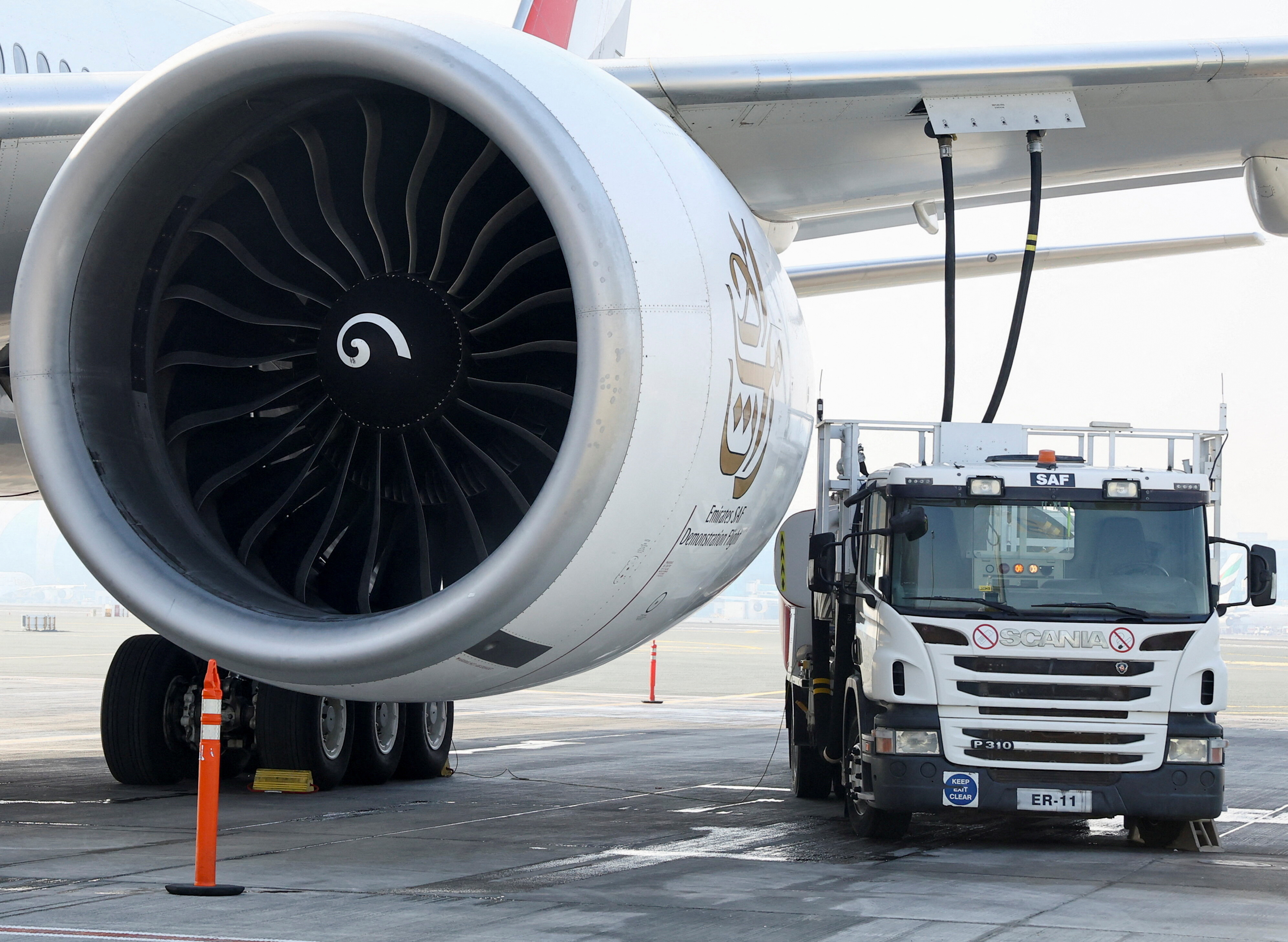
Scaling clean fuels is necessary to meet rising global energy demand Image: REUTERS/Rula Rouhana
- Scaling biofuels, hydrogen and synthetic fuels is necessary to meet rising global energy demand while reducing greenhouse gas emissions.
- Twenty-three countries, led by Italy, Japan, India and Brazil, committed to quadrupling sustainable fuel production and use by 2035.
- Interoperable standards, investment mobilization, cross-sector collaboration and supportive policies are essential to overcome cost, technology and feedstock barriers.
Liquid and gaseous fuels remain the backbone of today’s energy system, supplying more than half of global energy consumption. They fuel transportation, industry and produce electricity – the foundations of modern economies. However, only around 2% of this consumption is supplied by clean fuels.
Clean fuels produce less pollution than conventional fuels, emitting lower levels of particulate matter, carbon monoxide and greenhouse gases across their full life cycle.
As global energy demand continues to rise, with electricity demand expanding even more rapidly, a diverse mix of fuels will remain essential for meeting long-term energy needs and ensuring energy security.
Clean fuels are not a distant vision...
”Across most scenarios, fuels for energy use are projected to deliver 175–285 exajoules (EJ) through 2050, roughly five times current US energy demand. Scaling clean fuels from current levels is, therefore, necessary to meet global climate goals.
Beyond the climate necessity, clean fuels represent a major opportunity: they can drive new industries and jobs (with one-and-a-half to two times the job intensity of conventional fuels) and reduce energy import costs by leveraging local resources and fostering innovation.
The question is no longer if clean fuels will be relevant but which will scale and how fast and sustainably.
COP30 boost to clean fuels
The UN Climate Conference 2025 (COP30) in Brazil is increasing global momentum and could become a truly positive pivot for advancing sustainable fuels.
The “Belém 4x” pledge to quadruple sustainable fuel production and use by 2035, put forward by Italy, Japan, India and Brazil on 14 October in Brasilia and supported by 23 countries, represents a strong commitment to quadruple the production and use of sustainable fuels, including biofuels, biogases, synthetic fuels and hydrogen, by 2035.
Building on decades of innovation and industrial policy, Brazil is uniquely positioned to lead this global effort. Its experience in leveraging its vast biomass resources for biofuels in transportation to achieve energy security and climate objectives demonstrates how emerging economies can drive inclusive, low-carbon growth that delivers economic value.
Have you read?
Clean fuels and why they matter
Clean fuels are not a single category, but rather a family of pathways that differ in feedstocks, technologies and maturity:
- Biomass-to-X: Biofuels derived from organic materials, such as plants, waste and forestry residues – the most established pathways today.
- Power-to-X: Synthetic fuels derived from clean electricity, hydrogen, carbon or nitrogen.
- Fossil-to-X: Fossil fuels coupled with processes to reduce emissions intensity, for example, carbon capture storage, methane leakage minimization, or co-processing.
Molecules remain critical for several energy use cases:
- Transport: Aviation, shipping and road transport require high-density, drop-in fuels. These sectors are also some of the largest in terms of growing energy demand.
- Heavy industry: Energy-intensive processes, such as steelmaking, cement production and chemicals, can benefit from using clean fuels and require molecules as chemical feedstocks or process heat.
- Energy systems: Fuels provide long-term storage and global transportability, adding flexibility to renewable energy systems.
Clean fuels are not a distant vision: biofuels, including ethanol, biodiesel, biomethane, renewable diesel and sustainable aviation fuel (SAF), are produced and used globally. Refineries are integrating bio-based processes, airlines are signing multi-year SAF contracts and fleets are blending renewable diesel into operations.
Barriers and solutions
For many clean fuels and use cases, there is a negative cost differential compared to fossil fuel alternatives, which presents a significant hurdle to investment and demand.
Reducing and overcoming this challenge is possible, but it will require smartly combining policies, standards and cooperation across industries and between governments and the private sector.
Policy and standards
The global policy landscape for clean fuels is fragmented. Misaligned certification schemes and inconsistent incentives create uncertainty for investors and producers.
Brazil’s policy experience can offer lessons to governments: blending mandates for ethanol, biodiesel, SAF and biomethane; performance-based targets; fiscal incentives; and investment in infrastructure have proven effective in building a strong domestic clean fuels ecosystem.
Market readiness
To tackle the cost premium over fossil fuels, coordinated market mechanisms are needed, such as long-term offtake contracts, demand aggregation platforms and risk-sharing models, to connect producers and consumers and accelerate scale-up.
Feedstock availability
Rising competition for feedstock raises concerns about availability and price volatility. Expanding the feedstock base beyond food crops and waste oils requires investment in collection systems and logistics for new residues and sustainable sources. At the same time, scaling biofuels must avoid driving land-use change or deforestation.
Technology maturity
While some biofuels are mature, advanced biofuels, e-fuels and hydrogen-derived fuels remain at early commercial stages. Scaling from pilot to full-scale production demands capital, collaboration and risk-sharing.
Governments and industry must support technology demonstration projects and foster innovative partnerships between developers and producers.
Financing mechanisms
Clean fuel projects are high-capex and long-horizon, often facing policy and demand uncertainty. To attract private capital, financial frameworks should include de-risking mechanisms, concessional finance and blended finance models.
How the Forum helps leaders navigate the transition of energy and materials systems
What’s next
As the world gathers in Brazil for COP30, clean fuels are at the centre of the global energy dialogue. The Belém 4x pledge marks an important milestone in the energy transition.
To unlock the full potential of clean fuels, three priorities should guide collective action:
- Develop interoperable standards and accounting methods to enable global trade and scaling.
- Mobilize commitments and investments across the value chain to expedite deployment.
- Foster cross-sector collaboration connecting fuel producers, users and financiers.
The World Economic Forum’s Future of Clean Fuels Initiative brings together stakeholders from industry, policy and finance to share data on pathways and highlight real-world success stories.
Proven technologies, declining carbon intensities and growing investment are already demonstrating what’s possible – but progress must accelerate.
Don't miss any update on this topic
Create a free account and access your personalized content collection with our latest publications and analyses.
License and Republishing
World Economic Forum articles may be republished in accordance with the Creative Commons Attribution-NonCommercial-NoDerivatives 4.0 International Public License, and in accordance with our Terms of Use.
The views expressed in this article are those of the author alone and not the World Economic Forum.
Stay up to date:
Hydrogen


Forum Stories newsletter
Bringing you weekly curated insights and analysis on the global issues that matter.
More on Energy TransitionSee all

Kingsmill Bond and Sumant Sinha
March 25, 2026


