Opinion
UN Foundation: A new way forward for food systems on the COP30 agenda
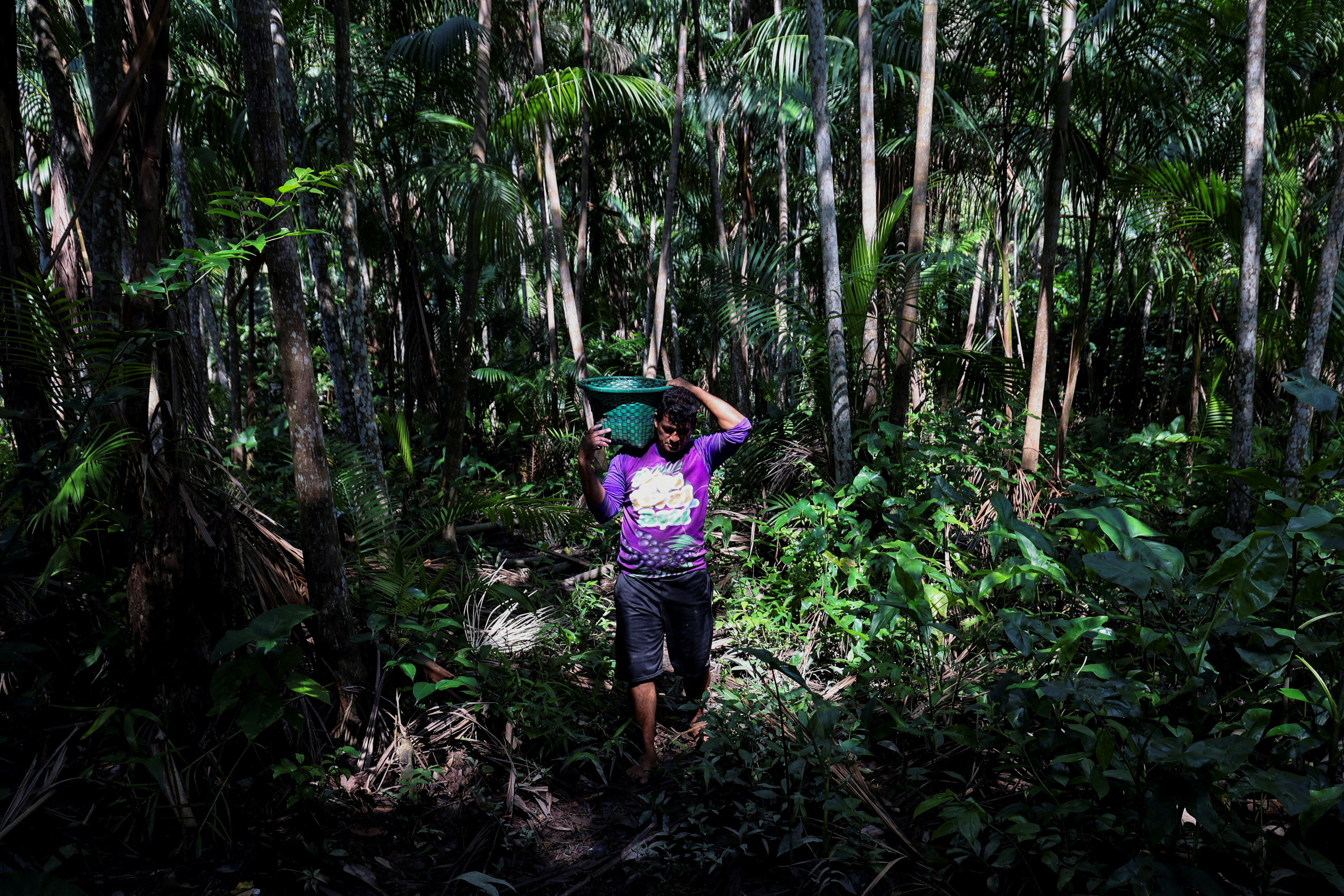
The food system contributes to a third of global greenhouse gas emissions. Image: Reuters/Anderson Coelho
- Delegates are meeting at COP30 in Belém, Brazil to confront the climate crisis.
- Lasse Bruun from the United Nations Foundation argues that the global food system needs to be included in the climate talks.
- Unified policies, bringing together farmers, industry and civil society, and 'protein diversification' could help.
World leaders are gathering in Belém, Brazil for the COP30 climate conference, where delegates will find themselves face to face with the Amazon.
A global emblem of natural wealth and fragility, it is an opportune moment to confront the very thing that's destroying it and fuelling the climate crisis – deforestation. The stakes are high.
If world leaders continue to look the other way and fail to address the key drivers behind its destruction, they'll also fail to meet the goals outlined in the Paris Agreement.
Will the Amazon emerge from COP30 as a symbol of hope and action or continue a haunting visualization of the climate crisis?
Why the food system needs to be included in climate talks
If it’s hope we’re after, we’re going to need to focus on food. Agriculture is the number one threat to the Amazon and the biggest driver of global biodiversity loss. The food system contributes to a third of global greenhouse gas emissions.
Despite being a sector which can offer a triple win for people, planet and prosperity – transforming food systems could unlock $121 trillion in global economic growth by 2070 – food is often missing from climate negotiations.
The Brazilian Presidency has made food systems one of six COP priorities, with initiatives expected on restoring lands degraded by agriculture, as well as climate and hunger. Dedicated food days and sustainably sourced meals are welcome symbolic moves. But we’re going to need more than symbolism.
Making food systems more healthy, sustainable and equitable is no easy task. Food straddles government ministries and UN bodies – from health to trade, agriculture to national security.
Brazil's recent success of being removed from the UN hunger map, achieving President Luiz Inácio Lula da Silva's number one manifesto commitment, came through integrating and connecting policies across these different areas.
It showed the world that investing in family farmers and people-first policies over harmful intensive agriculture is the best approach to feed nations. Yet industrial agriculture still holds its grasp on Brazil when it comes to exports.
Unified policies needed for food system transformation
Whilst some nations are making progress, on a global scale we're missing a crucial step to get combined action on food system transformation.
Unlike the energy sector, there is no agreed pathway of integrated policies to inform countries. Instead, we're left with a patchwork of voluntary targets, which create a confusing set of tools to guide national plans and omit key areas for change.
The sister pathway, the International Energy Agency (IEA) net-zero energy pathway, was pivotal in creating that shared global vision, driving national policies and unlocking investment in renewables. We need the equivalent for food.
The UN Food and Agriculture Organization (FAO) has started work on this, but is missing some sectors such as livestock. Livestock farming is the single largest source of methane from human activity.
A Harvard study of over 200 climate and food experts – more than half being Intergovernmental Panel on Climate Change authors – saw clear consensus that livestock levels must be reduced by 61% by 2036 in order to achieve the Paris Agreement.
That's why, as part of a set of globally agreed targets on food, we need to get to the meaty part – literally. While livestock takes up 77% of the world's agricultural land and requires vast amounts of water, it only produces 18% of the world's calories and 37% of total protein.
Calls for global shift towards alternative proteins
At the UN Foundation we are working to advance 'protein diversification', this means shifting towards alternative proteins such as plant-based foods and away from a reliance on animal-sourced proteins in high-consuming regions.
This isn't just important for the health of our planet but also for our health and healthcare systems. The latest peer-reviewed science, EAT-Lancet Commission 2.0, advises a plant-rich “planetary health diet” could prevent 40,000 early deaths a day across the world and cut food-related emissions in half by 2050.
Another analysis from Zero Carbon Analytics shows high-income, high-consuming countries could save $28 billion per year in total, if they reduce red and processed meat related diseases by just 30%.
Government action is key to protein diversification. Like with renewables, it takes concerted action by states to level the policy to incentivize industry, as highlighted in World Economic Forum studies.
Crucially, the shift must be based on a just transition which doesn't exacerbate inequality. We're working with governments to advance a global and equitable rebalancing of how animal-source, plant-based and novel proteins are produced, processed and consumed.
A key element of this is ensuring Global South stakeholders and marginalized communities are involved from the outset. Not just as a matter of ethical imperative, but as a strategic necessity.
COP30 must move beyond emissions and take real action on food
Food sits at the heart of today's crises, from conflict and rising costs to hunger and climate impacts. COP30 must move beyond emissions targets to real action on food and nature, recognizing their deep connections and the opportunity to fix the system.
Under Brazil's leadership and against the backdrop of the Amazon, COP30 sets the stage for rising to these challenges. The Tropical Forest Forever Facility – an innovative finance mechanism where forest countries are paid to keep forests standing – is expected to attract major investment.
An emphasis on adaptation and finance is also critical to ensure that policies and funds support family farmers, Indigenous peoples and local communities.
These are sorely needed and warmly welcomed, but unless the systemic issues are addressed, these initiatives are being set up to fail.
We will also be looking for those governments that will champion this mission beyond COP30. Those who are committing to specific targets to reduce emissions from agricultural sectors, support food industries to diversify protein supplies and enable citizens to access more sustainable, healthy and affordable diets.
Denmark has shown leadership with their cross-sector and whole-of-government Green Tripartite Agreement and Strategy for Green Protein. One of the world's largest pork exporters, they are now positioning themselves as leaders in plant-based food production.
Bringing together farmers, industry and civil society to deliver the country's climate targets of a 70% emissions reduction in 2030. The strategy provides a blueprint for how ambitious agri-food plans can be built into national climate plans, accelerating the global shift toward sustainable and equitable protein production.
Belém will test world leaders' resolve. If standing before the Amazon and the communities who rely and protect it, isn't enough to spark action on the systems driving its destruction, what will be? Brazil could yet be the one to give food and nature the place they deserve at the heart of climate diplomacy.
Don't miss any update on this topic
Create a free account and access your personalized content collection with our latest publications and analyses.
License and Republishing
World Economic Forum articles may be republished in accordance with the Creative Commons Attribution-NonCommercial-NoDerivatives 4.0 International Public License, and in accordance with our Terms of Use.
The views expressed in this article are those of the author alone and not the World Economic Forum.
Stay up to date:
Sustainable Development
Related topics:


Forum Stories newsletter
Bringing you weekly curated insights and analysis on the global issues that matter.
More on Climate Action and Waste Reduction See all

Lin O’Grady and Alice Charles
April 7, 2026


