How volunteers are advancing youth-led education from Jeddah to Zanzibar – and beyond

Local youth-led education programmes can provide a community-centric approach to meeting educational needs. Image: Shutterstock/michaeljung
- Research suggests people with high English language proficiency can earn up to 50% more than peers in the same country.
- The Voices Unbound initiative equips orphaned children with tools for future self-sufficiency through English language education.
- The initiative has expanded from Saudi Arabia to Tanzania, offering a blueprint for youth-led teaching programmes around the world.
A recent UNESCO report reveals a grim reality: 251 million children and young people are currently out of school globally, while public expenditure on education fell to 4% of GDP between 2015 and 2022. These figures underscore the magnitude of today’s educational crisis, which can lead to an underlying problem of millions of people being disconnected from opportunities to earn a living.
This gap is particularly pronounced in technology- and innovation-driven economies, where language can be the primary barrier to entry. In this context, the crisis extends beyond the classroom, limiting access to the essential skills and networks required for economic and social mobility.
Increasing English language fluency is one way to help bridge this divide. Specifically, proficiency in English can be a gateway to global knowledge networks and digital employment that serves as a catalyst for upward mobility in many countries. Some research suggests people with high English language proficiency could earn 30-50% more than peers in the same country.
Have you read?
Institutional efforts are integral to attaining education goals, but bureaucratic complexity means more responsive solutions are crucial. Local youth-led education programmes can provide a community-centric approach to meeting educational needs, such as English language proficiency.
Youth-led education solutions are based on community trust, using volunteers to provide targeted instruction where it is needed most. If youth volunteers also have a practical understanding of modern educational demands, their mentorship can help children face a rapidly evolving world.
Building confidence beyond the classroom
In Jeddah, Saudi Arabia, the Voices Unbound initiative equips orphaned children with the tools they need for future self-sufficiency through English language education. The programme teaches these children more than just grammar and vocabulary; it also gives them confidence, curiosity and practical communication skills.
The curriculum integrates public speaking activities and conversational exercises to foster self-empowerment, develop agency and accelerate personal growth. Regular group discussions encourage children to share personal experiences in English, while role-playing and collaborative exercises challenge them to tackle simple problems as a team. Such activities turn language learning into a way to promote critical thinking and civic awareness.
Since the initiative is maintained entirely by young people from the same communities as the children they support, the outcome is a mutually transformative experience. Volunteers frequently share that the work helps them build empathy and leadership skills, as well as highlight community challenges.
A sustainable cycle of civic engagement also inspires students to become community leaders. When asked what he wanted to be when he grows up, Sultan, a nine year-old participant in Voices Unbound, replied: “I want to become an English teacher.”
For children who experience hardship, the quality of the learning setting matters as much as the curriculum. A youth-led model helps to create an atmosphere of safety and relatability because students are more receptive to learning from mentors who seem familiar.
Volunteers are both instructors and role models for these children. This approach can be more effective than traditional institutional settings because it offers individual, aspirational mentorship. Together, a confidence-building curriculum and near-peer mentorship can create profound shifts in how children view their abilities and future prospects.
From local success to global blueprint
The true measure of social innovation lies in its replicability and capacity to scale beyond a single community. In 2025, Voices Unbound expanded to an orphanage school in Zanzibar, Tanzania. This tested whether the concept of a youth-led education volunteer delivery system and a curriculum centred on confident self-expression could work in a completely different cultural setting.
Students in Zanzibar showed the same eagerness to learn and gains in confidence as those in Jeddah. Notably, local volunteers observed more student involvement in school-wide activities. Children who once avoided group settings began volunteering for leadership roles, and those who had previously stayed silent started asking questions and engaging with enthusiasm.
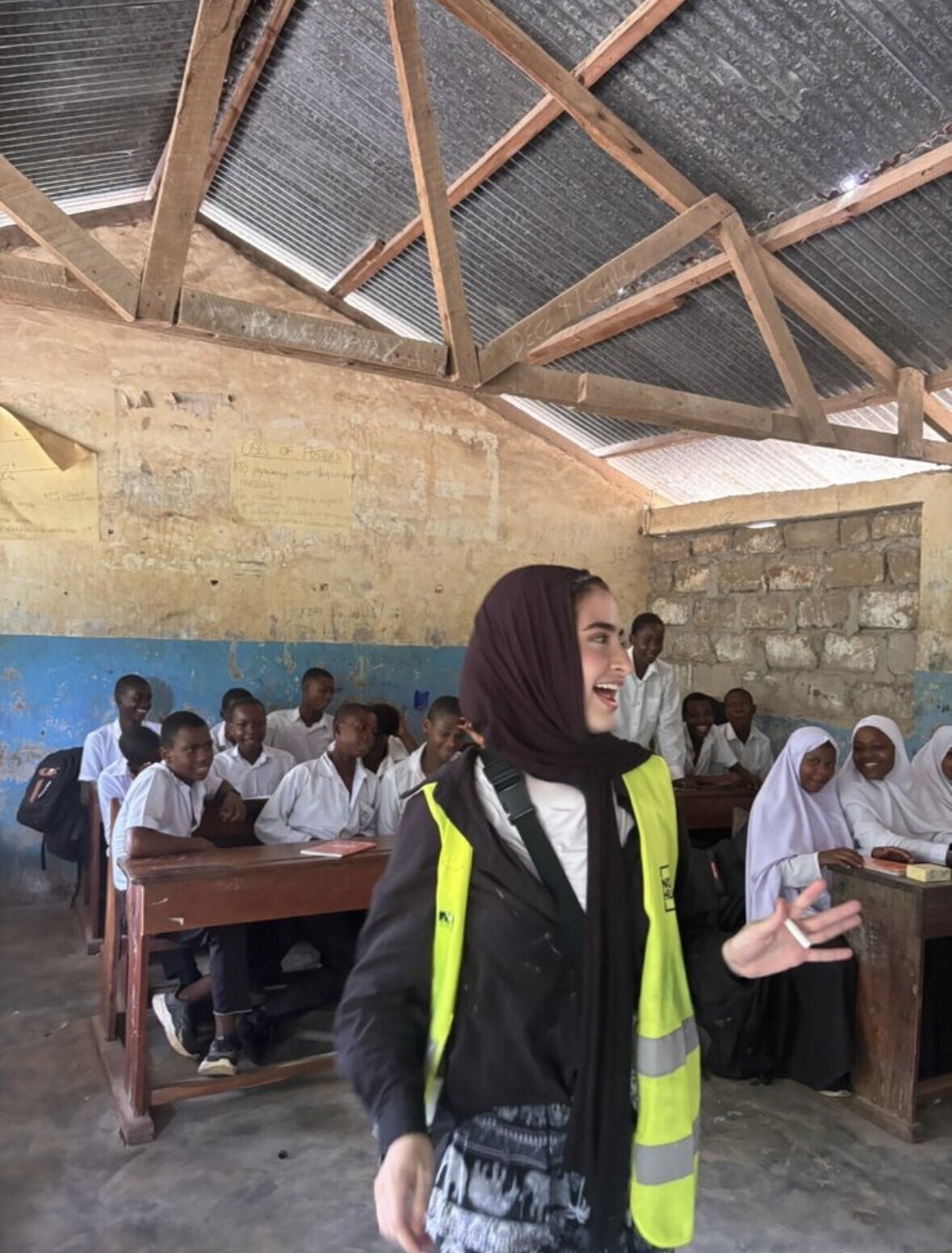
The success in Zanzibar indicates that the programme’s core components could be more widely applicable, thanks to the key ingredients of agility, low-cost operations and authenticity of community connection. This positions Voices Unbound as a blueprint with potential to inspire similar interventions worldwide.
This hyper-local youth-led education model has proven to be a high-impact, resource-efficient method with valuable outcomes. Global development will create more opportunities to fund and connect more local leaders in youth-led education. By investing in these efforts, the global community can help to expand the future prospects of young people who have been overlooked by traditional education systems.
Don't miss any update on this topic
Create a free account and access your personalized content collection with our latest publications and analyses.
License and Republishing
World Economic Forum articles may be republished in accordance with the Creative Commons Attribution-NonCommercial-NoDerivatives 4.0 International Public License, and in accordance with our Terms of Use.
The views expressed in this article are those of the author alone and not the World Economic Forum.
Stay up to date:
Youth Perspectives
Related topics:


Forum Stories newsletter
Bringing you weekly curated insights and analysis on the global issues that matter.
More on Education and SkillsSee all

Fabian Stephany
February 10, 2026


