5 defining questions for 2026 that leaders will address at Davos 2026
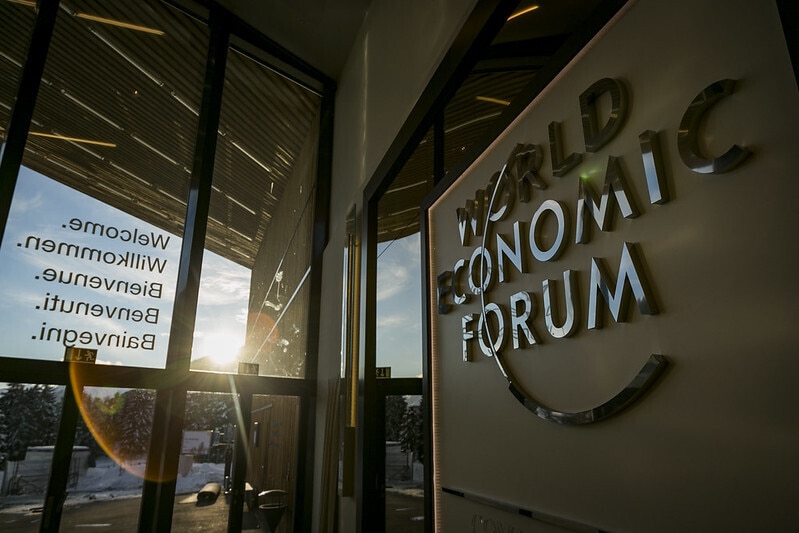
As Davos 2026 approaches, the new year is a moment to take stock of global risks and priorities for the year ahead. Image: REUTERS/Heather Khalifa
- As Davos 2026 approaches, the new year is a moment to take stock of global risks and priorities for the year ahead.
- From cooperation and growth to innovation, people and the planet, these are the five defining questions set to frame discussions at Davos 2026 and beyond.
- This new-year roundup of Forum Stories offers a preview of the conversations and may even provide some of the answers.
'New Year' as we know it dates back 4,000 years to the Babylonians, who were among the first civilizations to mark the occasion with festivals and rituals. Today New Year's Day is celebrated by communities around the world in different ways from cold-water plunges to plate smashing.
The Romans saw January 1st become a fixture and incorporated a more structured approach with ‘vows of renewal’.
Call them New Year's resolutions, if you like.
The World Economic Forum’s flagship event in Davos starts the year, taking place annually in the month of January, and the meeting similarly has elements of collective resolution to do better in the year ahead.
The achievements of successive Davos meetings are testament to this intention, with a range of impacts over the years from helping to avert a war between Greece and Türkiye to hosting a handshake that sealed the end of apartheid.
When leaders gather for the 56th Annual Meeting from 19-23 January, they’ll address five defining questions for 2026:


This new-year roundup brings together some of the recently published Forum Stories that give a taste of the discussions at Davos as leaders address those questions. They may even provide some of the answers.
1. How can we cooperate in a more contested world?
Logistics Emergency Team, 20 years on: With more than 305 million people in need of aid, read how a pioneering public-private partnership has kept humanitarian aid moving in crises.
Materials as a new frontier for cooperation: Why critical materials are emerging as both a source of strategic tension and a test case for pragmatic international collaboration.
Regional cooperation, global impact: What experts say about why regional alliances may now deliver better results than grand global deals.
Radio Davos on war and peace: As geopolitics shifts, three experts on international relations answer fundamental questions, including: Why do humans have wars? What are the new challenges facing peacemakers and peacekeepers? And what has changed for the Global South?
2. How can we unlock new sources of growth?
Navigating the new economy: Decision-makers from different sectors offer their thoughts on the transformative trends impacting their industries and related strategy responses.
Four futures for the new economy: Go deeper to read this paper outlining four distinct futures for 2030 that emerge from different trajectories of geopolitical stability and technology adoption.
Geoeconomics and technology in 2030: Drawing on data from the report, this op-ed from the Forum's Centre for New Economy and Society, lays out some difficult trade-offs, and argues that 'the new economy will not be back to normal'.
Transforming capital: It is projected that, by 2030, women will hold nearly 40% of global investable wealth. This paper explores why gender parity could expand the investable frontier – and unlock growth hiding in plain sight.
3. How can we better invest in people?
New economy skills: Why building AI, data and digital capabilities is becoming a prerequisite for growth – and inclusion.
Quantum vs AI in healthcare: What leaders need to know as two powerful technologies begin to converge in medicine.
Work transformation in Japan: How one economy is rethinking work, skills and productivity.
Bridging the digital talent gap: Why the talent shortage is less about supply and more about systems that fail to connect people to opportunity.
4. How can we deploy innovation at scale and responsibly?
The top frontier tech stories of 2025: The innovations that moved from promise to practical impact this year.
Three obstacles to AI adoption: Why culture, capability and trust (not technology) are slowing AI’s rollout.
Net-positive AI and energy: How AI could strengthen energy systems rather than overwhelm them.
Supervisory technology, or 'suptech': How financial regulators can foster a more resilient, transparent and accountable global financial system.
5. How can we build prosperity within planetary boundaries?
Water innovation trends for 2026: The shifts reshaping how the world manages scarcity, risk and resilience around water.
Pricing emissions in trade: How carbon costs embedded in goods are starting to reshape global commerce.
Can insurance unlock climate finance?: Why insurers may play a bigger role in closing the climate funding gap.
Radio Davos with Sylvia Earle: A message of hope for 2026 and a reminder from one of the world’s leading ocean scientists that economic systems depend on planetary health.
License and Republishing
World Economic Forum articles may be republished in accordance with the Creative Commons Attribution-NonCommercial-NoDerivatives 4.0 International Public License, and in accordance with our Terms of Use.
The views expressed in this article are those of the author alone and not the World Economic Forum.

Forum Stories newsletter
Bringing you weekly curated insights and analysis on the global issues that matter.
More on Forum in FocusSee all

Jaci Eisenberg
March 10, 2026


