Building the circular economy after global negotiations stall
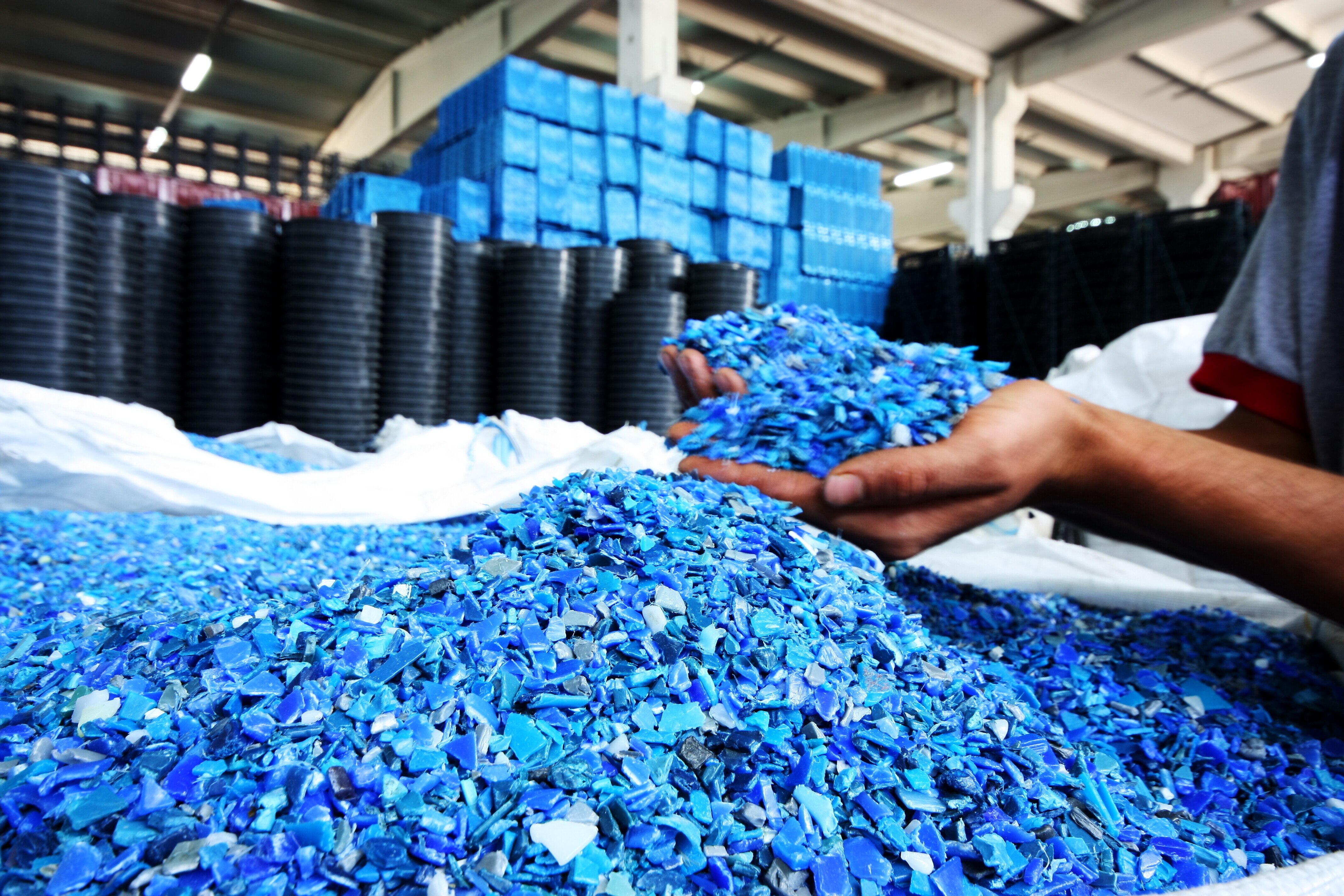
Divisions persist over how to govern the systems producing our materials. Image: Getty Images/iStockphoto
- While there is growing agreement on the need to protect ecosystems, divisions persist over how to govern the systems producing our materials.
- Post 'Paris Agreement for Plastics' and COP30 talks, we are shifting from negotiation to alignment on infrastructure to enable the circular economy.
- Circularity will only emerge when sourcing recycled materials becomes cheaper, easier and equally reliable to sourcing virgin alternatives.
The global environmental agenda faces a paradox following last month's COP30 in Belém. The “Amazon COP” placed the bioeconomy and nature-positive transitions firmly at the centre of climate ambition, yet progress again relied on voluntary commitments rather than binding finance.
That contrasts sharply with the regulatory stalemate in Geneva three months earlier – the collapse of the Global Plastics Treaty negotiations (INC-5.2) in August offered a sobering reminder that consensus on industrial rules remains elusive. While there is growing agreement on the need to protect ecosystems, divisions persist over how to govern the systems producing our materials. Disagreements over production caps, chemical transparency and financing mechanisms proved too wide to bridge.
For many, Geneva felt like a dead end. For the circular economy, it marks a pivot. While diplomats debated, global material consumption continued to rise and the circularity gap widened.
The contrast between a fragmented Geneva and a voluntary Belém reveals a hard truth: a top-down “Paris Agreement for Plastics” will not resolve today’s structural inefficiencies. The post-treaty era will be defined not by what governments write, but by the digital and operational infrastructure built to connect their policies in practice.
We are shifting from negotiation to alignment. The key question is no longer “what are the rules?” but “how do our systems speak the same language?”
From multilateralism to interoperability
The absence of treaty consensus does not mean regulation has stalled; it means it is fragmenting.
The European Union is advancing its rollout of the Ecodesign for Sustainable Products Regulation (ESPR) and Digital Product Passports (DPP). Countries across Southeast Asia, Latin America and Africa are implementing expanded extended producer responsibility (EPR) frameworks and national waste strategies.
The risk is not inaction but the emergence of a ‘splinter internet’ of circularity featuring divergent data systems, conflicting standards and rising compliance costs. Today, requirements such as DPP, EPR and the Corporate Sustainability Reporting Directive (CSRD) operate largely in parallel.
Without shared identifiers, a bale of recycled PET produced in Indonesia cannot easily prove its provenance to a buyer in Germany. Claims cannot be verified, materials cannot move efficiently and finance cannot follow evidence.
This is why interoperability has become the new frontier. Harmonizing policies is politically difficult; harmonizing data is technically achievable.
A tale of two circularities
The Geneva impasse also exposed a deeper structural divide between the Global North and the Global South – an issue that echoed throughout COP30.
For the Global North, circularity is a data integration challenge. Companies face fragmented supply-chain information and inconsistent reporting rules across jurisdictions. The machinery exists, but the digital nervous system is incomplete.
For the Global South, circularity is an infrastructure and inclusion challenge. Waste recovery is often driven by the informal sector, where an estimated 15-20 million workers collect and sort significant volumes of recyclable materials, often up to 60% of plastics in major cities. Yet these contributions remain under-financed and invisible to global markets.
A unified circular economy must bridge these realities. We need trusted data frameworks capable of validating material flows from an informal collector in Nairobi as reliably as from a recycling plant in Rotterdam.
Overcoming systemic hurdles to the circular economy
Moving from diplomatic aspiration to operational reality on the circular economy requires addressing five systemic hurdles. Each reflects where regulation alone has struggled – and where better system design can unlock progress.
1. The data deficit
Challenge: Brands often cannot see past Tier 1 suppliers. Information is locked in non-standardized documents and closed systems.
Response: Open identifiers and APIs can link DPPs to EPR, audit and reporting systems. Early EU textile pilots show material feasibility, but alignment with global standards is essential to avoid unintended trade barriers.
2. The capital gap
Challenge: Recent COPs delivered no binding climate or circularity finance commitments. The UNEP Adaptation Gap Report continues to highlight a substantial shortfall in funding for resilient and circular systems.
Response: Capital follows certainty. Linking finance to verified recovery and social outcomes can de-risk investment. Predictable EPR revenue streams can fund collection and support infrastructure financing.
3. Informal inclusion
Challenge: Millions of informal workers remain outside formal markets; both social value and material intelligence go uncaptured.
Response: Digital registries and fair-pay verification models can make informal contributions visible and bankable. Pilots in India and Argentina demonstrate how digitization strengthens traceability without excluding workers (e.g., Empower Foundation’s informal sector pilots).
4. Procurement inertia
Challenge: Governments spend roughly $13 trillion annually on public procurement, yet circular criteria remain limited or unenforceable due to a lack of verified data.
Response: “Traceability-verified” tenders requiring machine-readable evidence rather than static certificates could create immediate demand for circular materials and stimulate private investment.
5. The trust deficit
Challenge: Concerns over greenwashing have reduced confidence in sustainability claims and regulations such as the EU Green Claims Directive reflect mounting scrutiny.
Response: Audit-grade, machine-readable monitoring, reporting and verifying systems enable a shift from “trust me” to “verify me”, reinforcing credibility and reducing regulatory risk.
Harmonized data key to enabling circular economy
The technology needed to address these challenges already exists. ISO 59040, the product circularity data sheet (PCDS), provides a standardized, machine-readable format enabling verification without disclosing sensitive formulations. Combined with GS1 Digital Link for global identification, it offers a blueprint for a common language of materials.
When data becomes interoperable, compliance shifts from a cost centre to actionable intelligence. Recyclers can understand chemical composition before processing; financiers can verify recovery outcomes; and public authorities can trace responsibility across value chains – all while producers gain visibility on feedstock quality and availability.
The post-treaty landscape is not a policy vacuum – it is a design challenge. Progress on the circular economy now depends on enterprise leaders, technologists, designers and policy-makers building the infrastructure that policy alone cannot deliver.
Circularity will not emerge from a single agreement in Geneva. It will emerge when sourcing recycled materials becomes cheaper, easier and equally reliable to sourcing virgin alternatives.
Waste is a uniquely human invention. Solving it requires evolving from passive compliance to systemic operational intelligence.
Don't miss any update on this topic
Create a free account and access your personalized content collection with our latest publications and analyses.
License and Republishing
World Economic Forum articles may be republished in accordance with the Creative Commons Attribution-NonCommercial-NoDerivatives 4.0 International Public License, and in accordance with our Terms of Use.
The views expressed in this article are those of the author alone and not the World Economic Forum.
Stay up to date:
Circular Economy


Forum Stories newsletter
Bringing you weekly curated insights and analysis on the global issues that matter.
More on Climate Action and Waste Reduction See all

Emily Farnworth and Alice Ruhweza
March 12, 2026