In charts: The global reach and convening power of Davos
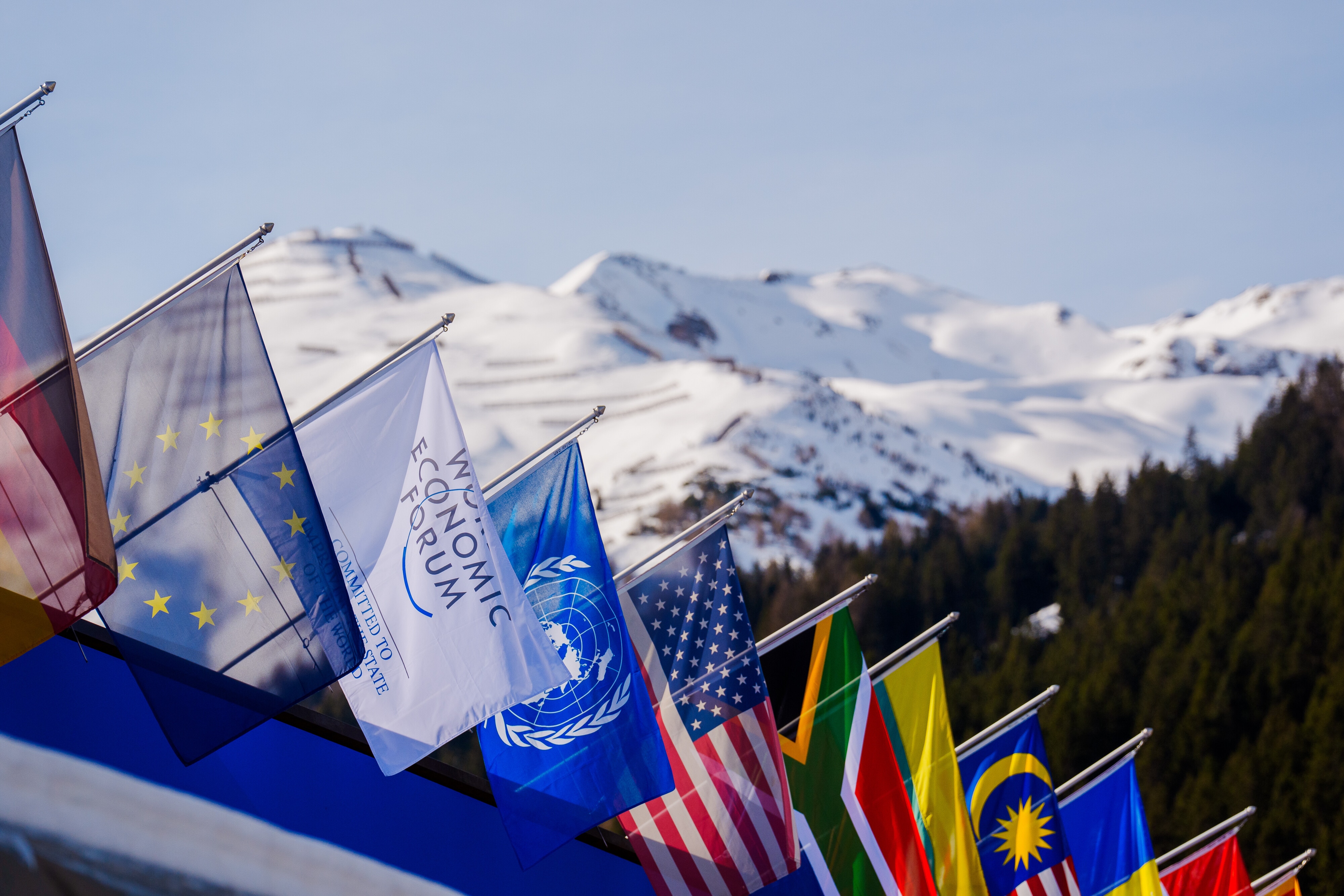
The 56th Annual Meeting, Davos 2026 will be held under the theme "A Spirit of Dialogue”. Image: World Economic Forum
- The World Economic Forum's Annual Meeting in Davos, Switzerland, has brought together leaders for over half a century.
- The global reach of the event has grown significantly over the past decades.
- In recent years, thousands of participants from across the world have taken part in the gathering to address shared challenges.
In 1971, business leaders, academics and lawmakers met in the alpine town of Davos, Switzerland, for the inaugural European Management Symposium, which was aimed at improving management practices across the public and private sectors.
In the years that followed, the event became known as the World Economic Forum Annual Meeting and grew into the preeminent venue for leaders from every corner of the world to come together to address the defining challenges of the times.
Participation in the Annual Meeting, often referred to as 'Davos', has grown significantly over the decades.
In the early 1970s, just a few hundred people attended the gathering, with the bulk of participants coming from the private sector. In more recent years, the Annual Meeting has welcomed thousands of leaders from government, business, international organizations, media, academia, youth groups and civil society.
The Annual Meeting has significantly expanded its global reach, too.
In the early years, participants came from only a few dozen mostly European countries. Today, they come from every corner of the world, making the meeting a truly global setting where leaders from all backgrounds can come together and examine shared challenges.
The Annual Meeting has also served as a platform for heads of state and government to represent their people and economies on a unique global stage.
Last year, world leaders who attended the Annual Meeting included United Nations Secretary-General António Guterres, Ukrainian President Volodymyr Zelenskyy, US President Donald Trump (video address), South African President Cyril Ramaphosa, Spain's Prime Minister Pedro Sánchez, Prime Minister of Malaysia Anwar Ibrahim and Argentine President Javier Milei.
The Annual Meeting’s programme and agenda has also grown. Since its first gathering, which focused on business management strategies, Davos has borne witness to numerous historical milestones, ranging from a handshake that sealed the end of apartheid to the launch of a global vaccine alliance.
Today, participants continue to gather to rebuild trust and explore the critical issues facing the global economy. This includes the adoption of advanced technologies like artificial intelligence, conflict resolution, progress on addressing the climate crisis and new avenues for economic growth, to name a few.
The global public can now follow and engage with the Annual Meeting through livestreamed sessions on the Forum’s website and social channels, as well as virtual links to Forum hubs, centres and projects worldwide.


A closer look at the Annual Meeting 2026
Next month, global leaders will gather back in Davos for the 56th Annual Meeting, which will be held under the theme A Spirit of Dialogue.
Building on a proud 56-year tradition of connecting leaders to make sense of global challenges, the meeting will focus on five interconnected questions that will shape the decade ahead:
The Annual Meeting 2026 will convene a diverse group of world leaders, business executives and renowned experts to exchange perspectives across borders and sectors, rebuild trust amid global uncertainty, and advance collective progress through cooperation and shared purpose. This includes around 850 chief executives and chairs of the Forum’s 1,000+ partner companies actively engaged in its year-round initiatives and communities.
To date, registrations for the Annual Meeting 2026 have reached a record high, with up to 3,000 leaders from close to 130 countries expected to attend, including around 60 heads of state and governments. Public figures include leaders from G7, G20, BRICS countries and beyond, as well as heads of international organizations. Leaders from civil society, labour, social entrepreneurs and religious organizations deepen and enrich the meeting’s dialogue and sessions.
For more on this year's theme, see the article below.

License and Republishing
World Economic Forum articles may be republished in accordance with the Creative Commons Attribution-NonCommercial-NoDerivatives 4.0 International Public License, and in accordance with our Terms of Use.
The views expressed in this article are those of the author alone and not the World Economic Forum.
Related topics:

Forum Stories newsletter
Bringing you weekly curated insights and analysis on the global issues that matter.
More on Forum in FocusSee all

Kaya Bülbül and Kate Whiting
January 30, 2026


