How grid integration can power Africa’s future
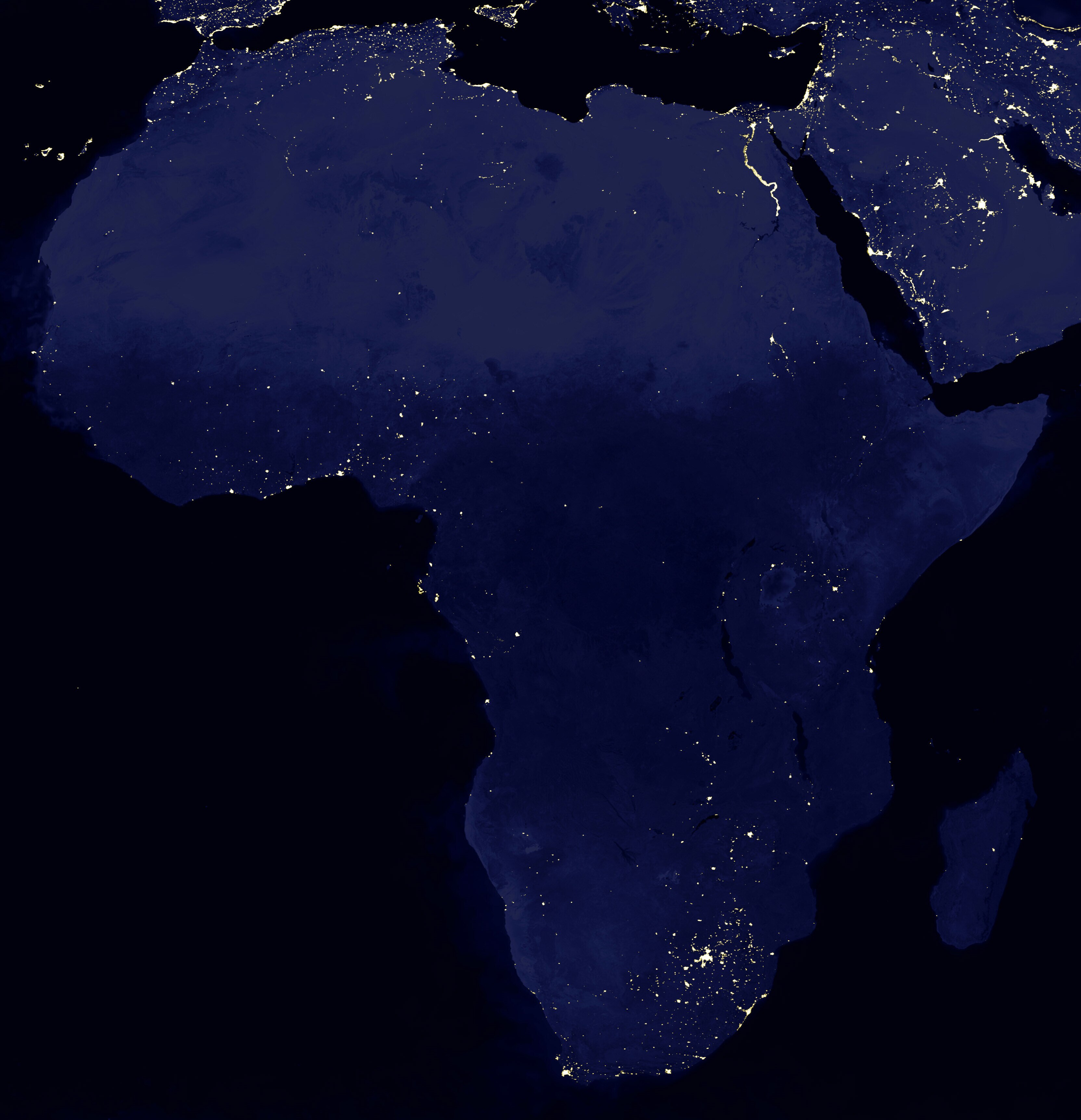
Most African countries run isolated national grids that are small, costly and unevenly supplied Image: REUTERS/NASA/Handout. EDITORIAL USE ONLY. NOT FOR SALE FOR MARKETING OR ADVERTISING CAMPAIGNS.
Rakesh Bohra
Project Fellow, Mobilizing Investment for Clean Energy in Africa, World Economic Forum Geneva- Despite holding 60% of the world’s best solar resources, Africa attracts less than 3% of global clean-energy investment and over 600 million people still lack reliable electricity.
- Most African countries run isolated national grids that are small, costly and unevenly supplied. Regional energy interconnectivity is the key to unlocking efficiency, affordability and renewable growth.
- Africa has a continent-wide roadmap for integration, but success depends on coordinated action and investor confidence.
Africa is a continent rich in energy potential. From the sun-drenched plains of the Sahel to the mighty rivers of Central Africa, the continent holds vast reserves of renewable and non-renewable energy. Sixty percent of the world’s “best solar resources” are found on the continent.
Yet, it receives less than 3% of global clean energy investment and more than 600 million Africans still lack access to reliable electricity.
The fragmented reality of Africa’s power systems
National grids on the continent are often small, underfunded and poorly maintained. Brazil’s domestic transmission network is longer in total kilometres of line than the combined transmission grids of 38 African countries.
While generation capacity across the continent is growing rapidly, the transmission and distribution networks needed to deliver that power are lagging.
What’s more, most African countries operate isolated national power grids, each designed to serve domestic needs. Connections with neighbouring countries are rare, creating a fragmented energy landscape.
This fragmentation leads to several challenges:
- Uneven distribution of power: Some countries, such as Ethiopia and the Democratic Republic of Congo, generate more electricity than they can consume. Others, such as South Sudan and Liberia, suffer frequent blackouts.
- High electricity costs: Small national grids lack economies of scale, making electricity generation and distribution more expensive.
- Limited viability of large renewable projects: Without the ability to export surplus power, countries hesitate to invest in large-scale solar farms or hydropower dams.
The lack of power interconnectivity across Africa also means countries are missing out on the developmental and economic benefits that energy trade could bring.
Regional interconnectivity, a game-changer
Regional energy interconnectivity – linking national grids to create a continent-wide electricity network – offers transformative benefits for Africa.
By interconnecting national grids, African countries could trade electricity among themselves, just as they trade goods and services, allowing them to share electricity during peak demand or outages, enhancing energy security and reducing dependence on costly emergency solutions.
Larger, regional markets also enable economies of scale, allowing for bulk purchasing, shared infrastructure and more efficient resource allocation, ultimately lowering costs for utilities and consumers.
Access to broader markets also encourages investment in renewable energy projects, as surplus power from solar, wind or hydro sources can be traded across borders. This integration supports economic growth and industrialization, providing reliable, affordable electricity to drive manufacturing, job creation and digital innovation.
Recent decades have seen substantial progress on this front, with the establishment of five regional power pools. The Southern African Power Pool, the West African Power Pool, the Eastern Africa Power Pool, the Central Africa Power Pool and the North African Power Pool have each improved cross-border electricity access and trade.
While these efforts remain at different stages of development and operation, they are paving the way for a future centralized interconnectivity programme that unifies the continent’s power systems and enables seamless energy exchange across regions.
The African Union (AU) has articulated a vision for a continent-wide interconnected power system (the Africa Single Electricity Market) that will serve 1.3 billion people across 55 countries, making it the biggest electricity market in the world.
In recent years, the Continental Power Systems Master Plan (CMP) has provided a much-needed strategic framework to integrate Africa’s five regional power pools into a single, resilient and scalable electricity network, laying the foundation for a truly interconnected energy future.
With demand expected to triple by 2040, translating this vision into reality will be essential to sustainably meet Africa’s energy needs. That’s where the recent Africa Ten-Year Infrastructure Investment Plan for Cross-Border Interconnectivity (TYIIP) comes into play.
Co-ordinated by the AU Development Agency – New Partnership for Africa’s Development, under priority 3 of the G20 Energy Transitions Working Group, this plan outlines a pipeline of regional transmission projects to be implemented between 2026 and 2036.
Phased over a decade and established in partnership with the various Power Pools, this plan embodies Africa’s commitment to a truly integrated continental grid.
One continent, one grid
Africa stands at a pivotal moment. Investing in Africa means tapping into 60% of global renewable energy potential and a $2.5 trillion infrastructure opportunity, driving sustainable global growth. The European – and more recently ASEAN (Association of Southeast Asian Nations – experiences with regional grid integration offer useful lessons for Africa to build on.
With the CMP’s vision and the TYIIP now out, the continent has a clear path toward a unified, resilient and sustainable energy future. What’s missing now?
Coordinated efforts among countries hosting future network infrastructure projects are essential to create enabling environments that improve predictability for investors. Beyond political commitments, risk mitigation will remain paramount.
Examples of collaboration among banks, development finance institutions and multilateral institutions to reduce counterparty risks and improve lending conditions have been successful.
Corridor approaches, taking a portfolio view of project developments, also offer greater scalability, synergies and more interesting risk profiles than isolated project preparation.
Lastly, beyond the very critical first step of project identification, helping provide greater market visibility, raising the profiles of these projects will now be key to getting investors interested.
To support this effort, the World Economic Forum, in collaboration with key African stakeholders, will host a series of dialogues showcasing the biggest transmission and generation projects identified under the TYIIP as requiring investment to propel the continent’s energy transition.
Gathering over 100 investors, energy leaders and multilateral development banks, these market-sounding sessions will be a unique opportunity to surface de-risking solutions and best practices for structuring that enhance bankability.
Don't miss any update on this topic
Create a free account and access your personalized content collection with our latest publications and analyses.
License and Republishing
World Economic Forum articles may be republished in accordance with the Creative Commons Attribution-NonCommercial-NoDerivatives 4.0 International Public License, and in accordance with our Terms of Use.
The views expressed in this article are those of the author alone and not the World Economic Forum.
Stay up to date:
Africa
Related topics:


Forum Stories newsletter
Bringing you weekly curated insights and analysis on the global issues that matter.
More on Energy TransitionSee all

Arslan Khalid and Rabia Ferroukhi
March 11, 2026


