How AI will help get fusion from lab to grid by the 2030s

Advancements in fusion and AI demonstrate how the energy could be mainsstreamed in the next five to 10 years Image: Unsplash/Luke Jones
- Developments in government and industry indicate that fusion energy could begin contributing to national grids in the 2030s, marking a shift from experimentation to deployment.
- Google DeepMind’s partnership with Commonwealth Fusion Systems shows how advanced artificial intelligence can help overcome some of fusion’s most challenging physics challenges.
- Global developments show that fusion is becoming a strategic technology arena with massive economic potential, with trillions of dollars in future clean-energy value.
The global pursuit of fusion energy – a potentially safe, abundant, zero-carbon power source – has entered a decisive phase, according to the International Atomic Energy Agency (IAEA).
A new fusion roadmap published by the US Department of Energy in October outlines how the technology could enter that country’s energy mix by the early 2030s.
“Fusion is real, near and ready for coordinated action,” said Jean Paul Allain, associate director of the department’s Office of Fusion Energy Sciences.
Artificial intelligence (AI) could help turn that goal into a reality.
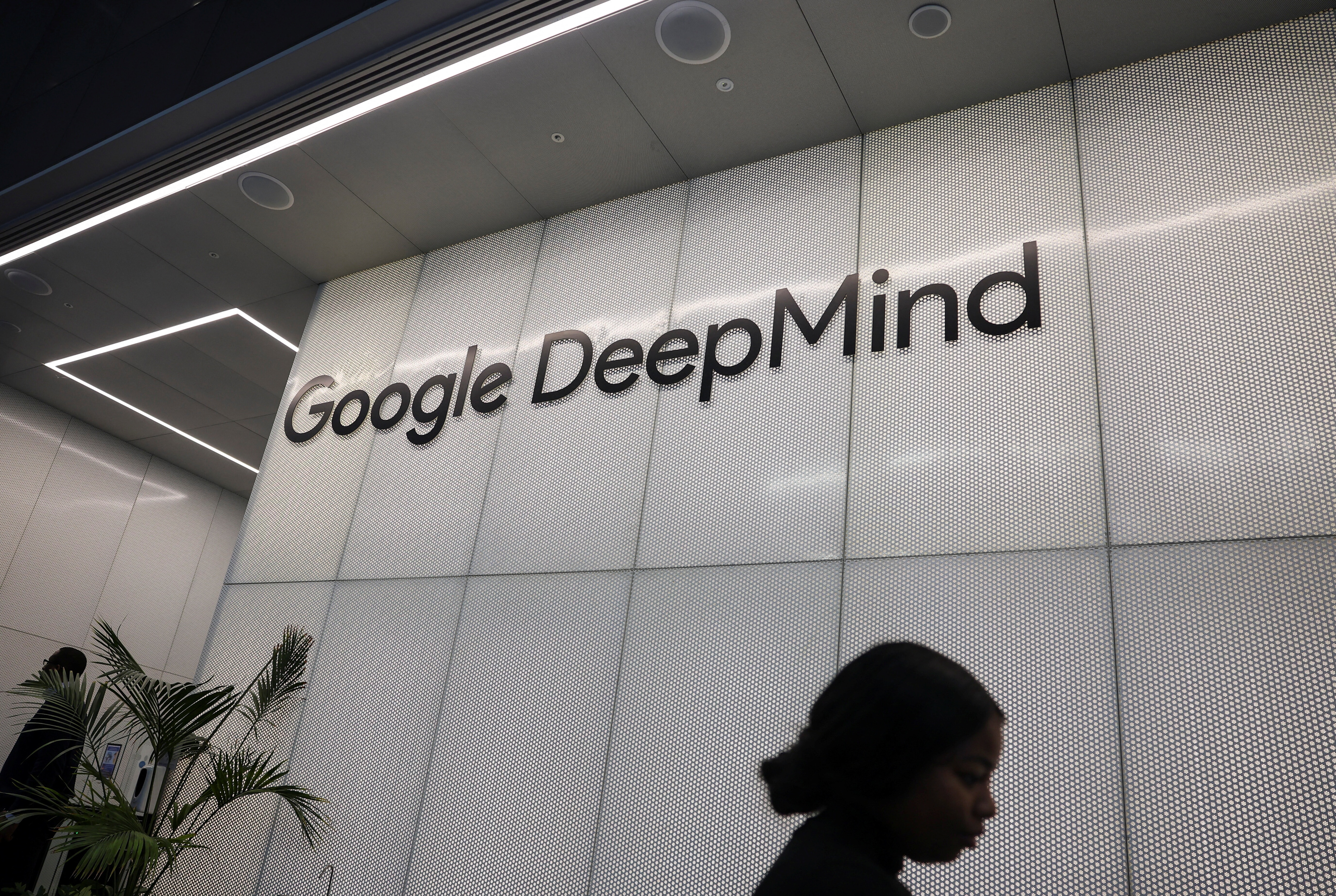
On the same day that the US Department of Energy announced its national strategy to accelerate the development and commercialization of fusion energy, AI research company Google DeepMind and fusion energy startup Commonwealth Fusion Systems (CFS) announced a research partnership to help accelerate the timeline to deliver fusion energy to the grid.
“The combination of our AI expertise with CFS’s cutting-edge hardware makes this the ideal partnership to advance foundational discoveries in fusion energy for the benefit of the worldwide research community and ultimately, the whole world,” wrote Google DeepMind’s fusion team in a blog post.
US Energy Secretary Chris Wright has underscored AI’s emerging role by noting its potential to enable breakthroughs in materials science, digital modelling of stellar fusion processes and molecular dynamics. “It’s hard to overstate the catalytic effect of artificial intelligence,” he said.
The global race to deliver fusion power
Fusion, the process that powers the sun and stars, promises nearly limitless energy without carbon emissions or long-lived waste, which has excited scientists since the 1950s. While achieving net-energy gain has long been a scientific challenge, progress is accelerating across multiple fronts, putting the technology on the radar of the World Economic Forum’s Global Future Council on Energy Technology Frontiers.
Since the 1980s, 33 nations and thousands of engineers and scientists have collaborated to build and operate a “tokamak” – a magnetic fusion device – as part of the ITER project, the world’s largest fusion experiment.
In parallel, governments, utilities and private industry are expanding the fusion ecosystem. At least 45 companies worldwide are pursuing commercial fusion and the IAEA reports that more than 160 fusion facilities are now operational, under construction or planned. Early power-purchase agreements from end users such as Google, global energy company Eni and Microsoft signal rising industry confidence.
One of the most evident signs that fusion is moving from a scientific experiment to a commercial reality is a milestone noted in the IAEA World Fusion Outlook 2025: the first-ever global modelling of fusion energy deployment.
Conducted by the Massachusetts Institute of Technology, the study projects that fusion generation will rise from 2 TWh in 2035 to 375 TWh in 2050, reaching nearly 25,000 TWh by 2100. The analysis highlights fusion’s potential to add trillions of dollars to global gross domestic product as demand for clean electricity surges.
The modelling also highlights fusion’s economic value: as demand for clean electricity generation rises, fusion could add trillions of dollars to global gross domestic product, according to the IAEA.
Governments increasingly view fusion as strategic. A recent report from Swiss company EconSight, which tracks technology trends and patents, shows China leading the field, filing 67% of world-class fusion patents between 2016 and 2023, compared to 19% in the US and 5% in Europe.
How AI might help advance plasma physics
Major hurdles remain, however, before fusion becomes a staple of the energy mix. Controlling the plasma in magnetic confinement fusion is challenging, as it must remain confined and within a stable, defined volume for a prolonged period. The heat and pressure cause expansion but any contact with the reactor walls instantly cools it and halts the fusion reaction.
The DeepMind and CFS partnership builds on work using AI to successfully control plasma. With academic partners at the Swiss Plasma Center at EPFL (École Polytechnique Fédérale de Lausanne), Google showed that deep reinforcement learning can control the magnets of a tokamak to stabilize complex plasma shapes. It also developed TORAX, a fast and differentiable plasma simulator.
DeepMind will now apply these tools to CFS’s programme. Combining TORAX with reinforcement learning or evolutionary search methods such as AlphaEvolve, AI agents can explore vast numbers of operating scenarios, identifying the most efficient pathways to net-energy production.
DeepMind is also developing an AI pilot to control magnetic configurations, optimize fusion power and manage heat load for CFS’s SPARC reactor outside Boston.
CFS aims to bring its first grid-scale fusion plant online in the early 2030s and has already secured off-take agreements from Google and Eni, the latter valued at more than $1 billion. Both companies are also investors. With no materials-resource constraints, CFS says it could scale up to produce up to 1,000 plants per year by 2050.
CFS is racing against Helion, another US fusion startup backed by OpenAI CEO Sam Altman, which plans to bring a fusion power plant online by 2028 and has signed Microsoft as its first off-take partner.
As AI accelerates the path to commercialization, fusion energy is shifting from an ambitious science project to one of the most consequential markets of the century.
Don't miss any update on this topic
Create a free account and access your personalized content collection with our latest publications and analyses.
License and Republishing
World Economic Forum articles may be republished in accordance with the Creative Commons Attribution-NonCommercial-NoDerivatives 4.0 International Public License, and in accordance with our Terms of Use.
The views expressed in this article are those of the author alone and not the World Economic Forum.
Stay up to date:
Artificial Intelligence-Facilitated Healthcare
Related topics:

Forum Stories newsletter
Bringing you weekly curated insights and analysis on the global issues that matter.
More on Energy TransitionSee all

Arslan Khalid and Rabia Ferroukhi
March 11, 2026


