How industrial clusters are helping the circular economy go mainstream
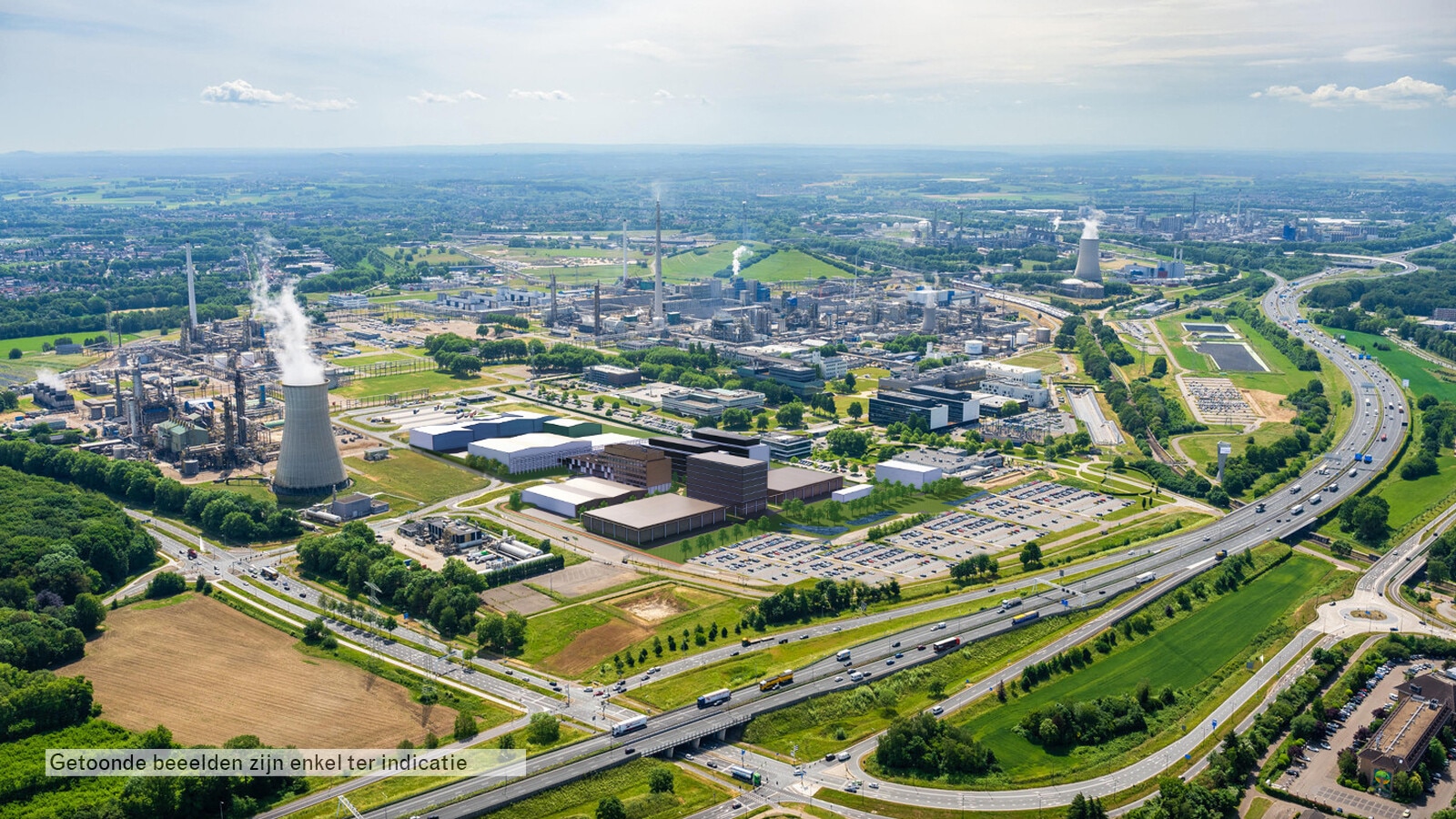
Industrial clusters can advance the transition to circular business models with the right regulation, shared infrastructure and digital tools. Brightlands Circular Space, Sittard-Geleen, Netherlands. Image: Brightlands Circular Space
- Circularity offers economic, social and environmental benefits, including lower emissions, cost savings, greater resilience and new revenue streams.
- Industrial clusters in China, Spain, the Netherlands, Denmark and Belgium are helping companies to achieve these benefits.
- Success depends on enabling regulations and collaboration on physical and digital infrastructure, training and financing.
Each year, the world consumes 1.7 times more natural resources than the Earth can replenish. This leaves businesses operating under linear models increasingly exposed to both climate regulations and reputational pressures, as well as material risks such as input shortages and price volatility.
Circular models offer an alternative by decoupling growth from resource use. A circular economy challenges the traditional "take-make-waste" model by keeping materials in use for as long as possible. For industry, this means redesigning how goods are produced, used and disposed of.
This goes beyond recycling to encompass redesign, reuse and regeneration. Applying circular strategies to plastics, aluminium, cement and steel could cut emissions from these key industrial materials by 40% in 2050. As well as cutting emissions, circular models hold significant economic promise, with some research indicating that a global circular economy could create up to 8 million new jobs.
Industrial clusters, geographical areas in which companies operate in close proximity, make the exchange of resources, utilities and by-products more practical and cost-effective. This approach, known as industrial symbiosis, helps boost efficiency, resilience and competitiveness by enabling participants to cut emissions, waste and costs while creating new revenue.
However, "proximity makes exchange possible, but more is needed to make it powerful," says Rana Hajirasouli, CEO of The Surpluss, a digital platform that provides resource intelligence to industrial clusters. "Without regulatory alignment, shared classifications and data legibility for interoperability, any surplus stays stranded. The new era of industrial symbiosis moves beyond ESG and into sovereignty, which is the power to define, revalue and recontrol the flows that shape our future economies."
Transitioning from linear to circular models requires enabling regulation, innovation ecosystems, shared infrastructure, digital tools and alignment across sectors. Around the world, industrial clusters are piloting solutions that are already delivering value.
Rethinking regulation
Regulation often lags behind innovation, with only a few countries setting clear targets or monitoring mechanisms for the circular economy. The Netherlands is a notable exception. It aims to halve primary raw material use by 2030 and achieve full circularity by 2050, supported by sectoral plans, monitoring schemes, carbon pricing and a national environmental database.
As a result, at the country’s Port of Rotterdam, circularity is tangible. A new chemical recycling plant by Xycle, which is opening in 2026 and backed by Dow, ING, Invest-NL, Vopak and Polestar Capital, will process 21,000 tonnes of plastic waste annually into pyrolysis oil for new plastic production.
"This innovative technology enables plastic waste that would otherwise go to landfill or incineration to be reused in high-value applications, including food-grade packaging, medical products and automotive components," explains Nico van Dooren, Director of Energy Transition, Port of Rotterdam. "It shows how technological innovation and industrial collaboration can come together to accelerate the transition toward a circular economy."
Rotterdam’s existing infrastructure and access to offtake partners make it ideal for scaling technologies like Xycle’s, showing how regulatory clarity and co-location can attract investment and create high-quality jobs.
Fostering innovation ecosystems
Circular innovation thrives in environments that allow for testing, demonstration and scaling. Some industrial clusters enable this by connecting companies, startups, researchers and policy-makers, reducing risk and experimentation costs.
At the Port of Antwerp-Bruges in Belgium, for example, the NextGen District is home to many circular and clean-tech companies. "NextGenDistrict is a place where new technology is incorporated into the fascinating ecosystem of a port and industry," says Dries Van Gheluwe, Manager Invest, Port of Antwerp-Bruges. "Innovative companies are given the space to grow and join a valuable network of fellow pioneers."
Closing technical and infrastructure gaps
Technical issues and limited infrastructure, such as storage, transport and preprocessing facilities, can slow circular progress. But shared logistics and coordination can enable safe and efficient material exchange between companies.
For example, the Brightlands Circular Space is an open-access R&D demonstrator for circular plastics that is due to launch in 2026 within the Chemelot industrial cluster in the Netherlands. It will provide shared facilities for waste pre-treatment, polymer processing and material analytics. Companies located there can test, validate and optimize recycling technologies under real industrial conditions.
According to Lia Voermans, Chair of the Board at Brightlands Circular Space, the accelerator will provide a place for industry, knowledge institutions and government to collaborate "to solve real-world bottlenecks in circular material flows and create innovative business models".
Embedding this kind of R&D and demonstration capacity within an active industrial ecosystem helps to ensure consistent material quality and technical interoperability across value chains, while enabling the development of innovative designs and high-quality jobs.
De-risking investments
High upfront investment, uncertain returns and long equipment lifecycles can make circular initiatives financially risky. Emerging technologies such as CO₂ reuse may not yet be cost-competitive and traditional financing models struggle to justify early-stage risks.
At the Basque Industrial Hub for Circularity (BIH4C), led by Tecnalia, companies from 10 heavy industries, including steel, paper, lime and oil refining, work together to test carbon capture, hydrogen and slag reuse. The project aims to cut emissions by 20% and materials use by 10%, while enabling new products to enter the market and strengthening the regional supply chain.
"Demonstrating circular synergies at industrial scale is critical to build confidence and attract investment," says Nora Fernandez Perez, Project Director, Tecnalia. "Coordinated innovation can accelerate decarbonization while strengthening regional resilience."
"Scaling circularity in hard-to-abate sectors demands long-term vision, trusted partners and a shared investment logic to de-risk complexity," adds Manu Nuñez, Director, Petronor Innovación, a division of one of Spain’s largest refiners that's advancing hydrogen and CO₂ conversion projects within the cluster.
Aligning people and purpose
Technology alone cannot make circularity mainstream, however. Trust, governance and shared purpose also plays a role. The Kalundborg Symbiosis industrial cluster in Denmark has been aligning people and purpose to sustain collaboration over decades.
Novo Nordisk, a member since 1969, benefits from reliable, cost-efficient utilities, lowers waste costs by converting by-products into resources and reduces emissions via shared energy systems. Michael Hallgren, Production Director, Novo Nordisk Kalundborg, calls it "a global centre of excellence where innovation, investment and collaboration fuel sustainable growth".
And collaboration in Kalundborg extends beyond infrastructure. A new campus offers training to industrial managers and planners to help them identify synergies and design circular systems. Community benefits are central to the model, including projects exploring the use of industrial excess heat for district heating, which could potentially serve 50,000 households.
Data intelligence
Finally, high-quality data and digital tools are key to scaling circularity. With visibility into resource flows, companies can spot synergies and quantify benefits.
In China, the Tianjin Economic-Technological Development Area (TEDA) developed a digital platform connecting over 1,000 companies. Over four years, it has enabled 150 exchanges between companies, diverted nearly one million tons of waste from landfill, and cut 170,000 tons of CO₂e. It has done this while lowering waste compliance and transaction costs for companies.
"With over a thousand companies in the cluster, no one could see the full picture of available by-products or potential synergies. Only by digitizing the ecosystem – mapping inputs, outputs and needs – could we unlock the hidden value across the network," explains Dylan Zhang, R&D Director, Green Partnership of Industrial Parks, the organization that manages the park.
Circularity in industrial clusters can build resilience, sustainability and competitiveness. But success depends on policies and collaborative models that align innovation, investment, skills development and shared digital and physical infrastructure.
The Transitioning Industrial Clusters initiative, led by the World Economic Forum in collaboration with Accenture, is turning ambition into action by offering a platform to share best practices and drive collective progress on circularity.
By turning geography into synergy, industrial clusters can use circularity to help shape the economy of tomorrow.
Don't miss any update on this topic
Create a free account and access your personalized content collection with our latest publications and analyses.
License and Republishing
World Economic Forum articles may be republished in accordance with the Creative Commons Attribution-NonCommercial-NoDerivatives 4.0 International Public License, and in accordance with our Terms of Use.
The views expressed in this article are those of the author alone and not the World Economic Forum.
Stay up to date:
Circular Economy
Related topics:


Forum Stories newsletter
Bringing you weekly curated insights and analysis on the global issues that matter.
More on Energy TransitionSee all

Cheukai Makari
September 16, 2026


