Making cities future-proof: How to sustainably build livable urban centres
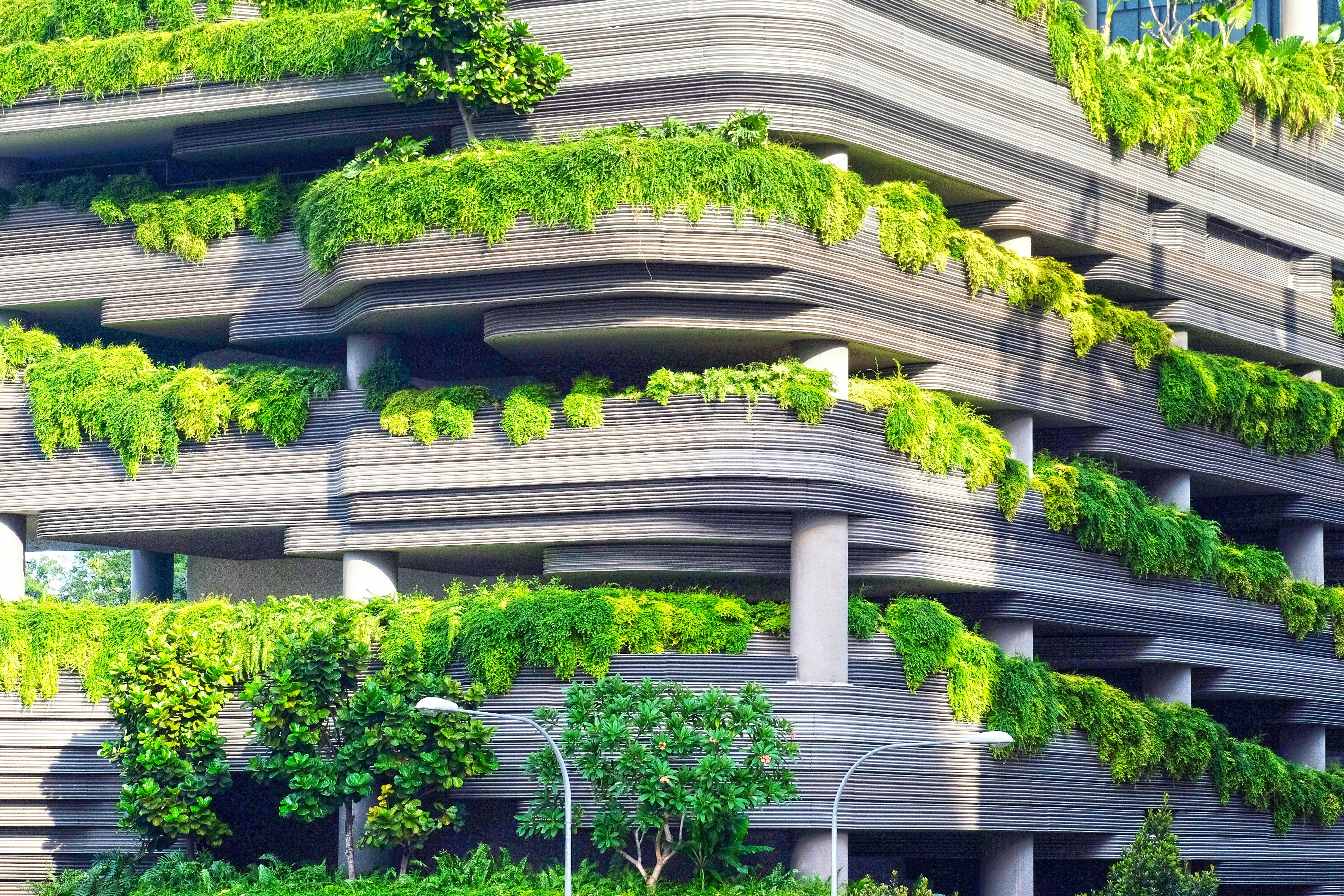
Sustainable urban development combines people and technology Image: Unsplash/Danist Soh
Marco Xaver Bornschlegl
Chief Sustainability Officer; Head, Innovation, Digitalization and Sustainability, STRABAG- Urban areas face climate impacts and water scarcity, yet buildings remain responsible for a large share of global emissions, requiring their transformation into energy-producing assets.
- Most buildings that will stand in 2050 already exist today, making retrofitting and refurbishment one of the most powerful yet underused climate tools in sustainable urban development.
- Digital tools, upgraded grids and storage solutions (including hydrogen technologies) are crucial to reducing energy waste and supporting smart systems.
More than half of the world’s population lives in cities today. By 2050, that number will reach two-thirds, according to the United Nations. Such rapid urbanization is challenging the construction sector like never before. Why? Because cities are facing a double burden.
First, they will feel the severe effects of climate change, such as heat waves, floods and storms. Second, water shortages will be felt particularly acutely among urban populations, especially in developing countries.
But cities are not only victims of climate change; they are also key contributors to the crisis. Buildings generate a massive share of global emissions. According to the World Green Building Council, buildings are responsible for 39% of global energy-related carbon emissions.
Operational emissions from cooling and heating, as well as electricity use, account for 28%, and the materials and construction process account for the remaining 11%. These figures show that it’s time to act. We must transform how we build, right now.
From passive consumers to active contributors
Urban infrastructure must evolve. Buildings and mobility systems can no longer remain passive consumers of energy. Instead, they must become active contributors to a smart, integrated energy ecosystem.
Cities are already transitioning towards climate neutrality. Public transport networks, cycling infrastructure and electric vehicle (EV) charging stations are expanding. But the next step aims for a deeper integration: buildings and mobility must work together to generate, store and share energy.
Imagine smart buildings equipped with solar panels and battery systems. These buildings could produce renewable energy, store it but also share it with nearby homes or vehicles.
EVs, in turn, could act as mobile batteries – transporting energy and feeding it back into the grid when needed. Together, buildings and EVs could form decentralized energy hubs, creating neighbourhood-scale microgrids that are flexible, resilient and efficient.
This is not science fiction but integrative planning. By aligning the entire lifecycle of buildings – from design and construction to operation and eventual deconstruction – we can optimize their contribution to the urban energy system and deepen the value chain.
Building within existing structures
One of the most potent tools for climate action is often overlooked: retrofitting existing buildings. Most of the buildings that will exist in 2050 are already standing today. Instead of focusing solely on new construction, we must prioritize upgrading what we already have.
Retrofitting improves energy efficiency, reduces emissions and extends the life of buildings. It also preserves cultural heritage and reduces the environmental impact of demolition and new material production.
However, current regulations often make refurbishment more complex than new builds. We need simplified, flexible policies that reward every step towards decarbonization – not just the final result. Eventually, every tonne of carbon dioxide saved matters.
Neighbourhood development as social infrastructure
Sustainable urban development is not just about energy – it is also about people. Cities must become places where communities thrive. That means investing in social infrastructure: affordable housing, green spaces, community centres and inclusive public services.
Neighbourhoods should be designed to support wellbeing, social cohesion and accessibility. A great example is the project “Hangweide” in Kernen, Germany. As part of the International Building Exhibition 2027, 34 subsidized flats are being built with green roofs and solar panels.
This project combines ecological sustainability with social responsibility – creating homes that are both climate-friendly and affordable. By developing entire districts with integrated energy systems, shared mobility options and community spaces, we can create urban environments that are as equitable as they are resilient.
Breaking down technical and operational barriers
Technology plays a crucial role in making cities smarter and more sustainable. Digital platforms can monitor energy use in real time, identify inefficiencies and thus optimize building performance.
For example, STRABAG PFS eco2solutions platform enables this through a careful analysis of the building stock, assessing the current condition and energy requirements of the building fabric, and the technical installations. This is closely linked to the evaluation of a wide range of information sources.
A decarbonization path is then developed based on the building's condition and energy requirements and those of its technical systems.
These innovations make it easier to build and retrofit sustainably – but they need the right market conditions and policy support to thrive.
What is the World Economic Forum doing to promote sustainable urban development?
One major obstacle to smart energy systems is the limited capacity of existing energy grids and storage infrastructure. Grid bottlenecks can waste renewable energy and slow down progress. Without sufficient storage, it is difficult to balance supply and demand or integrate intermittent sources such as solar and wind.
Europe must accelerate the expansion of grid infrastructure and incentivize scalable storage solutions. Technologies such as power-to-gas, which convert surplus electricity into hydrogen, offer promising options but they require investment and supportive regulations.
There are companies prepared to produce clean hydrogen; however, poor infrastructure and weak market demand are slowing progress. Without cost-effective models for electricity and grid access, hydrogen remains economically unattractive.
The path forward
The tools to build future-proof cities already exist. We have the technology, the expertise and the vision. What we need to take this further is the courage to align policies, mobilize investments and embrace bold innovations.
We must break down silos between sectors and foster collaboration across disciplines. Architects, engineers, urban planners, policymakers and communities must work together to create integrated solutions.
And we must always remember: cities are not just systems – they are homes. By combining climate resilience with social infrastructure, we can build urban environments that are not only sustainable but also inclusive, vibrant and worth living in.
The future of cities is not a distant dream. It is being built today – in every retrofit, every solar panel, every community garden and every neighbourhood that puts people and the planet first.
Don't miss any update on this topic
Create a free account and access your personalized content collection with our latest publications and analyses.
License and Republishing
World Economic Forum articles may be republished in accordance with the Creative Commons Attribution-NonCommercial-NoDerivatives 4.0 International Public License, and in accordance with our Terms of Use.
The views expressed in this article are those of the author alone and not the World Economic Forum.
Stay up to date:
Sustainable Development
Related topics:


Forum Stories newsletter
Bringing you weekly curated insights and analysis on the global issues that matter.
More on Built Environment and InfrastructureSee all

Marcela Guerrero Casas, Mikhail Manuel and Shabari Shaily-Gerber
March 3, 2026


