The top energy stories of 2025
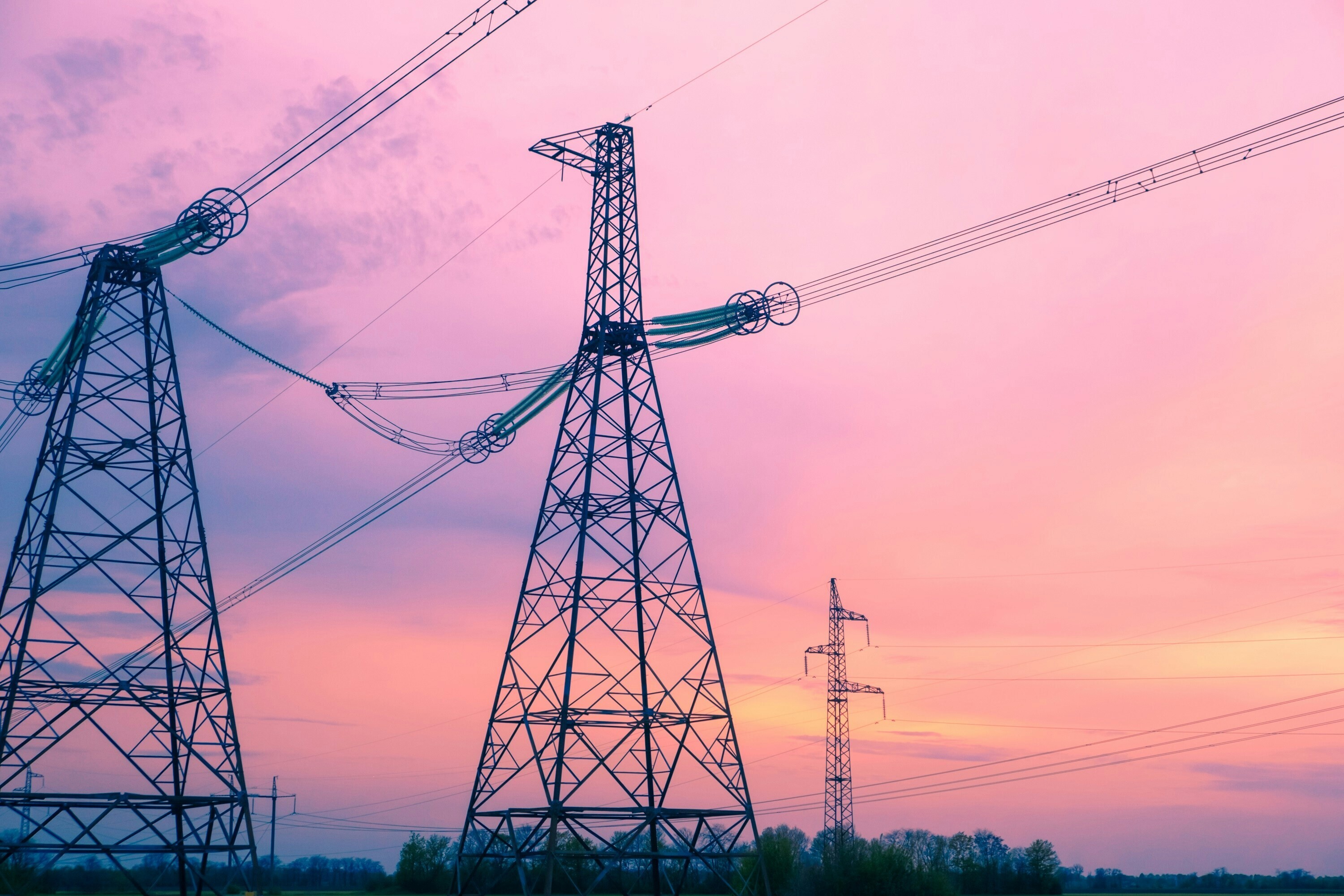
Record renewable deployment and the impact of AI were key trends in the energy landscape in 2025. Image: Unsplash/Evgeniy Alyoshin
Roberto Bocca
Head, Centre for Energy and Materials; Member of the Executive Committee, World Economic Forum- Energy continued to be a key topic in 2025 - on the global news agenda and for the World Economic Forum.
- From energy transition momentum to increased focus on critical minerals, here are some of the big themes from across the year.
1. Energy transition gains momentum
Progress towards a secure, equitable and sustainable energy system is growing, but a World Economic Forum report acknowledges that momentum could stall amid financing and geopolitical challenges.
Looking at trends across 2024, organizations including the International Renewable Energy Agency (IRENA) and International Energy Agency (IEA) found “unprecedented” global renewable capacity additions and record-breaking expansion of solar PV capacity respectively.
This continued in the first half of 2025, when renewables produced more electricity than coal for the first time on record, according to energy think tank Ember. Solar and wind capacity additions each rose by more than 60% year-on-year in the first six months of 2025.
Yet, as power demand surges, the World Economic Forum's Fostering Effective Energy Transition 2025 report noted that, despite continued expansion of renewables and improvements in energy efficiency, energy-related CO2 emissions reached a record high of 37.8 billion tonnes in 2024.
Clean energy investment, meanwhile, grew to over $2 trillion, which was double the 2020 levels but well below the $5.6 trillion that is needed annually through to 2030.
Moreover, investment is uneven, with the majority invested in the energy transition over the past five years going to advanced economies and China – this despite the fact that emerging economies are expected to drive 80% of future energy demand growth.
In 2025, the report continued, the imperative to accelerate energy transition efforts is not just about meeting long-term climate targets. It is increasingly about managing “a growing set of interconnected risks to national security, economic stability and social resilience”.
Redefining energy security, targeting investment where it matters most, and addressing infrastructure bottlenecks will be key to maintaining momentum.
The report, which includes the annual Energy Transition Index (ETI), ranks countries’ energy system performance in security, equity and sustainability and found that in 2025 global scores increased 1.1% year-on-year.
This video outlines the countries that are leading the way.
A key aspect of advancing the energy transition will be progress across eight heavy industrial and transport sectors, according to the Forum report Scaling the Industrial Transition: Hard-to-Abate Sectors and Net-Zero Progress in 2025. Aviation, shipping, trucking, steel, cement, aluminium, primary chemicals, and oil and gas. collectively account for nearly 40% of global greenhouse gas emissions.
About half of industrial emissions can already be abated with mature solutions. But deeper innovation, robust policy and enabling infrastructure are required to rapidly scale solutions globally and profitably.
Industrial clusters will be a key part of this. Another Forum report, Unleashing the Full Potential of Industrial Clusters: Infrastructure Solutions for Clean Energies, looks at how aggregating demand and sharing resources, knowledge and risks can unlock opportunities to deploy clean-energy solutions.
Learn more in this podcast:
2. China’s clean-energy electrostate
For the first time, 2025 saw growth in China’s clean power generation cause its CO2 emissions to fall even as power demand rose rapidly.
China’s CO2 emissions declined 1.6% year-on-year in the first quarter of 2025, according to analysis published in CarbonBrief, with electricity supply from new wind, solar and nuclear capacity enough to cut coal-power output despite surging energy demand.
In the third quarter of 2025, the country’s CO2 emissions were unchanged from a year earlier, extending the flat or falling trend that began in early 2024.
This achievement – from the world’s largest emitter – was due to its massive investments in clean power – almost 40% of the world’s total in 2024, according to the Fostering Effective Energy Transition report.
The country is installing more renewables than any other economy – in 2024 alone, China installed 360 gigawatts of wind and solar capacity, which is more than half of global additions for that year.
China reached an all-time high ranking of 12th in the 2025 edition of the Forum’s ETI, driven by these investment volumes and strong innovation capacity.
With goals of peaking carbon emissions before 2030 and achieving carbon neutrality by 2060, it is rapidly reshaping its power system.
How it manages to overcome market, financing and systemic challenges holds lessons for other economies investing in renewables – read more in this Forum blog.
3. Data centre demand
Electricity demand from data centres could more than double by 2030 to about 945 terawatt-hours, which is more than the entire electricity consumption of Japan today, according to the IEA.
And US figures from BloombergNEF suggest that this growth rate isn’t just about the number of new data centres set to be built but the size of these facilities too. Power demand from the average data centre is about 5-10 megawatts (MW), with large hyperscale data centres drawing 100 MW or more.
Yet of nearly 150 new data centre projects BNEF started tracking in 2025, almost a quarter were more than 500 megawatts each – which equates to the annual electricity consumption of more than 2 million electric vehicles. This was more than double the share that exceeded that size the previous year.
Behind this boom, of course, is artificial intelligence (AI), and the power needed to train, inference and run large-language models such as ChatGPT.
In response, in 2025, tech companies concerned with power availability further increased their interest in procuring clean, reliable power, including nuclear, geothermal and energy storage.
The US is leading this global data centre build-out. But hyperscalers including Microsoft and Google are also increasingly investing in facilities in emerging and developing economies – which accounted for over 80% of total global energy demand growth in 2024.
While the explosion in demand will put strain on grids everywhere – especially in the places where data centres cluster – AI can help accelerate the energy transition rather than compete with it.
This is explored in the Forum report From Paradox to Progress: A Net-Positive AI Energy Framework, which says that managing AI's energy impact is no longer a future concern but a "present tense innovation imperative".
The report offers a framework, drawn from more than 130 real-world use cases, to help policy-makers and tech executives align AI's growth with energy, economic and climate goals.
By doing so, organizations can accelerate progress towards net-positive AI energy and make responsible design a competitive advantage, it says.
For more on how AI is shaping the future of clean energy, watch this video:
4. Critical minerals key in Southern Africa
Critical minerals made many headlines in 2025.
Essential for many modern and clean technologies, demand for key minerals – like lithium, cobalt and rare earths – is set to triple by 2030 and quadruple by 2040 if the world is to achieve net-zero emissions.
At the same time, these minerals have become a focus for discussions around global policy and trade. At COP30, they were negotiated at the annual summit for the first time. Governments including those of the US, UK and India unveiled new plans to boost production and partnerships as national strategies increasingly focused on critical mineral supply chains.
The World Economic Forum initiative Securing Minerals for the Energy Transition works to help ensure that there are sufficient mineral resources for clean energy technologies – wind turbines, electrical grids, electric vehicles and more.
Surging demand offers an opportunity to expand and diversify global supply chains, it says.
In 2025, it released a report focusing on unlocking mineral resources in Southern Africa – home to almost 30% of the world’s reserves. This includes about 50% of the globe’s cobalt reserves, 20% of its graphite reserves, and 10% of its copper reserves.
These minerals can be leveraged to support the region’s economic and social development. Despite this, financing for exploration is a fraction of total global spending.
Countries in the region have taken several policy actions in response, including amendments to mining regulations, local value addition requirements and export bans.
Innovative financing tools, public-private partnerships, developing industrial clusters to localize value chains, and community participation could all help unlock the investment that will be vital for both the global energy transition and driving local economic value.
License and Republishing
World Economic Forum articles may be republished in accordance with the Creative Commons Attribution-NonCommercial-NoDerivatives 4.0 International Public License, and in accordance with our Terms of Use.
The views expressed in this article are those of the author alone and not the World Economic Forum.

Forum Stories newsletter
Bringing you weekly curated insights and analysis on the global issues that matter.
More on Energy TransitionSee all

Mark Esposito
March 18, 2026


