From quantum to climate: the frontier tech stories that defined 2025

A year of technology headlines. Image: Unsplash/Robynne O
In 2025, frontier technologies crossed key thresholds – not just advancing, but beginning to scale. From quantum security and spatial computing to climate and food systems innovation, this was a year when convergence turned into consequence.
Across industries and geographies, we began to see technologies that once were at the edge of experimentation begin shaping real-world decisions: how banks secure data in a post-quantum future, how satellites inform climate and food security and how deep tech is redefining energy, manufacturing and healthcare.
This end-of-year edition of our Frontier Technologies & Innovation wrapper brings together the developments that mattered most in 2025.
Drawing on the Forum’s research, global convenings and innovation communities, it highlights the breakthroughs that moved from promise to deployment and the leadership choices now required to ensure they deliver shared, sustainable value.
1. Insights from the top emerging technologies of 2025
Our Top 10 Emerging Technologies of 2025 report, developed in collaboration with Frontiers, highlighted 10 innovations that could reshape industries and drive progress forward for society.
Here's a flavour of some of the technologies it identified:
- Advanced nuclear technologies: Small modular reactors and next-gen cooling systems promise safer, cheaper, and scalable green energy.
- Engineered living therapeutics: These are modified microbes or cells that produce drugs inside the body, offering targeted, sustained treatment with lower costs and fewer side effects. If its development hurdles are overcome, this approach could transform chronic disease care.
- Autonomous biochemical sensing: Wireless, self-powered systems could offer real-time monitoring for applications like glucose tracking or pollution detection.
Two experts guided us through the report in the below episode of Radio Davos:
You can read the full report below, or if you're curious about our methodology and process behind curating this list of transformative innovations, read our article.



2. How converging tech is redefining value chains
We are living through a pivotal moment in technological history. As multiple foundational technologies mature simultaneously, they're creating “unprecedented business opportunities” for those who can harness their combined potential.
That's a key finding of our Technology Convergence Report, produced in collaboration with Capgemini, which offers a systems-based understanding of innovation to help organizations navigate a fragmented tech landscape.
Why does this matter? Connie Kuang, lead of the report, walks us through this unique tipping point we’re living through in the video below:
The report identifies eight powerful technology domains that, together, deliver value no single innovation could achieve alone:
- Spatial Intelligence
- Omni Computing
- Next-generation Energy
- Quantum Technology
Learn more about these technologies and explore the others in the list by reading the full report or our handy summary article below.


3. The technology start-ups shaping the future
The Forum's Technology Pioneers programme celebrated its 25th anniversary this year. The community helps early-stage start-ups with technologies that can positively shape our future to grow.
Over 25 years, the Forum has recognized more than 1,200 companies. This year, it welcomed 100 more start-ups into the fold, with this cohort reflecting wider shifts in the innovation landscape.
Use the interactive graphic below to explore some of the innovative solutions on offer in this year's cohort.
You can explore the full list of 2025 Technology Pioneers here and read more about the community here, or get a quick summary from the blog below.

4. How technology is enabling solutions for a planet under pressure
Seven of Earth’s nine planetary boundaries – the natural systems that keep our planet stable – have now been breached.
This is based on the Planetary Health Check 2025 by the Potsdam Institute for Climate Impact Research (PIK). Planetary boundaries set the scientific limits within which our natural systems must operate to function fully.
An insight report from the Forum, 10 Emerging Technology Solutions for Planetary Health, examines the technologies that may help redress the declining health of our planet’s fundamental processes:
- Automated food-waste upcycling: Cutting-edge automation and AI technologies now make it easier to separate food from other waste, so it can be diverted to be composted or turned into biogas and bioplastics.
- Timely and specific Earth observation: With near real-time, high-resolution images from satellites, drones and ground sensors combined with the power of AI, we can monitor everything from greenhouse gas emissions to soil health, deforestation and water levels.
- Modular geothermal energy: New modular systems can generate geothermal power without specific geological conditions, providing consistent renewable heat and electricity to complement other renewable resources.
Learn more about these technologies and the seven others highlighted in the report below, or check out our summary blog if you just need an overview.


5. The agri-tech revolution to feed our planet
There is an increasing strain on the world's ability to feed its rapidly growing population. Conventional methods are no longer enough if we are to put food on everyone's plates.
A Forum report, Shaping the Deep-Tech Revolution in Agriculture, explores the frontier technologies shaping the future of global agriculture by improving yields and cutting waste.
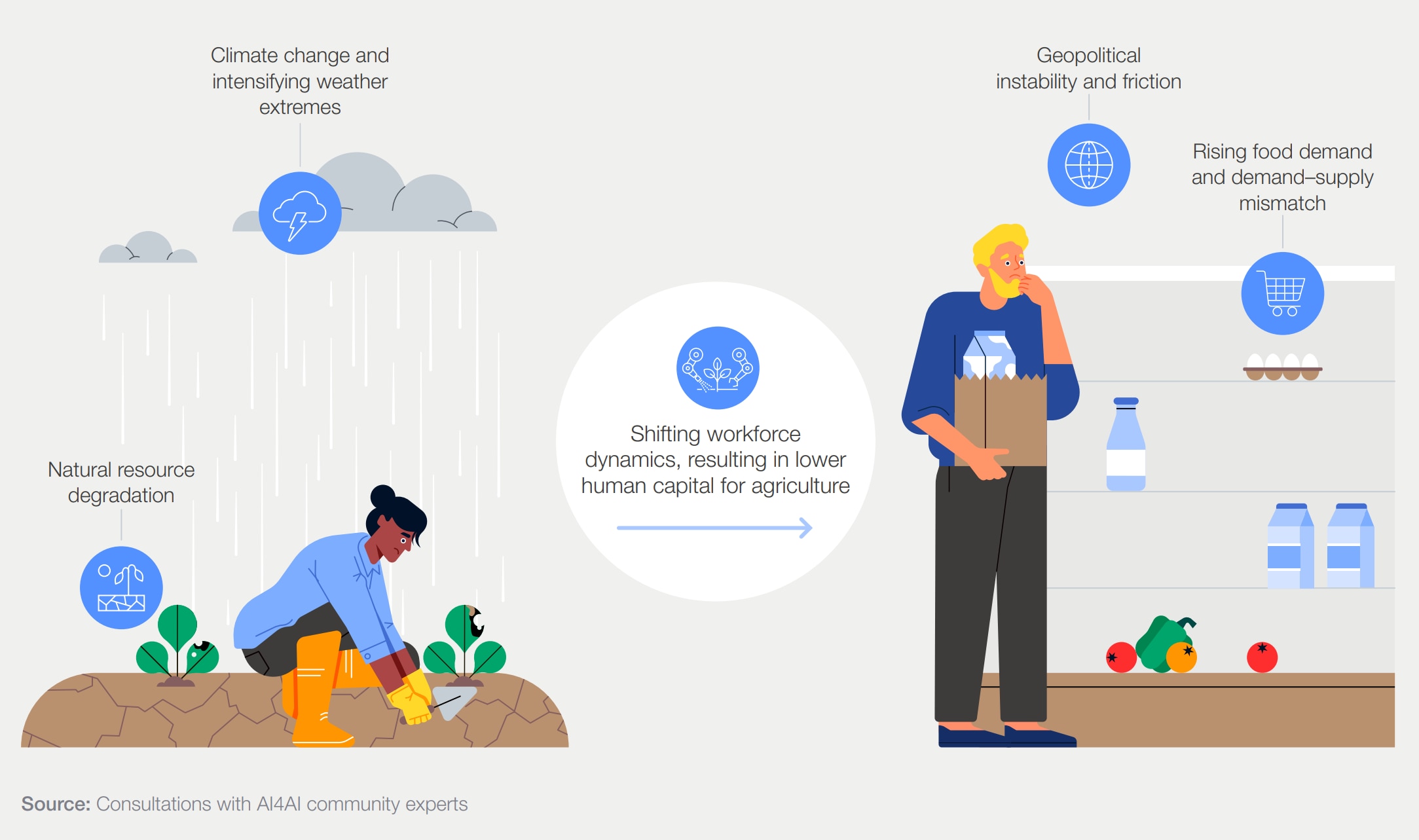
The report identifies seven promising deep-tech domains that are critical to this transformation. Here's a small selection:
- Generative AI: GenAI’s applicability in agriculture is driven by recent advances in large language models and the increasing availability of agricultural data.
- Computer vision: Growing use cases, such as rapid pest and disease identification or plant stress detection, have been fuelled by decreasing camera costs and advances in deep-learning models.
- Satellite-enabled remote sensing: Allows continuous and large-scale monitoring of farm conditions at affordable costs, aiding data-driven decision-making.
Explore these ground-breaking technologies in the full report below.

6. Quantum shifts across industries
Quantum technologies are rapidly transitioning from the realm of theory into practical, value-creating tools across sectors.
From financial services to advanced manufacturing, we've covered its applications and uptake across a range of industries in our publications this year. The chart below highlights the percentage of early adopters in different industries, by number of companies.
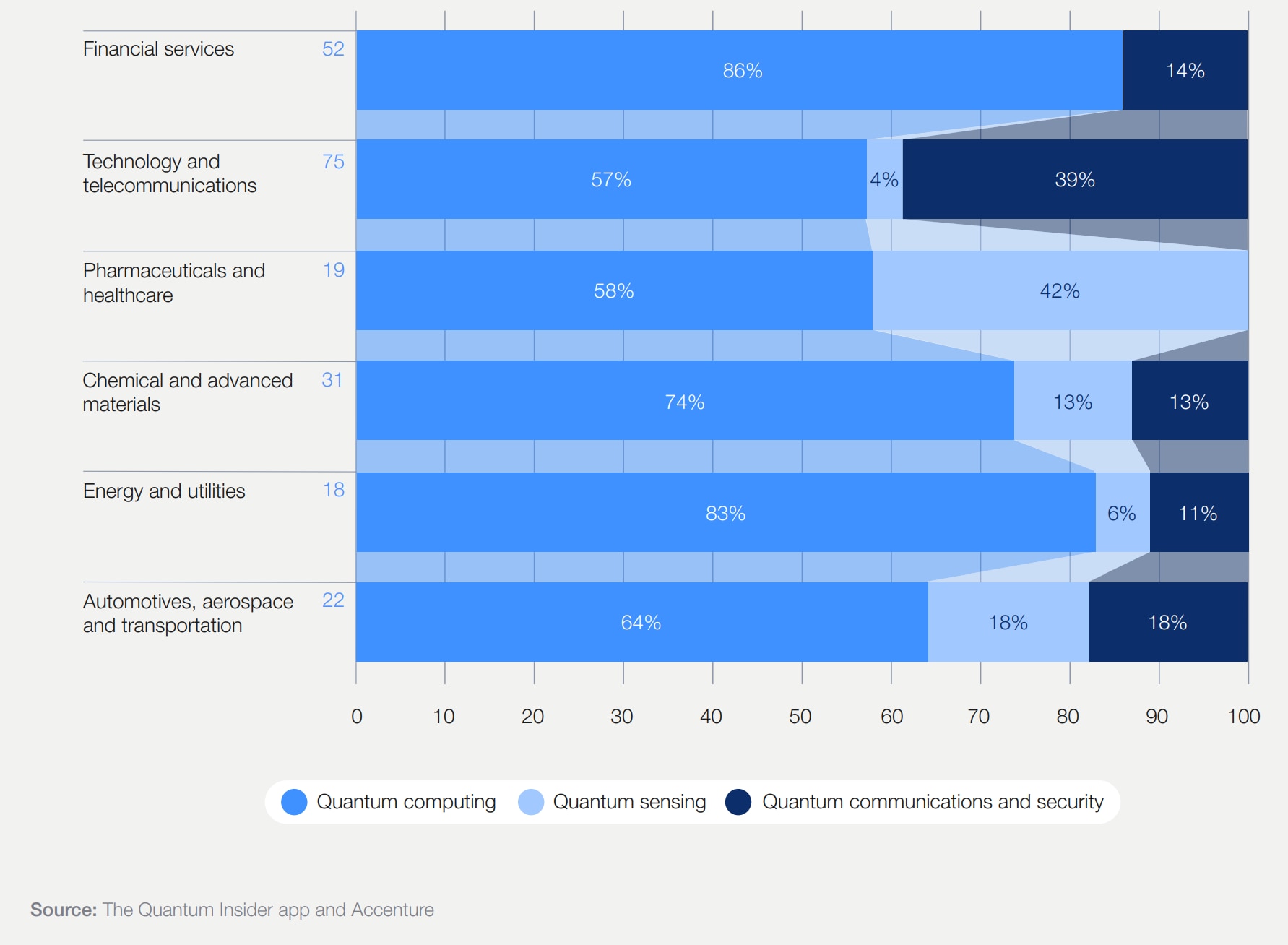
The quantum economy is not just a distant dream – it's unfolding right now. If businesses are to harness its potential, they must strategically position their organizations at the forefront of this revolutionary wave.
The Forum's report, Embracing the Quantum Economy: A Pathway for Business Leaders, published in collaboration with Accenture, provides companies with a pathway to do just that. To learn more about a specific sector's quantum opportunity, pick a report below.


7. Developments in space creating opportunities on Earth
Space technology is advancing rapidly, with the space economy poised to reach $1.8 trillion by 2035.
At the Forum's 55th Annual Meeting in Davos at the start of the year, experts gathered for a session to highlight the space-based technologies that could revolutionize energy production, sustainability and our ability to harness resources beyond our planet.
Here are some of the innovations that emerged from the discussion:
- Space-Based Solar Power: The Japan Aerospace Exploration Agency's (JAXA) SBSP prototypes are using massive solar arrays spanning several kilometres and achieving conversion efficiencies exceeding 45%, transmitting power via precisely targeted microwave beams to receiving stations on Earth.
- Advanced earth observation systems: Over 50% of climate data now comes from satellites. As MIT Media Lab Director, Dava Newman, emphasized, "We can't live a day without this."
- Active debris removal systems: These rubbish collectors use robotic arms armed with AI-driven vision systems alongside other technologies to potentially remove up to 5-10 large debris objects per year per vehicle.
8. Spatial technology - the next tech shift
One of the key technologies driving the development of spatial intelligence, which we highlighted in the Technology Convergence Report earlier, is spatial computing. It could change how we communicate and interact with technology as a whole.
This evolving, 3D-centric form of computing uses AI, computer vision, extended reality (XR) and other technologies to seamlessly blend virtual content and experiences into the physical world.
This might sound confusing, so Spatial Dynamic's Founder, Cathy Hackl, breaks the technology down for you in this short video:
9. Making sure technology works for everyone
All this innovation is for nought however, if it doesn't serve people equally. As technological development races ahead, it's up to organizations and governments to ensure ethics and equality remain at the top of the agenda.
At a town hall during Davos 2025, leaders debated how to responsibly harness emerging technologies to maximize benefits while minimizing risks:
Trust is another important issue, on which significant regional differences exist. In 2024, 72% of Chinese consumers expressed trust in AI and 90% considered autonomous driving beneficial, while only 32% of US consumers reported trust in AI and acceptance rates for autonomous driving remained lower in Germany, the US and Japan than in China.
An expert panel explored these differences at the Annual Meeting of the New Champions in Tianjin, China, earlier this year:
License and Republishing
World Economic Forum articles may be republished in accordance with the Creative Commons Attribution-NonCommercial-NoDerivatives 4.0 International Public License, and in accordance with our Terms of Use.
The views expressed in this article are those of the author alone and not the World Economic Forum.
Contents
1. Insights from the top emerging technologies of 20252. How converging tech is redefining value chains3. The technology start-ups shaping the future4. How technology is enabling solutions for a planet under pressure5. The agri-tech revolution to feed our planet6. Quantum shifts across industries7. Developments in space creating opportunities on Earth8. Spatial technology - the next tech shift9. Making sure technology works for everyone
Forum Stories newsletter
Bringing you weekly curated insights and analysis on the global issues that matter.
More on Emerging TechnologiesSee all

Markus Kirchschlager and Benedikt Gieger
March 20, 2026


