The top global health stories from 2025

Heatwaves continued to prove a threat to public health around the world this year. Image: REUTERS/Adrees Latif
Shyam Bishen
Head, Centre for Health and Healthcare; Member of the Executive Committee, World Economic Forum- Health and healthcare have changed dramatically in 2025, characterized by a downturn in global health financing and more of a shift to artificial intelligence (AI) and data-driven care.
- From climate change health impacts to transformative discoveries for brain health, here are our top health stories of the year.
1. A fragile decade for health gains
A decade of hard-won progress, erased. That is the sobering reality laid out in the World Health Organization's (WHO) World Health Statistics 2025 report. The data shows that global life expectancy fell by 1.8 years between 2019 and 2021, effectively wiping out a decade of progress and underscoring how fragile health gains have become in the wake of COVID-19.
"Health progress is slowing. Every government has a responsibility to act, with urgency, commitment and accountability to the people they serve," said Dr Tedros Adhanom Ghebreyesus, WHO Director-General.
At the World Economic Forum's 55th Annual Meeting in Davos at the start of the year, an expert panel came together to discuss how greater coordination on the use of cutting-edge technologies and data can improve public health and life expectancy around the world. Learn more in the video below.
2. Extreme weather, rising temperatures and pollution drive health risks
Climate inaction is costing lives, straining health systems and undermining economies.
Rising temperatures have pushed 12 of 20 key indicators tracking health threats related to climate change to record levels in the past year, according to the 2025 Lancet Countdown report.
A January Forum report, published in collaboration with Oliver Wyman, put a cost on this failure to act. Healthcare in a Changing Climate: Investing in Resilient Solutions estimates that climate-related health impacts could drive an extra 14.5 million deaths and $12.5 trillion in economic losses by 2050.
However, the authors also identified a massive opportunity. Through strategic investments in prevention, diagnostics and novel treatments, the world could save 6.5 million lives and mitigate economic losses by $5.8 trillion. This analysis set the stage for our expert-led climate discussions at Davos this year:
Health was a primary focus at the United Nations (UN) annual climate change conference, COP30, in November. The meetings saw the launch of the Belém Health Action Plan (BHAP), which called for immediate and coordinated action to protect health in a rapidly warming world.
The BHAP received 80 endorsements from 30 countries and 50 partners among civil society and IGOs, marking "a milestone in adapting to the health sector as a priority through a roadmap for countries to build resilient health systems and accelerate global cooperation".
Explore the Forum's Centre for Health and Healthcare's wide range of research and analysis on the impacts of the climate crisis on health and healthcare systems below.



3. AI uptake improves health outcomes
The use of AI in healthcare has truly taken off this year, in both the public and private sectors.
A Forum and BCG paper, The Future of AI-Enabled Health: Leading the Way, highlights some of the key applications of AI in healthcare, as the graphic below shows.
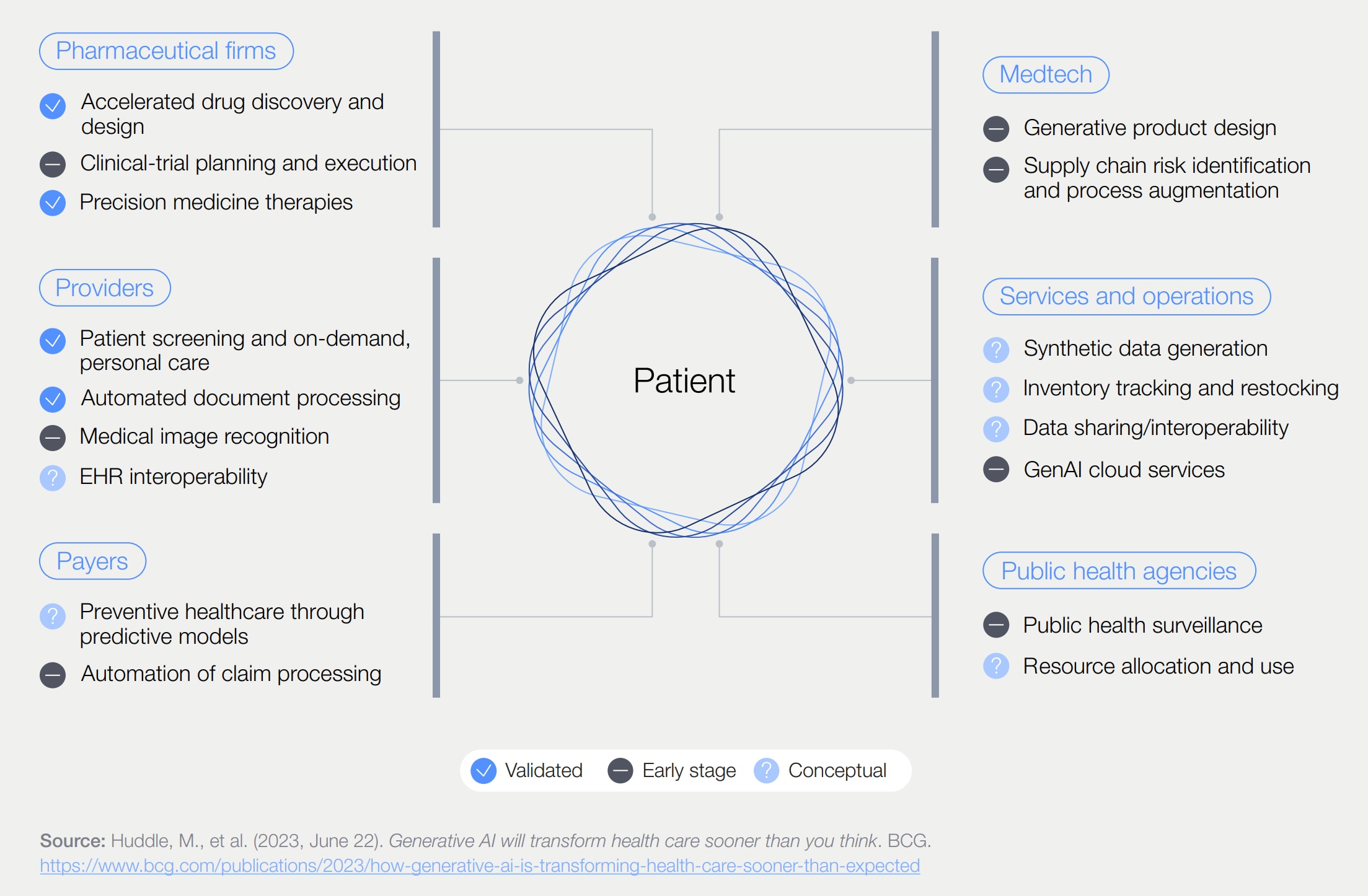
Yet, to enable the sector's full potential for AI transformation to be achieved, six pivotal transitions are needed, the report says, including demonstrating clear returns on investment in AI and prioritizing shared digital public infrastructures. Explore the full list here.
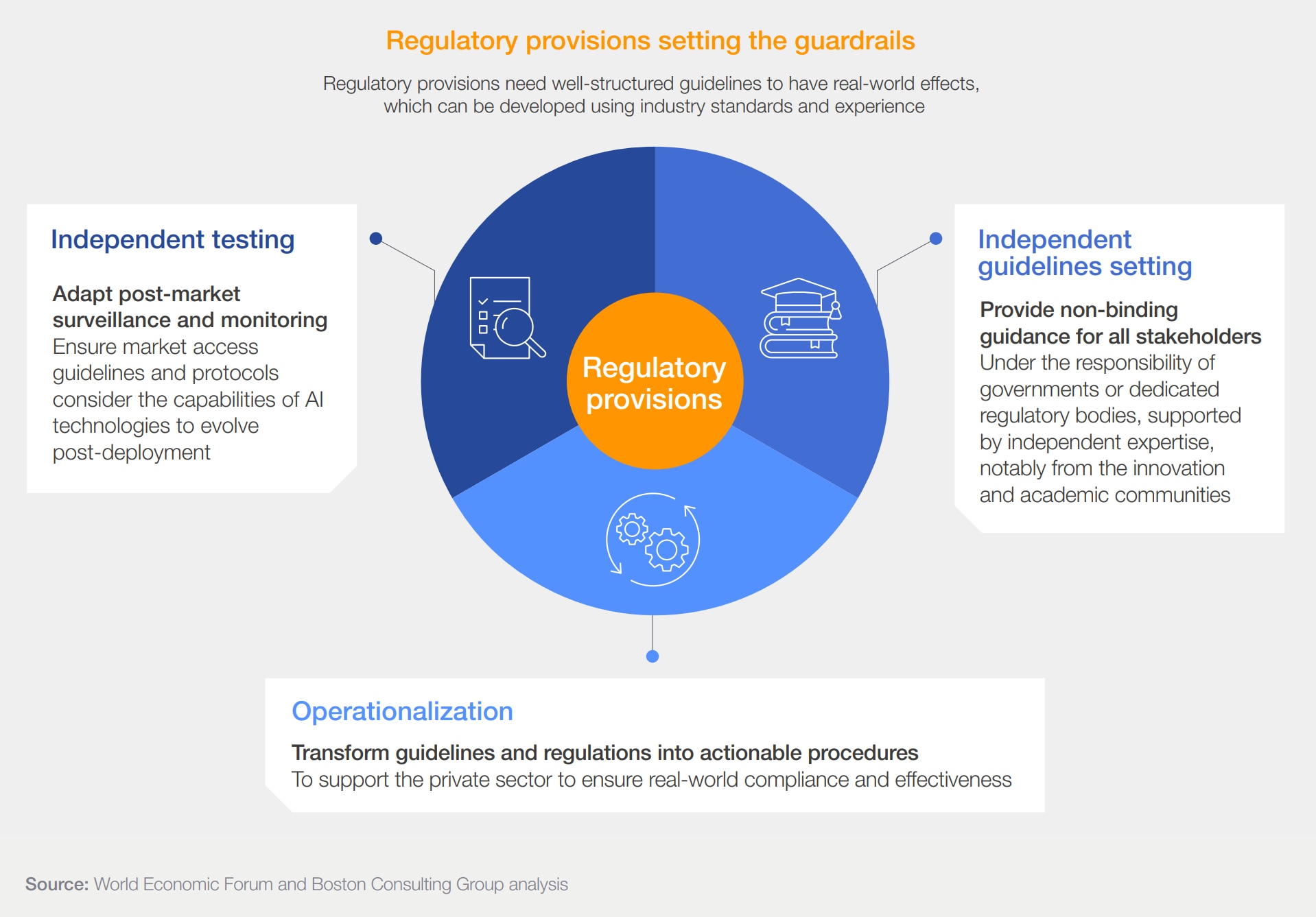
Embedding trust is also essential for realizing AI’s full value for resilient and equitable health systems. A companion paper, Earning Trust for AI in Health: A Collaborative Path Forward, outlines a framework for earning this trust - from using regulatory sandboxes to establishing independent quality assurance mechanisms.
4. Women's health gap persists
While the gender health gap remains a critical challenge, 2025 saw a pivot from awareness to action through major global initiatives.
2025 marked one year of impact for the Global Alliance for Women’s Health, hosted by the Forum and co-chaired by the Gates Foundation and the Ministry of Health of Brazil.
It was also the year the alliance launched the Women’s Health Impact Tracking Platform, in collaboration with the McKinsey Health Institute, to deliver insights and achievable metrics for identifying and addressing disparities in women’s health.
Women spend 25% more of their lives in poor health, compared to men, because their health has historically been under-researched and underfunded, leading to gaps in knowledge and innovation.
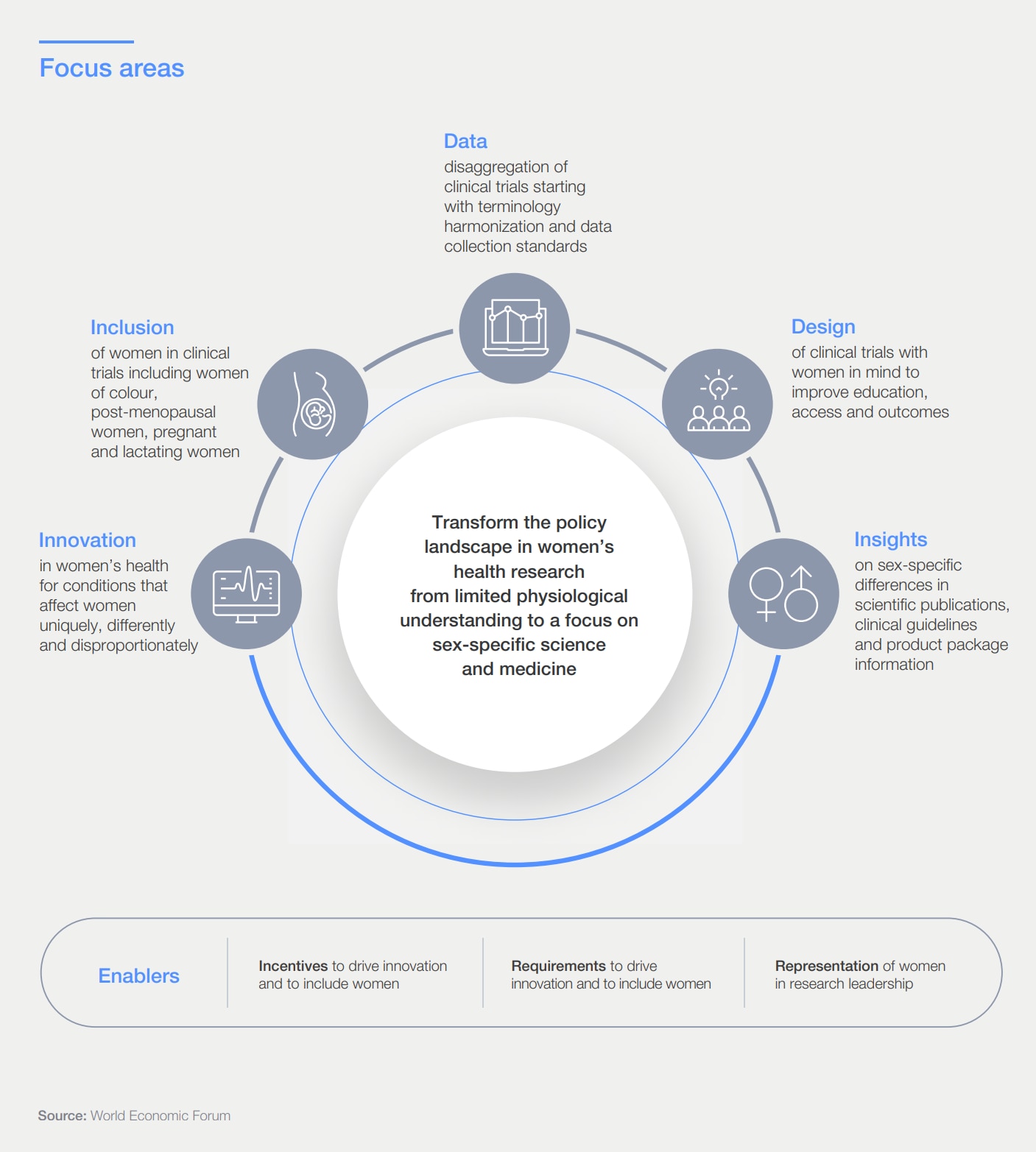
Two key Forum reports published this year explore how we can close the women's health gap and the impact this could have on lives and economies:


5. Creating healthier and more productive workforces
Investing in employee wellbeing could boost the global economy by $11.7 trillion, according to the Forum's Thriving Workplaces report.
The COVID-19 pandemic put the spotlight on mental health and wellbeing at work, but one expert says "the pendulum is swinging back" now.
Professor of Economics and Behavioural Science at Oxford University, Jan-Emmanuel De Neve, spoke with Radio Davos to explain why workplace wellbeing matters.
Only a quarter of workers in the US, UK, Canada and beyond are actually happy at work, according to De Neve's research with Indeed, so changes are urgently needed in this area.
The Forum’s Centre for Health and Healthcare is working with its partners to strengthen both the investment case and evidence base for prioritizing holistic workplace health to improve productivity and the overall health resilience of the global workforce. Through the Healthy Workforces and Chief Health Officers communities, leading organizations are working with De Neve and other researchers to illuminate and harmonize the most critical workplace measurements and metrics.
How the Forum helps leaders strengthen health systems through collaboration
6. AMR could lead to 10 million deaths annually by 2050
'Superbugs', which have become resistant to the medicines once used to treat them, kill an estimated 5 million people a year.
This situation is only projected to worsen, as antimicrobial resistance (AMR) could lead to 10 million deaths annually by 2050 if left unchecked. Without urgent action, the UK government's special envoy on antimicrobial resistance, Dame Sally Davies, says we risk a return to the pre-penicillin time when common infections were life-threatening, setting back decades of medical progress.
Excessive antibiotic use is a significant driver of resistance. Yet it’s not just prescribing to humans that is a problem – two-thirds of antibiotics globally are used in farming. In recent years, antibiotic use in agriculture in Europe has fallen dramatically. But they continue to be widely used in emerging economies because of their impact on profit margins and a lack of viable and affordable alternatives.
At the start of this year, the Forum’s Global Future Council on Tackling Antimicrobial Resistance developed and released the Davos Compact on AMR, which outlines how the public and private sectors can engage and highlights the key areas of focus to tackle AMR.
7. WHO pushes for cost-effective solutions on NCDs
The Fourth High-level Meeting of the UN General Assembly on noncommunicable diseases (NCDs) took place in September, where the WHO released a report revealing that an additional investment of just $3 per person annually in tackling NCDs could yield economic benefits of up to $1 trillion by 2030.
In the report, the WHO identified 29 highly effective and affordable measures called 'best buys' that countries can use to prevent and manage major NCDs. The graphic below outlines the compounding returns that countries can expect on their investment.
At this High-level Meeting on NCDs, world leaders expressed overwhelming support for the text of the first United Nations global political declaration on responding to NCDs and mental health by 2030.

8. Pharmaceuticals stepped up in tackling obesity and diabetes
Numerous pharmaceutical companies including Novo Nordisk, Eli Lilly, Pfizer, Amgen among others have accelerated the anti-obesity and diabetes pharmaceutical pipeline, achieving impressive weight-loss results during trials.
These weight-loss drugs are GLP-1 agonists - a type of medication that helps lower blood sugar levels, slows the digestion of food and increases satiety (i.e. the feeling of fullness) - and they have rapidly transformed from a niche diabetes medication into a revolutionary tool in the fight against obesity and other metabolic disorders.
While GLP-1s represent and important tool in supporting those living with obesity, questions about their side effect profile, long term sustainability and access remain. The WHO recently issued their global guidelines on the use of GLP-1s in treating obesity, recommending conditional use of the drugs. Importantly however, medication alone is not sufficient to address the much more pressing medical, economic, and social challenge we face – one of poor global metabolic health. The Forum and McKinsey Health Institute have been facilitating dialogues across industries (food, pharma, wellness, insurance, hospital systems and civil society) to explore a mutli-industry strategy to advance population metabolic health.
There are hurdles holding GLP-1s back from changing the lives of millions that could benefit from them: equitable access and trust. Find out how we can tackle these issues and improve lives, in the article below.

9. Breakthroughs in brain health
Neurological conditions affect more than 40% of the global population, which is around 3 billion people, a WHO report found in October.
Stroke, migraine, meningitis, Alzheimer’s and other dementias are a few examples of the types of neurological disorders that are responsible for over 11 million deaths globally each year. Despite this, fewer than one in three countries around the world has a national policy to address this issue.
Many of these neurological conditions can be prevented or effectively treated, yet services remain out of reach for most – especially in rural and underserved areas – where people too often face stigma, social exclusion and financial hardship.
—Dr Jeremy Farrar, WHO Assistant Director-General
”One of the most common neurological conditions is dementia, and of the 57 million people living with the condition worldwide, 60-70% are thought to have Alzheimer’s disease.
With the number of people with dementia expected to increase to 152 million by 2050, the pressure is on to find a solution to this debilitating and devastating disease.
A number of breakthrough discoveries around Alzheimer’s have provided hope this year, of which our explainer highlights eight.
The Forum's 56th Annual Meeting (19-23 January 2026) in Davos, Switzerland, will gather leaders across geographies, industries and generations under the theme A Spirit of Dialogue. It will feature a host of expert-led panels covering a range of health and healthcare topics. Keep an eye out here for the programme, or learn more about the theme in the article below.

10. Technology's role in nutrition and longevity
The cost of living and climate crises have put good nutrition firmly out of reach for millions of people around the world. Today, over 2.5 billion adults live with overweight or obesity, while 149 million children under five suffer from stunting, highlighting the deep inequalities and systemic failures in global food systems.
This poses a real threat not only for health, but also for economies.
Nutrition supports more than just individual well-being as it underpins the health of society and the economy. Improving nutritional balance can enhance productivity and reduce healthcare costs, resulting in a positive economic impact.
AI is offering some relief in the form of consumer nutrition interventions by analyzing large-scale datasets to deliver hyper-personalized dietary guidance and predict risks for chronic diseases. So far in 2025, there have been several exciting developments in this space including:
- Fay, a digital nutritional therapy start-up raising $50 million in Series B funding round, plans to expand AI-powered usage for personalized nutrition.
- Bevel has launched an AI-powered nutrition tracking tool that can be integrated with blood glucose monitors to provide real-time insights into dietary impacts.
- Fitterfly Healthtech's Nutrition 360 Suite, a cutting-edge API-based solution that brings together fitterfly klik (AI-based photo logging), meal scoring, fitterfly talk (voice-based multilingual logging) and an AI diet plan generator. Fitterfly currently provides 5 macro and 50+ micronutrient values for more than 40,000 foods eaten across India.
The Forum's New Frontiers of Nutrition initiative, supported by Accenture, convenes a diverse set of stakeholders to progress global nutrition, sustainable diets, human health, and resiliency. The initiative has identified five levers to create a sustainable, healthy food system, from reformulating unhealthy, processed foods to creating ecosystems that make diverse, nutrient-rich foods the default.

License and Republishing
World Economic Forum articles may be republished in accordance with the Creative Commons Attribution-NonCommercial-NoDerivatives 4.0 International Public License, and in accordance with our Terms of Use.
The views expressed in this article are those of the author alone and not the World Economic Forum.
Contents
1. A fragile decade for health gains2. Extreme weather, rising temperatures and pollution drive health risks3. AI uptake improves health outcomes4. Women's health gap persists5. Creating healthier and more productive workforces6. AMR could lead to 10 million deaths annually by 20507. WHO pushes for cost-effective solutions on NCDs8. Pharmaceuticals stepped up in tackling obesity and diabetes9. Breakthroughs in brain health10. Technology's role in nutrition and longevity
Forum Stories newsletter
Bringing you weekly curated insights and analysis on the global issues that matter.
More on Health and Healthcare SystemsSee all

Sarah McDonald
March 18, 2026


