Asia Pacific at Davos 2026: How 'ASEAN' is managing the risks and opportunities of global turbulence
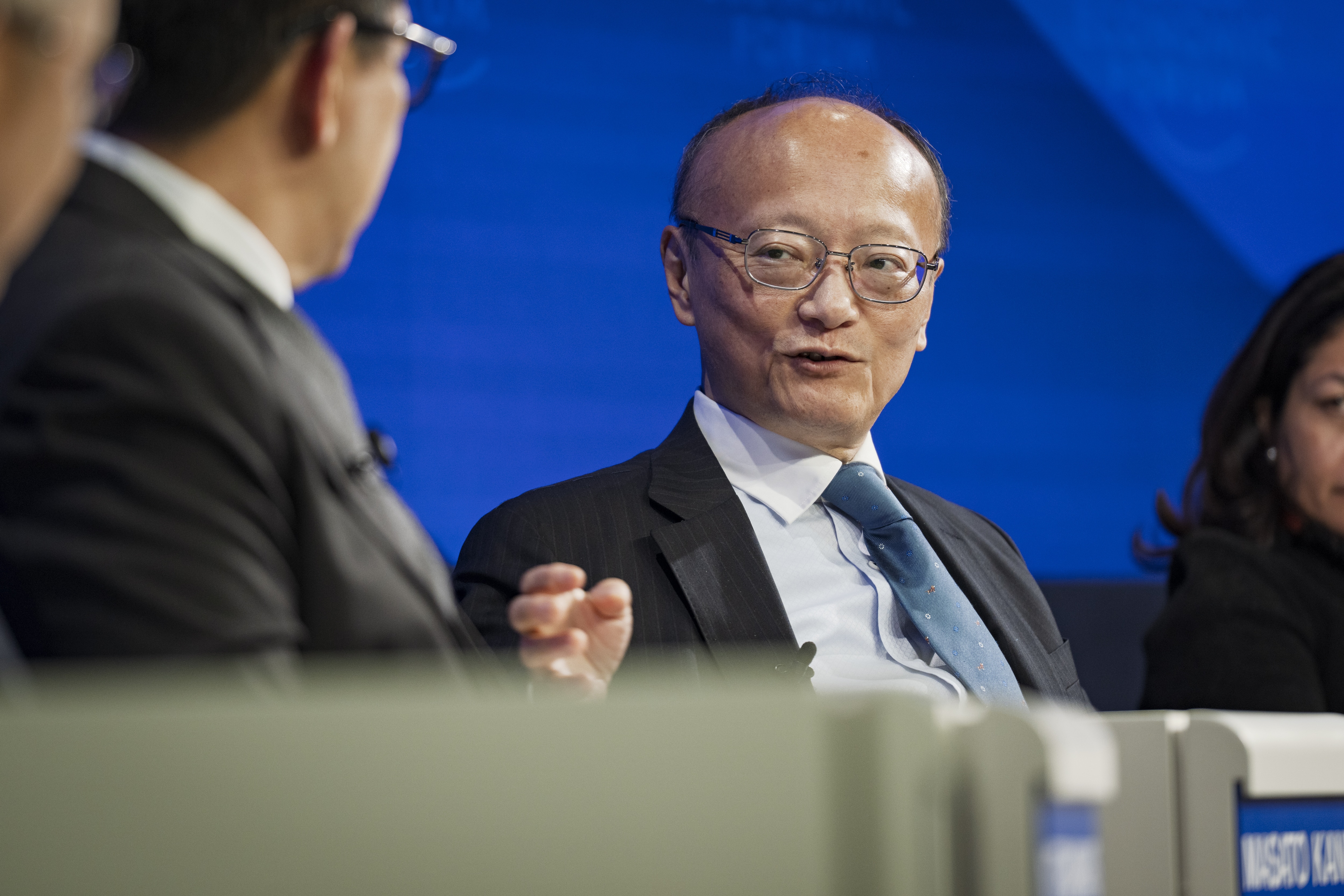
Is ASEAN Moving Fast Enough? Session on Asia-Pacific with Ekniti Nitithanprapas, Deputy Prime Minister and Minister of Finance of Thailand; Jaime Ho, Editor, Straits Times, Singapore; Masato Kanda, President, Asian Development Bank, Philippines; at the World Economic Forum Annual Meeting 2026 in Davos Image: World Economic Forum
- During a period of geoeconomic and trading tensions, the Association of Southeast Asian Nations (ASEAN) is seeking to capitalize on its advantages and address its challenges.
- The bloc’s aim is to offer investors and partners a dynamic, safe, neutral space in which to do business and trade.
- Both the speed and quality of the bloc’s transition are being considered, with emphasis laid on greater integration, enhancing resilience and tackling issues like education and inclusion.
The current period of profound geopolitical transformation presents enormous opportunities and risks for countries worldwide, but perhaps none more so than the countries of the Association of Southeast Asian Nations (ASEAN).
The 11-nation bloc is seeking to become the world’s fourth-largest economy and offers a neutral, loosely harmonized, open, dynamic, increasingly entrepreneurial partner, and, according to Tulsi Naidu, Chief Executive Officer, Asia-Pacific, Zurich Insurance Group, “a compelling growth opportunity”.
Described as the most “trade-driven region,” it has shown remarkable resilience in a hostile trading environment where its members have faced US tariffs ranging from 10% to 48% in recent months.
Finding strength through collaboration
As Masato Kanda, President of the ADB, suggested, further “regional connectivity and diversification of industry and trade are the best protection against external shocks,” and with leaders cognisant of this, ASEAN is working hard to transform faster.
Like many trading blocs, ASEAN is currently questioning how best to address geopolitical and economic events. According to Thailand’s deputy prime minister, Ekniti Nitithanprapas, it’s vital ASEAN members continue to work together. As regional blocs replace multilateral set-ups and institutions, investors will naturally be looking for safety; it’s envisaged they that ASEAN’s long-standing neutrality and relative levels of peace will prove attractive. Additionally, ASEAN has a chance to reap dividends by positioning itself as a “springboard to grow to other regions”.
ASEAN already has trading deals with at least seven countries, including China and India, and is negotiating an FTA with Canada.
Focusing on speed and quality in transformation
Both speed and quality of transformation are important. ASEAN already has growing infrastructure networks in transport and energy, and is working to lay down a digital infrastructure to better harness technologies like AI.
As a result of its Digital Economy Framework Agreement (DEFA), which is due to be signed this year, ASEAN leaders are aware that interoperability will be essential, and that they need to share the foundations for digital identity, the frameworks, interfaces, governance and finally, services of these systems.
In doing so, ASEAN has the potential to make great strides in areas like trade, health, logistics, and e-commerce, as well as bring its large proportion of SMSEs into the digital marketplace, creating new growth opportunities.
Showing self-reflection and awareness about challenges
ASEAN leaders show a strong degree of self-awareness, particularly in terms of the challenges the region faces. The bloc has a potential demographic dividend, with 213m of its 680m population aged between 15 and 34. As Meutya Viada Hafid, Indonesia’s Minister of Communications and Digital Affairs, highlighted however, this is only an advantage if quality jobs are available and the workforce becomes skilled. If not, the bloc risks social instability.
Reflecting this understanding, steps are being taken region-wide to improve education, inclusion and development. At Davos, Indonesian President Prabowo Subianto outlined large-scale national programmes his administration is advancing to strengthen education, health and essential infrastructure, with a focus on students and vulnerable communities.
In the past year, the Indonesian government has rolled out a nationwide free meals scheme targeting children and other vulnerable groups, aiming to deliver almost 83 million meals per day by the end of this year - an investment in both immediate needs and future generations. This, it is envisaged, will not only provide nutritional support for these individuals, but boost GDP growth, creating jobs through these services – and ultimately – developing a healthier population.
Steps being taken to boost resilience
A major area of concern for many is the region’s vulnerability to the effects of climate change, particularly – as the past few months of heavy flooding has shown – bouts of extreme weather.
The bloc’s leaders are aware that greater resilience is required. There is a fundamental understanding that preparedness and prevention are vital in everything from procurement to a fair supply chain. Beyond this, several leaders took the opportunity of using the Annual Meeting to reaffirm their commitment to climate goals and agreements.
Reflecting its concerns about the environment and as part of the Annual Meeting’s ‘Blue Davos’ oceans programming, Indonesia announced its collaboration in delivering the first Ocean Impact Summit, which will be held on Bali in June. The event will aim to advance a healthy ocean as a strategic priority integral to sustainable growth, climate action, food security and the livelihoods of coastal communities.
More widely, there is the sense that broader transformations are under way in the bloc. Daren Tang, Director-General of the World Intellectual Property Organization (WIPO), noted that ASEAN has “one of the highest numbers of unicorns in the emerging world,” standing at 45-50. It’s R&D spend has reached $60 billion, it’s showing strong commitment to innovation, and filings in areas like patents and designs are rising swiftly. Tang suggested that ASEAN is transforming from being a consumer of IP to “creating, inventing and taking ideas to market,” adding, it is “no longer about tourism and natural resources, but also creativity and entrepreneurs”.
ASEAN’s leaders fear that in the current environment, they must, as Minister Nitithanprapas suggested, “cooperate more, and if we don’t, we will suffer”. Offsetting this, the region is one that holds that peace and stability are valuable assets, which may prove its most enticing proposition in these uncertain times.
Don't miss any update on this topic
Create a free account and access your personalized content collection with our latest publications and analyses.
License and Republishing
World Economic Forum articles may be republished in accordance with the Creative Commons Attribution-NonCommercial-NoDerivatives 4.0 International Public License, and in accordance with our Terms of Use.
The views expressed in this article are those of the author alone and not the World Economic Forum.
Stay up to date:
ASEAN
Related topics:


Forum Stories newsletter
Bringing you weekly curated insights and analysis on the global issues that matter.
More on Geographies in DepthSee all

Abdulla bin Ahmed Al Khalifa
February 25, 2026


